
Blog

  • Too Much Ivory. Too Little Coverage.

    Source: naturepl.com/John-Downer/WWF
    Source: naturepl.com/John-Downer/WWF

    Originally written December 2013

    The resurgence of poaching in Africa needs to be re-introduced to the West to portray the magnitude of the threat in having a world without elephants or rhinos. Unfortunately, there are not many journalists covering this important story. The Western media maintains a distant narrative on this issue. Focusing on numbers and corruption limits their audience reach to animal or environmental conservationists. Media outlets should focus on raising awareness among all viewers by shifting their narrative to one that is more personal, comprehensive, and accurate.

    To portray this story with a personal tone, journalists should make a point to focus on the experience of animals that are suffering.

    Keith Lindsay is a researcher for the Scientific Advisory Committee for Amboseli Trust, an elephant research and conservation project based in Kenya, and understands the effects of poaching on elephants at an individual level. “[It] is pretty devastating,” said Lindsay, “they take the biggest and oldest individuals first because they have the biggest tusks, which messes up the whole social structure of the elephants. The older animals are the ones who are wiser and learned lessons about dealing with people. When you remove them, conflicts with people will increase as well.”

    Even though they have not experienced as many losses as other conservation parks, researchers at Amboseli Trust have noticed the disruption of social and reproductive strategies among elephants due to the resurgence of poaching.

    “If elephants are wiped out,” said Lindsay, “the whole conservation movement loses an aspect for their reason to be.”

    For viewers to understand the bigger picture behind poaching in Africa, journalists need to provide a comprehensive narrative that explains how this issue effects and involves a variety of factors and people.

    “We’re losing diversity with a flagship species that is usually used to outline the parks,” said Dr. Thoralf Meyer, lecturer in the department of Geography and the Environment at the University of Texas at Austin, who also lived and worked in Botswana prior to his work at UT.

    “The trade of illegal wildlife product, according to my knowledge, is the third biggest illegal economy in the world after the illegal sales of weapons and drugs,” said Dr. Meyer. Thus, the militarization among poachers and rangers has become the main focus for resources. “Public money is forcibly spent on anti-poaching operations,” said Dr. Meyer, “but we also shouldn’t forget that a lot of money should actually be spent on efforts to eradicate the demand. So at the moment we’re just fighting the effects, but we’re not solving the problem.”

    The biggest demand for ivory is traced to South East Asia, in particular China. It has been reported that ivory and rhino horn is used in South East Asia for jewelry and traditional medicine.

    “Basically,” continued Dr. Meyer, “other nations are destroying other people’s heritage.” Due to the level of poverty in these rural regions, it is relatively easy to recruit poachers for much less then the price ivory is sold for. “I don’t think these people want to poach,” said Dr. Meyer. “I think this is done for a different reason, simply for the fact that they need money for whatever they need the money for. These are some big issues for countries like Zimbabwe, Botswana, and South Africa to handle efficiently.”

    Additionally, avoiding inaccuracy requires starting a conversation with animal and environmental conservationists who have either worked in the region or with government organizations that can speak to how the international community must collectively pay attention to this issue.

    On November 14th, the US Fish and Wildlife Service (FWS) publicly denounced poaching by crushing six tons of seized ivory for the world to see. Dr. Richard Ruggiero, the chief of the Africa branch for FWS, said they “intended this event to make a strong statement that the government of the US is taking a stand and confronting the ivory crisis firmly with our full attention.” The pieces that were crushed included a large collection of elephant tusks, carvings, and jewelry.

    “Efforts should be focused on three main areas,” noted Dr. Ruggiero, “securing the habitat, breaking up the trafficking networks, and the market demand. There is not one cure for this ailment.

    “You need a lot of money,” said Dr. Meyer, “man power, technology, and a lot of intelligence as secret service information to do this effectively.” The trafficking networks could be affected at the grassroots level. “ Hopefully we can make these communities somewhat aware of these poaching problems,” continued Dr. Meyer, “so if they see something suspicious they will point it out or to educate them in a way so that they actually see poaching as a threat to themselves that threatens their economy or heritage.”

    “We need education campaigns combined with good evidence based data,” said Lindsey, “to show that the way they are trying to change opinions in South East Asia is actually having some effect.”

    “The ivory crisis is a global problem. The solution must also be global,” said Dr. Ruggiero.

    Of the few media outlets that have covered this topic, the personal, comprehensive, and accurate tone is lacking in their stories. This small cohort of journalists, who most are out in the field covering this story, are not accessible by phone or e-mail, which also effects their story’s tone and reach.

    The New York Times and the Guardian are two of the few media outlets that have published articles reporting on this issue. The New York Times published “The Price of Ivory” in 2012 as an online multimedia series to curate all the articles and media their reporters post on this topic. Jeffrey Gettleman, the New York Times bureau chief for East Africa, is the main journalist for this series. In these stories, Gettleman illustrates the green jungle in Kenya, armed rangers in the Democratic Republic of the Congo, and the underlying theme of corruption throughout the continent. The Guardian published two new blogs – “Nature Up” by Adam Welz and “Africa Wild” by Paula Kahumbu – in March of 2013, which also primarily portrays the facts and corruption narrative. These two publications do not provide their readers with a comprehensive narrative to gain a better understanding or a personal tone to provide a better connection.

    An example of an encouraging attempt to cover this story is Journeyman Pictures’ documentary “Where Have all the Elephants Gone?” for ABC Australia. Even though they feature conservation rangers, elephant orphanages, and animal traffickers, the film could have gone a step further in giving insight on where the demand and profit for ivory is coming from. Again, corruption and poverty were the protagonists in their story, with elephants casted in a supporting role.

    Finally, poaching in Africa is a big and complex issue. Thus, it is even more important for the western media to pay close attention to how it reports this tragedy. The resurgence of poaching in Africa is not just about corruption, facts, and distant politics. This genocide against elephants and rhinos is about the future of our planet, the straining relationship between the animal kingdom and human beings, and the undeniable source of demand leading to criminal violence against both animals and people.
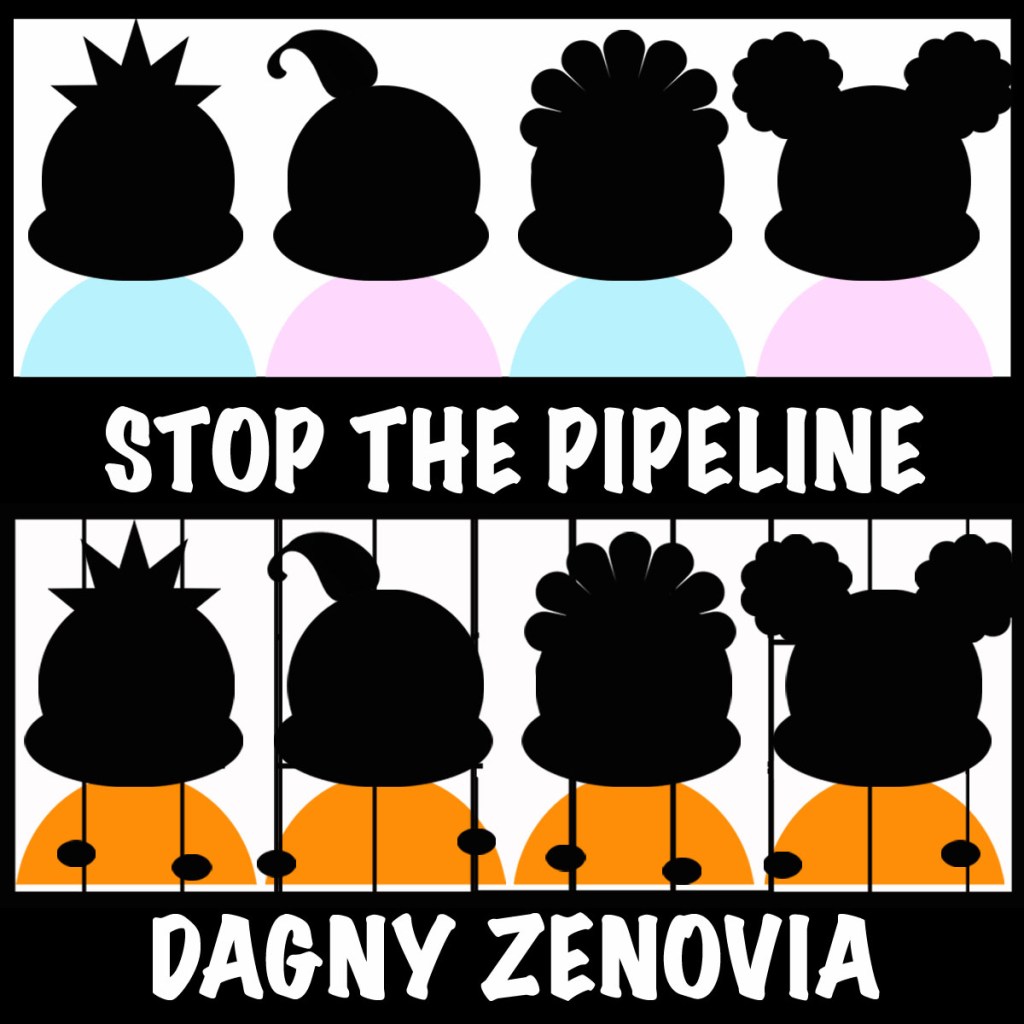
  • Stop The Pipeline

    “Stop The Pipeline” is a music video, public service announcement, educational tool, and news supplement attempting to fill the gap between those affected by the school-to-prison pipeline and those who should be paying attention to the pipeline.

    Cover_StopThePipeline

    The purpose of my thesis, a.k.a. masters report, is to focus on the school-to-prison pipeline and the need to intervene with school discipline that pushes students out of the classroom and into the criminal justice system. It showcases services and programs in Austin, Texas, including Southwest Keys, Webb Youth Court, and Council for At-Risk Youth as examples for solutions. My report incorporates research and expert advice on the safety and well-being of students while advocating a need to change the policies and culture surrounding schools.

    I am still in the process of pitching my report to news outlets and am hoping they will accept the article and video as a full news package.

    This media project is my contribution to innovative journalism. A form of storytelling that connects viewers, educates listeners, and inspires all. I know initiatives like this tend to spur conversation, but I hope it also leads to action that really makes a difference.

    In January of 2013 I decided to dedicate my thesis to the school-to-prison pipeline. I had noted an increase in conversations and news stories about this issue and I wanted to contribute to the search for a solution. At first I was not sure what aspect of the pipeline I would focus on, but I was convinced I would uncover the answer that no one had ever imagined. As I continued my research that summer, I noted that the majority of voices that were raising awareness about this issue were adult experts. The youth voice was usually casted as the victim or the face of evidence. I felt this agist gap needed to be bridged in order for progress to continue on the right path. I did not want my long-form public affairs news story to only be read by those who still subscribe to a newspaper, but also reach those who are directly affected by the pipeline. My creative side kicked in and started visualizing a civic media project to broaden the audience for my report and contribute to the conversation. In the fall of 2013 I included the media project idea in my proposal noting that I would write a full 4,000 word article as if there is no media – the curriculum does not list a music video as a multimedia option. My readers at the time agreed to it. One Saturday in December of 2013, I sat with my sister, brother, and mother to brainstorm the lyrics for my song. I had written a number of phrases to give the idea of the storyline I wanted to use. Together we created a rap, chorus, bridge, and spoken word segment. We also recorded a demo with GarageBand. It’s always fun to collaborate with my family when we have time. We are kind of like a combination of the Jacksons and the Huxtables with a pinch of loving-crazy.

    I was not completely happy with the demo we recorded. Granted, this was the first time I had attempted to create an original song and I was a little hesitant in measuring if it was good or not. Thus, I stepped out of my comfort zone and reached out to strangers to take my project further. From January to March of 2014, it seemed everyone I spoke to were either busy or would disappear and not respond to a second message. In addition to this, my readers seemed to backtrack on their agreement with the video. They wanted to see footage with the first draft of my paper (due in February) and repeatedly noted that their expertise did not include critiquing music videos and they wanted to make sure it was not a form of propaganda. As a creative person, any slight negativity surrounding a project can kill my vibe. I was hoping my project would be seen as a step towards innovative journalism that future students could look to for inspiration. I wanted my project to move further then skim the surface of this issue. I somewhat understood their hesitancy, since this was the first time anyone in this program had attempted such an endeavor, but it would have been nice if they could have been a part of this project. Nonetheless, they were very helpful in editing my written report. I refused to allow this disappointment to detour my inspiration and decided to remove the video from my thesis report. Since I could see the video so vividly in my mind, I was determined to make it a reality. The main dilemma then was figuring out how to convince others to collaborate with me on a project that was not connected to an assignment or monetary source. Luckily, I was taking a second course, Critical Hip Hop Studies, with people who could see the value in my project. After discussing the matter, my professor agreed to accept the video project, along with a bibliography, script, etc, as the final assignment for the class. We also had a special guest, MC AtLas, speak to our class and give a lyricism workshop in the undergrad class equivalent. Along with her inspiring story and encouraging tips, I showed her my lyrics. She gave me some pointers on how to create a melody and noted that my lyrics were good. It was at that point I stopped feeling unsure about my new songwriting abilities. Things were looking up!

    The week after Spring Break, I was scrolling through my twitter feed when I noted a tweet about Longhorns Hip Hop and SXSW. It mentioned a few UT students involved with the show. The only one that had a link to a website and portfolio was Avalon Gordon, whom I later learned is a talented, connected, and brilliant producer. I reached out to her on twitter about my project, we e-mailed each other more details, and she was on the team. I must admit that this project would have never gotten off the ground if it wasn’t for Avalon. She connected me to Jared Kinsler with SoundNoodle, who produced the music, posted the casting call, scheduled the film shoot, found the location, monitored our budget, put together a solid crew with a great director and gaffer along with my fellow video journalist Efren Salinas, introduced me to a brilliant editor, Karla Diaz, and was all around pleasant to work with. In one month – April – my project went from a page of lyrics and sketches to a polished song and music video. The way this project came together was amazing. I really am grateful to the cast and crew for contributing all of their talent and time.

  • Get To Know Me

    “You don’t know me…you don’t know my life…you don’t know what milk I put in my cereal!” Decided to share a few things about myself with you thanks to a tag from my fellow youtuber Doyin. Choosing the questions was fun. If there is anything else you would like to know about me, let me know in the comments below.

  • Bro & Sis Cover: They Don’t Care About Us

    It’s “my brother and me” again! My brother learned how to play “They Don’t Care About Us” by Michael Jackson on the piano about a year ago as a surprise for me. We both agreed to do some sort of collaboration with it, but never got around to it. Two weeks ago I went home for a weekend visit and we played around with the song. It is a work in progress, but I figured I should record it to share with you. Since the piano is so loud, my microphone had difficulty capturing my voice…granted it was a challenge singing loud while concentrating on playing chords. So I recorded my vocals separately to layer with the video. Towards the end I started catching the MJ bug and my voice picked up a different attitude. (This is why choir directors could never give me a solo when I was in elementary school…my voice is too spontaneous) This was a lot of fun. My brother and I are still working on polishing this song and brainstorming other cover or mash up music ideas. Have any suggestions for songs we should do? Let me know in the comments below. Enjoy!

  • My Brother and Me

    My Brother and Me

    It’s “my brother and me!” Not the show silly…even better…

    My brother and I decided to do a sibling TAG video. We chose a few questions to ask about each other. It turns out I know more about him then he knows about me.

    We are planning some more fun collaborations in the near future. Do you have any ideas we should try? Make sure to subscribe to my channel to see new videos every weekend.

  • Girl Power Remix

    I noticed this Girl Power TAG video chain on youtube and felt I needed to expand on it’s meaning. It started with Seventeen Magazine interviewing teen celebrities to share inspiration and confidence to their readers. I think it is a nice initiative and I wanted to contribute to the conversation. Here is my Girl Power Remix.

    1. What does Girl Power mean to you?

    Powerpuff Girls

    Girl power means embracing our gifts and responsibilities that come with being a queen. We naturally have powers to nurture, uplift, support, protect, inspire, grace, seduce, love, build, and the list goes on. We are responsible to not only accept and strengthen our gifts but also share and contribute them to society.

    2. What is the best advice you can give to girls who want to be powerful?

    Supergirl and Batgirl

    There are two aspects of being powerful. First, self-worth, confidence, and determination. Refusing to conform to what society claims what your role in life should be. Measuring your value deeper then the surface. Standing up and speaking out for what you believe in. Second, being inclusive. Not hating on other girls or women who are different from you, having struggles, or are victims of rumors. Not excluding boys or men just because they are a different gender. I believe the key to solving the issues in our society is being a unified community. We cannot do that if we segregate ourselves along gender lines. We are stronger together.

    3. If you could have any super power, what would it be and how would you use it?

    Storm

    I would like to have ultimate mind power to move objects with my mind and be able to communicate with animals, plants, and all the elements on Earth. I want to help everyone and thing on this planet to coexist without taking advantage or destroying each other.

    4. Show your best Girl Power pose.

    Dagny Zenovia

    This photo was taken in 2011 when I did the “big chop” to go natural. I felt very powerful starting that new chapter in my life. It is amazing what a new hair style can do. Check out my previous blog to learn about my hair journey.

    5. What beauty product makes you feel powerful?

    Harley

    I would like to change this question to “what thing” because I feel we need to expand on what girls can use as a resource of power. Beauty products can be fun to play with and can be helpful in maintaing healthy looks, but I also feel we should encourage youth to use their imagination to build their inner strength. There are a variety of things that make me feel powerful depending on my mood, but I will share two of them here. First, knowledge – the access to explore it and the freedom to share it. As Queen Latifah once said, “no one can put a padlock on your mind.” Second, my glasses. I started wearing glasses when I was 16 months old. Traditionally, glasses are considered a weakness since without them, the person is possibly blind. However, mine give me the power to see clearly, act as a shield against any elements flying in the wind, and has a certain influence on people to stay-on-their-toes since my magnified eyes give the illusion of looking into their souls. Granted, sometimes I wonder if it is only the guilty who tend to feel paranoid…but I digress.

    6. Why is it important to have Power Girls as role models?

    Sailor Scouts

    Having powerful people of all kinds as role models allows us to use our imagination and believe that we can be whomever we want to be. I think it is important to expand on what we define as a powerful person, because not all heroes wear a cape or are featured on front page news. It also inspires us to push the bar further and take on dreams that are just as risky or unconventional.

    7. What young up and comer do you think is powerful and why?

    If you watch my video above, I included a collage of a number of young individuals whom I think we all should encourage and celebrate. This includes: Malala Yousafzai, De’Juan Correia, Leah BooherGabrielle DouglasBrian LintonChristopher YaoErica Williams SimonDylan Mahalingam. There are countless others on the front lines and behind-the-scenes making a difference.

    Additionally, I want to mention what I appreciate about powerful people. We tend to think those who are featured in Forbes or Time Magazine are the only powerful people. I believe you reading this is powerful and I think we do not articulate our appreciation for each other enough.

    To my fellow Queens and Princesses, I appreciate your strength in smiling every day, caring for each other, and refusing to conform to what society claims you should be and continuing to build a united community. I appreciate your intelligence, resilience, and talent in juggling all of your numerous roles and responsibilities. I appreciate everything you teach us. Thank you and keep it up!

    To my fellow Kings and Princes, I appreciate your strength in lifting the heavier weight, constantly striving to be the better man you want to be, and your courage in helping to build a united community. I appreciate your intelligence, determination, and talent in juggling all of your responsibilities. I appreciate everything you teach us. Thank you and keep it up!

    I hope you enjoyed the clip and the entertaining pictures. I would love to know what makes you feel powerful. Remember to subscribe to my youtube channel for new videos every weekend.