Tag: Travel

  • My 9 Days In China: Shenzhen, Guilin, Train Rides, KTV, Africa-China Relations

    My 9 Days In China: Shenzhen, Guilin, Train Rides, KTV, Africa-China Relations

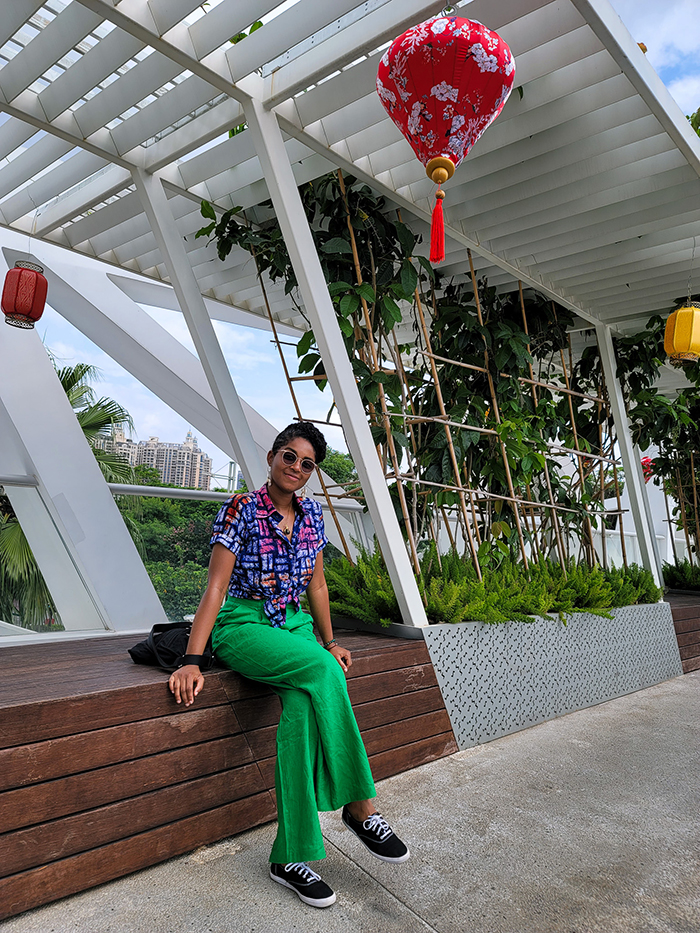
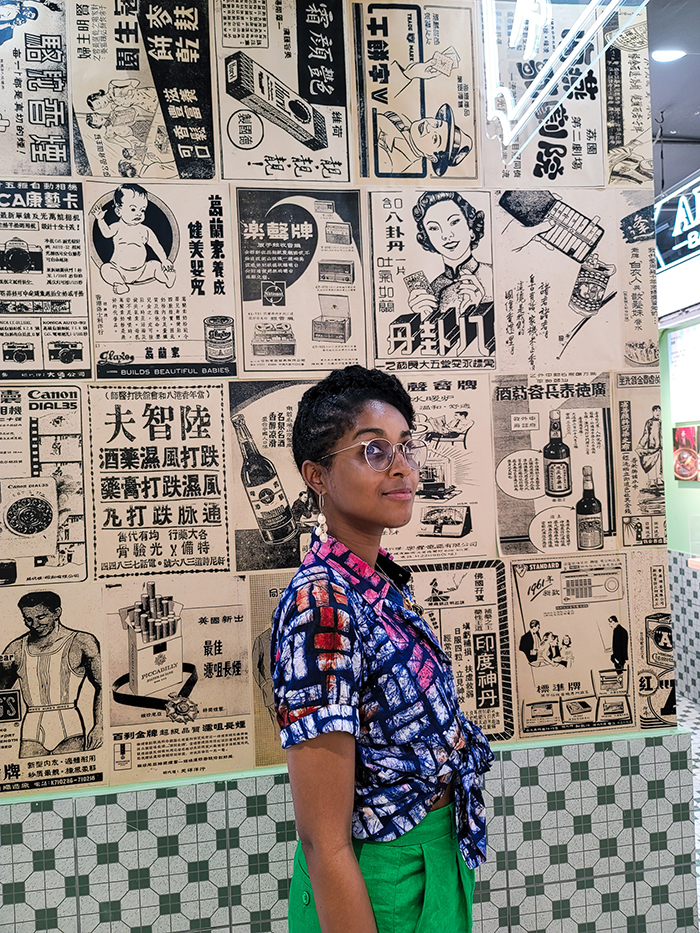
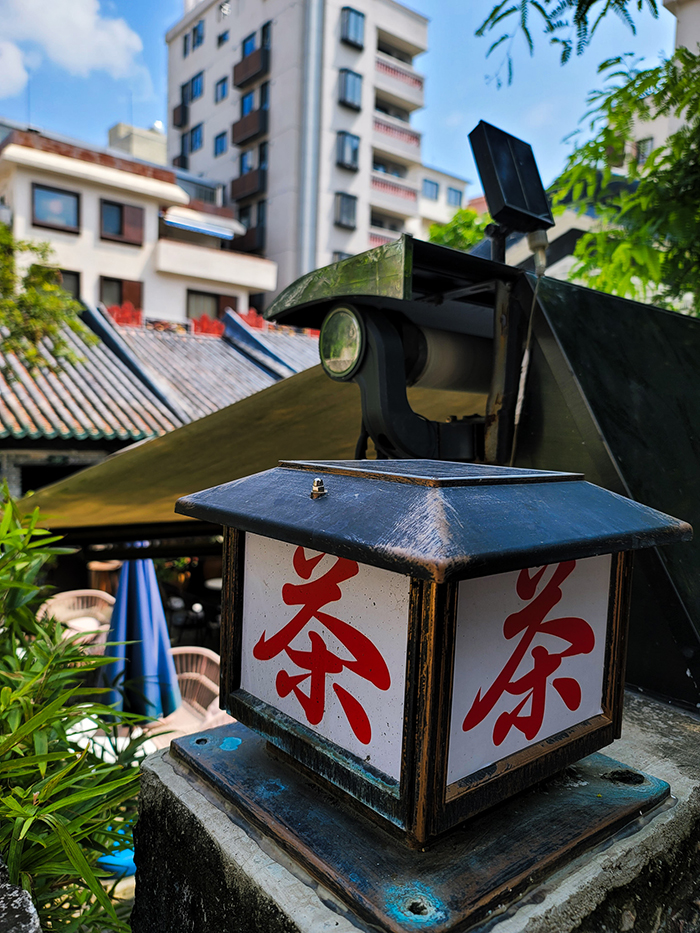
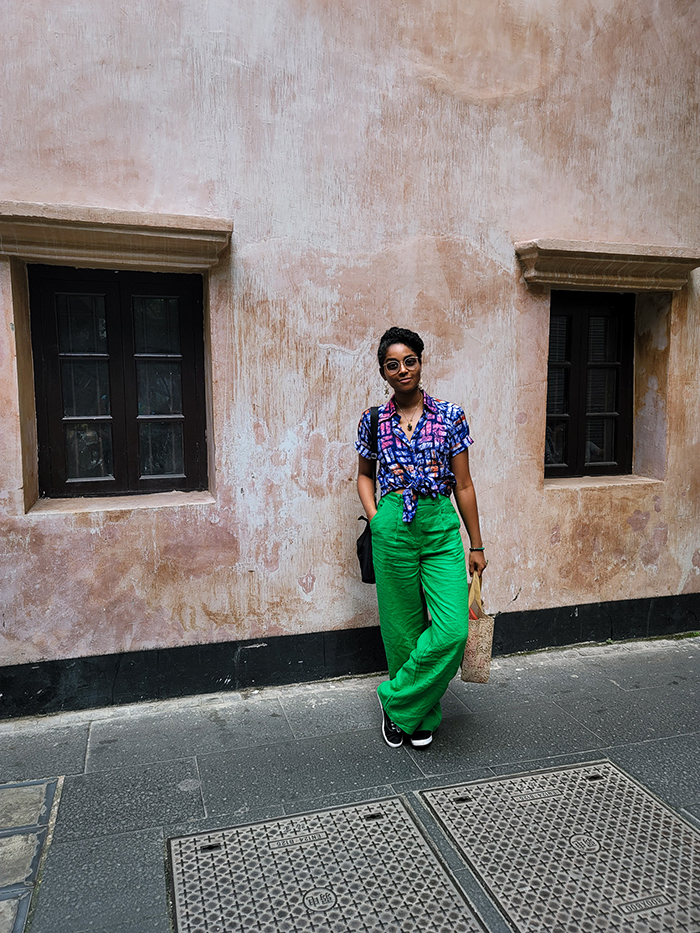
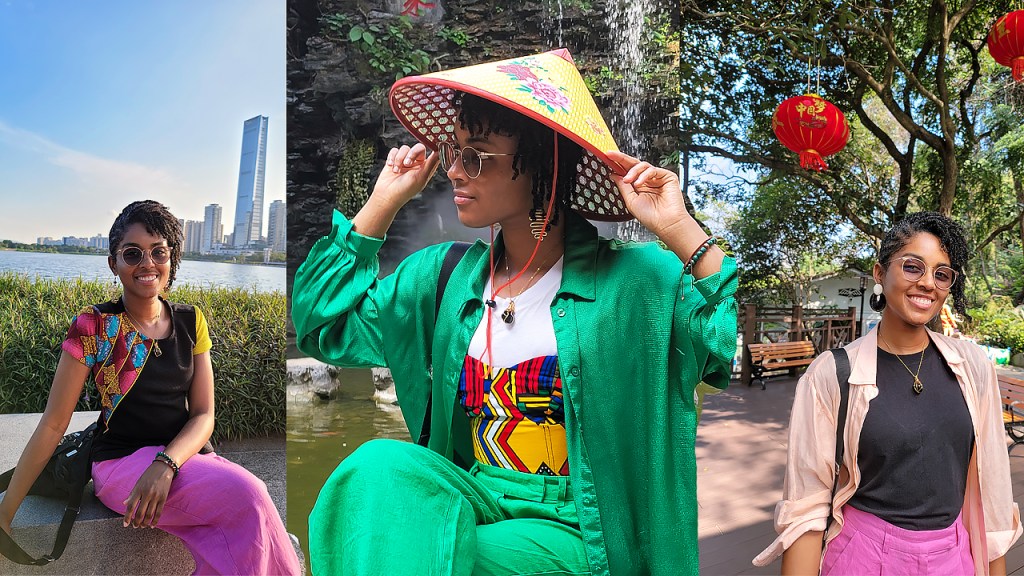
    So, do you want to hear about that one time I became a ninja? A few months ago, I visited China. This was my first time in Asia. The trip was awesome. I felt like I traveled to the future. We packed a lot of adventures in 9 days.

    Now, before the person behind you reacts with anti-China propaganda, may I ask you to please be respectful and curious about what I’m sharing with you. Fun fact, I served as the editor for an online publication called Africans on China a few years ago. I learned a lot while editing and posting content, training African university students in editorial writing, and interviewing Africans with experience in China. It gave me a glimpse into how Africa – China relations are evolving beyond government agreements.

    This trip added another layer of curiosity for me to see the room for improvement and what can be leveraged to create win-win situations. In this post, I share a recap of my trip and elaborate on my reflections about Africa-China relations.

    So, let’s get into it. Shall we?

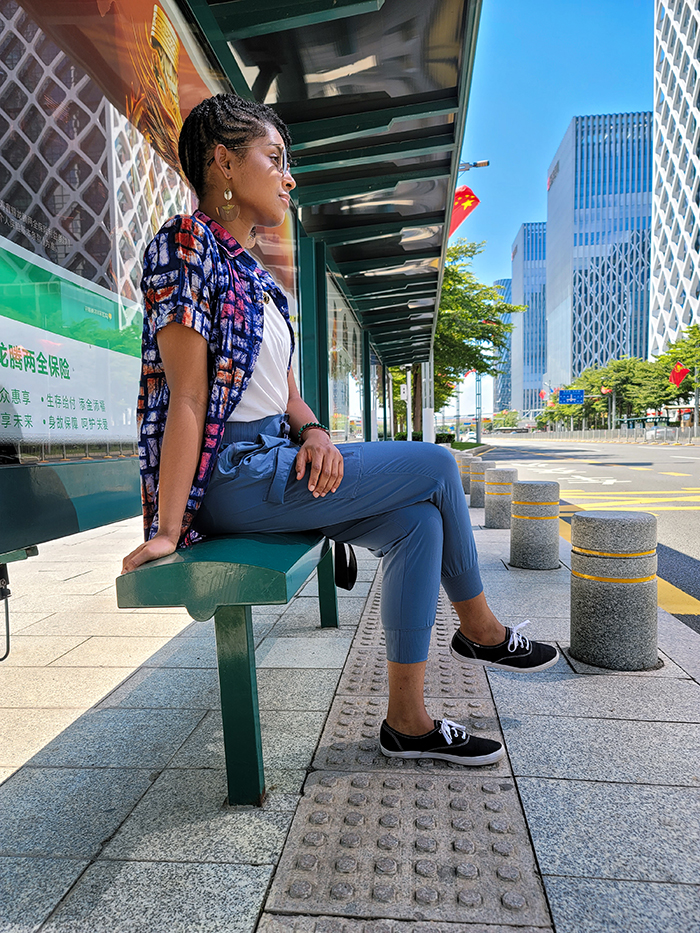
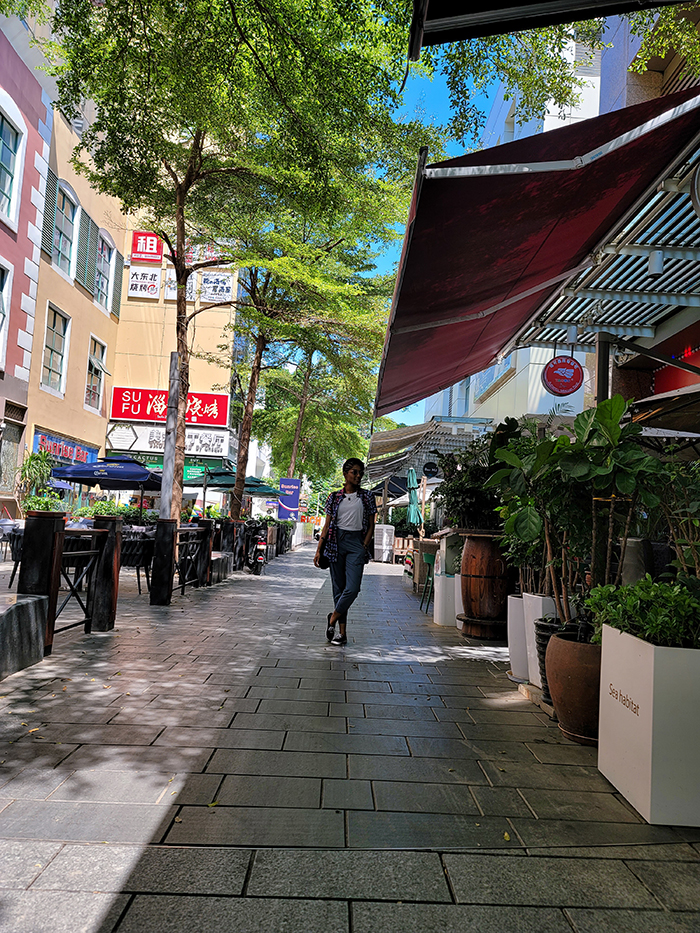
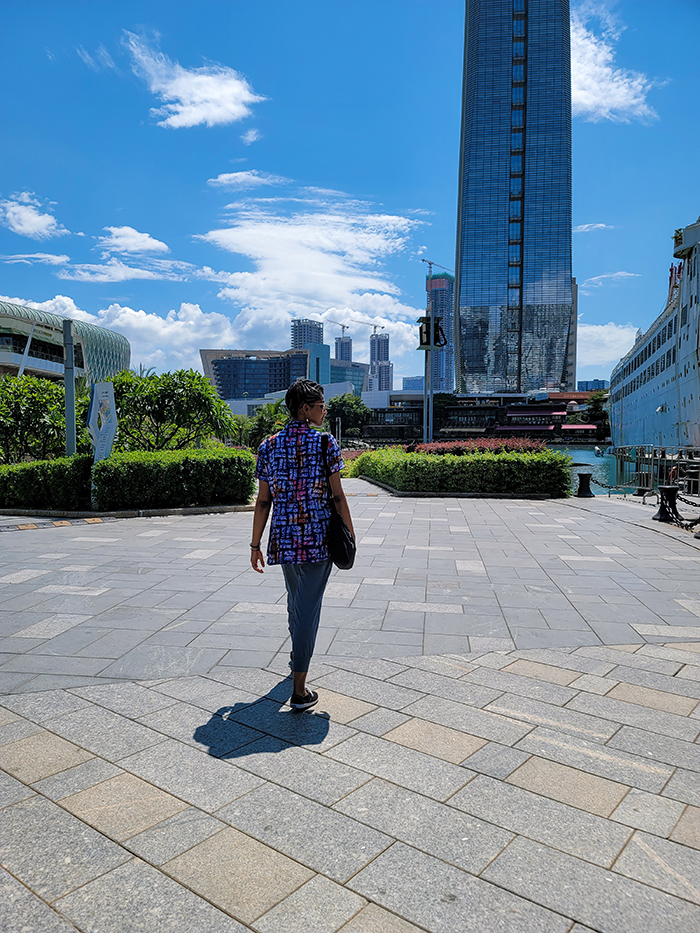
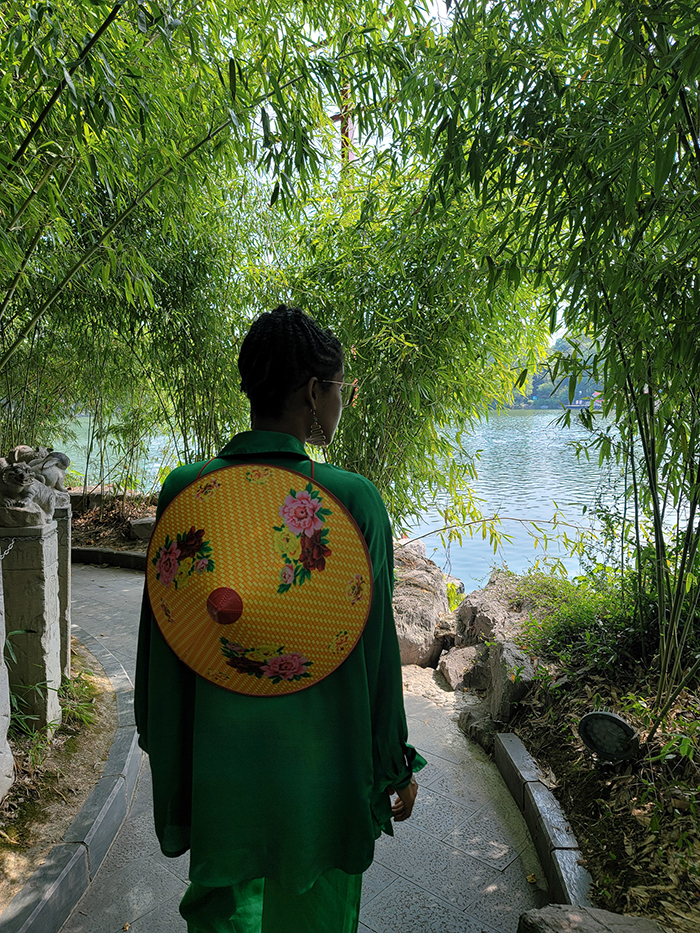
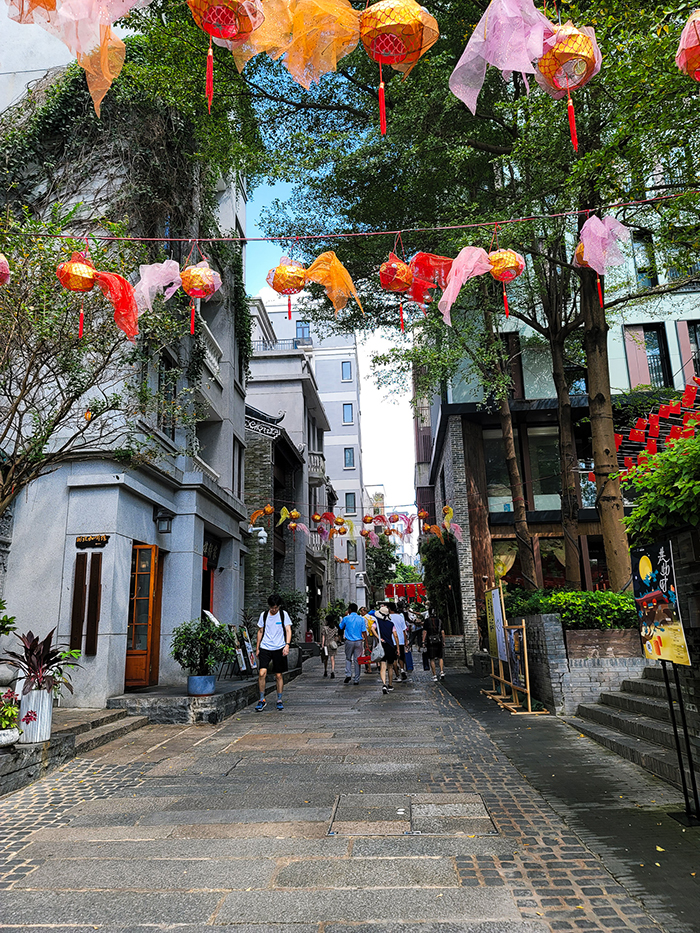
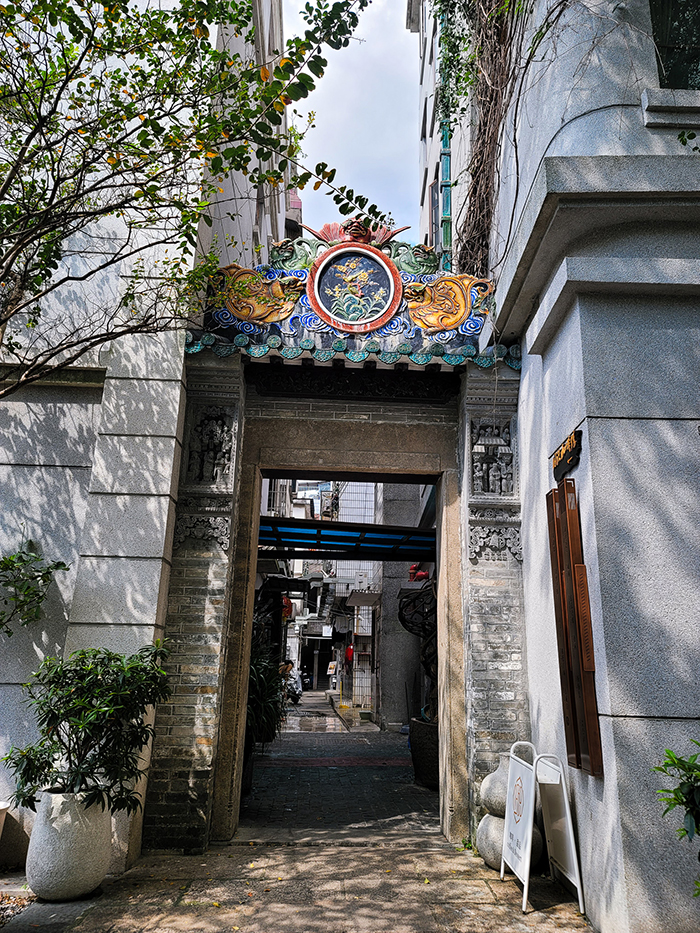
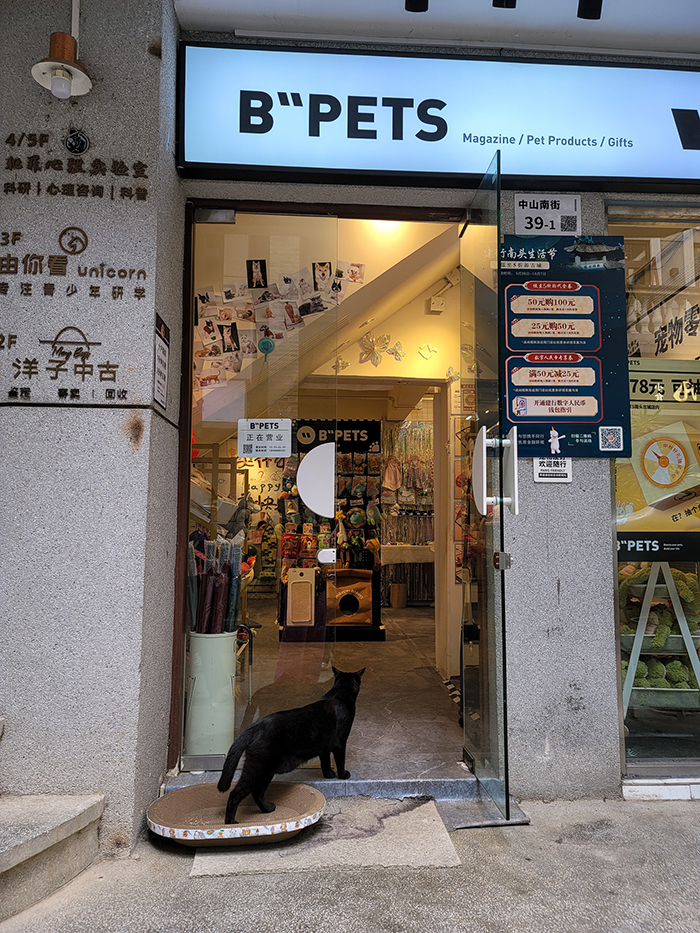
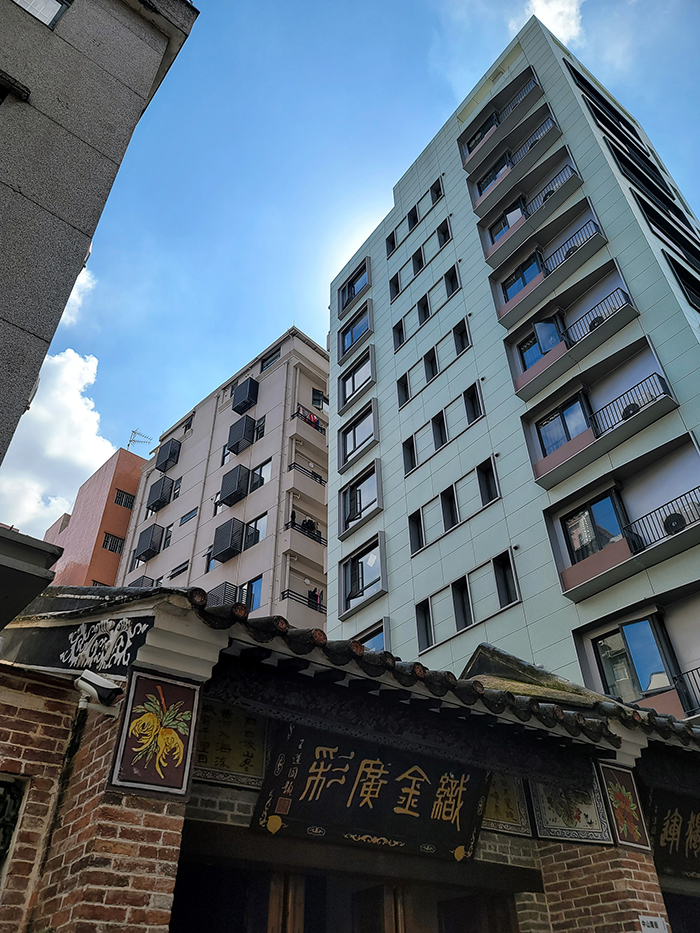
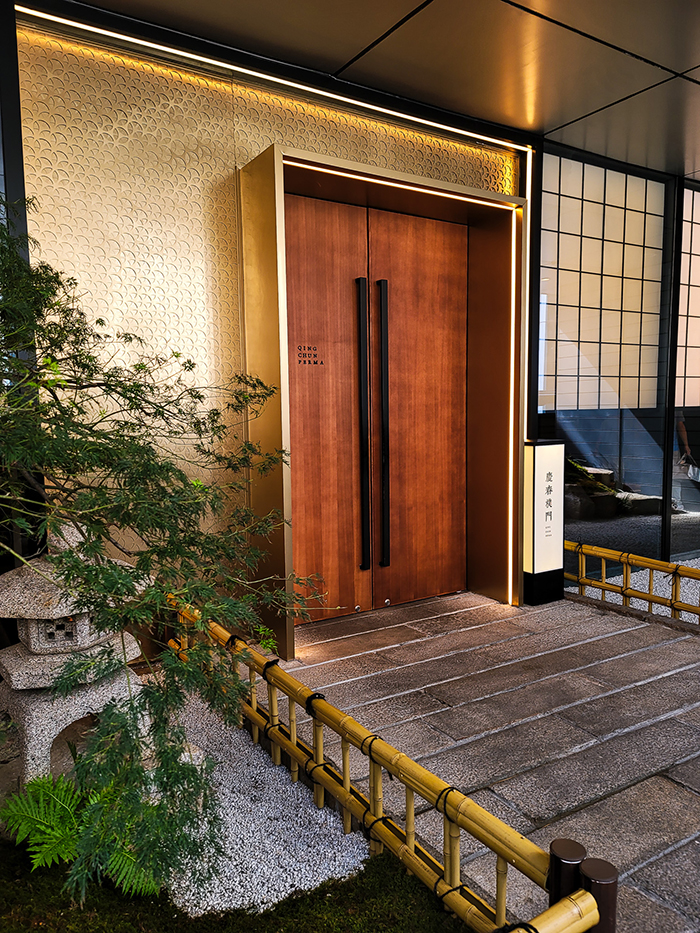
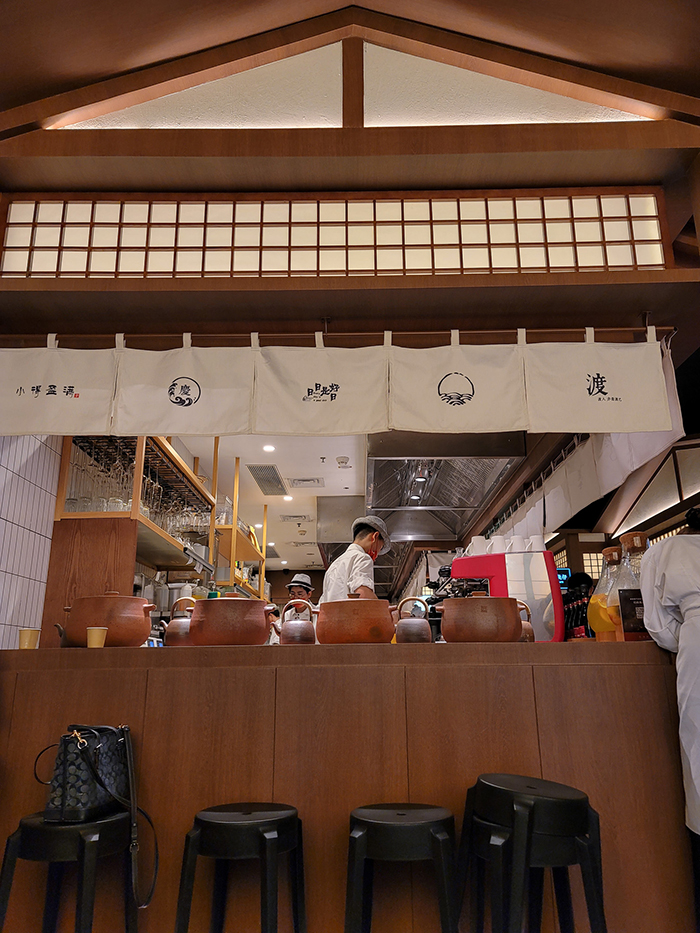
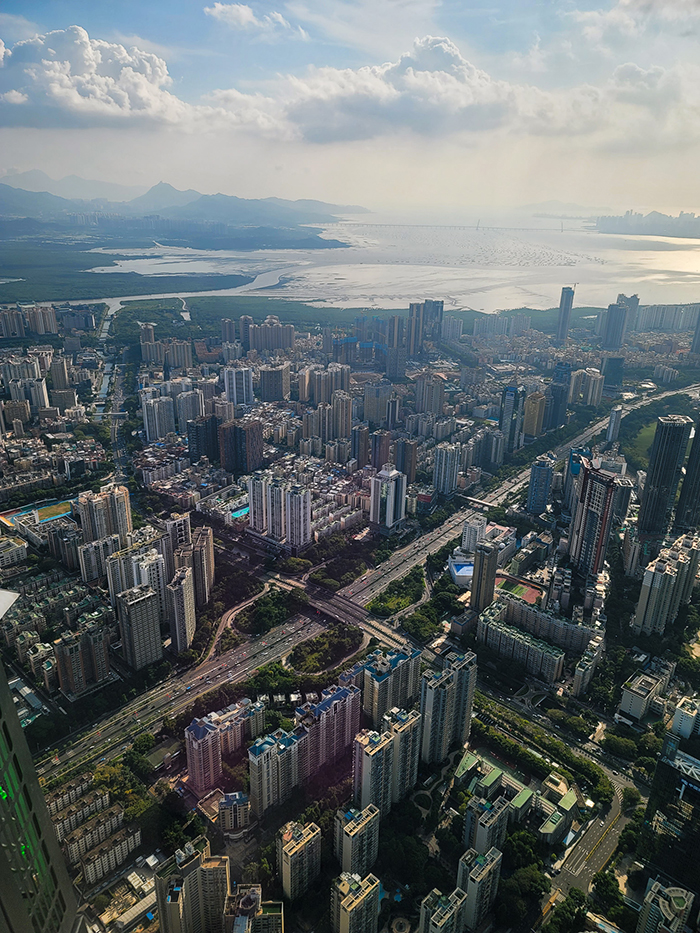
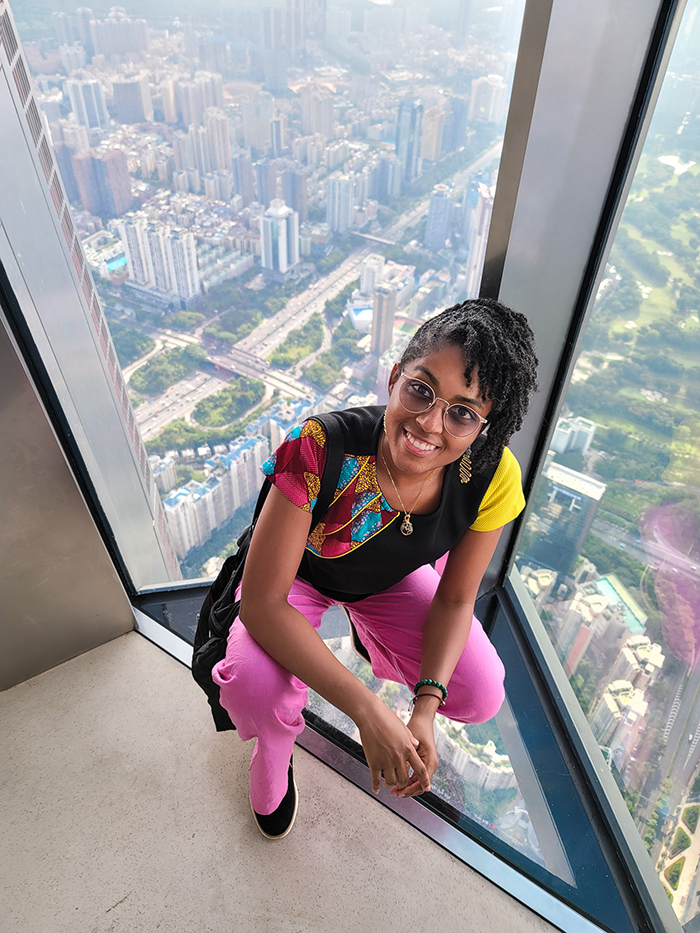
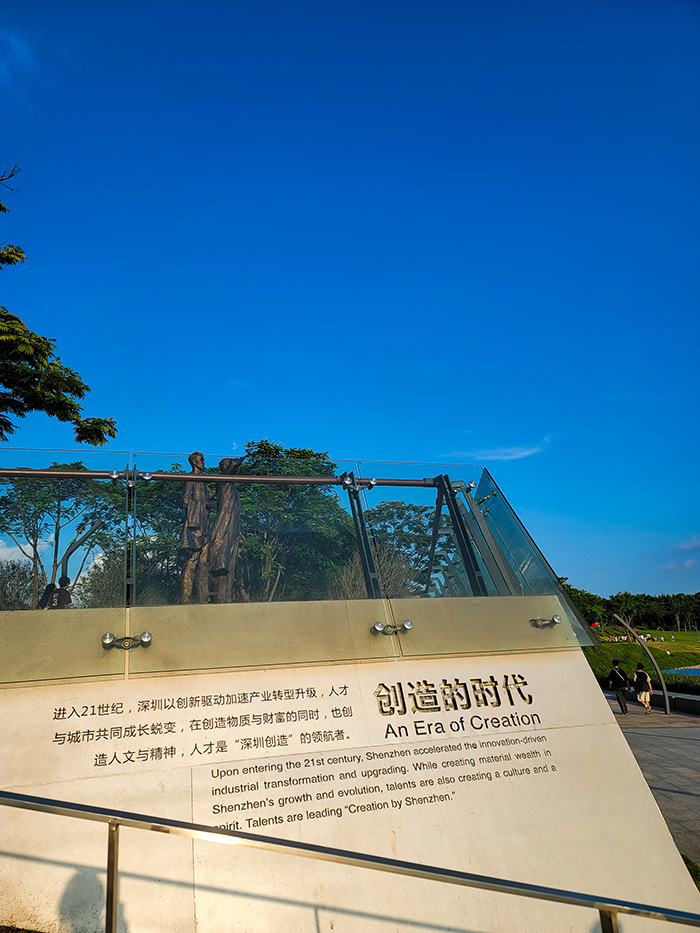
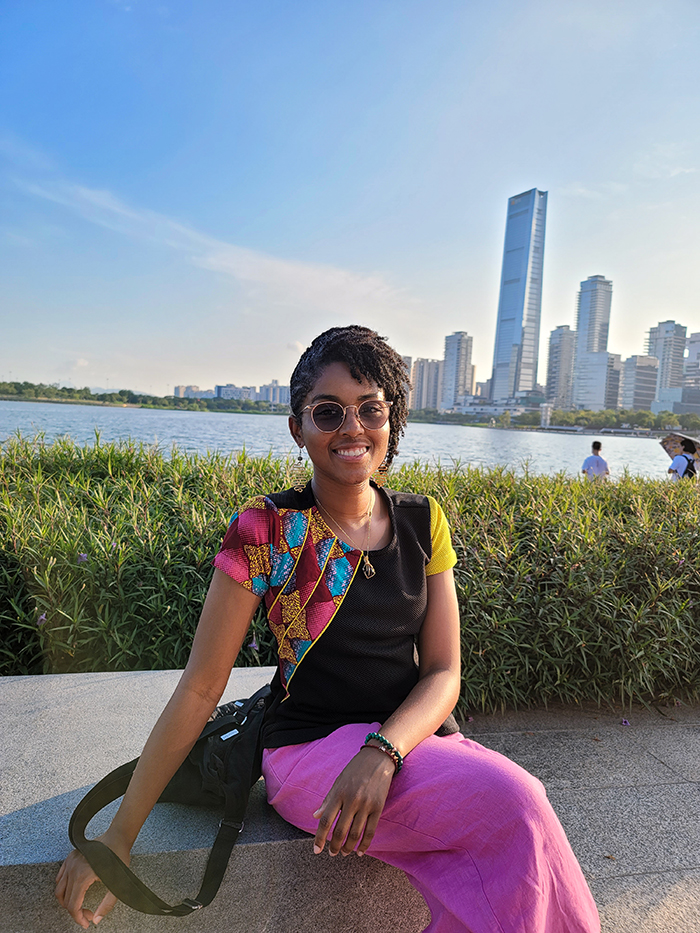
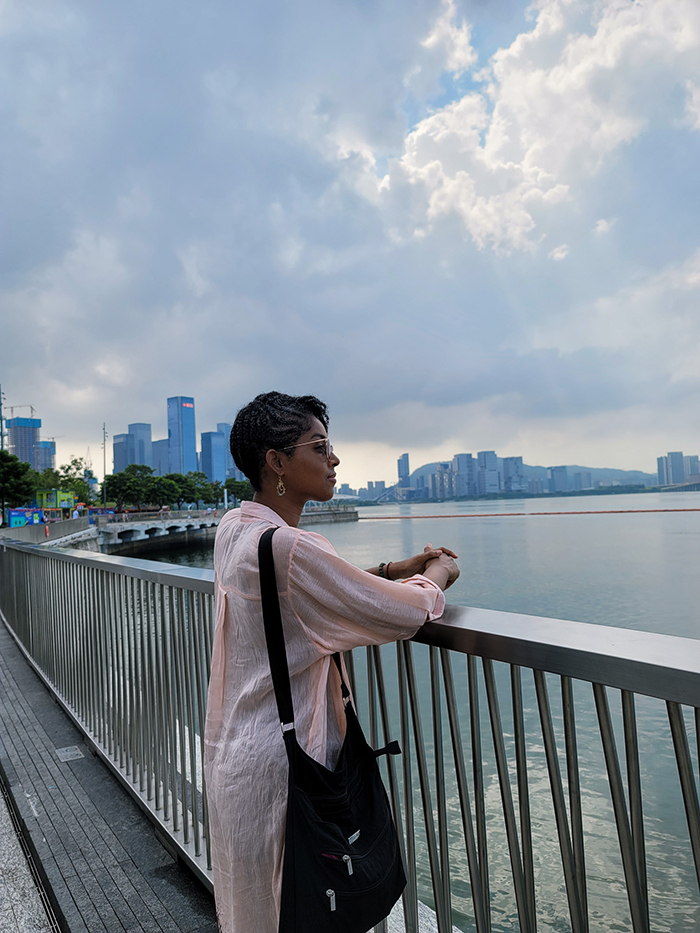
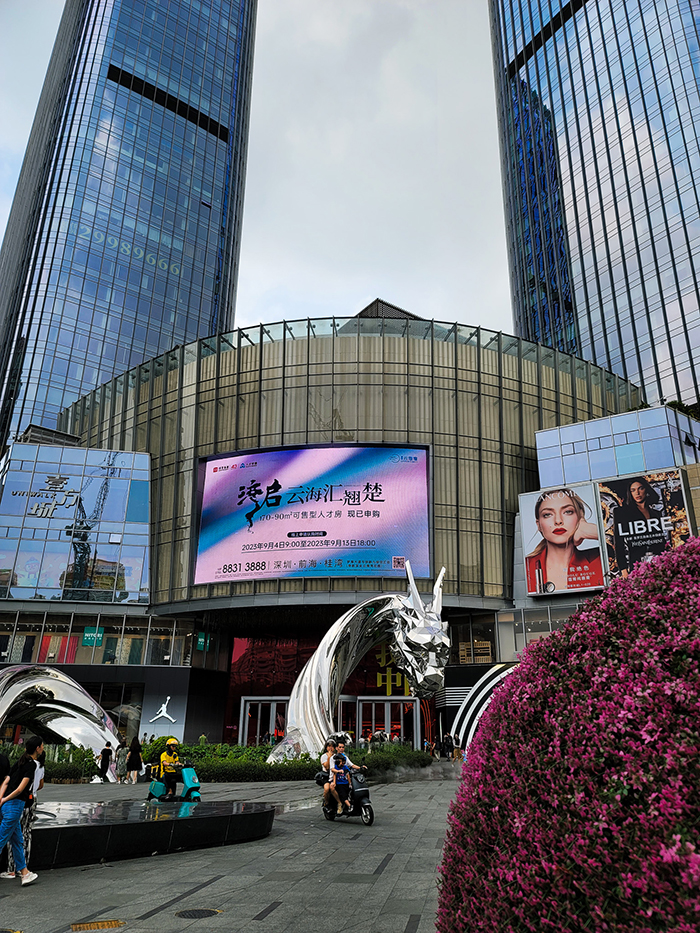
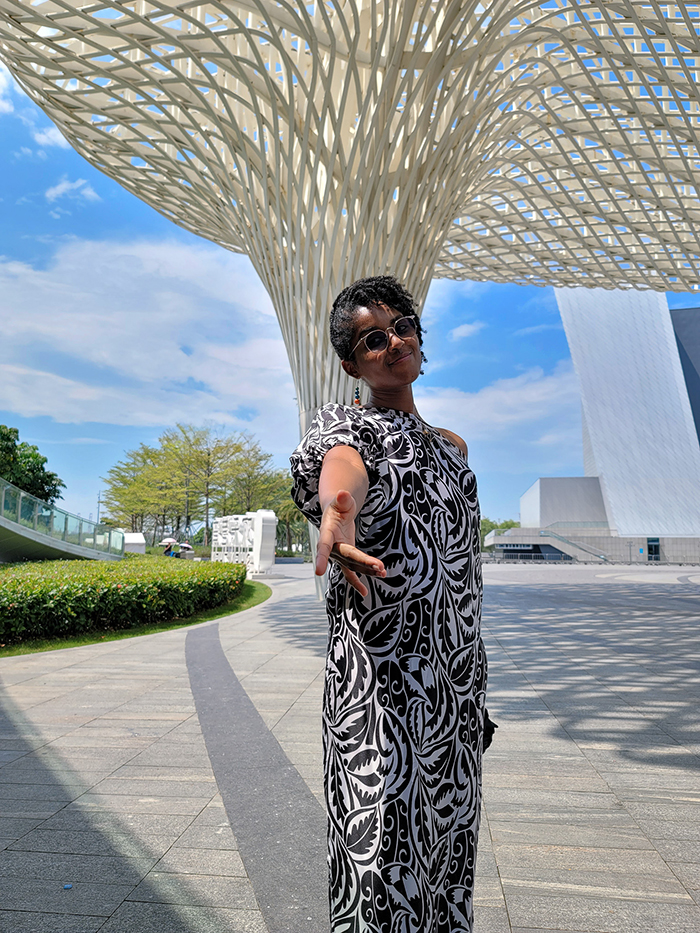
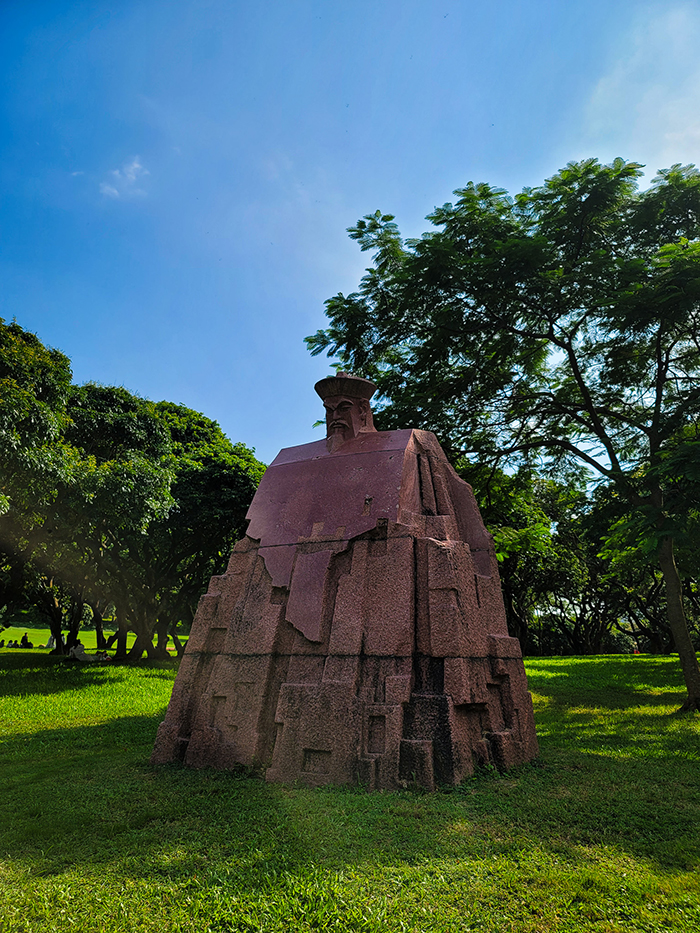
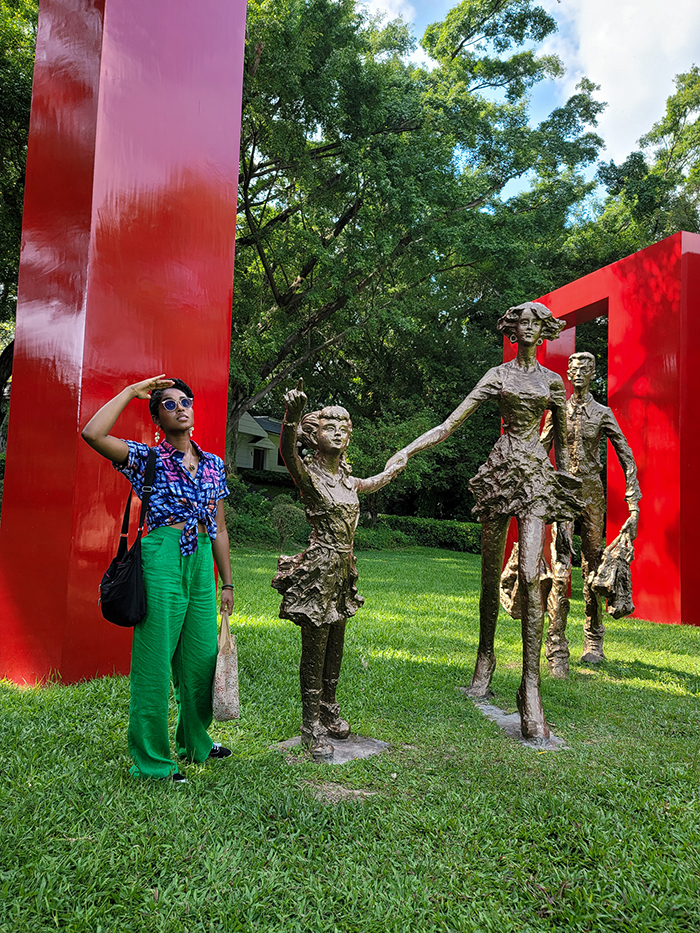
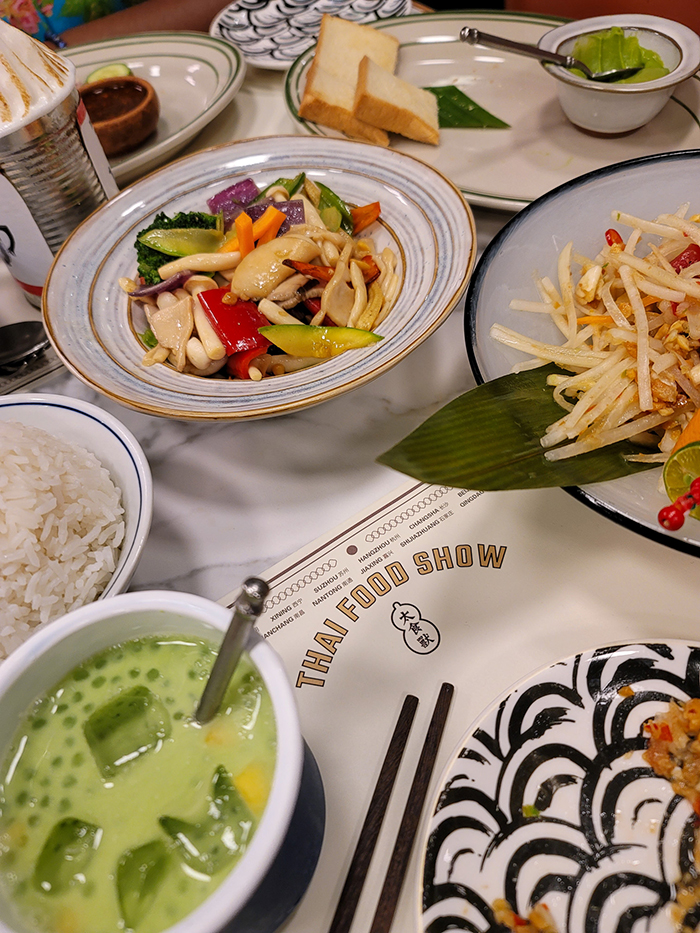
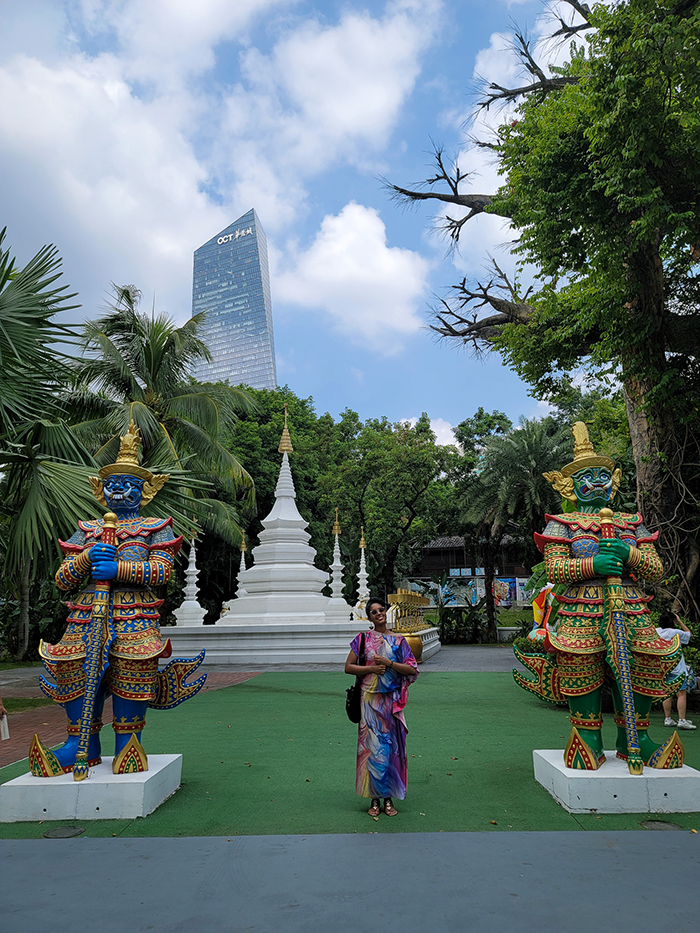
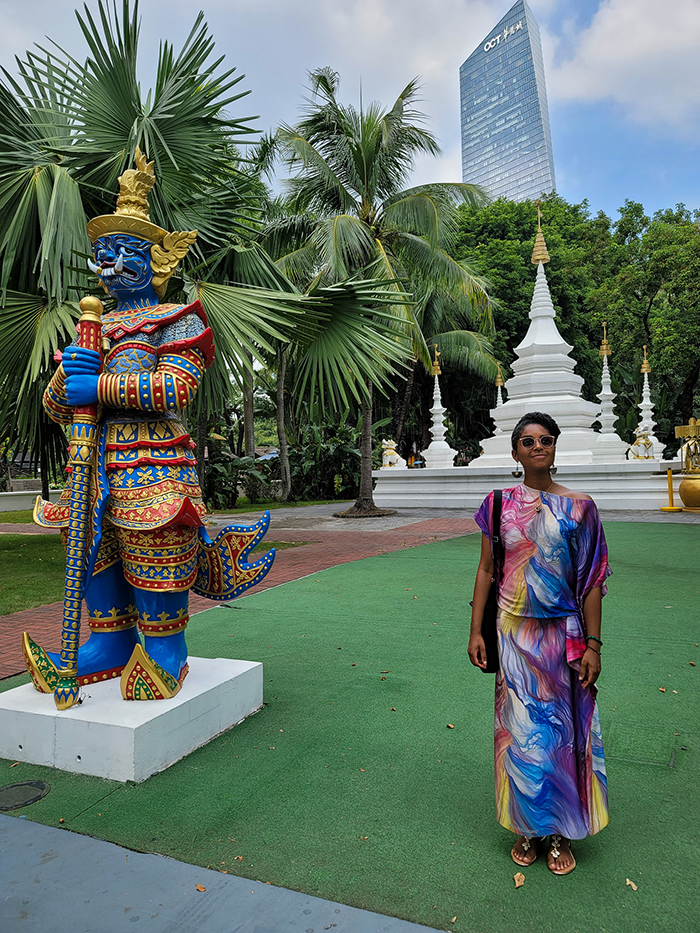
    First, the trip. We started in Shenzhen.

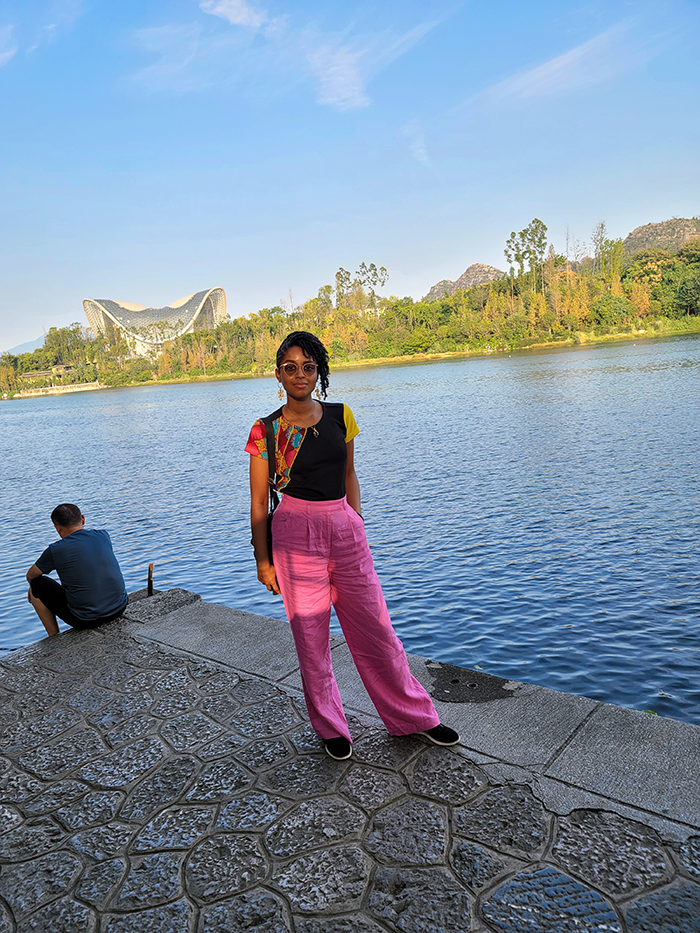
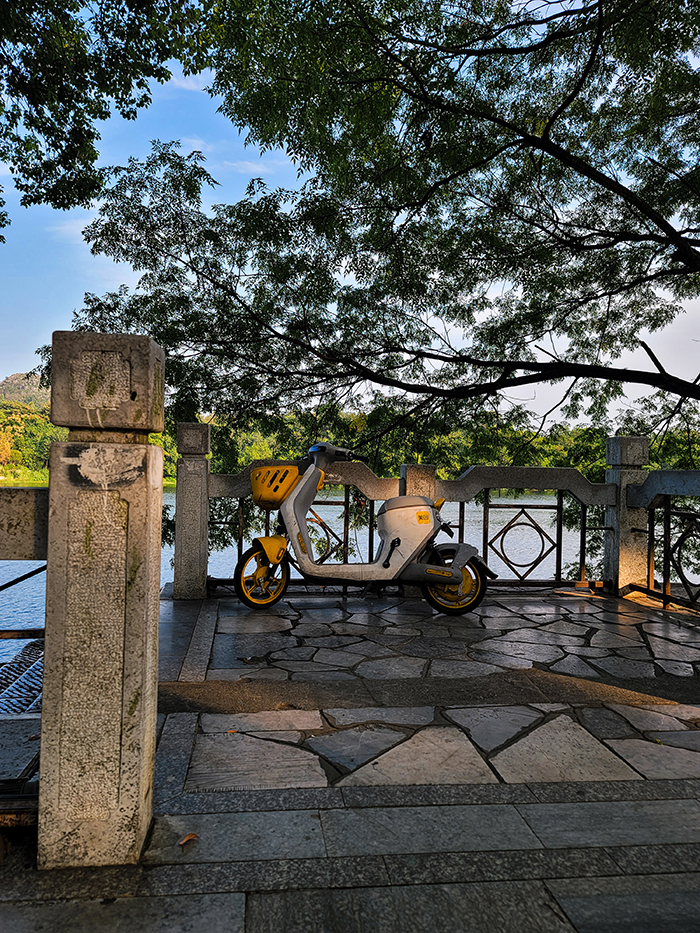
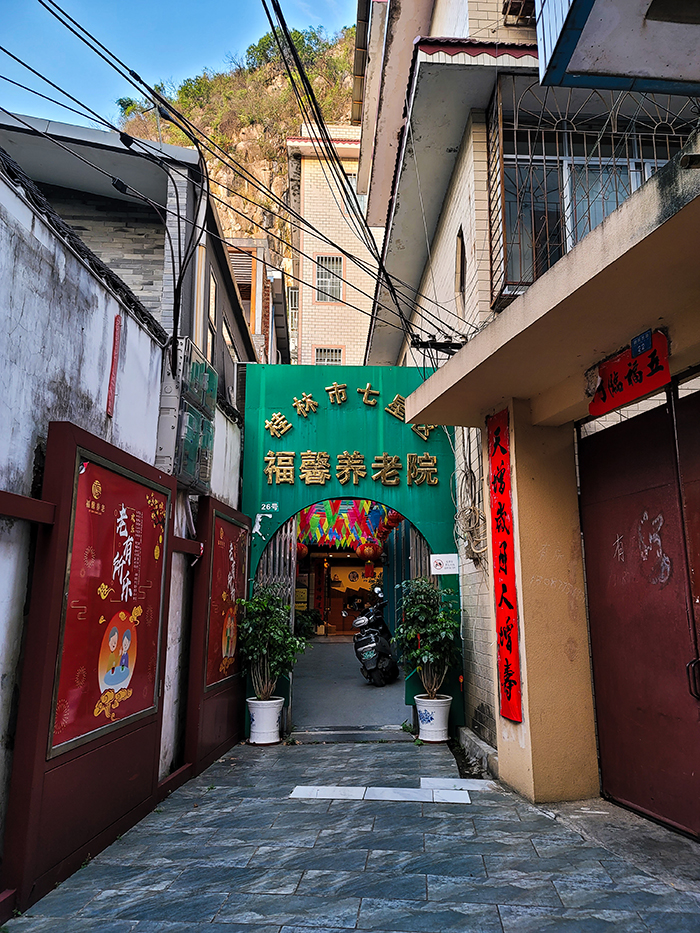
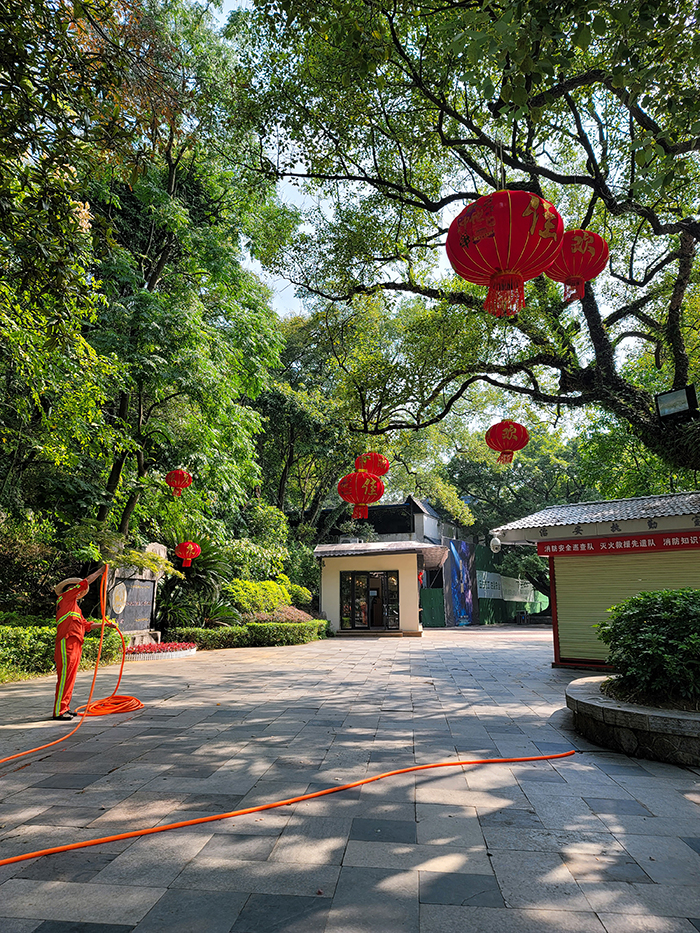
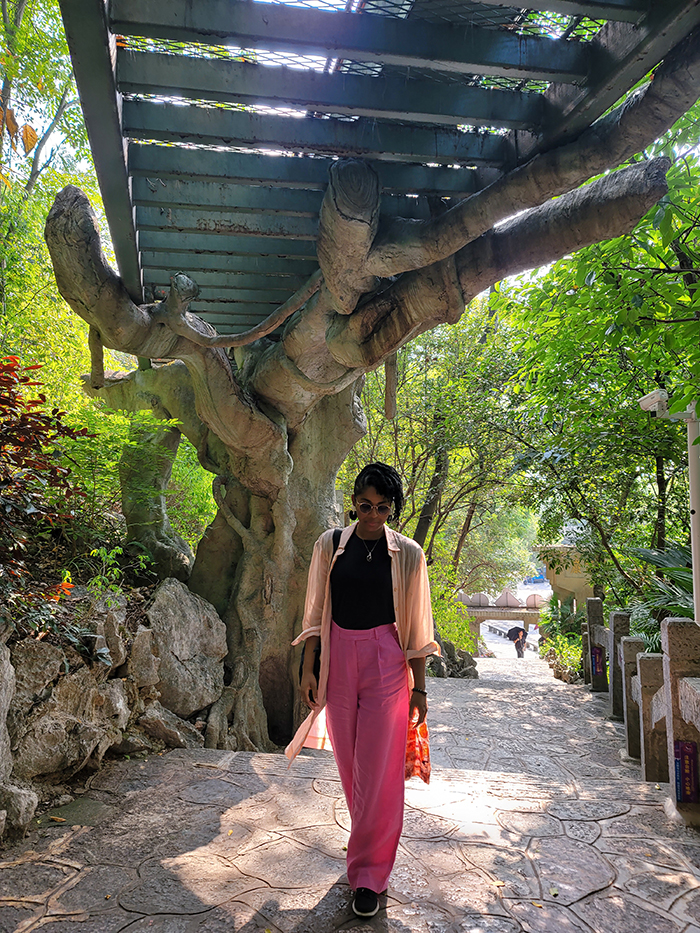
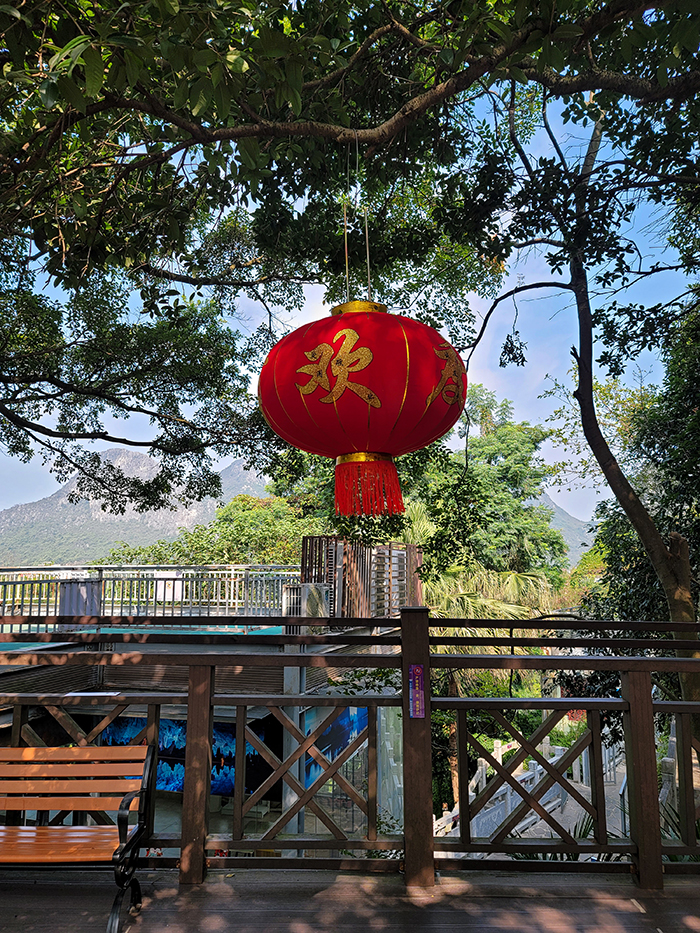
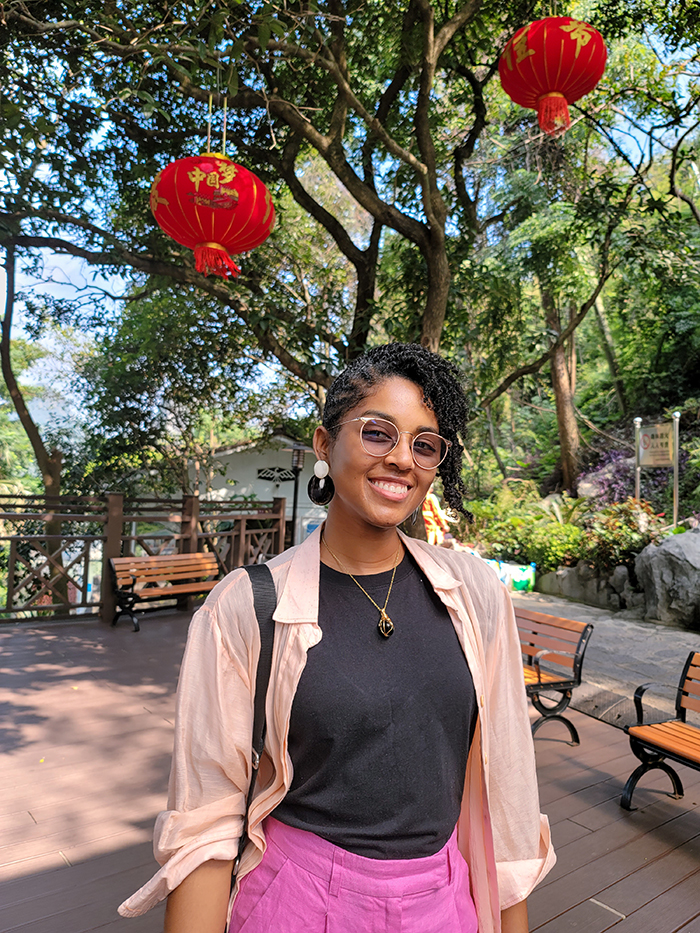
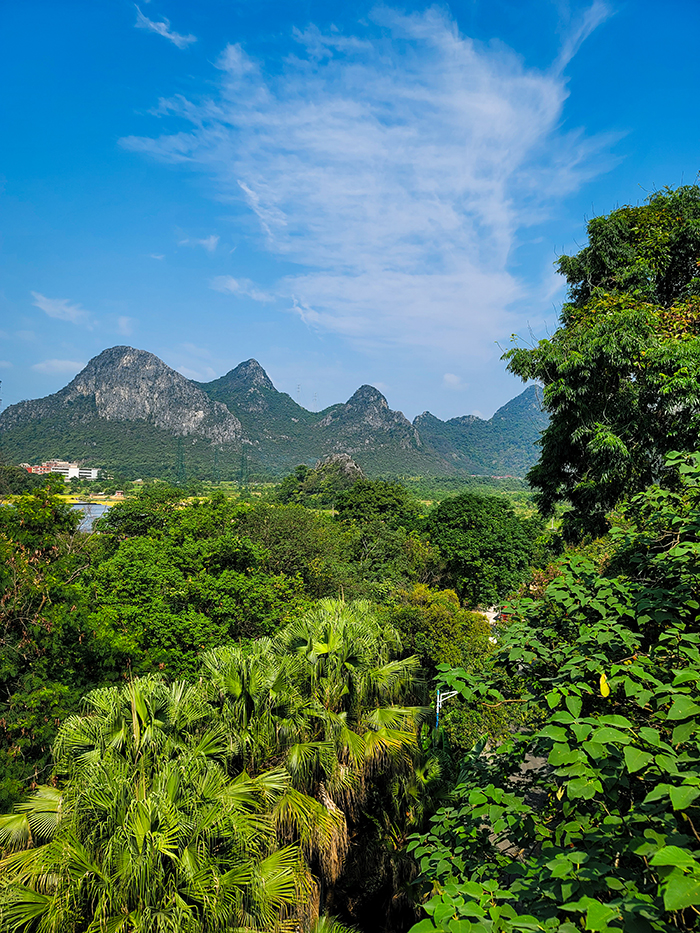
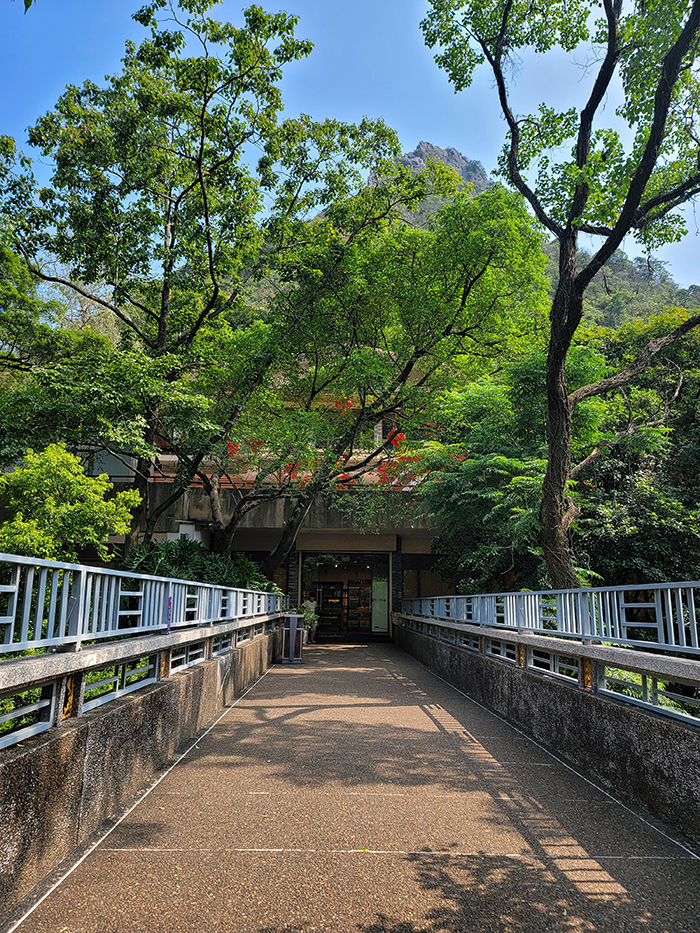
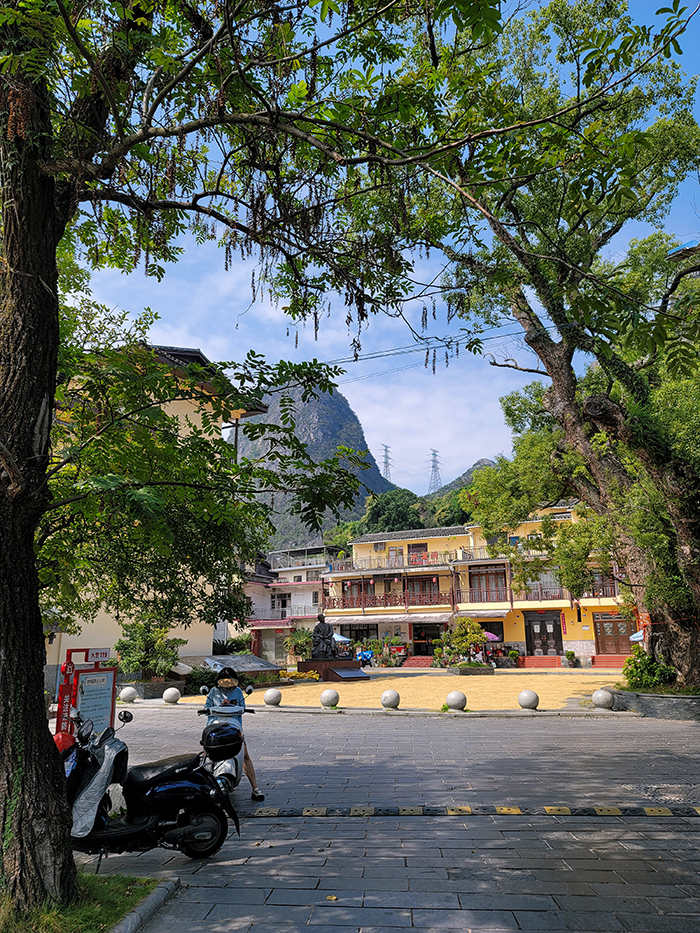
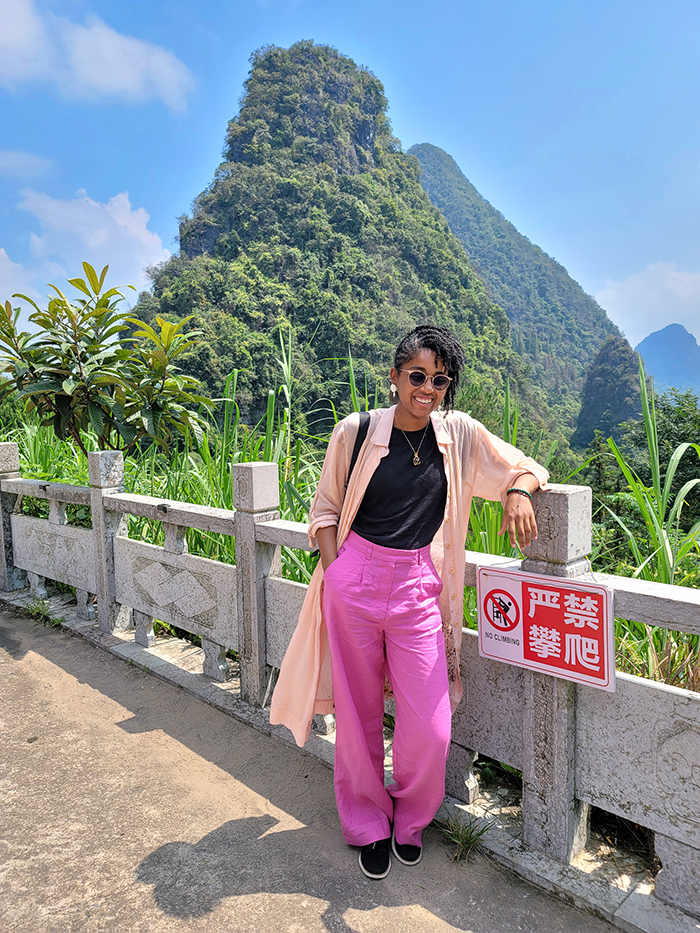
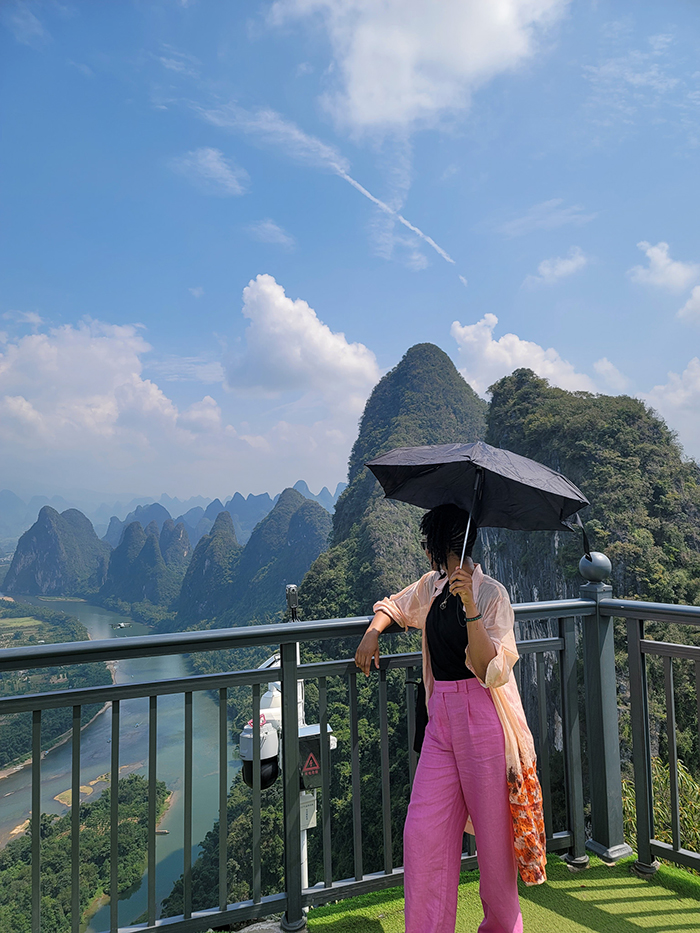
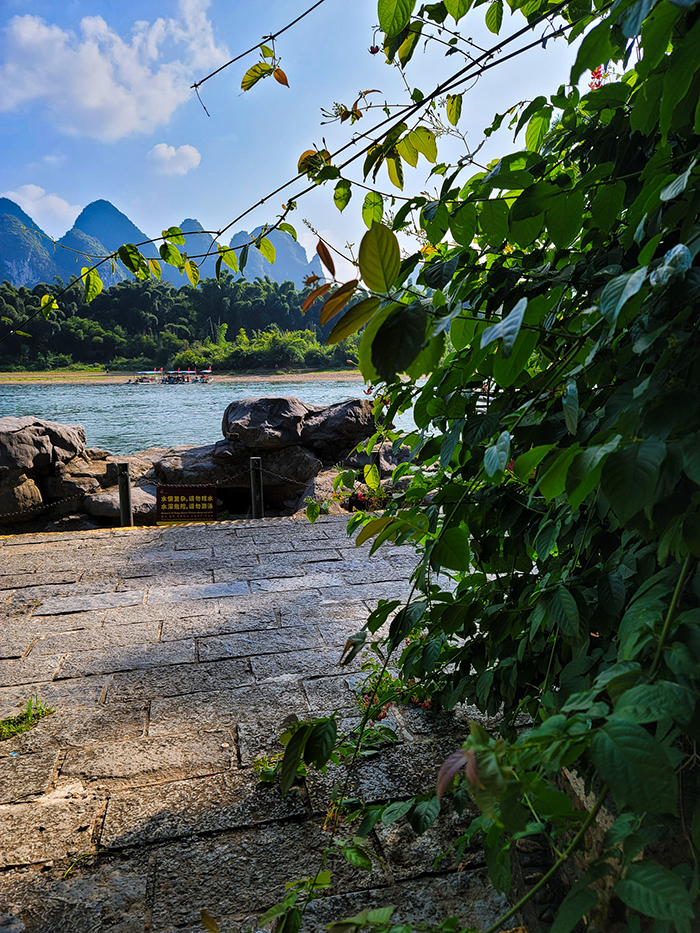
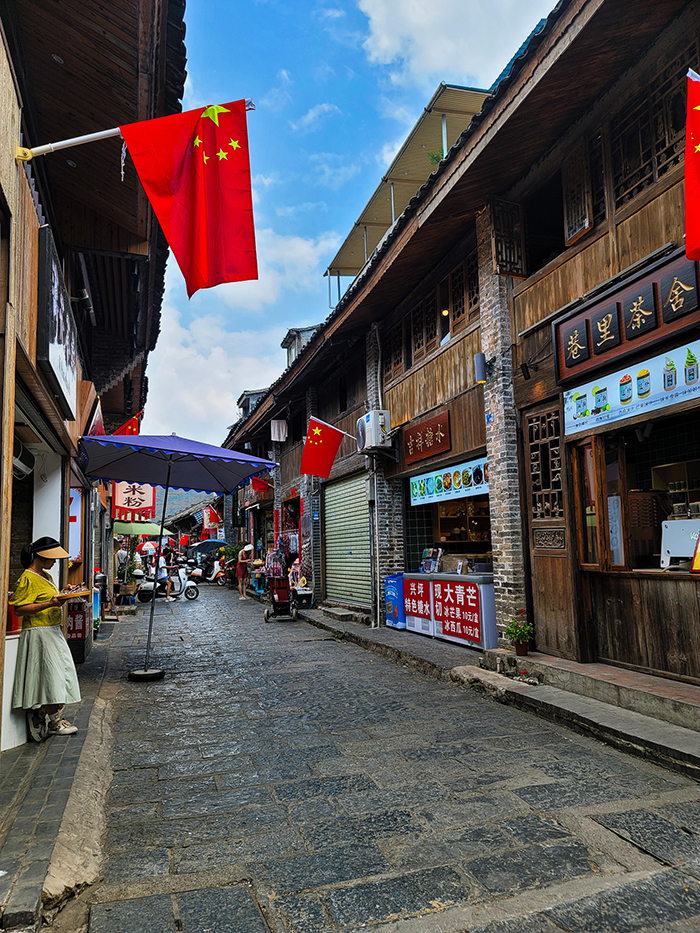
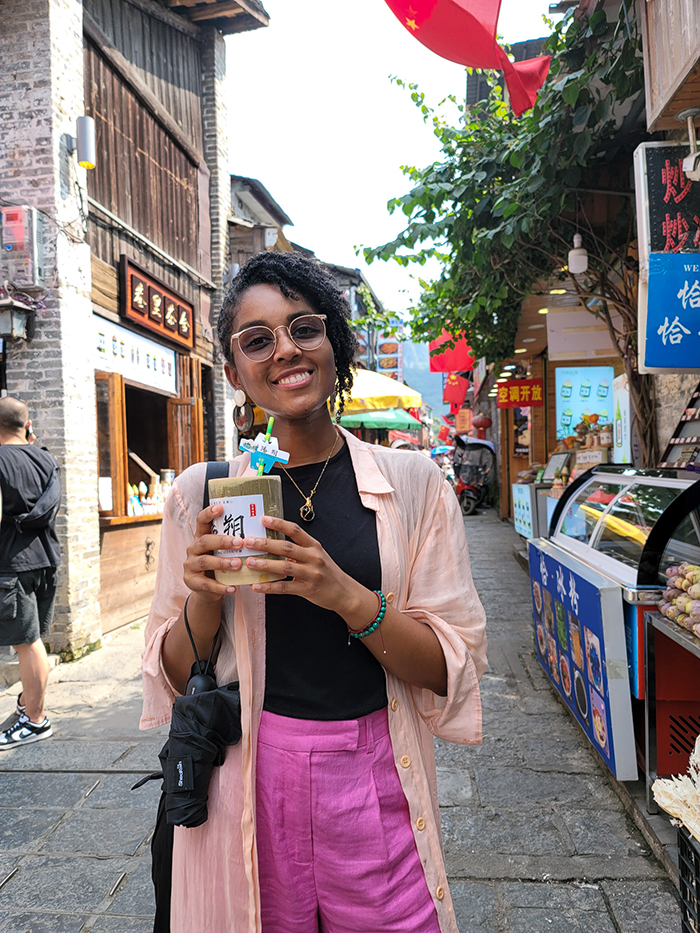
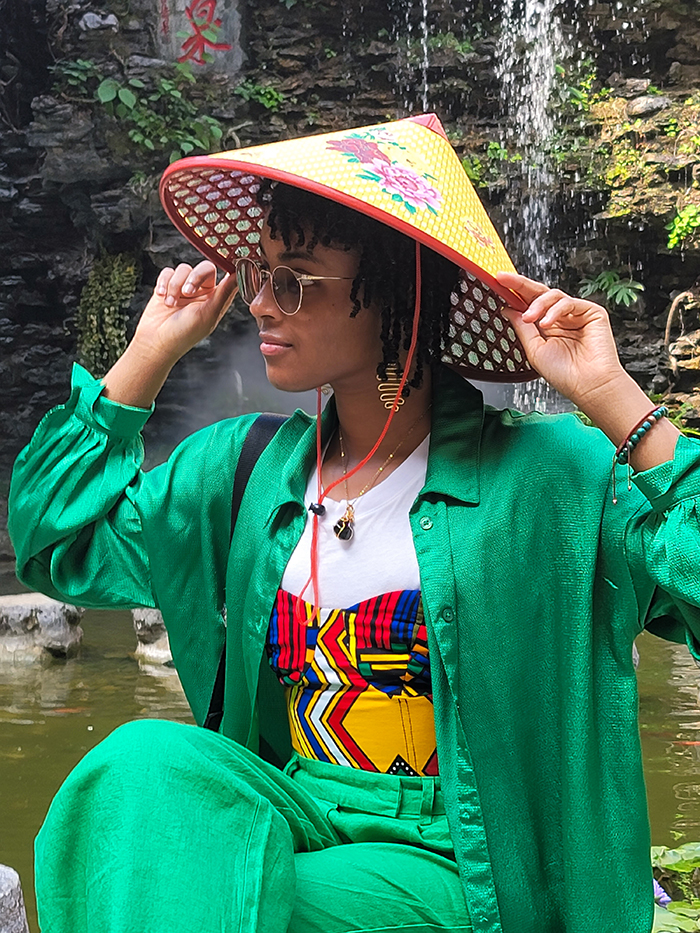
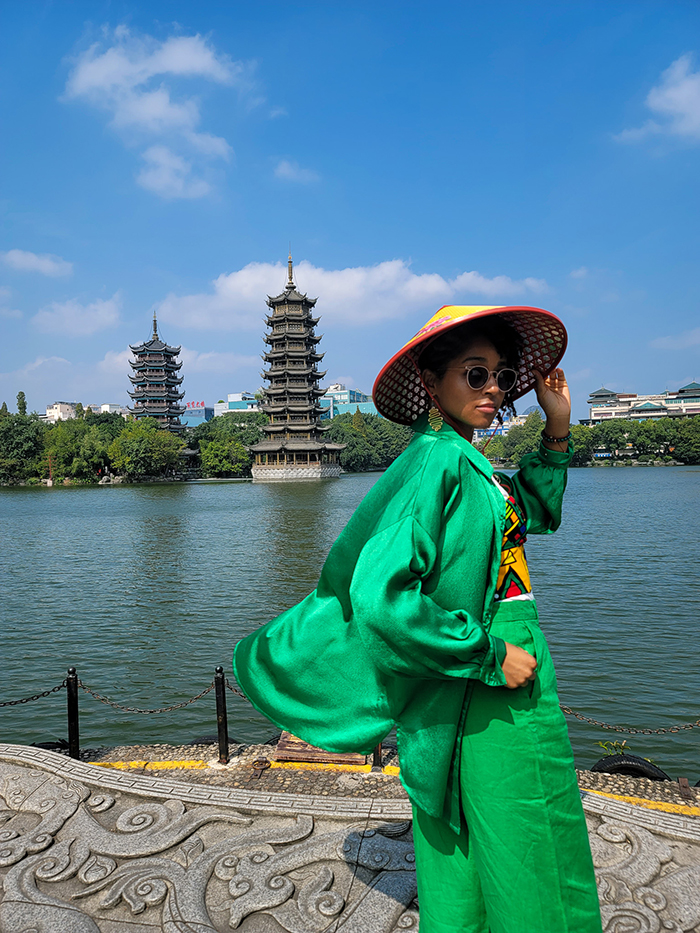
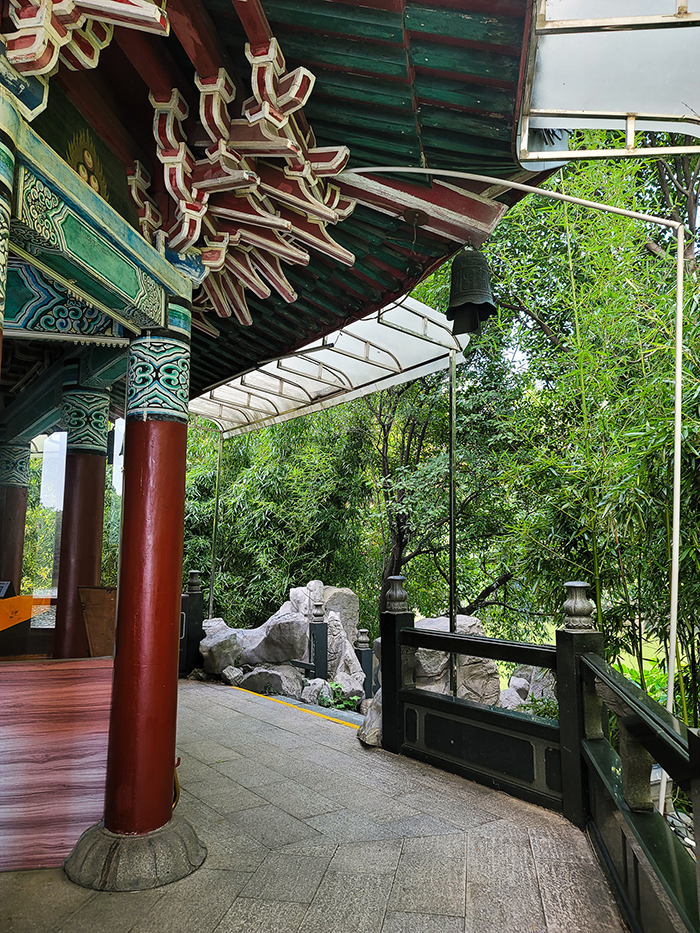
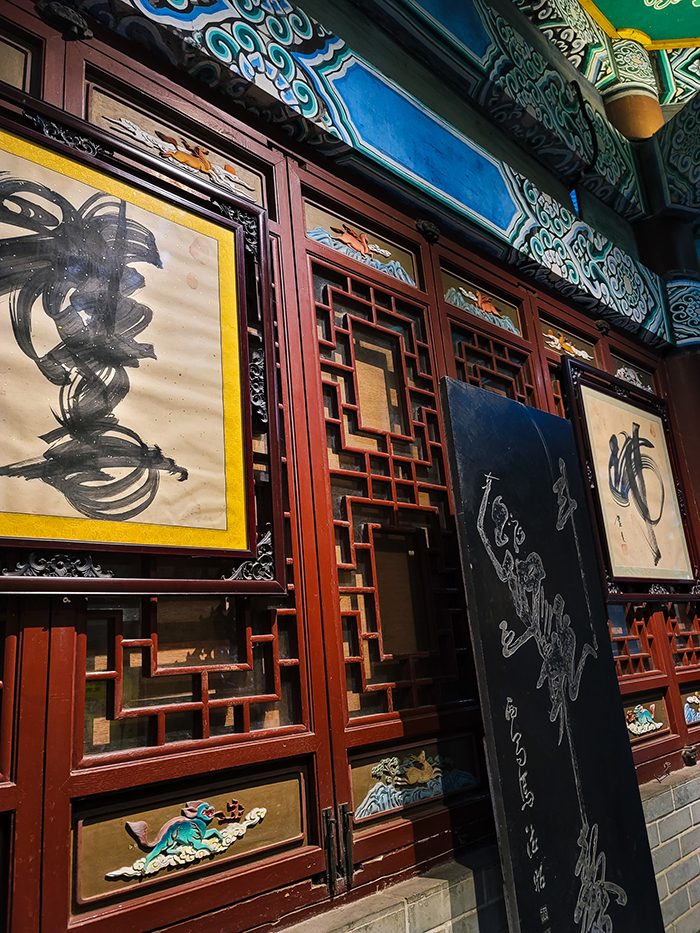
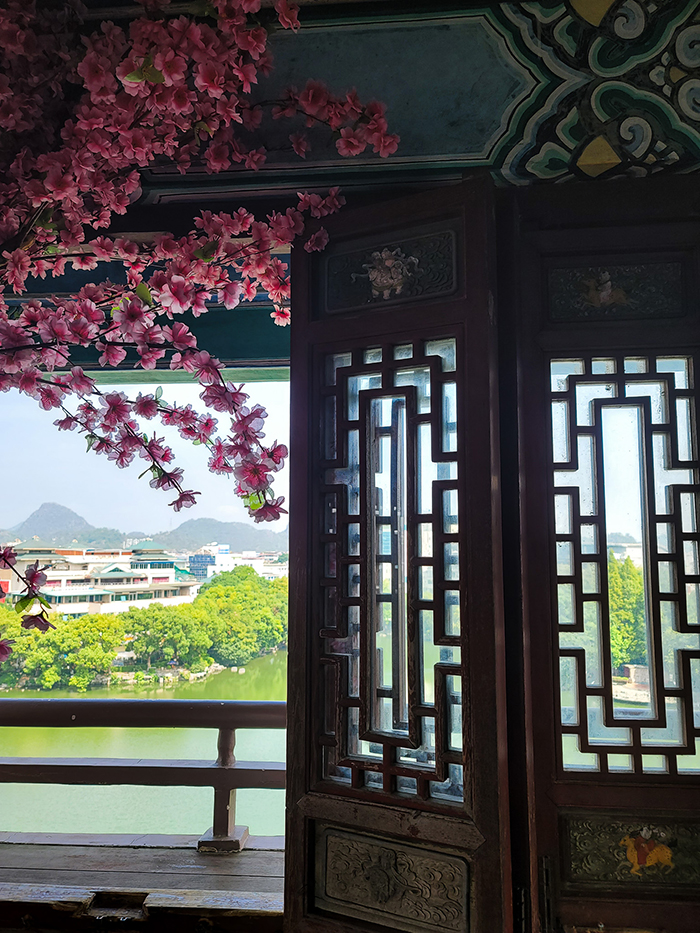
    Next, we took a trip to Guilin.
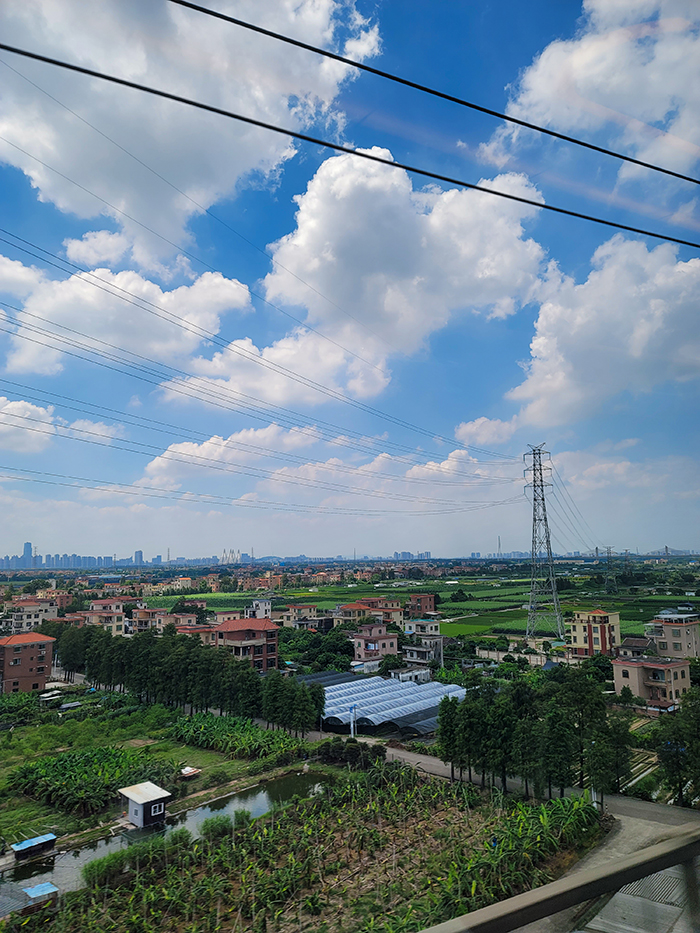
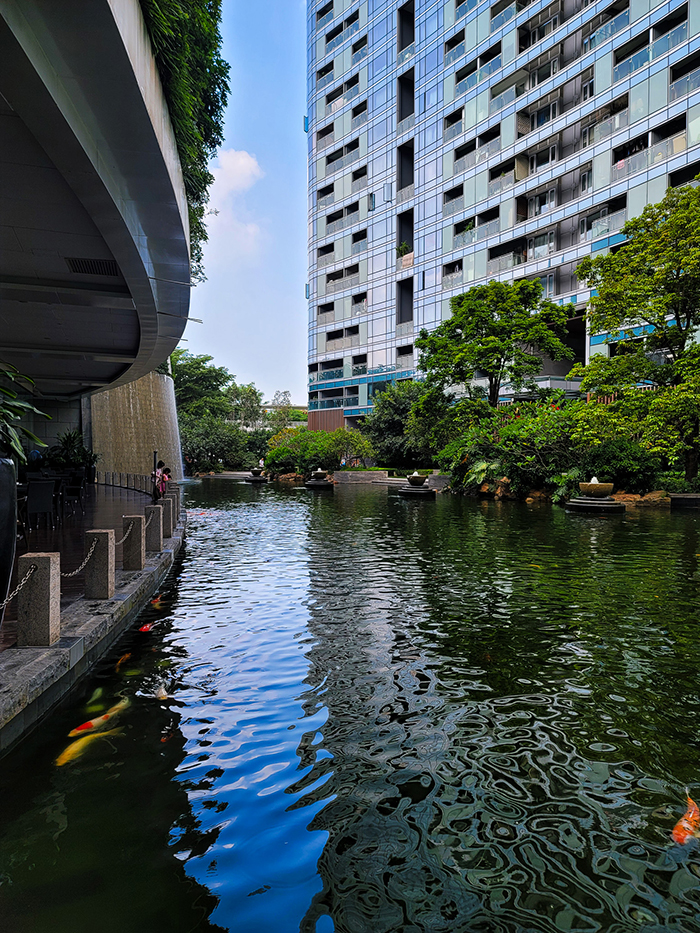
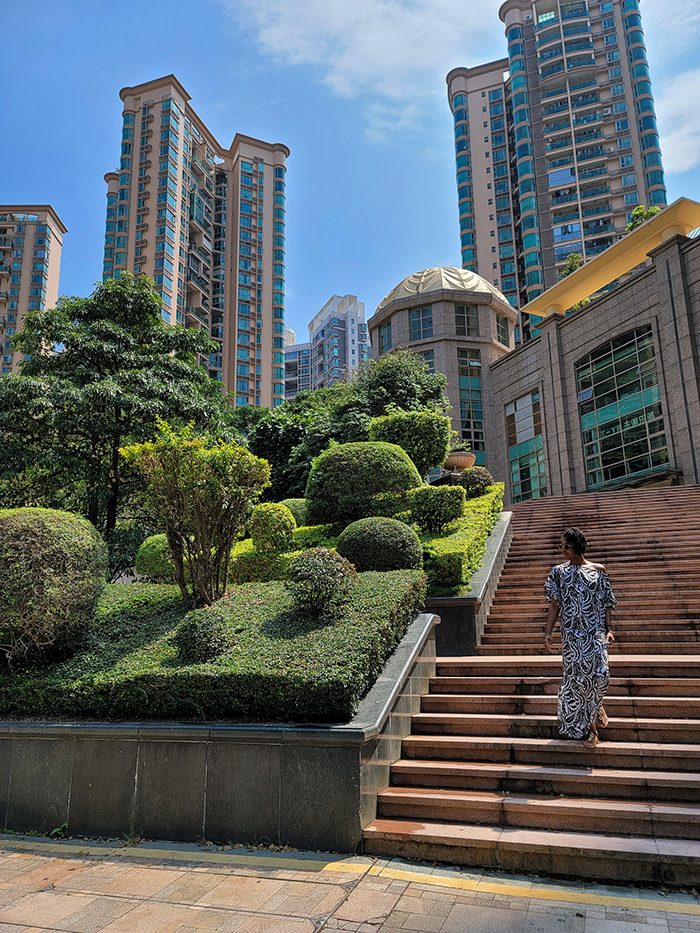
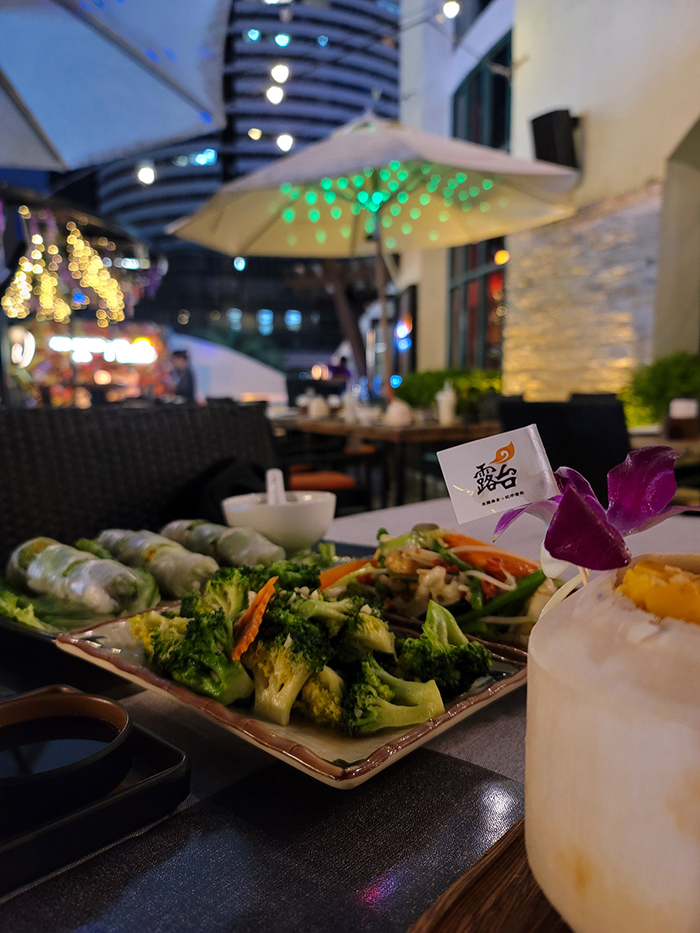
    Now, back in Shenzhen.
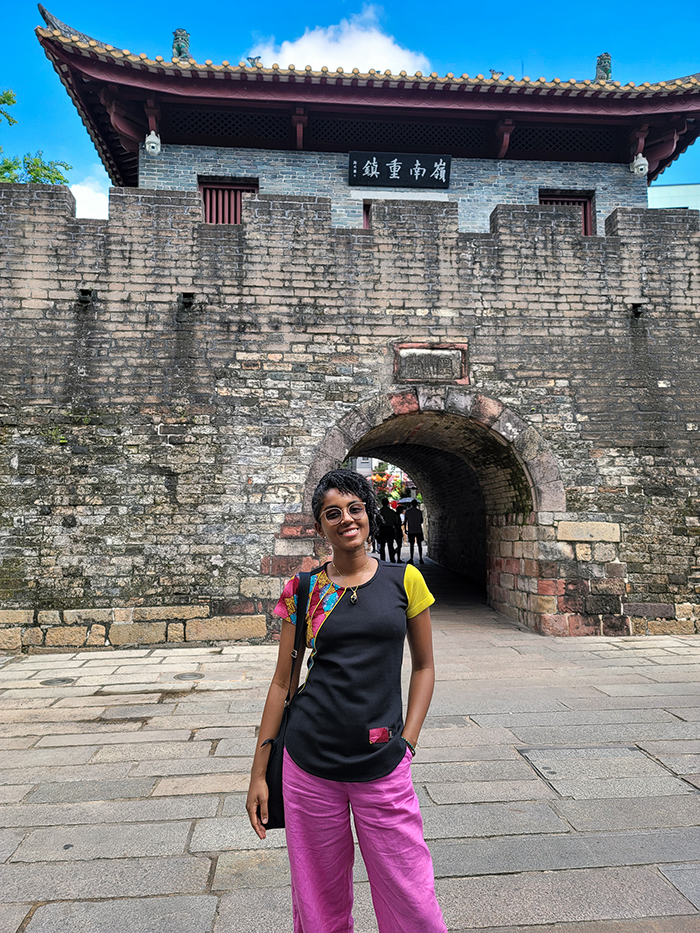
    Overall, I really enjoyed my trip. Thanks to this experience, I am still reflecting on a few things. May I share them with you?

    When People Can Tell Their Own Story

    I loved how history was documented and showcased in Shenzhen. Every part of their museums, parks, and exhibits are very intentional in maintaining the narrative they want for their people. History, traditions, and stories are beautifully illustrated and celebrated in a variety of story methods. Available all year round for all ages. The majority of the guests in these spaces were Chinese. As in, the focus on this documentation and showcasing is not for the foreign gaze or foreign understanding. Instead, I got the sense that all of this effort was for their own people. To reiterate to themselves what they are capable of, where they come from, what there values are, and where they are headed. I found this to be very inspiring. Like I said in the video, China and Chinese people have a lot to be proud of and excited for. The sleeping dragon is way ahead of the rest of us (if that is appropriate to say, respectfully).

    This also got me thinking of how we can use similar methods to document and showcase African history, Ghana history, and Black global history. At the time of writing this, I live in Accra, Ghana. So, my examples are focused on this location to start.

    Right now, Africa is navigating an era in presenting itself as a tourist destination, investment destination, and repatriation destination. In Ghana, that navigation has continued through the initiatives Year of Return and Beyond the Return. The layers of success and challenges that these initiatives faced and continue to maintain prove there is a demand for this. So, we have a lot of room to take this further. I don’t mean copy what I saw in Shenzhen. Rather, take note of how much more we can do.
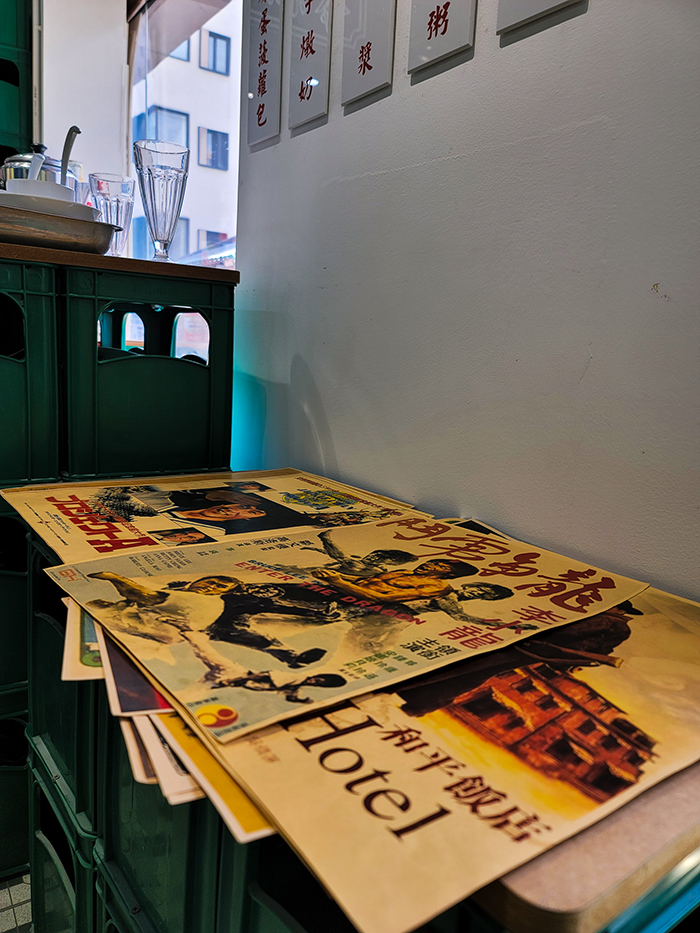
    For example, the exhibits I shared with you in the video show four types of methods. First, the room with simulation projection that make the guests feel as if they are walking through an ancient city. Second, the exhibit with mannequins reenacting ceremonies, traditions, and milestones. Third, the amusement park with replicas of historical cites and people dressed to represent different regions. Fourth, the talent park that celebrates talent from the city and reiterates the story and purpose behind building the city. What would something like this look like for Accra?

    Possibly a room with a simulation projection that shows what Accra was like before it was named Accra and takes you through how the city changed overtime. Documenting and showcasing the tribes indigenous to this regions, the migration that took place, the ceremonies, the traditions, the colonizers influences, the development, the gentrification, the milestones, etc.

    Possibly an exhibit with mannequins reenacting the ceremonies and traditions that represent Accra. This actually reminds me of a play I saw last year at the National Theater in Accra. At the moment I forget the name, but the plot was Anansi as a person traveled to every region of Ghana tricking everyone. In the play, Accra was represented with a boxing match, where Anansi again tricked everyone to win. It was a beautiful display of Ghana’s culture. Could we translate that into an exhibit that is available all year? And add a live show within the exhibit every week? Or everyday as demand grows.

    Possibly a talent park or garden that showcases people who contributed to Ghana in all sectors and industries. This reminds me of my visit to the newly renovated Kwame Nkrumah museum. Part of the exhibit there lists all the initiatives, industries, and infrastructure he created during his administration. To give that exhibit more substance…hear me out. Each of those initiatives could include showcasing the people who were involved, the story behind how they got it up and running, and who was responsible for shutting it down and why. In addition, this possible talent park can include statues and plaques reiterating what Ghanaians are capable of, what their values are, and where they are headed, including ancient history and modern history.

    I know the amusement park might be a little too far ahead to think of right now, but we should still see it as a possibility.

    Again, the intention behind all of these is for the enjoyment and enlightenment for domestic tourism as well as international tourism. Things like this should be available throughout the year for local school field trips, national holidays, etc. This is for Ghanaians to be the expert on their own history and values. This is for those who choose to live in Ghana to be aware of history and values. This is for intercontinental and international tourists to acknowledge history and values. Thus, the “Ghana narrative” is solid.

    These are only suggestions. Please adapt and implement what resonates with you.

    Where In This Galaxy Can Others Have A Futuristic City Of Their Own

    As I mentioned in the video, Shenzhen is about 10 years old. This is a very young city. This is part of why I felt like I had traveled to the future. It was really inspiring to witness how a city can be built to accommodate and account for everyones needs. The level of convenience, security, residential options, commercial options, job opportunities, logistics, transportation, etc. was very impressive.

    Actually, this also reminded me of the book The City We Became by N. K. Jemisin. In that book, cities are like living organisms that have an avatar to represent them as they develop. New York City has a new avatar, and all the avatars that represent the different boroughs must help the new one fight against the virus that wants to stop the city from developing. It was a really clever and creative story. If you like fantasy like that, I recommend it. She is one of my favorite authors. Ok, I digress. Keep focused.

    Experiencing such a futuristic city got me thinking of where in this galaxy can other people have such a thing of their own. My frame of reference is Afrofuturism, but I also would love to see all groups get to experience this for themselves too. What would a new city look like in Africa, South America, the Middle East, other parts of Asia, the Caribbean, etc? A new city that genuinely serves the needs of the people and is culturally in-tune.

    For Black people, I’m not sure if we have that yet. There are populations of Black people living comfortably all over the world, but still balancing nuances that do not always serve them. For a long time, we have been drumming the beat that Africa should be where those new cities should be. Are we truly developing in that direction?

    In Ghana’s case, there is room to build a new city. I’m not sure if you can do that with Accra, since you continue to develop without city-planning or zoning. This would also cause too much displacement. For example, Shenzhen was a fishing town. They moved the people who were living there to temporary accommodations and provided incentives to build the new city together. Could we do that in another part of Ghana? I know I am not the first to think this. I am sure others have already designed the blueprint for this. But this new city needs to be a complete city. Not only a residential area for a select few who can afford it. Not only an isolated structure with no good road to get to it. Instead, it would be a city that has no slum, because everyone is served and accounted for. It would be a city with trees that are protected. It would be a city that is clean and safe. It would be a city with maximum wages, because the minimum wage system is obviously disrespectful. Can you imagine how cool that would be?

    Then we can make this metro idea a reality. I came across this on Twitter and thought it was fabulous.

    Again, these are suggestions. The way Shenzhen is set up, their government views these types of things as a priority. In Ghana, there is an interesting dynamic with the government sector, private sector, extractive sector, and exploitive sector. I say this respectfully.

    Why Africa-China Relations Need To Develop Beyond Agreements And Propaganda

    Finally, in the video I shared examples of the gap I am seeing with the potential within Africa-China relations winning. First, with my very unpleasant experience with my passengers on my Ethiopian Airlines flight from Accra to Addis Abba to Shanghai. Second, with the Galamsey issue in Ghana. With both, I note a stark difference between the people’s behavior and construction methods.

    I feel there are possibilities to create a win-win situation for all involved in this. For instance, the way China maintains its autonomy and holds itself as a priority in international interactions is something Ghana and other African countries could implement and benefit from. I’m not going to get too much into what type of government you should follow, but looking at what I experienced on this trip, it seems like you need more than 4 years to get real things done. But that is neither here, nor there, nor everywhere, nor anywhere, nor all at once.

    If you do not respect your own country or people, it can be difficult to insist others should do the opposite. It is not enough to point figures at foreigners or push Western anti-China propaganda about this. The issues that Chinese traders and miners face and facilitate in Ghana could be prevented. From undercutting the fish and goods market to destroying the environment through gold mining on one side to being scammed and harmed on the other side. Is it surprising that some Ghanaians view all Chinese people in their country through the prism of illegal activities, mafia affiliations, and the “new colonization”? I’m not endorsing any of these perspectives and I do not mean any harm. We all deserve better.

    I believe the way you do anything is the way you do everything. Because the way you do everything is the way you do anything. From what I am seeing, within Africa-China relations, China is very intentional about what their role is. Same in the way they are very intentional about everything. It is very important for African countries to get intentional with their role. This can be equally beneficial. From my perspective, a thriving African country is good business for China. This has not been the case for Western relations with Africa. There are already examples of this with Chinese trade, distribution, and education in Ghana that has been good and beneficial. You already have a growing number of Ghanaians who are fluent in Mandarin, have lived or studied in China, and want to see Ghana do better. You already have Ghanaian banks setting up better systems to facilitate trade between Ghana and China. So, there is no excuse to continue destroying the environment for mining, disrespecting or harming people, or flooding markets with cheap goods. You are already being set up to win. Are you willing to be who you need to be to win? Like I said in the video, I hold both sides responsible for this solution.

    Thank you for taking the time to share in this experience with me and be open to my insight. I hope and trust you found this helpful and fun. As always, I love hearing from you. Let me know your thoughts in the comments. Let’s continue the conversation.

  • My 10 Days In Benin: West African Kizomba Festival, Cotonou, Ganvie, Ouidah, Graffiti Wall

    My 10 Days In Benin: West African Kizomba Festival, Cotonou, Ganvie, Ouidah, Graffiti Wall

    I’m in Benin! Bonjour! This was my first time and I have a fun adventure to share with you. I attended the West African Kizomba Festival, featuring dance workshops by instructors/ dancers from across West Africa, and dance parties. Also explored the cities Ouidah, Ganvie, and Cotonou, featuring slavery history, the biggest city on water in Africa, the Graffiti Wall, and sites/ information that were the direct inspiration for the movie The Woman King.

    If you know me, you know I have wanted to explore the world, including more of Africa. But, in particular, explore beyond tourism and incorporate more community and fun. I’m so grateful I got the chance to experience this in Benin. This is also my first time sharing with you one of my hobbies: social dancing. I started learning Kizomba and Salsa in Accra around September/ October 2021. Dance has always been a love of mine since I was a kid doing ballet, tap, jazz, folkloric, drill team, and Hip Hop. I had always wanted to learn ballroom dancing, but never had the chance. So, a number of my inner children and inner teens have been very happy with me being consistent with social dancing. Not only for the dancing but also for the community and the new fun experiences that come with it.

    ENG: For my French speakers, please turn on the captions for the video and select settings to translate to French. I made sure to include subtitles to make this video more accessible to you. (All my videos include subtitles like this, if you feel inspired to explore the other content)

    FR: Pour mes francophones, veuillez activer les sous-titres de la vidéo et sélectionner les paramètres à traduire en français. Je me suis assuré d’inclure des sous-titres pour rendre cette vidéo plus accessible pour vous. (Toutes mes vidéos incluent des sous-titres comme celui-ci, si vous vous sentez inspiré pour explorer l’autre content)

    As always, share with me in the comments so we can continue the conversation.

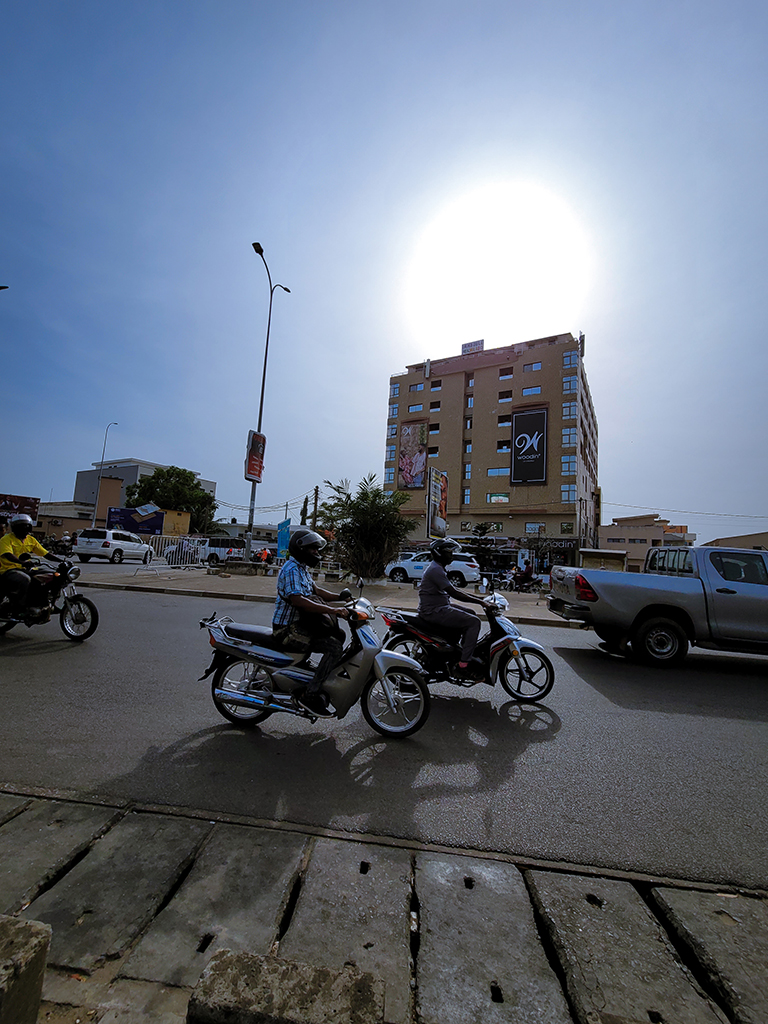
    Arriving in Cotonou

    As I mentioned in the video, I stayed at the Golden Tulip Diplomate in Cotonou. This hotel was very nice. Great location, good customer service, and a comfortable room.

    Exploring Ouidah

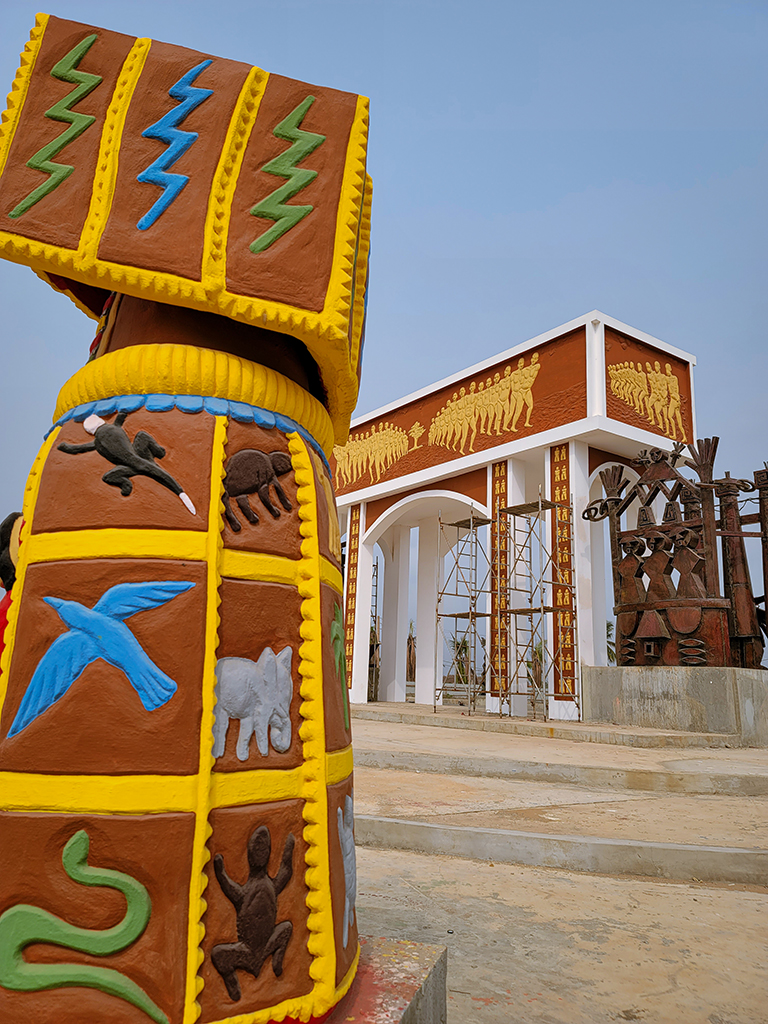
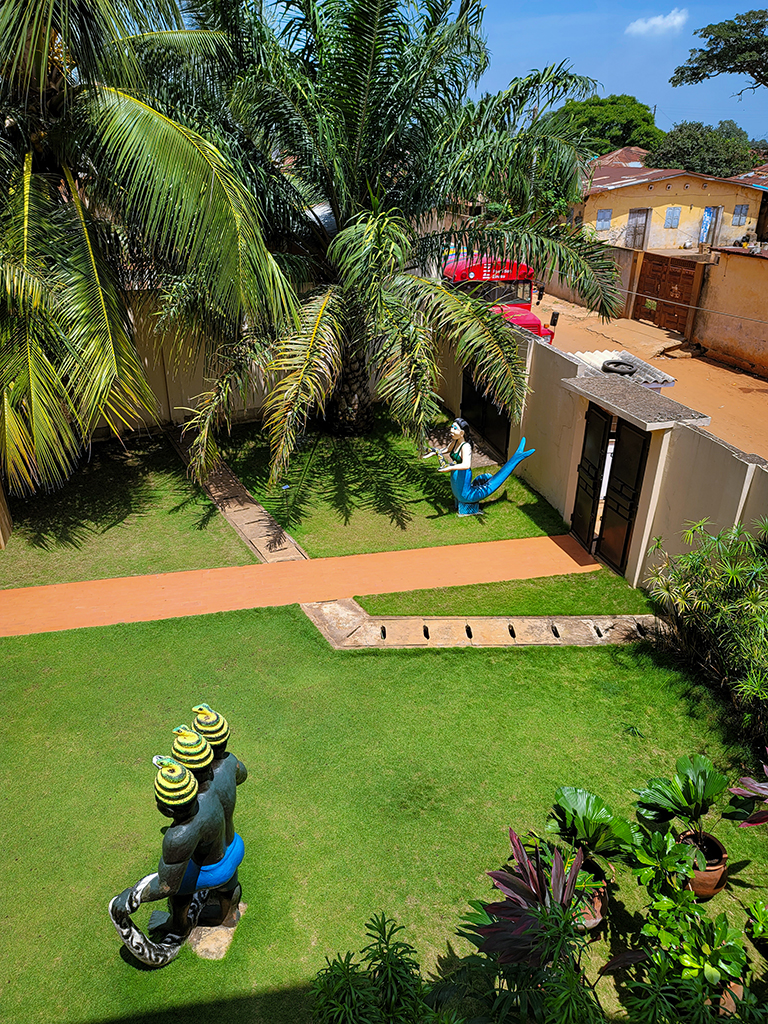
    Our first-day tour was in Ouidah. We visited different monuments paying tribute to the slave history that exists here.

    Next, we visited the Door Of No Return.

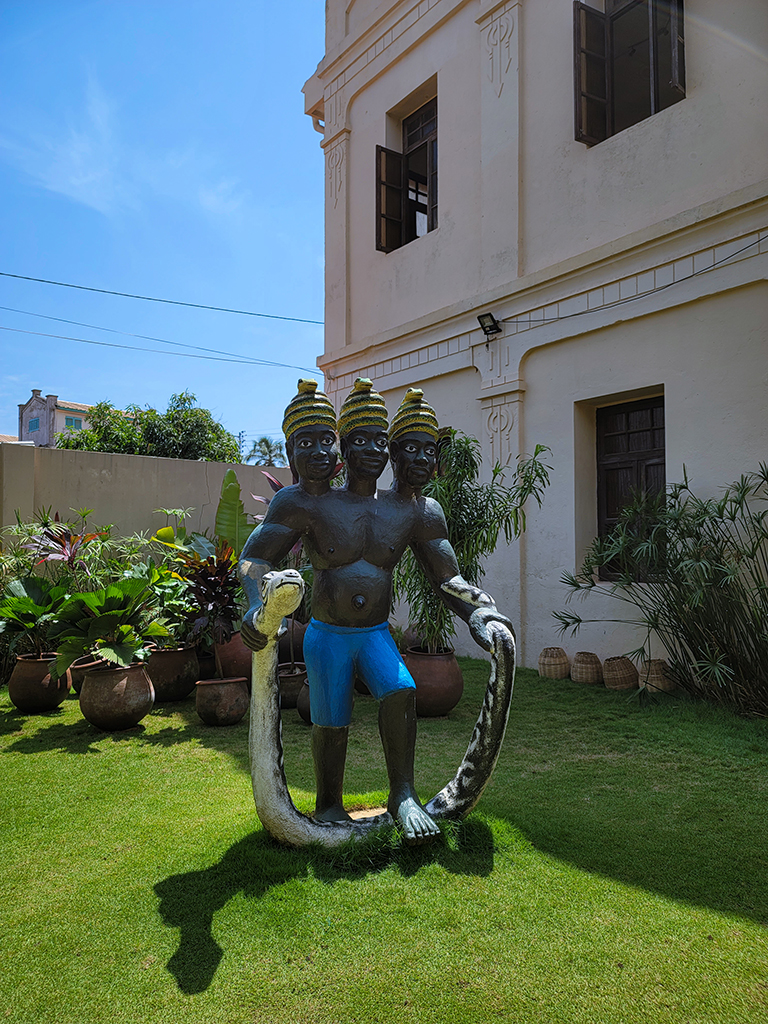
    We then visited a Python Temple to learn more about the voodoo religion and culture.

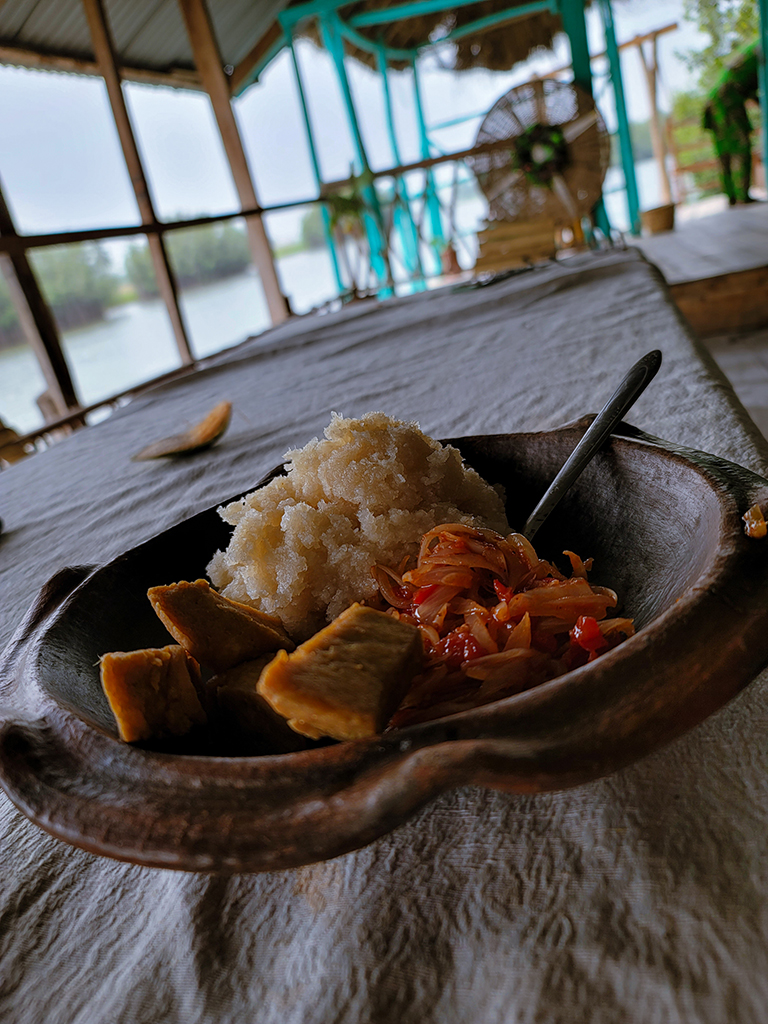
    Finally, we visited a wet area village known for fish to have lunch and take a clay bath.

    Exploring Ganvie

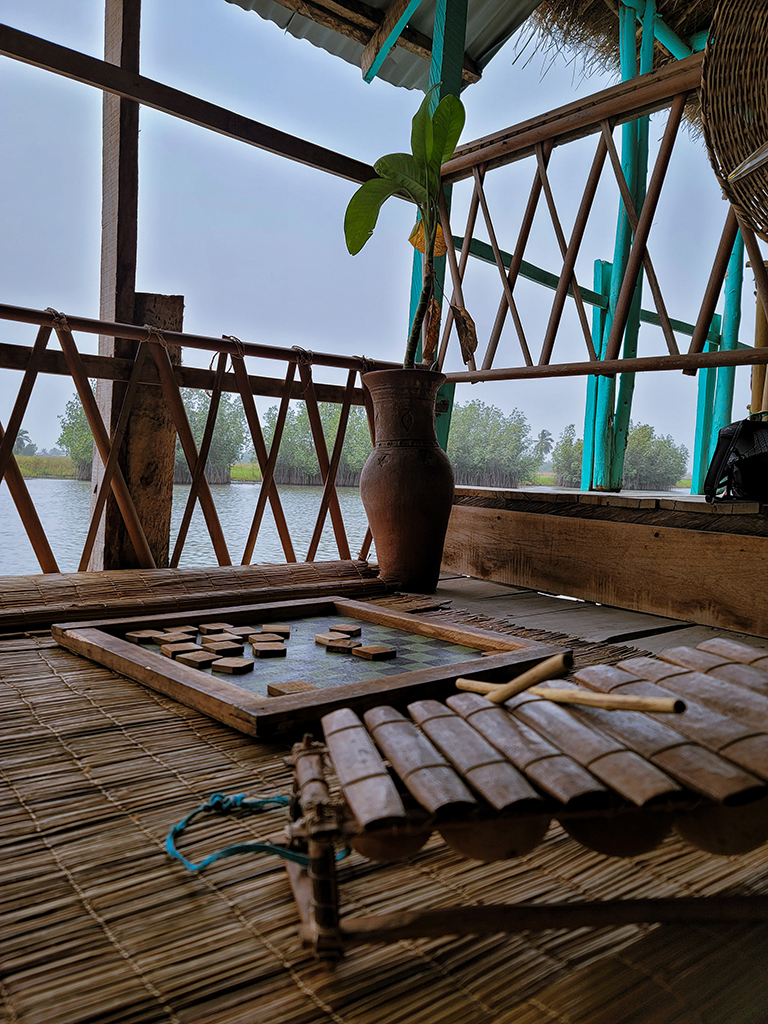
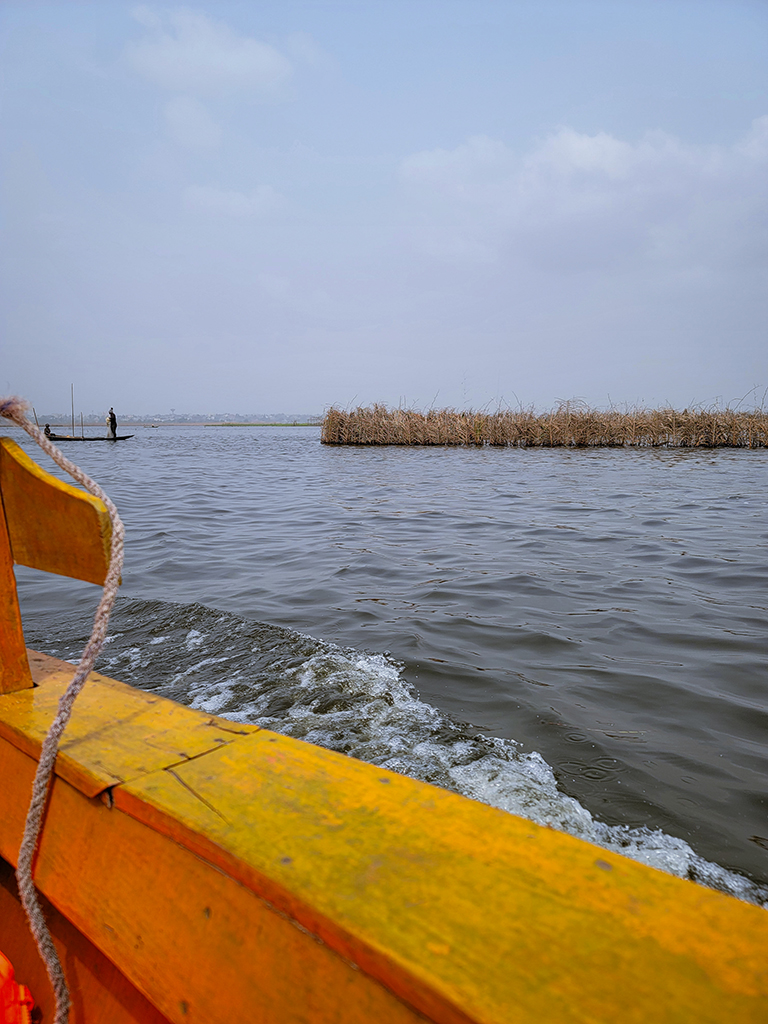
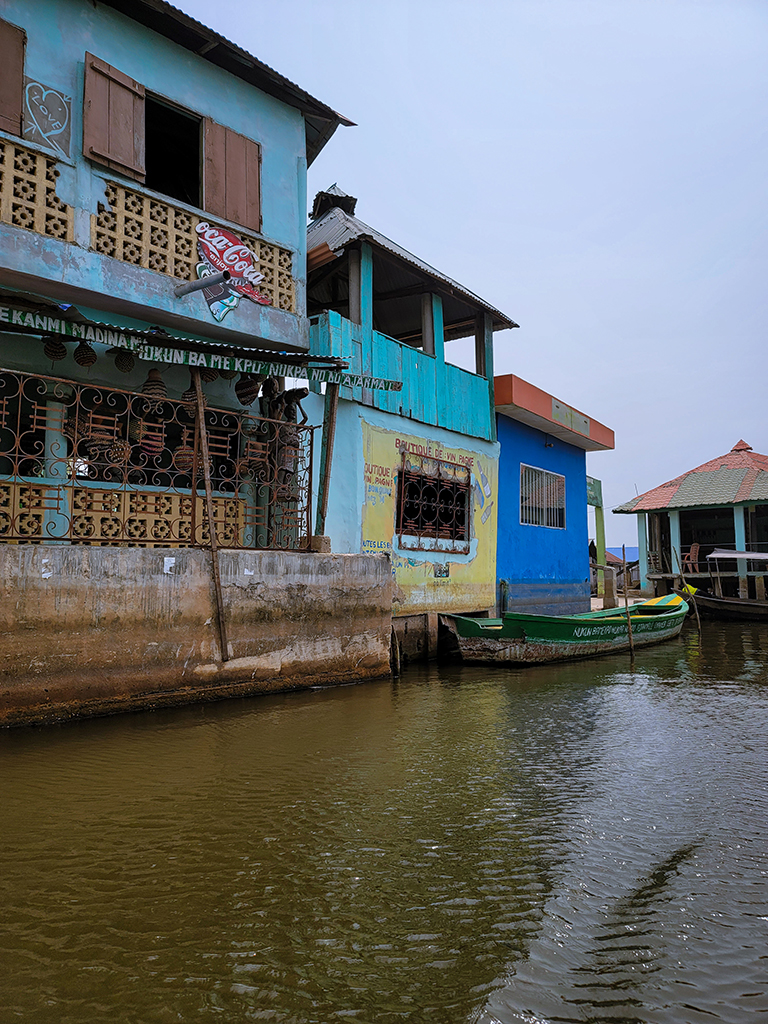
    Our second-day tour was in Ganvie. This is the largest lake village in Africa. We spent the whole day here floating through Ganvie, had lunch, and did water bikes.

    The West African Kizomba Festival

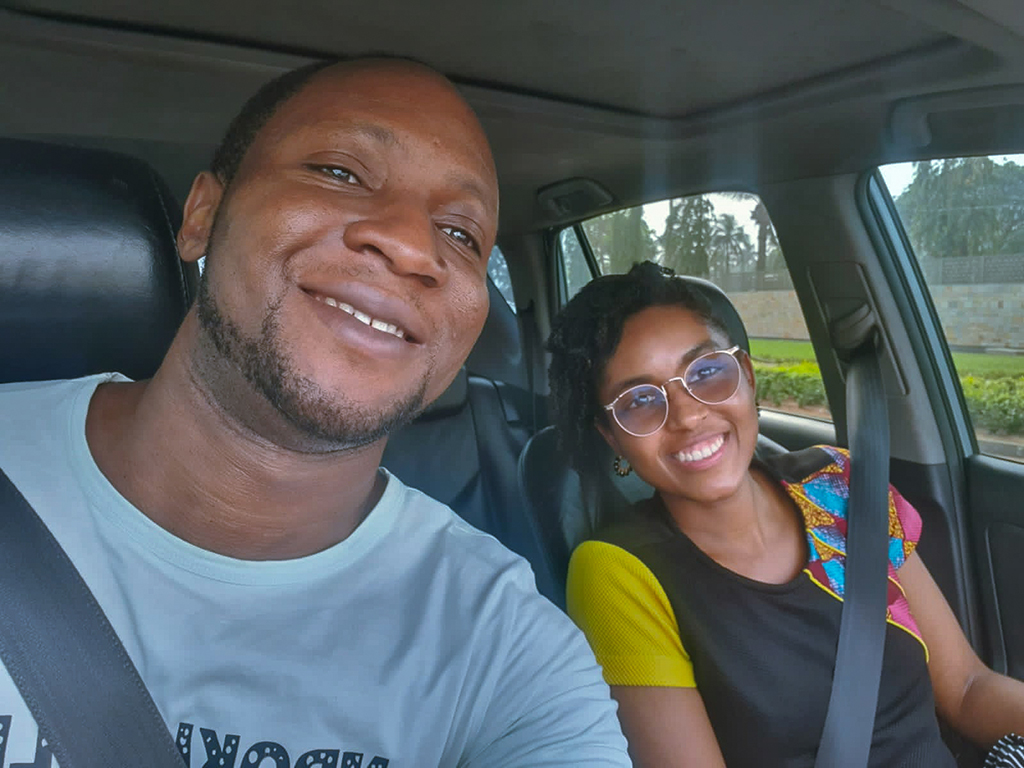
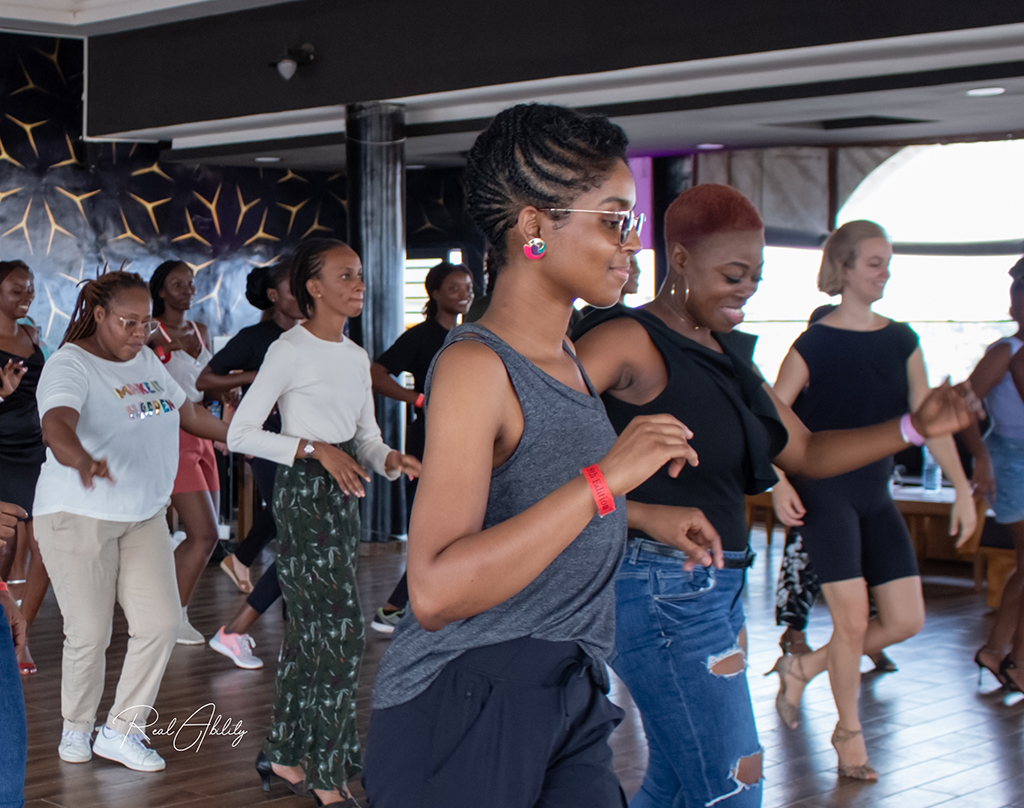
    The main reason I came to Benin was to attend the West African Kizomba Festival. The full program includes two days of tourism and three days of dance workshops, socials, and parties. This was the 8th year they hosted this program. Harold is the founder of the festival and the OG for Kizomba in Benin. He started dancing Kizomba in 2011. Basically, everyone who knows how to dance Kizomba in Benin was probably taught by Harold. He was a wonderful host. He is pictured below picking me up at the airport.

    I took more videos than photos of the festival to be able to share more of the ambiance and experience. Big thank you to Real Ability for taking these photos below at the workshops and socials.

    Exploring Cotonou

    After the festival, we did a little more exploring on our own.

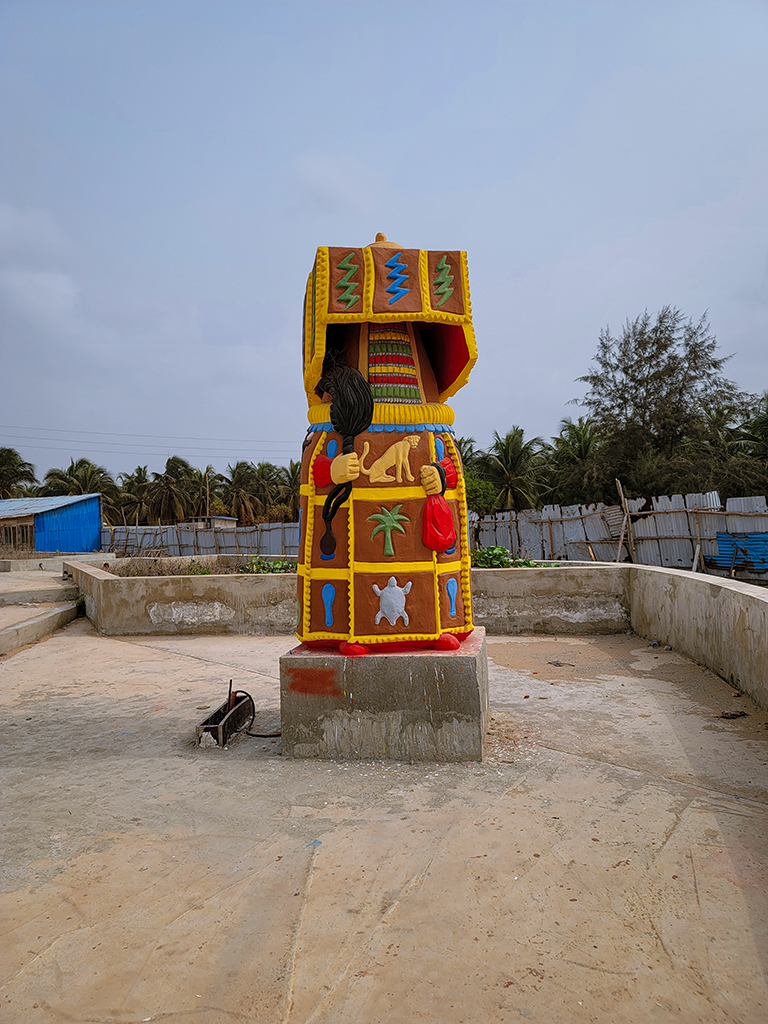
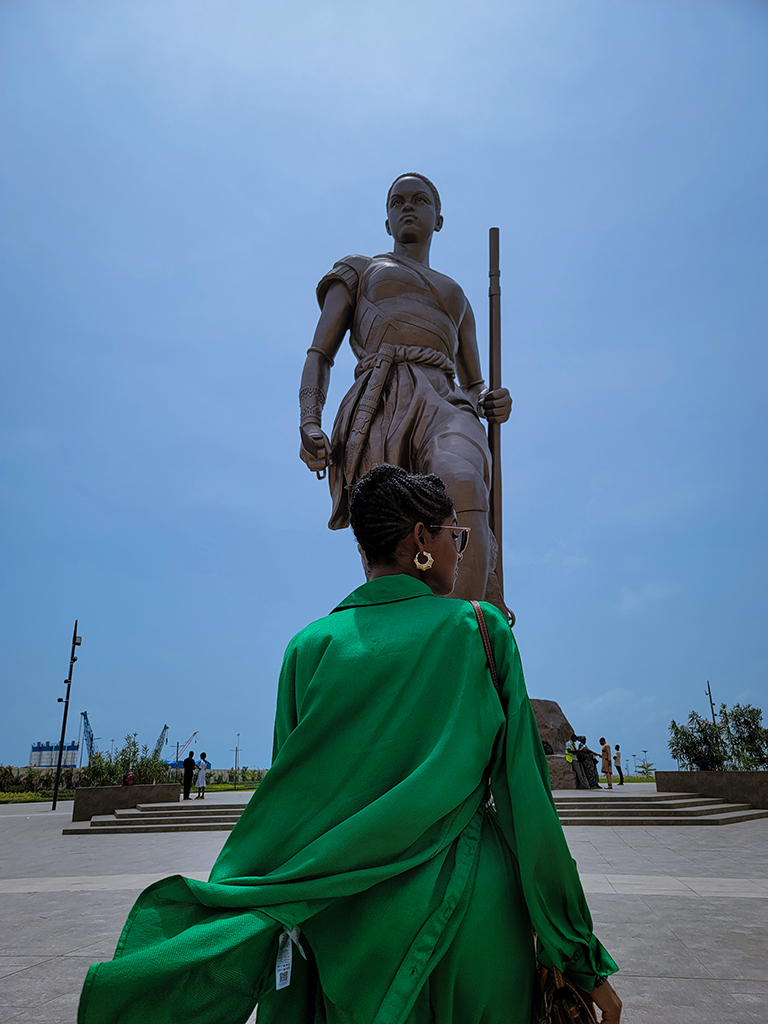
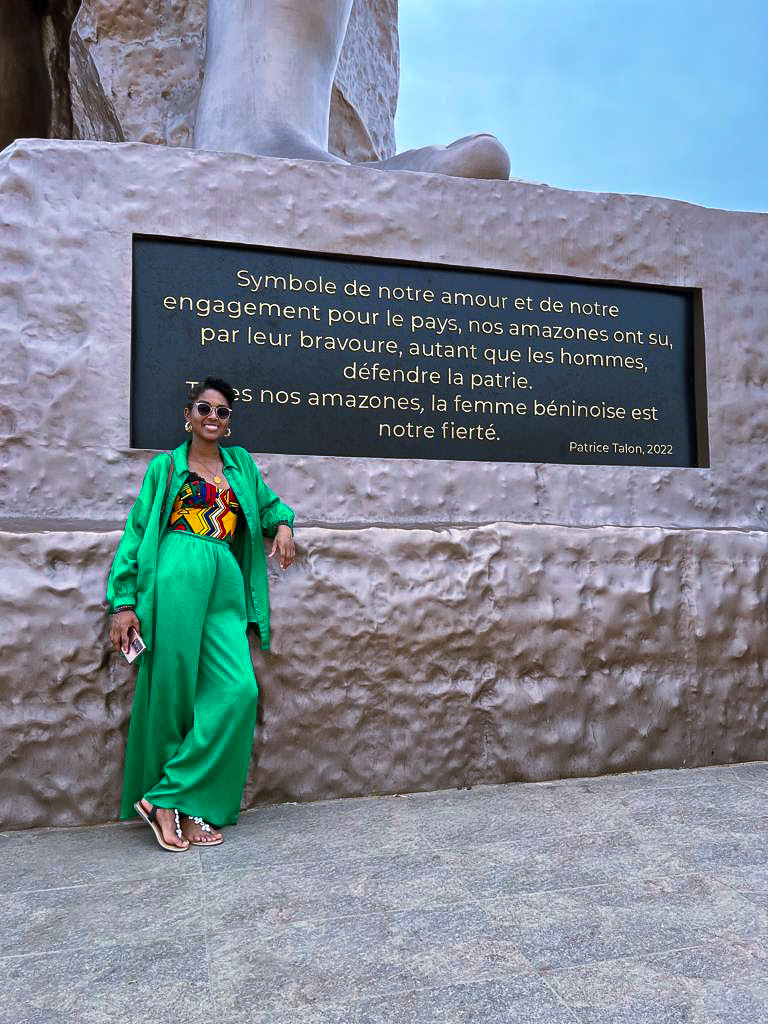
    The Amazon statue pays tribute to the Amazon warriors of the Dahomey tribe. This is the original Woman King.

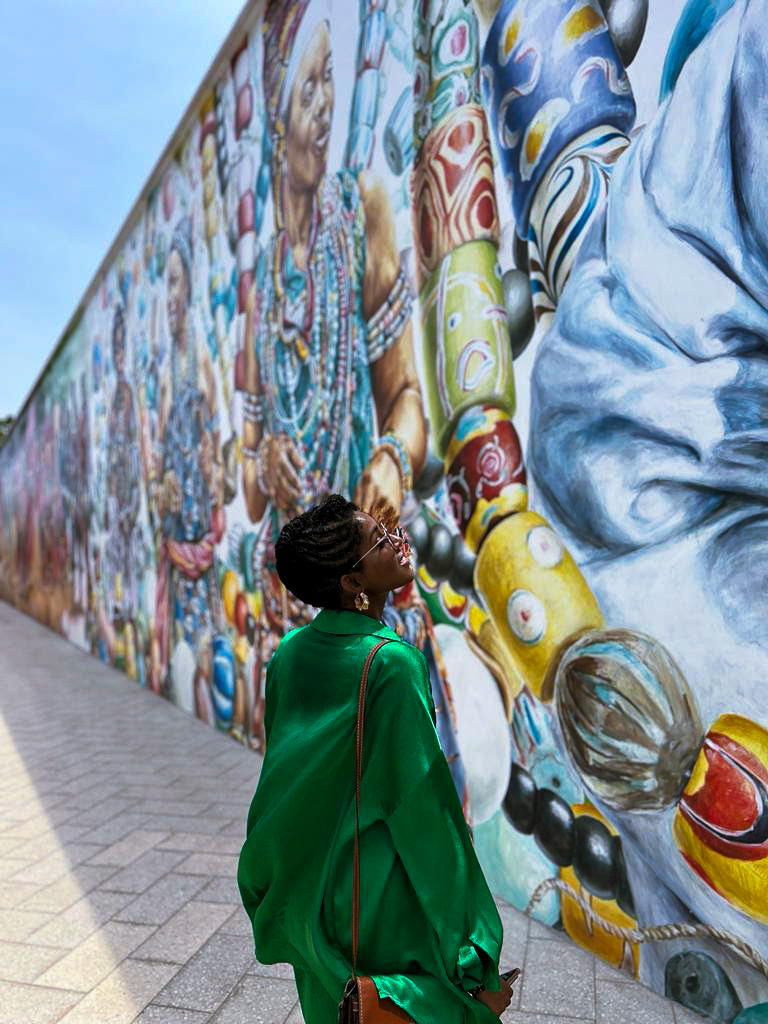
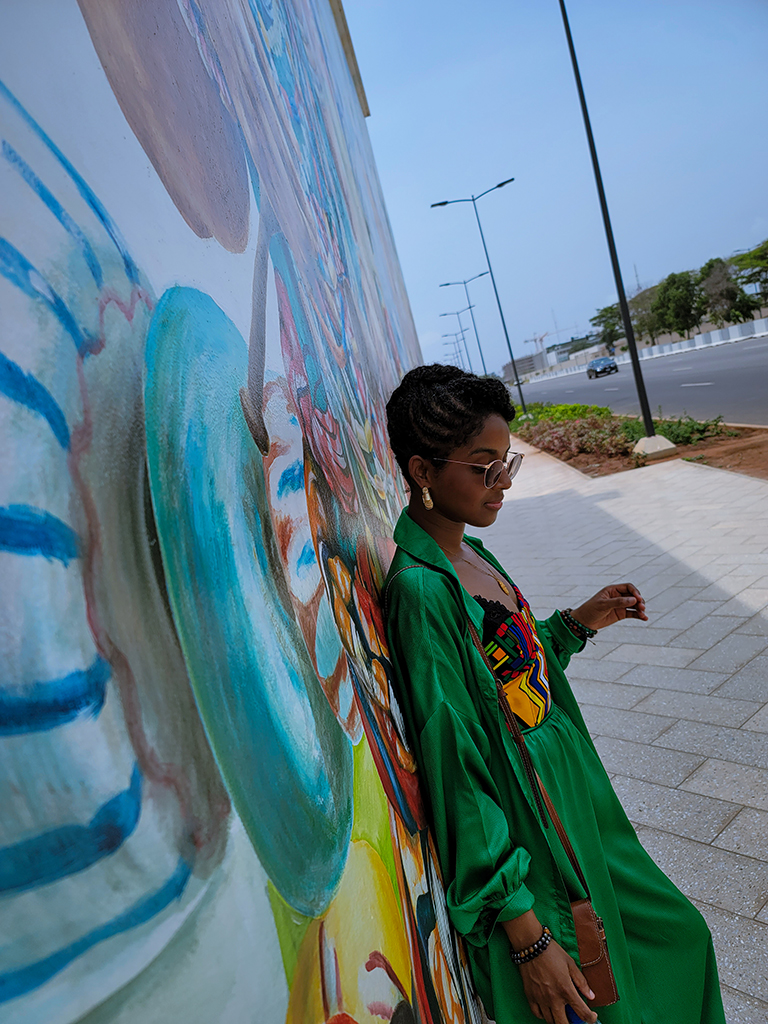
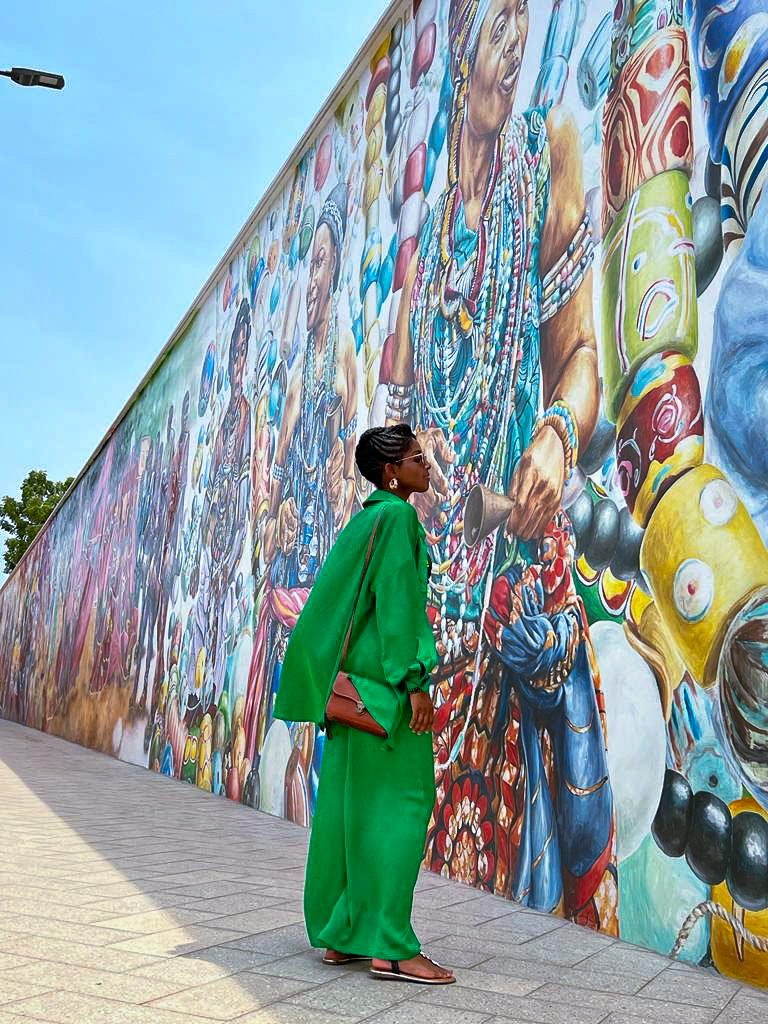
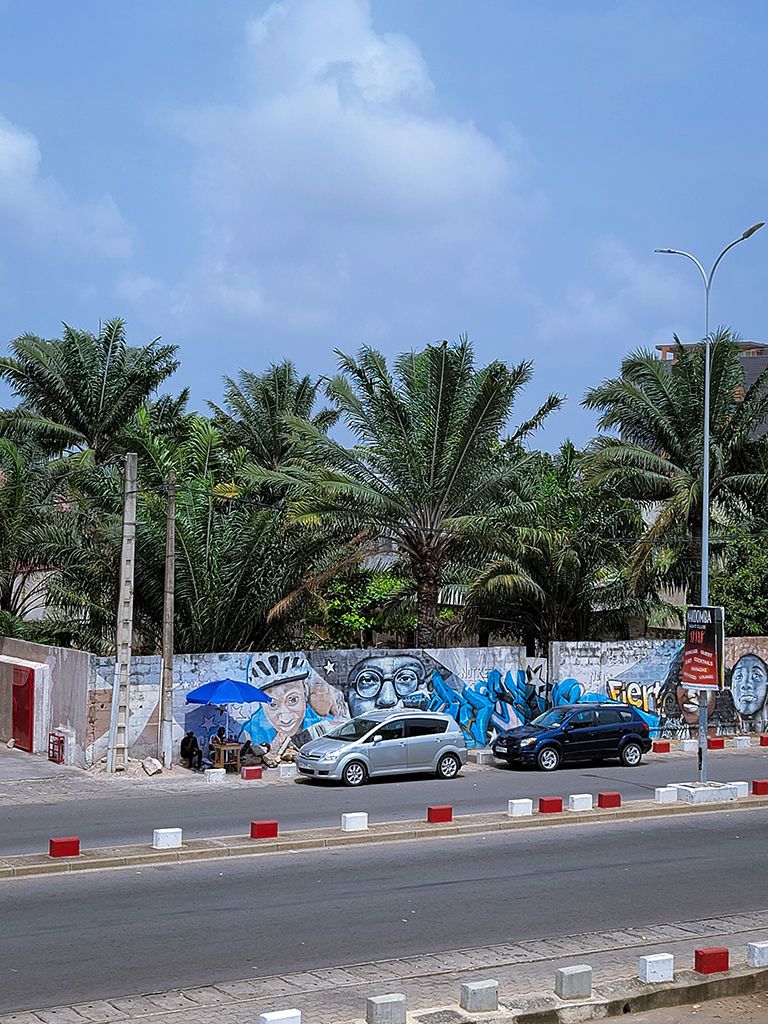
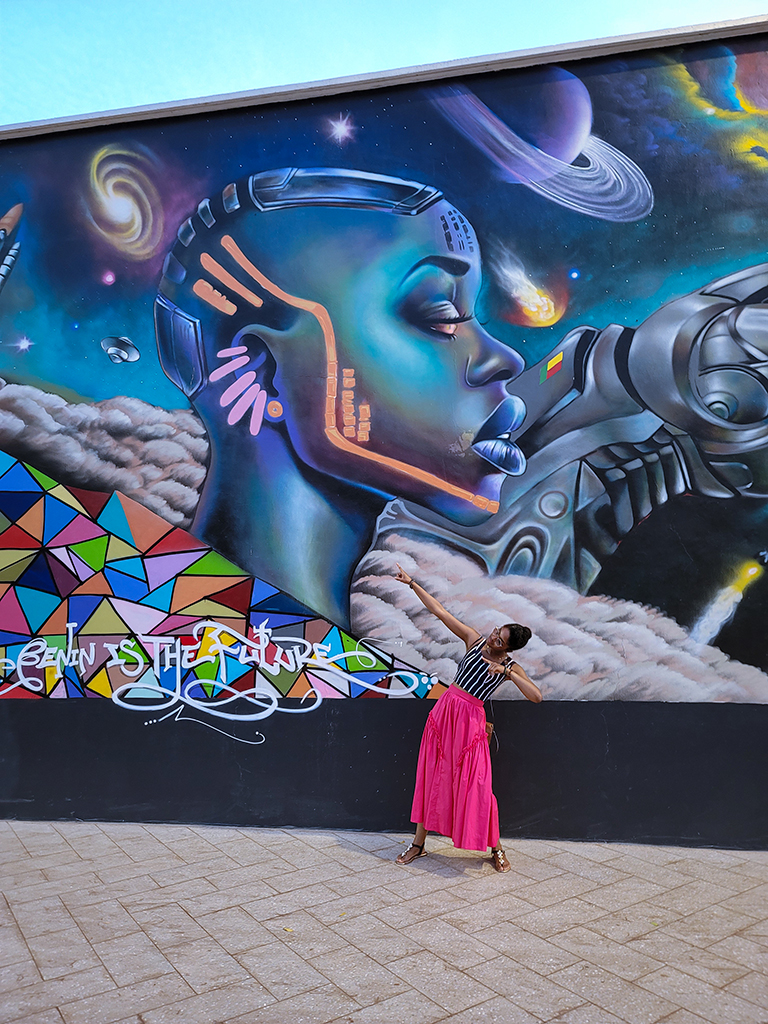
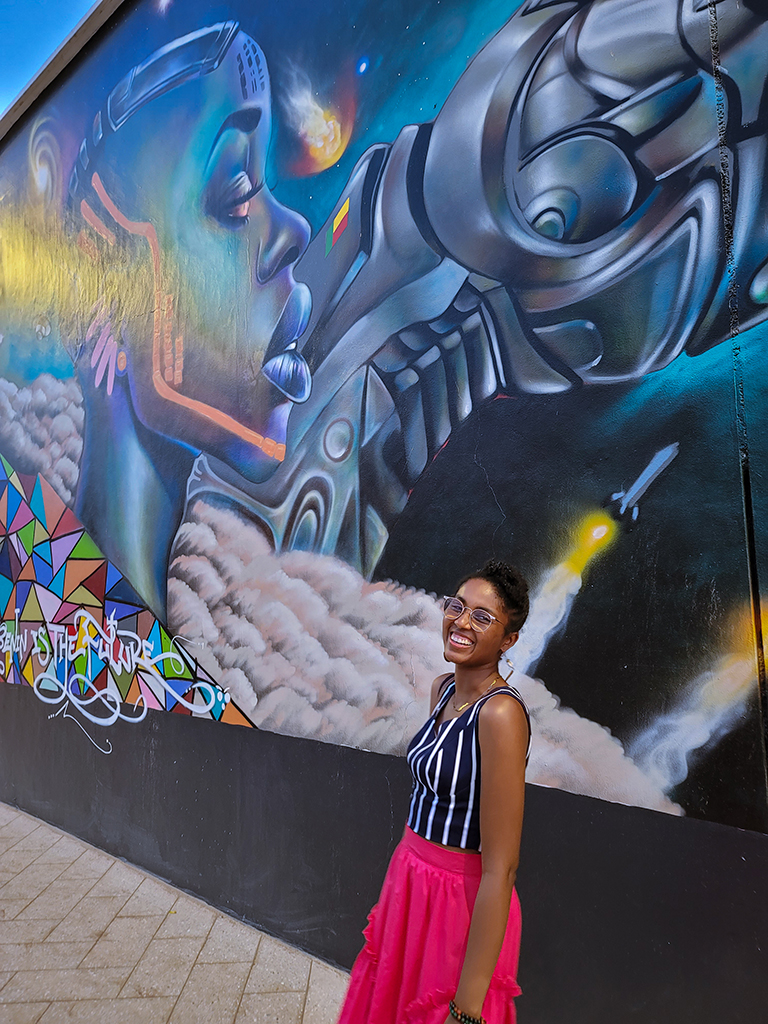
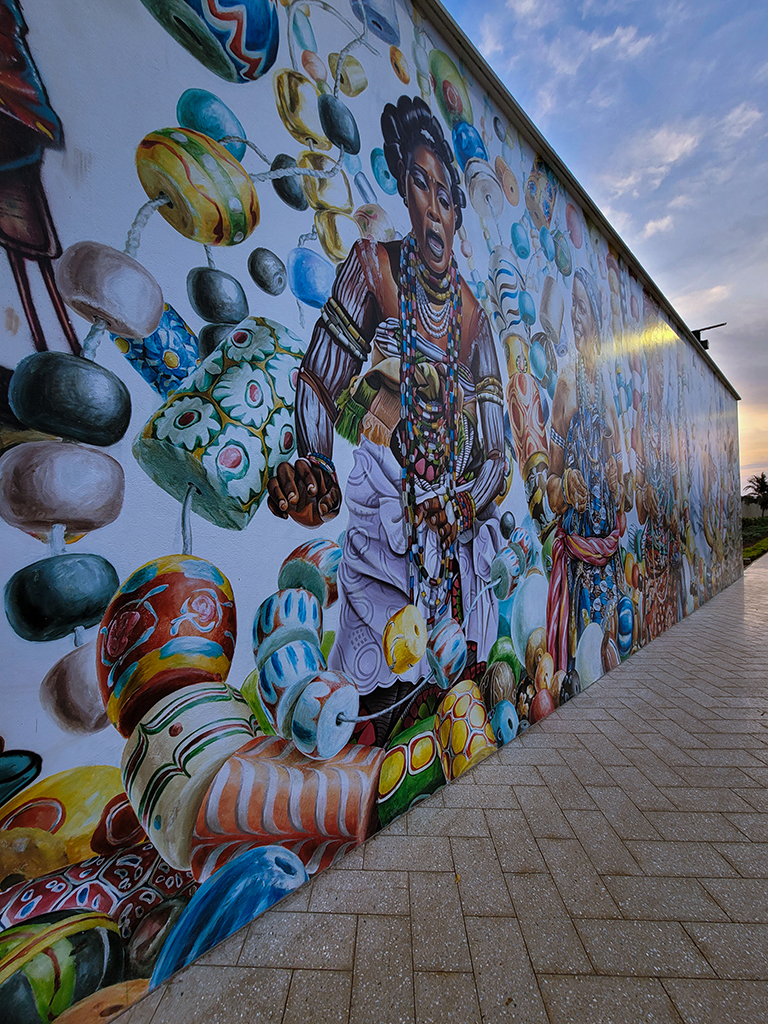
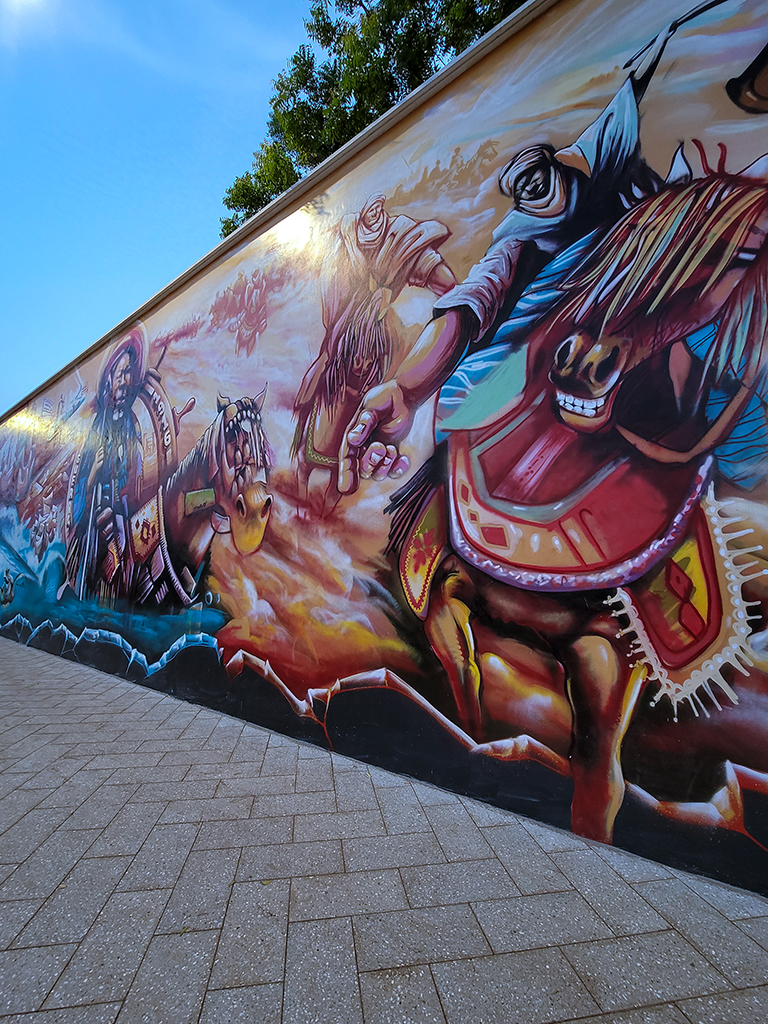
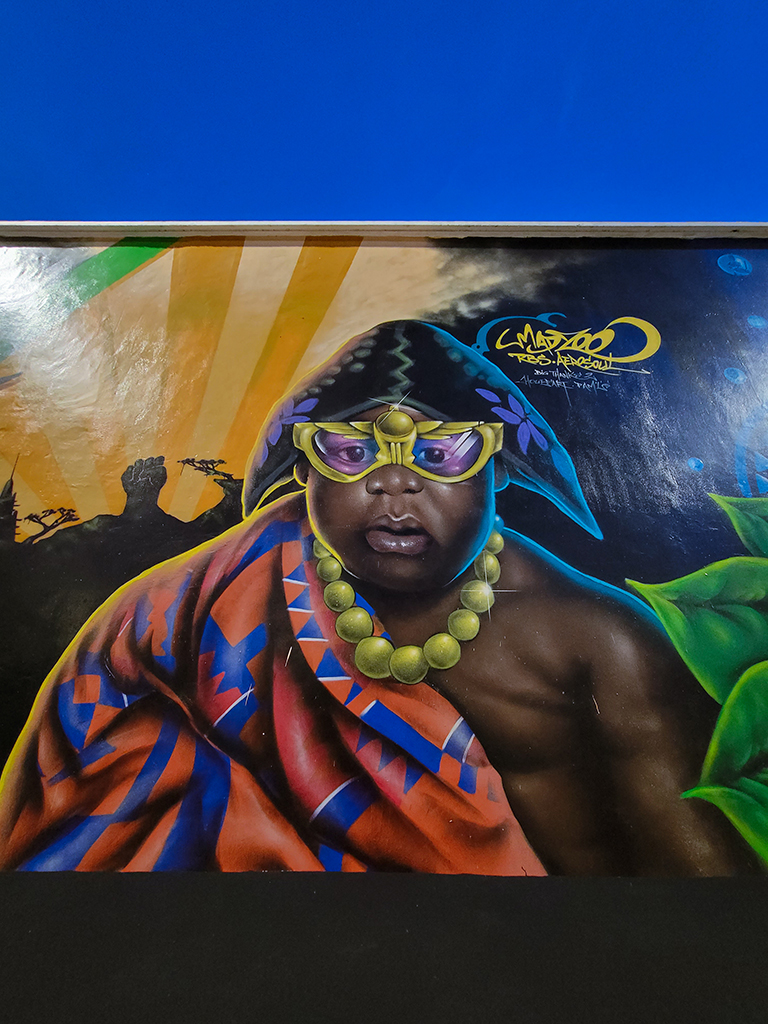
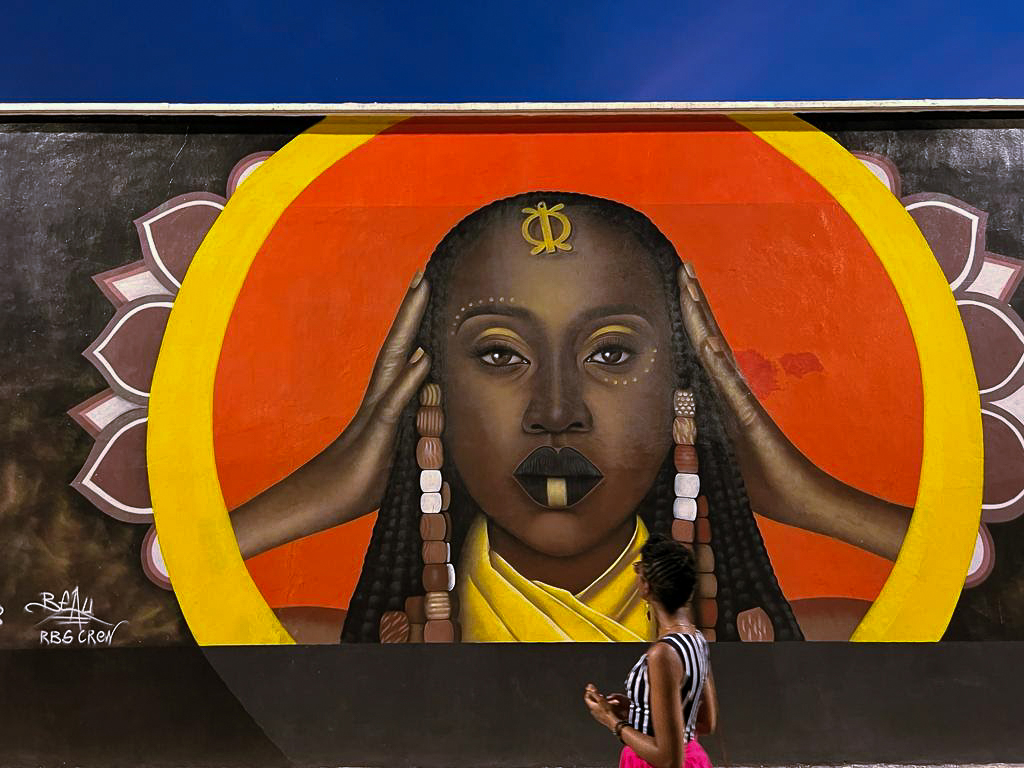
    We went to the Graffiti Wall twice. The first time was early in the afternoon when we discovered it was way too hot to see the whole thing. We still got some epic photos. What do you think? Later we continued to explore the city. Big thank you to Mubarak for taking photos of and with me.

    Of course, I am wearing Bandele Muse earrings in these photos.

    We returned to Ouidah to add more to our exploration. Starting with the Zinsou Museum.

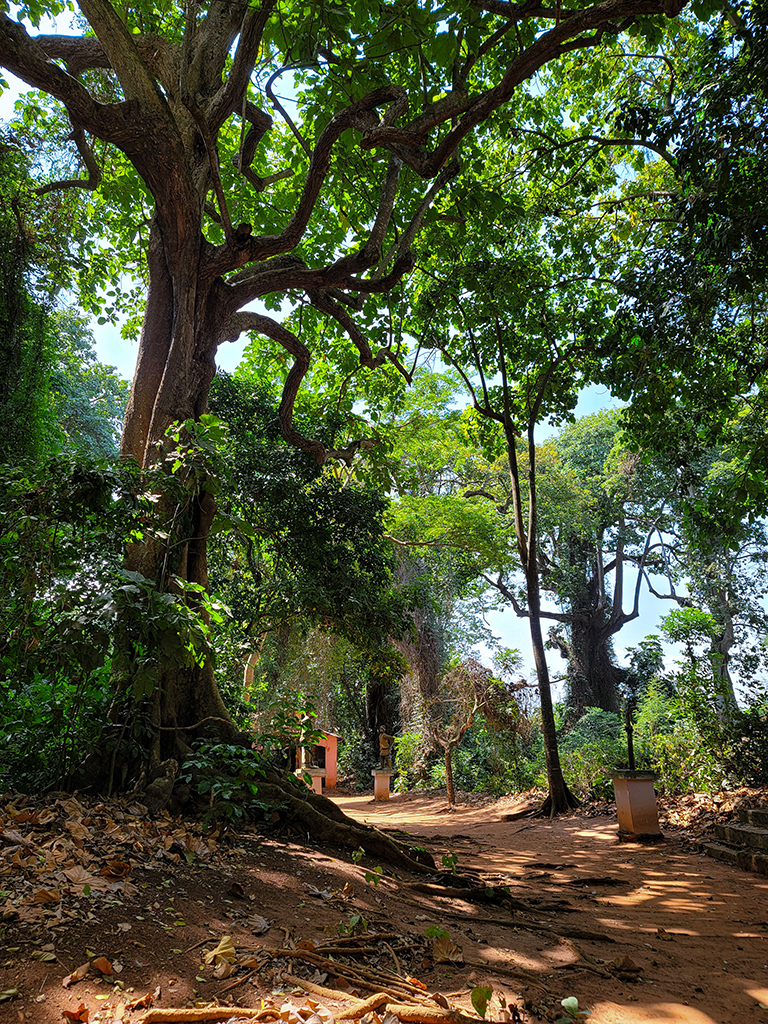
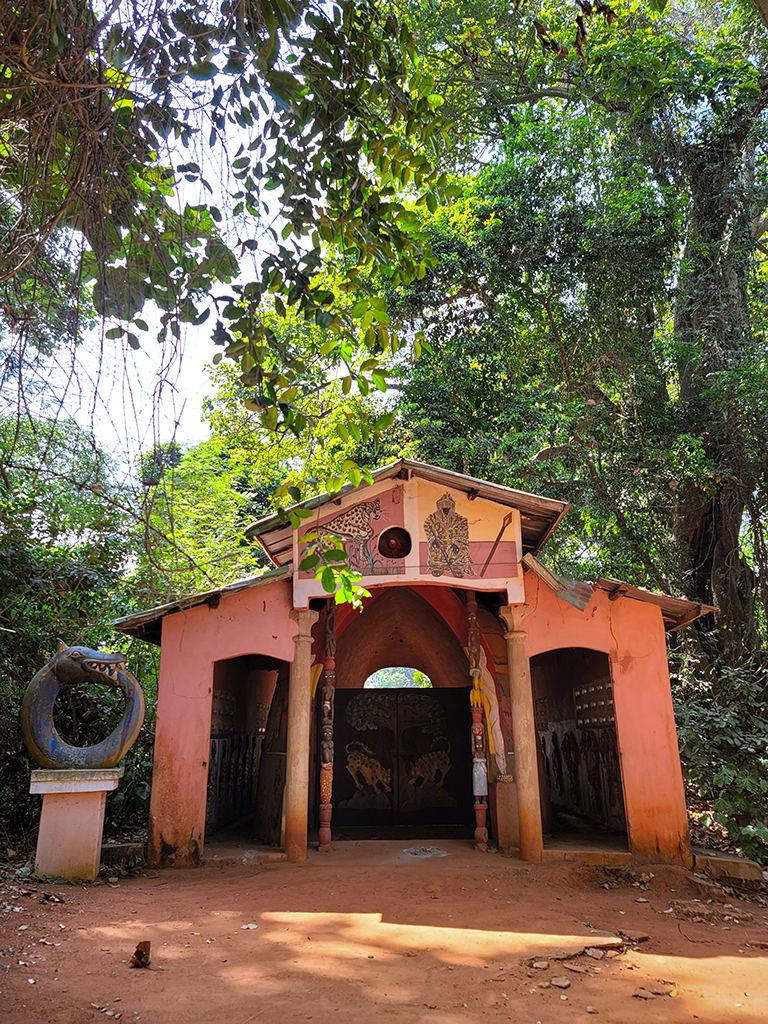
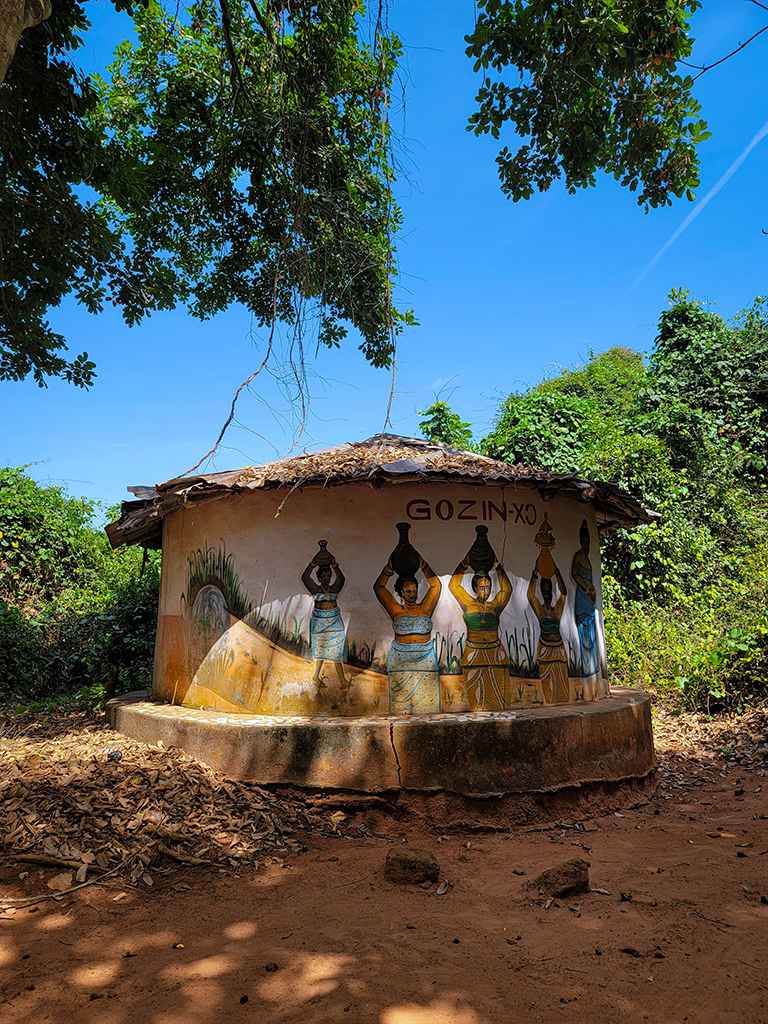
    While still in Ouidah, we visited the Sacred Forest.

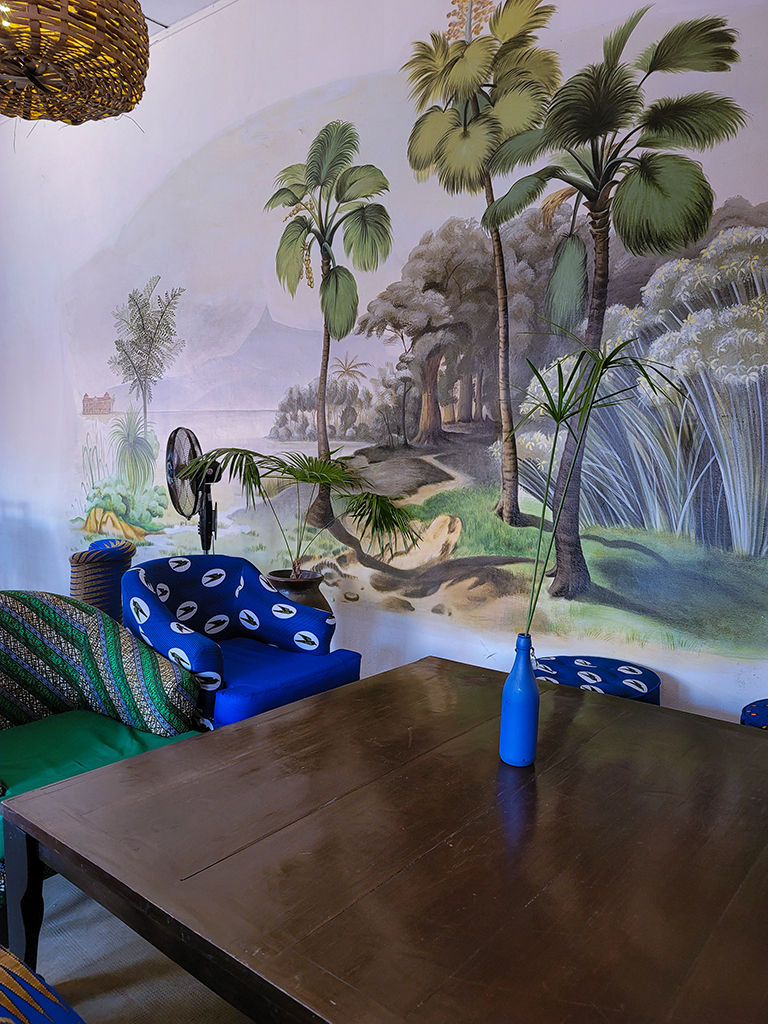
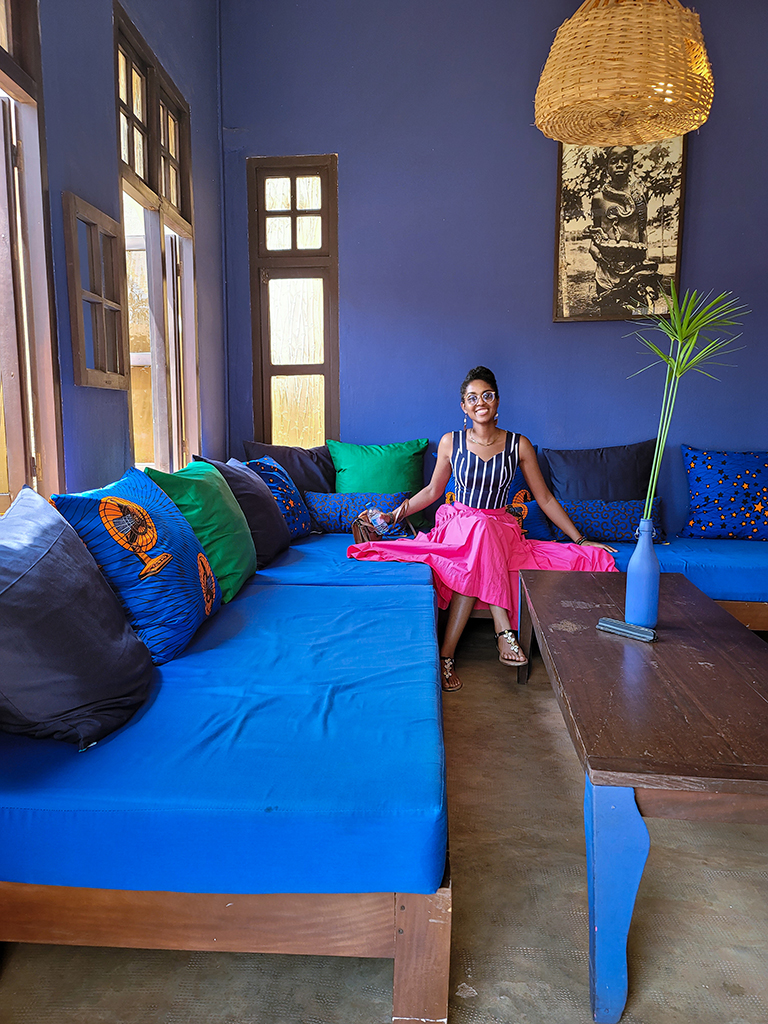
    Back in Cotonou, we ate at this lovely restaurant.

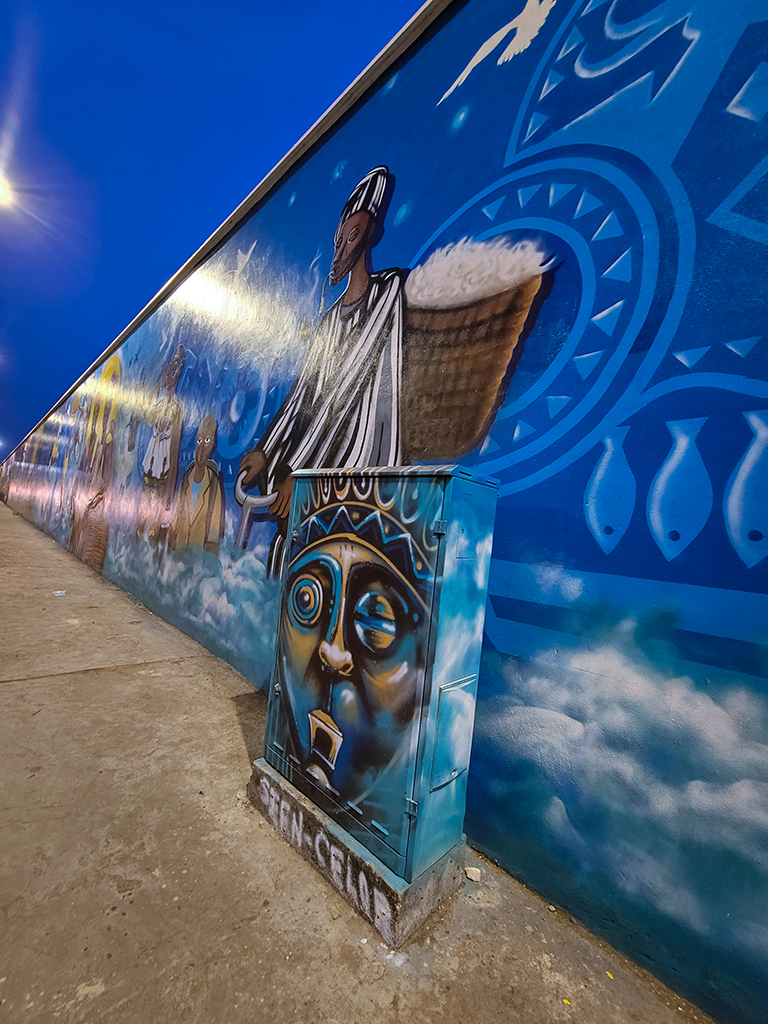
    The second time we went to the Graffiti Wall was in the evening. Now we were able to take our time and indulge.

    Dancing In Accra

    As I said in the video, if you are interested in joining the social dance scene in Accra with Kizomba, check out Kizinfinity and Kizomba Queens.

    As I mentioned above, this is my first time sharing with you one of my recent hobbies: social dancing. I learned Kizomba and Salsa in Accra.

    It’s funny how reality evolves when you contribute to the internet. People connect with you during different phases of your journey, but may never experience the full masterpiece puzzle that is you.

    For some on here, you know me as the ultimate magical entertainer. For others on here, you would be shocked to discover I can moonwalk circles around you literally & figuratively. Maybe this is a great time to recognize how nuanced and complex we (definitely me) truly are. It would help to remove the box and timeline you need people to fit in.

    Anyways, social dancing is different from my other dance experience. It’s more of an energetic teleport conversation instead of solo or group formations. It can be a beautiful and fun experience, depending on your partner and venue. It’s a nice way to practice coordination, vulnerability, and balancing physically & emotionally.

    It’s fascinating to witness reactions to social dancing in Accra. Some see it as something only expats do because they only hear about Afrikiko( I don’t dance there much. So don’t come for me unless I call you 🙃). Some share in the excitement because they, too, love it and want to learn more. Some see it as evidence to label you as indecent and easy prey. Again, this is a great time to remind you….do you boo. People will think whatever they want to think regardless.

    We need a proper ballroom. A space where you can dress up to go dancing. Mingle with like-minded community. Be consistent and reliable with music, refreshments, schedules, respect, dance floor, and temperature control. I have the design ideas when you are ready to build it.

    Do you do social dancing? What’s your favorite genre?

    Thank you for supporting me and my blog.

    As always, sharing is caring. Check out the links below:

    Get 10% off + tips, gifts, & fun from me. Join my newsletter: https://link.bandelemuse.com/newsletter

    Check out my business Bandele Muse: https://bandelemuse.com/

    Get 50% off your first year of Flodesk and take your newsletter & landing pages to the next level with my link: https://flodesk.com/c/BANDELEMUSE

  • The Roaring 20s: The Panoramic Panini Pandemonium Edition

    The Roaring 20s: The Panoramic Panini Pandemonium Edition

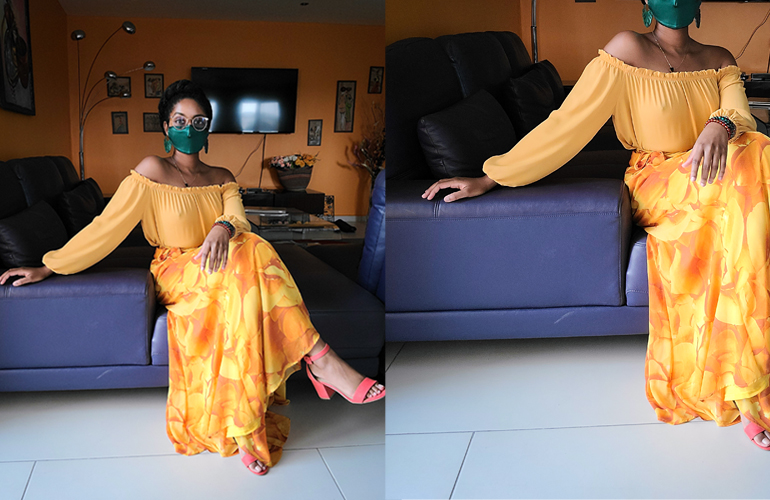
    Is it truly a bad thing if certain history repeats itself? For instance, comparing the current Panoramic decade to the 1920s, would it be beneficial or chaotic if our behavior turned out to be the same? Along with developing a collection of masks to coordinate with my outfits, I have been wondering if there is any correlation between these two decades. This lead me to discover what different parts of the world were experiencing in the 1920s and if any of that compares to how we all will maneuver this decade.

    Let’s start with the 1920s in the US. The jazz age. The Great Gatsby. The delicate clash between glamour and rebel. During this time, there was a dramatic rise in consumerism. Film and literature hyped up the parties and lifestyle a portion of the population was experiencing. On the other hand, the US was clamping down on immigration through legislation. The stock market began its descent. Henry Ford introduced the 49 hour work week with the auto industry. The younger generations of the time were pushing back against traditional taboos. Overall, it seems as if the 1920s in the US was a vibe.

    In contrast, the 1920s in Ghana had a different vibe. During this time, the Gold Coast was still exporting gold and producing more than half of the world’s supply of cocoa. Due to this continued wealth, the 1920s was a decade of industrial and economic development in Ghana under the orders of Governor Gordon Guggisberg. He took on a 10-year development program and proceeded to develop and improve transportation, water supply, drainage, hydroelectric projects, public buildings, schools, hospitals, prisons, and communication lines. Their set goal was to fill half of the colony’s technical positions with Africans as soon as they could be trained. It seems that to an extent Ghanaians did benefit from the developments in this decade, which also aligned with growing resistance against British rule over Ghana.

    Next, in Brazil, a similar resistance was happening. The 1920s in Brazil was partly defined by a modern art movement. As Brazil celebrated 100 years of independence from Portugal, artists began to produce avant-garde artwork that focused on human naturalism and anatomy. Of course, at first, the general response was a mixture of horror and shock. However, there was a desire to rid Brazil of imported art, literature, ideas, and ideology to push back against European art being seen as superior to Brazilian art. Also, fun fact, in the 1920s, many small towns in Brazil educated children in German or Japanese and Portuguese was rarely spoken. This was due to the mass migration to Brazil from Europe and Asia in the 1890s. However, when it was disclosed that the German government was aiding anti-government groups in Brazil, the Brazilian authorities closed schools that did not teach primarily in Portuguese.
    Are you starting to notice a pattern? Surrounding resistance, identity, and drama? Let’s add one more.

    This pattern was also happening in Japan. In the 1920s, a form of nationalism took hold in Japan to preserve traditional Japanese culture and reject Western influence. The British Empire ended its 21-year “alliance” with Japan, signaling the West’s apprehension of Japan’s growing power in East Asia. However, many Japanese who lived in the cities watched Hollywood movies, enjoyed Western-style dancing, and found Baseball, golf, and tennis popular. They also appreciated Western examples of democracy, liberal institutions, labor unions, and Women’s rights and proceeded to implement a version of these ideologies that worked for them at the time.

    Looking at this sample of the world, the 1920s was a decade of resisting the traditional, redefining and reprioritizing identity, and experiencing an overwhelming amount of drama. The West was fighting among themselves, while countries colonized or hijacked by the West were starting to shake the table. All while everyone was wearing similar fashion styles and listening to similar music.

    Now, fast forward to today. The first year of the 2020s was defined by resisting a virus and the traditional forms of basically everything, redefining identity and equality, and experiencing a devastating amount of drama. This time, it was overwhelmingly documented. So, what will the 2020s decade look like? What can we learn from the 1920s?

    I’m glad you asked. I don’t know. Got ya! Ok, I have some ideas. The added layer to this experience is the technology and a global virus. Countries had to turn inward, after spending years getting comfortable with the good and bad side of globalization. People found creative ways to collaborate across borders and produce locally. Even I got to work with and get involved with groups of people I would have never crossed paths with if it was not for this push for community online. I feel it is also due to this turning inward that there was an increase in holding the failings of traditional norms accountable. The question is, how will this decade resolve all the issues we learned about and protested against in 2020? We all did a lot of talking while we had to stay in place or stay at home. Now that movement is becoming the norm again, we need to walk the walk too.

    Despite all the varying and confusing information about The vaccine, I feel we still need to applaud humans on Earth. You made history! Developing a vaccine and rolling out distribution all in one year. That is awesome. Now, of course, me being someone who has no B.S. behind my name, (get it? Because I did not study science, but we should always question rules too) I must ask why it is taking so long to develop a malaria vaccine when a large part of Africa and Asia are heavily affected by it. Hopefully, we can get on that next.

    From an individual standpoint, mental health is the bigger conversation that might shine during this decade. Again, thanks to technology and the people who are brave enough to share their authenticity, access to a community, resources, and solutions are expanding in ways like never before. The way this progresses will have such a major impact on everyone as a whole. Mental health is not only about what is happening in your mind. Cultures around work, relationships, health, consumerism, education, authority, and society at large are all influenced by mental health.

    I feel we have set ourselves up for quite a fascinating decade. I am grateful to see beyond the year of doom. I feel more aligned with who I am and more comfortable in how I choose to create my reality. As calm and cool as that might be, I also deeply feel the continued unnecessary suffering the world and my mind still face. It is such a surreal balance because it keeps me very present at the moment. Looking at what was going on in the 1920s and how that influenced decades later, it seems like we are right on time in how we are defining the 2020s.

    What do you think? I hope you have been keeping safe. Share your thoughts with me. Also, remember to connect with me on YouTube, Instagram, Pinterest, Twitter, and/or Facebook. I love hearing from you. As wonderful as the internet is, being online still gives me this surreal isolated / connected feeling. You know what else is funny? In January of 2020 I posted a short story called The Year 2020. At the time, I had no idea how the year was going to be, but the story has some foreshadowing. It is fascinating how the imagination works.

    Also, this mix is officially part of my 2020s soundtrack. Wouldn’t it be cool to chill at a lounge or picnic with this vibe? Enjoy.

    Take care.

  • What We Can Learn from Economic Oppression and Black People Everywhere

    What We Can Learn from Economic Oppression and Black People Everywhere

    If you want to know why something is happening, follow the money. To further the discussion to heal the distance between Africa and its Diaspora, let us go over the historical and current economic oppression that influences and determines the Black experience.

    In this video and post, I am focusing on Black America and Ghana. For Black people outside of America and Ghana, please do not feel isolated or excluded in this conversation. The point is for all of us to win. Understanding how we can strategically do that is key. As you read further in this post, I widen the focus to other parts of the world.

    Let’s dive deeper. Starting with economic oppression and Black America, there are two layers to this agenda: the wealth gap and the income gap. The wealth gap was created by the exploitation of free labor from Black slaves, passing down of profits from that exploitation, and destroying and stealing from Black businesses.

    The history of slavery in America is diluted and distorted in American history. The wealth gap began with cotton. America’s first big business, which pushed it to be the leading economy in the world, revolved around slavery. At one point, American cotton made up two-thirds of the global supply of cotton. This was all off the backs of slaves. Americans became millionaires off the bleeding backs of enslaved Black people. This is also where police brutality began. Aggressive and barbaric white “supervision” was used to return runaway slaves to the plantation while violently and brutally questioning the work and movement of slaves. This Vox article gives more details on how slavery became America’s first big business.

    Like I mention in the video, there are two historical massacres that are referred to as the illustration of why telling Black people to pick themselves up from their bootstraps is not valid.

    The Tulsa Massacre in 1921 occurred in Tulsa, Oklahoma in the Greenwood District, which was also known as Black Wall Street. It was an affluent Black American community that included thriving and peaceful Black businesses and residential areas covering 35 city blocks. The incident that started the massacre is still surrounded by rumors around what happened when Dick Rowland, a Black man, and Sarah Page, a white woman, stood in an elevator. A white mob formed reacting to this rumor that was further embellished as it spread through the town. Rowland was arrested and held at the police station. The mob outside was met with a group of concerned Black residents who understood that Rowland was in danger of being killed by either law enforcement or this white mob. This response added to the rumors that spread among the white mob pitting for a race war. The white mob grew in size and hate. They proceeded to burn and destroy Black Wall Street, leaving around 10,000 Black Americans homeless and murdering around 300 Black Americans. The Tulsa Historical Society and Museum have archived the details of the Tulsa Massacre through documents, photos, and audio on their website. They also provide a free exhibit.

    The Rosewood Massacre in 1923 occurred in the predominately Black town, Rosewood, in central Florida. It also was instigated by an alleged rumor that a white woman was offended, in this case sexually assaulted, by a Black man. The white mob that responded to this acted on further embellished rumors to burn the town to the ground and lynch / murder any Black man they could find. Again leaving those who survived homeless. More details are in this Black Past article.

    The income gap continues through occupational segregation. Let’s go over some numbers. In 2018, 20.8%, which is 8.9 million, of Black America were living underneath the poverty threshold, being the second largest group in America living in poverty. (Source from Talk Poverty) The overall largest group is Native Americans at 25.4%. Like I mentioned in the video, Black people in America got the shorter end of the stick and Native Americans did not get a stick at all. Systematic inequality cannot continue to wipe them out either. Let me know if you would like to learn more about the Native American experience so I can direct you to the voices you need to listen to. Regarding unemployment, in 2018, the overall rate was at 3.8% and the Black rate was 6.5%. In 2020, the overall rate is 13.3% and the Black rate is 16.7%. America has the biggest incarcerated population in the world. Prison policies and reform has more depth than a few percentages could show. This report gives more details on the issue of mass incarceration in America. The income gap is not only maintained by unemployment. There is an additional layer with wages. This article breaks down how the wage gap is widening further. For more insight, read this report on systematic inequality and economic opportunity.

    When we talk about systematic racism and systematic inequality, these numbers are part of the picture. One cannot “catch up” when the game is fixed or when the goal post continues to be moved. The gap is not actually influenced by the mask of education, home ownership, or job title. The gap is only influenced and maintained by the deliberate effort to keep the gap. This article from CityLab about why we can’t close the racial wealth gap has some good insight. This is part of why it is so exhausting to be Black in America. Always working hard and following the rules accepting that you will always have to tolerate less in every industry, field, interaction, and experience.

    This is also why America always starts sweating when the conversation about reparations comes up. It is not because it is impossible to calculate the wealth Black America created and never benefited from. It is not because Black America is living so much better now compared to the 1800s or 1960s. It is because America prefers to drag its feet. It is because America prefers to do everything but what was asked for, like painting Black Lives Matter on a street, manufacturing band-aids that match brown skin, and kneeling while wearing cloth that looks like Kente cloth.

    How can we learn from this? For the first time in a while, Black America used its purchasing power as an effective tool and Black-Owned businesses made millions of dollars over night. This is a good start. How do we take this further?

    Now, let’s talk about economic oppression and Ghana. When I compare what was happening in Ghana with the same historical dates I listed above, I see there is a lot Africa’s people, in and out of the continent, can learn from to heal the distance and enhance the link.

    In the 1860s, which was during the height of the cotton empire in America, the export of slaves was gradually diminishing. Even though the import of slaves to America was outlawed in 1808, the demand for slave labor continued after that. Later, Ghana experienced a shift as colonizers pivoted to competing with each other for colonial territories. During this time there were a variety of alliances and struggles for power, including the Ashanti-Fante War and the Anglo-Ashanti Wars. The latter wiped out different levels of British forces.

    The debate as to whether Africans sold Africans into slavery is an interesting one. I have noted Africans rebutting that there is no evidence that a sale transaction occurred. I have noted Black people outside of Africa express suspicion on whether Africans were sold or stolen. Some argue that trying to discuss whether Africans sold Africans is like discussing black on black crime, which is a distraction from the movement. To me, it sounds like both discussions trigger people in different ways. I believe in holding each other accountable, which includes looking in the mirror and reading real history. The primary point is to avoid repeating history. Stop trying to distance yourself from the problem. We need to do better.

    British authorities in the 1920s in Ghana adopted a system of indirect rule. Even though they put traditional chiefs in position of local authority, they took instructions from their British supervisors. During this era, transportation, water supply, public buildings, schools, prisons, hospitals, and other services were developed by colonial rule and African hands. Ghanaians also assisted Britain in World War I and World War II. A national conscious, which lead to independence, developed after WWII when veterans and the growing educated population no longer were satisfied with the humble position colonial rule kept them in. In some respects, Ghana was lucky compared to other African colonies. They did not experience limbs being chopped off, like Belgium rule in Congo, or complete destruction, like French rule in Algeria. However, one could analyze a wealth gap in how much was extracted from Ghana during this time.

    Before I fast forward to the income gap of today, let’s pause here. If we focus on the historical events listed above for both Black America and Ghana, what do you see? Black people in America had a different experience with white people compared to Black people in Ghana during that time. Both set of colonizers utilized economic oppression, but in different ways. I feel this needs to be understood by Africans and Africa’s diaspora. This might be the reason why there is a sense of urgency to fight the power on one end and a sense of confusion and no urgency on the other. Remember, colonizers do not want us to be on the same team. I feel education has a role to play in this too. When I speak to Ghanaians about colonialism and Ghana’s relationship with England now, I do not pick up a sense of animosity or disdain. The narrative is not focused on exploitation, but rather how the British enhanced Ghana, historically speaking. Like I noted above, development did occur during colonial rule. Also focus on the fact that British rule had authority over education and implemented the British educational curriculum in Ghana. Making sure the Ghanaian population learned British history under a British lens, it is no surprise the British continued to frame themselves as a hero. This is similar to the American education system, which continues to frame the founding fathers and corporations as heroes. However, Black Americans have a different narrative when they speak about slave masters, Jim Crow law, and police brutality. Black British and Black French also have a different narrative when they speak about their experience with colonizers, which does include police brutality, economic oppression, and pushing statues back into the sea. I do not have the answer yet, but this disconnect should not be dismissed nor should it allow us to create more barriers between us.

    Fast forward to the income gap of today in Ghana. In 2016, 56.90% of Ghana’s population was living underneath the international poverty threshold. In 2018, the unemployment rate in Ghana was 4.16%. There is a lack of transparency in the value of labor and skills in Ghana. This is why the numbers, which are primarily calculated and reported on by NGOs and international corporations, may not always add up. The focus of these numbers are primarily on national policy, like this report on Ghana’s poverty rate and inequality. There is a discrepancy between what Ghanaians are paid and what expats are paid in Ghana. There is inequality between what women are paid and what men are paid in Ghana. More details on this inequality are analyzed in this Oxfam report. As development continues, the gap between the rich and poor continues to widen.

    These numbers and lack of numbers is part of the picture. This is why the sense for most in Ghana is that nothing you do will really change the bigger things that keep your life the way it is. Some still spend half the day without electricity. The floods, that could be prevented, still kill and displace people every year during rainy season. This supports the assumption that big money only comes from abroad or corruption, not real work. When you compare this to how many foreign companies are making real profits in Ghana and taking it outside of Ghana, like this company producing organic bananas, I have to wonder if this attitude is systematic to reduce competition.

    How do we learn from this? There are plenty of Black owned businesses in Ghana and Africa. There is a strong purchasing power in Ghana and Africa. However, there is still a mix-match. How can we fix it?

    How do we learn from how economic oppression has been utilized against us to effectively protect what we build? On a people, corporate, and government level. How do we prevent our efforts from being destroyed by those who want to maintain the status quo? Let me know what you think.

    The energy we are feeling right now is a golden opportunity. The shift and change is possible, if we continue speaking up, evolving, holding each other accountable, and making a difference. Below are more resources for you to continue supporting Black content and businesses.

    Also, feel free to connect with me on Instagram, Twitter, and Facebook. I love hearing from you.

    Freedom Agenda

    Black Owned Apps

    JoinMi – safe space for HBCU students to converse about concerns and life.

    Gbook – e-commerce platform for students to buy/sell products and services.

    #TopIt – fun social challenges with friends.

    Blademy – online platform for Black millennials to learn new skills, land better jobs, and reach their full potential.

    Black Initiatives

    Made in Africa Project


  • Can I Find My Niche in Ghana & Africa

    Can I Find My Niche in Ghana & Africa

    Africa is the future. The real question is, whose future does it benefit? What does Beyond the Return look like now? Before moving to Ghana, I did a lot of research to try to understand the country and see where I could fit. Even though that helped to encourage me to take the first step, it did not compare to what I needed to learn on the ground. In this video, I discuss what has worked for me in finding and creating my niche in Ghana and Africa.

    As I discussed in the video, nothing compares to learning from experience. Being patient, adaptable, and open to learning will take you much further, if you are looking to find and create your niche in Ghana and Africa.

    Networking does play a role in your success. Instead of insisting there is only one way to do this, I encourage you to explore what works for your industry and your personality. Some people need to be in everyone’s face. Others prefer to keep their circle of contacts small and close. I have found that a mixture of in person socializing and online outreach allows me to have a diverse network of people to learn from, collaborate with, support, and work with. This lends itself to the work culture in Ghana. You do not need to limit people to one transaction or interaction. The person you purchase furniture from can also introduce you to a business opportunity, help you with your garden, invite you to meet their family, or find that particular gadget that is not available in stores. The person you met at an event can also collaborate with you on a project, introduce you to the manager of a bank, teach you how to cook traditional dishes, or introduce you to their tailor. It all depends on how you value and maneuver your interactions.

    Even though these connections feel more wholesome compared to the isolating transactions I experienced in Houston, or America in general, I am still learning how these interactions evolve to create your closer circle of friends. This might be influenced by the societal notion that everyone should know their place. Some people, in spite of interacting with each other for an extended period of time, may never feel comfortable enough to invite me into their home. As an American, this is not unusual because we all have friends who don’t know where we live. From my understanding, Ghanaians do invite their real friends home and introduce them to their families. I have also learned that people in Accra are different from people based or born and raised in other parts of Ghana. This might be similar to other big cities, but the sense that not everyone is truly as they seem or say is not foreign in Accra. I am very grateful that I have met and continue to connect to the people who are wholesome, supportive, authentic, and interesting.

    Regarding the established network groups I mentioned in the video, I feel they are a great start to get a sense of who is around, what people are talking about, and what you can connect to. Ahaspora is a group for young professionals. I have also used their job listing to find opportunities. AAAG, the African American Association of Ghana, is the group that introduced me to the W.E.B. Du Bois Center in Accra. Ghana Must Read Book Club is a lovely group of book nerds. I really enjoyed the meet up I attended to discuss Children of Virtue and Vengeance by Tomi Adeyemi. This year, each month is dedicated to a different region of the world. There are many more groups for a variety of interests through out Ghana. These are the ones I have participated in thus far.

    When it comes to figuring out if your industry exists in Ghana, or another country in Africa, it is important to remember that it may look different than what you are used to. Even though most of the data you need will come from word of mouth, there are startups developing ways to gather that data for all industries. Survey54 is a platform focused on emerging markets in Africa and its diaspora. I met the founder, Stephen Eyeson, in Ghana during the December holiday season. Him and his team are doing an impressive job developing their product. This article in African Business Magazine discusses the industries that are buzzing due to need to shift the economy into a digital landscape. Like I mentioned in the video, mobile financing, online education, and tele health are on their list. There is also a luxury market in Africa that continues to expand and grow. Another article from African Business Magazine discusses this in more detail. The speed of development, debt, and demand creates an interesting environment in Ghana and Africa. The mixture provides a blank canvas for you to choose how you further your business, make an impact, and gain in every aspect of your life.

    Dagny Zenovia Niche in Ghana Africa Beyond the Return

    So far, this is what has encouraged me to continue my journey. Are you looking to move or work in Ghana or another country in Africa? Are you already based in the royal continent and looking to expand or pivot? What do you find helpful? Let me know in the comments. Let’s continue the conversation.

    Also, feel free to reach out and connect with me on Instagram, Twitter, or Facebook. I love hearing from you.
  • Where In The World Is Dagny

    Where In The World Is Dagny

    It is finally time for me to come back to YouTube. I am so excited to be filming again and to share all my new content. So, first, where in the world I have been?

    As of filming this clip, I have been living and working in Accra, Ghana for one whole year. Crazy, right? The growth I have experienced during this journey is really wonderful, which is why now is the perfect time to share my adventures and tips. Check out the video for my life updates, new content coming to my channel, and all that good stuff.