With the internet, you can find inspiration everywhere. From stories to classes, there is something to keep all of us entertained or enlightened. Through self-publishing and social media, so many brilliant ideas are slipping past barriers and amplifying their voices. I see this as a movement of sorts. A move for change, awareness, and responsibility.
One of the many things I want my blog/platform to provide is a supportive space for other creatives, innovators, and leaders. I am inspired everyday by people and projects I come across on social media because they illustrate how to effectively enhance a movement. From documentaries to community programs to merchandise, we have amazing people pushing beyond a hashtag or march. They are building a legacy. It is important for any movement to live past the hype. To survive the trends, it takes dedication and strategy to maintain clear priorities but also evolve with the issues.
I want to share with you some of the projects I have seen recently that inspired this post. Initially, I was going to write about the discrepancies I have observed within social justice movements today (which I might still reflect on in a later post), but after reading and watching these projects, I have hope that we are moving in the right direction.
Amani Yahya is Yemen’s first female rapper and recently did a project shedding light on women’s rights.
The Dinner Table Doc is a documentary and community initiative to change the narrative and images of women of color in the media. The director went to Agnes Scott College (which I went to my freshmen year…so we are half scottie sisters!) and she is building a really important platform.
Did you know there is an afro-mexican community in Mexico? Do you know why Black History Month should exist in Mexico? Check this video from Plumas Atómicas.
The Invention of E.J. Whitaker is an upcoming indie comic book about a woman of color who invents a flying machine in 1901. I am excited to read this adventure once they publish it.
My Creative Connection is a blog that shares stories, resources, and advice to help creatives build their network and achieve their dreams. Their twitter chat #blkcreatives is one of the most encouraging social media experiences.
Revolt TV did an excellent documentary about Women DJs around the world who are making an impact on dance culture.
An article reflecting on identity and violence as a first-generation American, this is a discussion I know too well and appreciate more voices bringing light to.
This movement is not about pointing fingers or excluding others. It is about being unapologetically authentic and aware of the importance of your influence. What has inspired you recently? What projects would you add to this list?
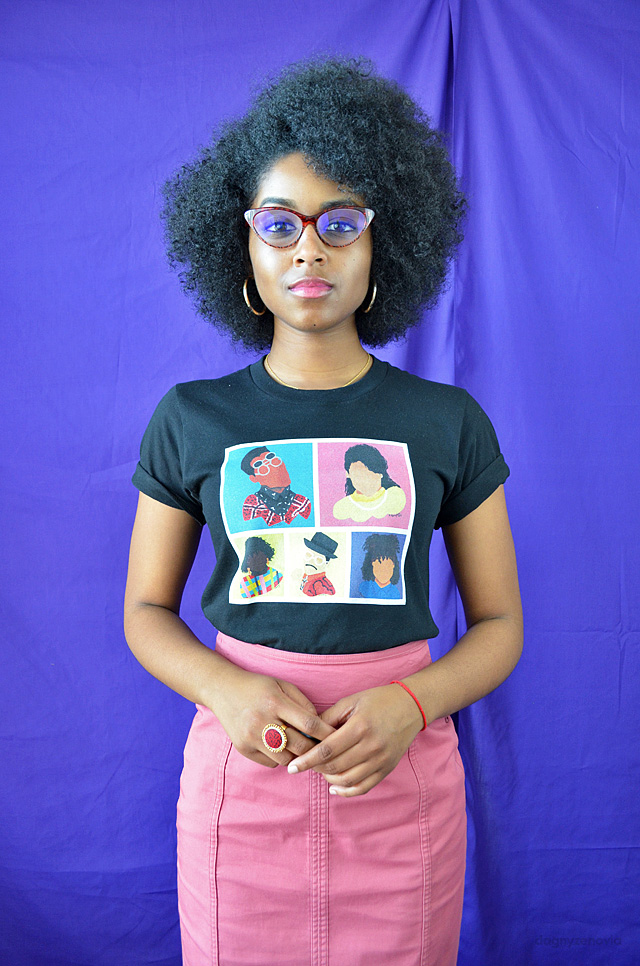
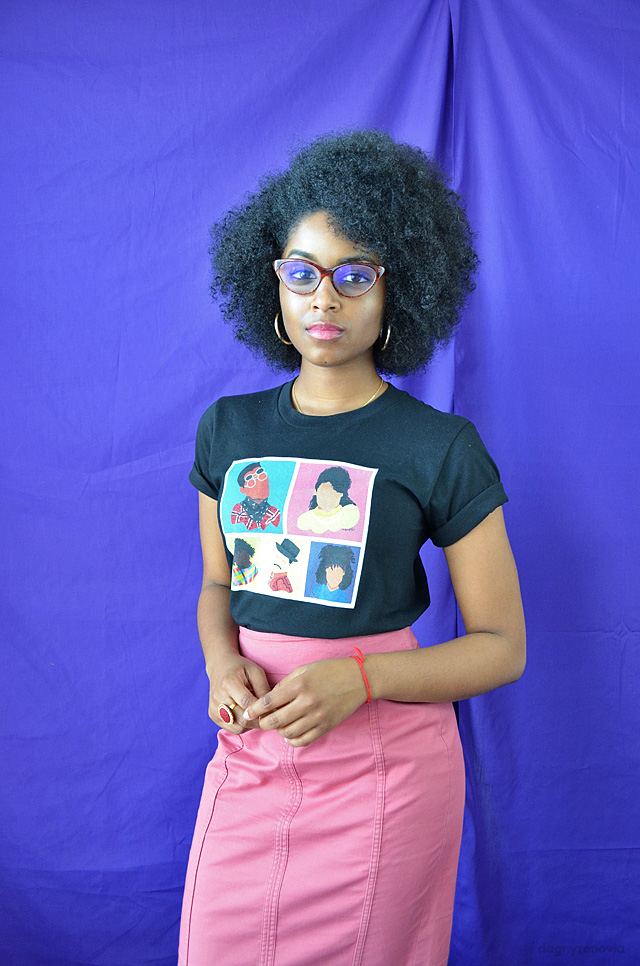
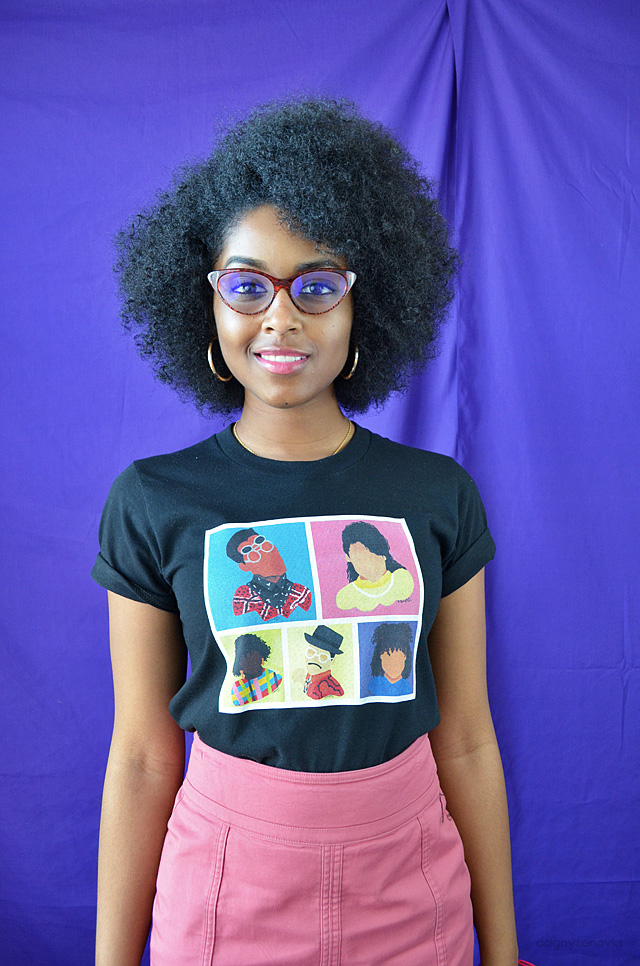
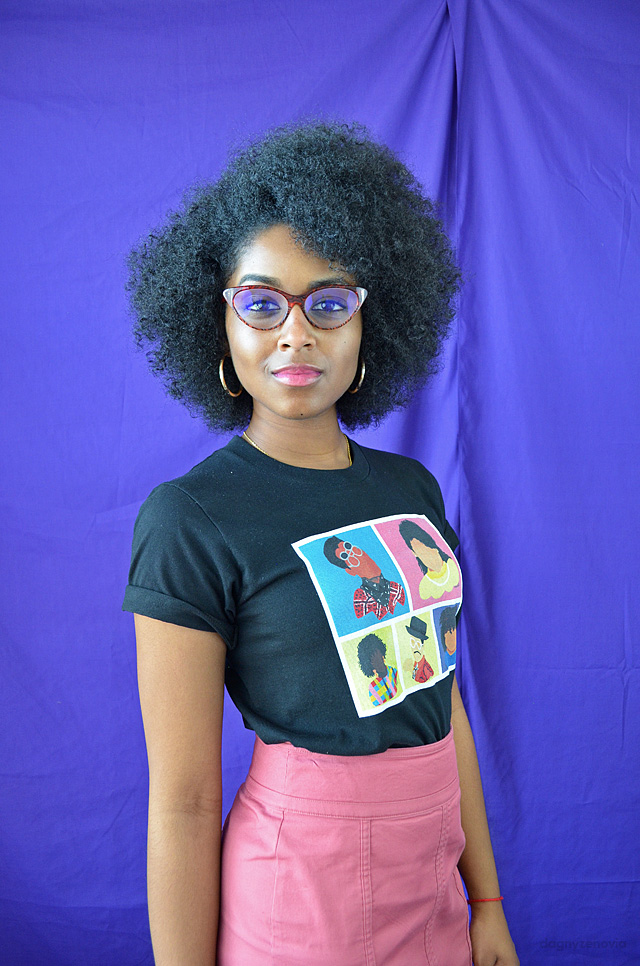
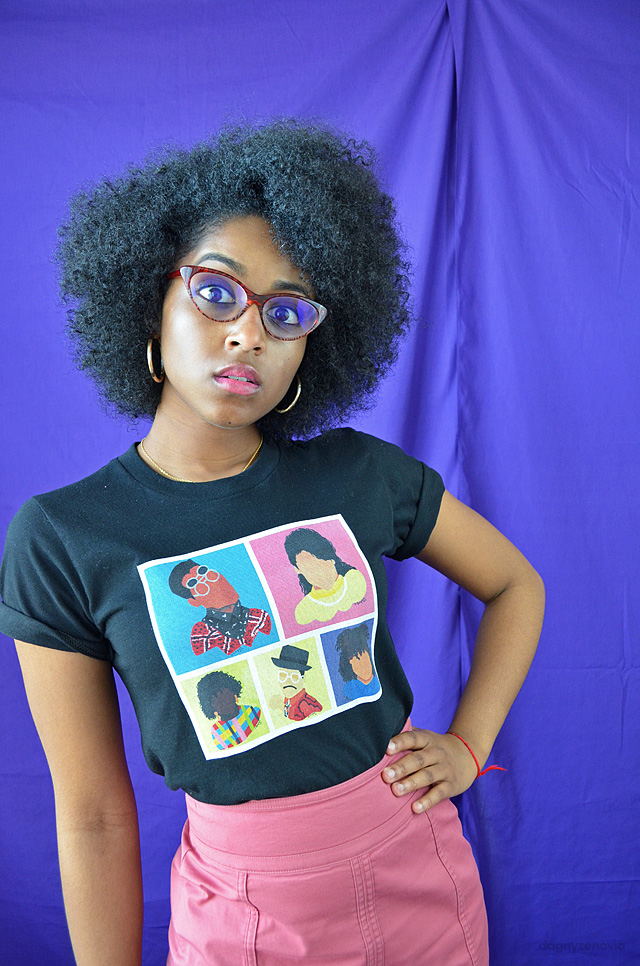
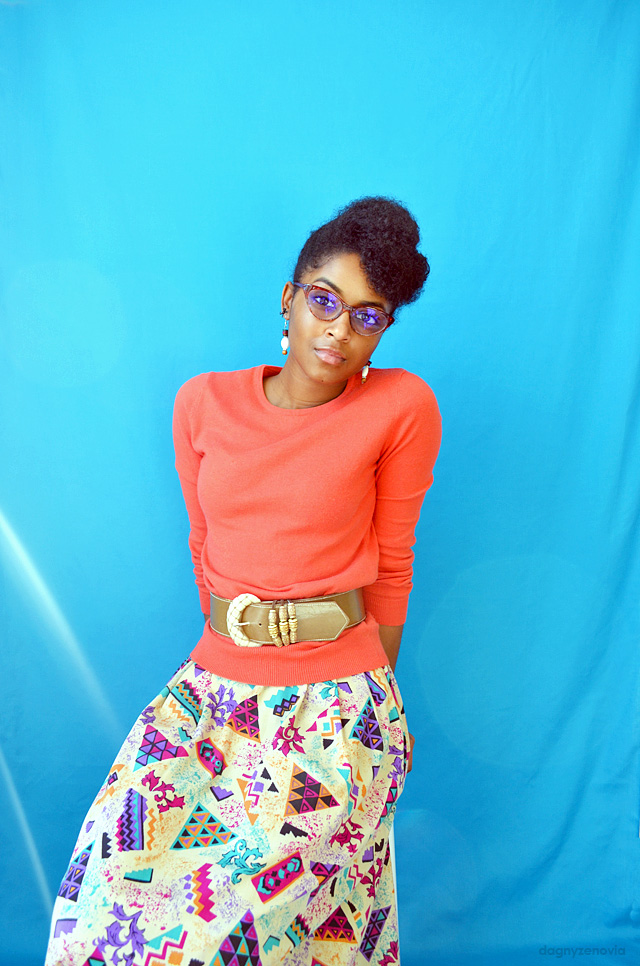
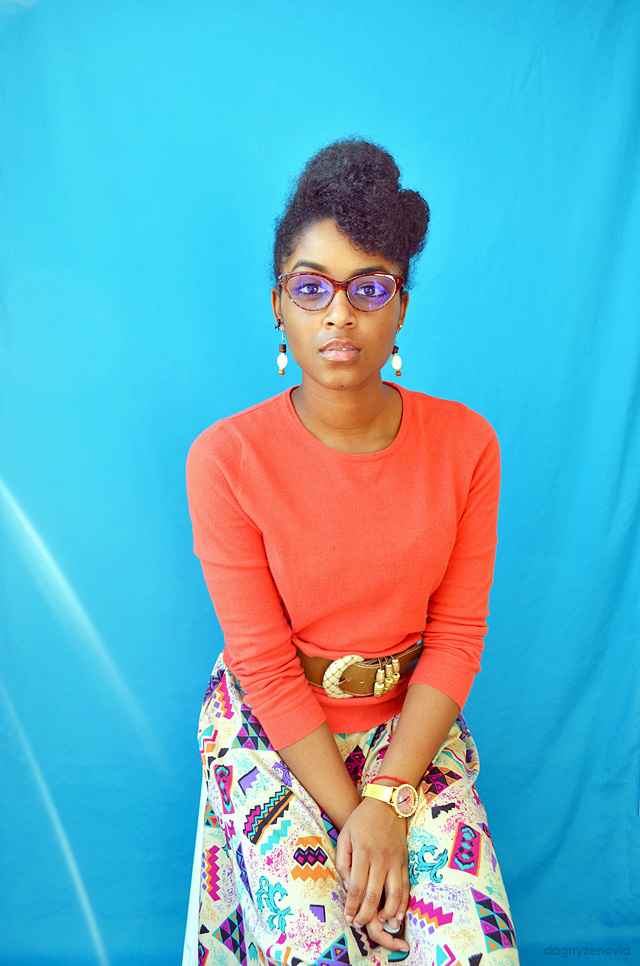
Wearing: Kasmir VIII shirt, Ann Taylor skirt, Aldo shoes
Style is not just about clothing and trends. It is a form of self-expression influenced by many factors…some we might not be aware of. For instance, how does your location affect your style? I am not only talking about what you pack for a trip. The city you live in holds so many nuances to inspire your style. Today I am sharing with you how my current city, Houston, influences my style. This is part of a collaboration with a fabulous group of bloggers. Make sure you read to the end to view their style and enter our giveaway.
I like to view my style as a medium through which I exercise and enhance my creativity. It started as a hobby and evolved into a signature persona. It is a mixture of 1950s classics, 1970s attitude, and futuristic sparks. It is a blend of chic, afrocentric, and retro. I have been told my style resembles Janelle Monae and Solange. They both are on my list of inspirations, along with Audrey Hepburn, Esther Quek, Lena Horne, Miranda Priestly, Diana Ross, and many others.
Houston is a big city. The 4th largest in the nation to be exact. Just like preparing for a trip, the weather and mode of transportation are the two main factors in planning your outfits. In Houston, the weather likes to play games. In one day we can go from a thunderstorm to sunny and clear to dry and windy. Next we can go for a week or two with beautiful spring or fall weather. Most people drive everywhere and the only time spent outside is intentional. Thus, fashionista’s in Houston have a keen eye in creating outfits that work with shifting temperatures and the need for comfort.
Living in Houston has added another dimension to my wardrobe by helping me feel comfortable in casual clothes. I know that sounds weird, but hear me out. In high school I repeatedly wore graphic tees, jeans, and fake converse. When I left for college, and left Texas, I wanted that next chapter to not be high school part 2. That included changing my wardrobe. I grew to prefer dressing up and got so good at it that I could put together stylish outfits everyday without skipping a beat. This also meant that the casual section of my closet faded away.
I think part of being a successful fashionista is being open to what new places can offer you. There is a time and place for everything. Looking like a futuristic Mary Poppins does not work everywhere, but I think it is always appreciated at special occasions (right?). This does not mean you should try to blend in. On the contrary, you should try to have fun. Style in Houston is unique. There is no one-size-fits-all uniform to be considered stylish. I have seen a range of fabulous looks from cowboy boots to grunge jackets to dapper suits to urban chic to thrift elegance. There is room to create your own niche. Some trends I am looking forward to in Houston for the Spring include: Spanish floral patterns and light weight denim.
Since this is my first post for the new year, we must take a moment to claim it. My intention for 2016 is to restore. I feel like I have paid my dues: unfair, just, and self-imposed. I want to be open to the happiness I have earned. I will share more on how this pertains to my personal life in a later post. For my blog life, I am cheering for more inspiration, collaborations, and fun in 2016. What are your intentions for 2016? Let me know in the comments below.
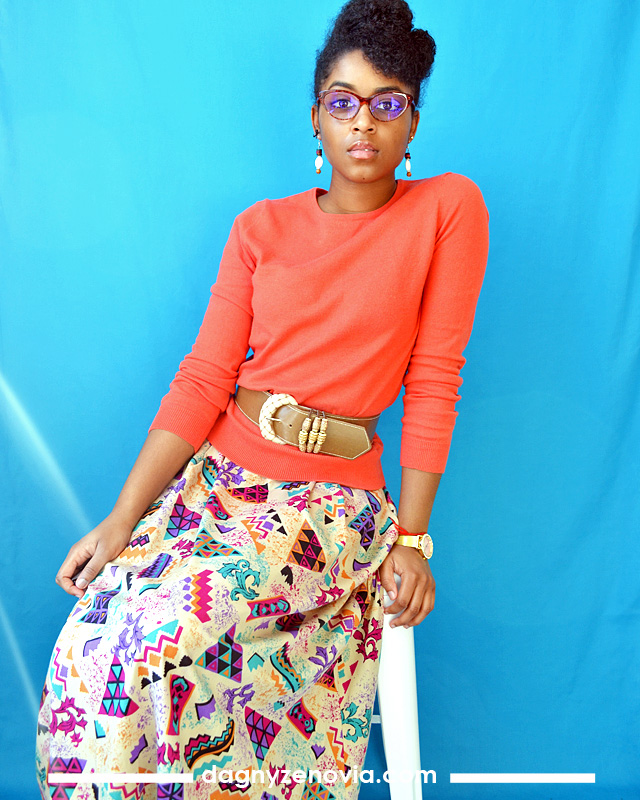
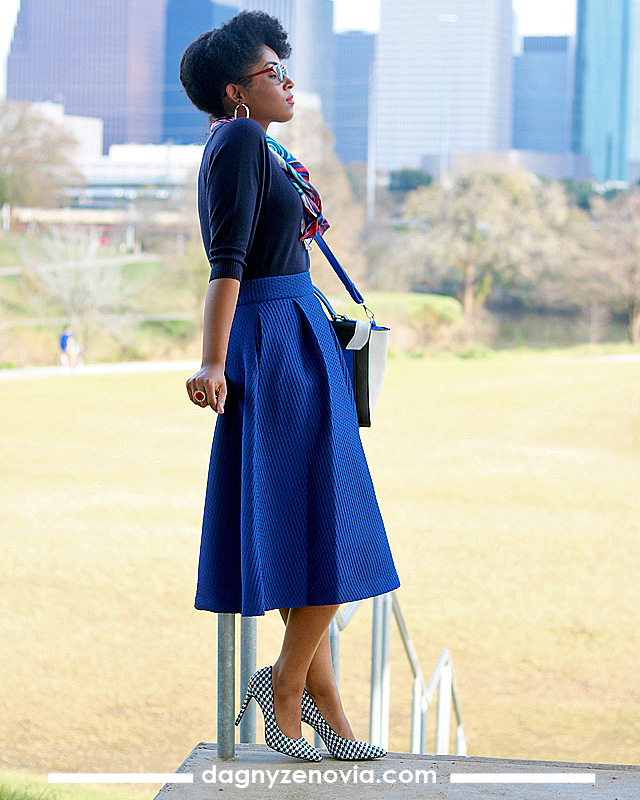
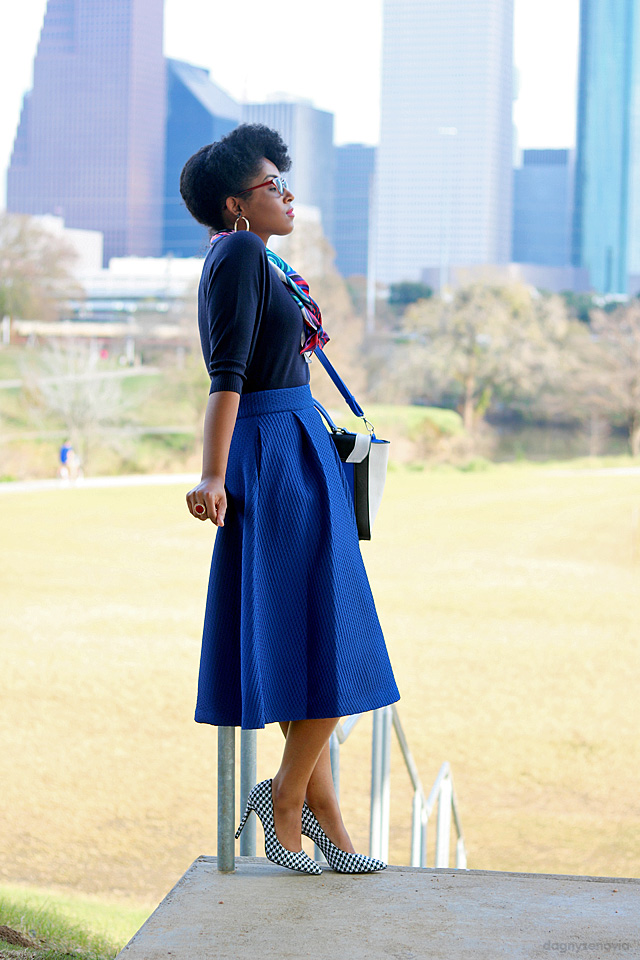
Wearing: Thrifted scarf, The Limited sweater, New York & Company skirt, DSW purse, DSW shoes, Girl Talk watch, Zig Zag ring
Remember that collaboration I told you about at the beginning of this post? Well, “My Style + My City” is a collaboration I created to meet new bloggers and showcase others work. I wanted to see different interpretations of style from around the world. Here are the fabulous bloggers who participated. Make sure to check out their blogs and show them some love.
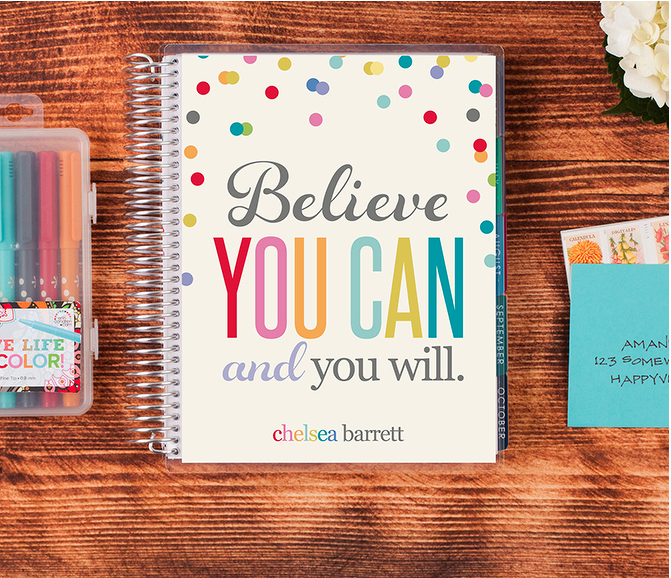
As a token of our appreciation and an effort to encourage you to achieve your best in 2016, we are giving one lucky reader a 2016 Erin Condren Life Planner. Click here to enter. Good luck!
Aspiring to achieve success comes with an interesting tool box. The majority of your journey includes filtering through what you can work with and what you need to let go. One of the essential tools to success is connecting with the right people. This past Thursday, I had the pleasure of attending The Root’s Young, Fabulous & Female event, sponsored by Toyota, at the House of Deréon Media Center. The theme was “Getting Across the Line” asking how black women cross that line to achievement and success, how we bring others with us, and what obstacles are in our path. The panel discussion included a number of gems, positive energy, and motivation. Now, let’s get into my recap of the event and suggestions to improve the discussion.
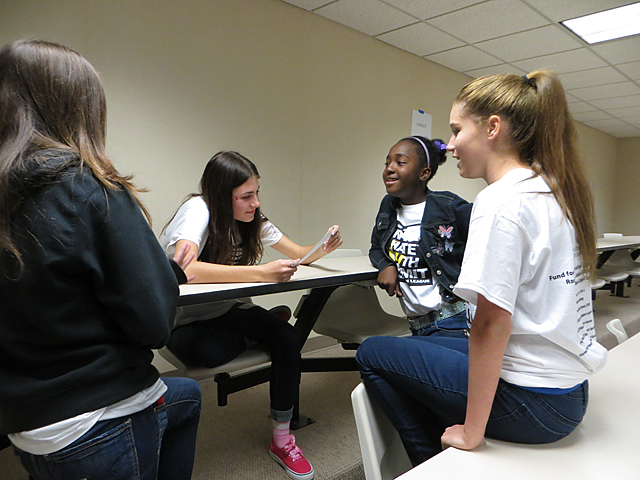
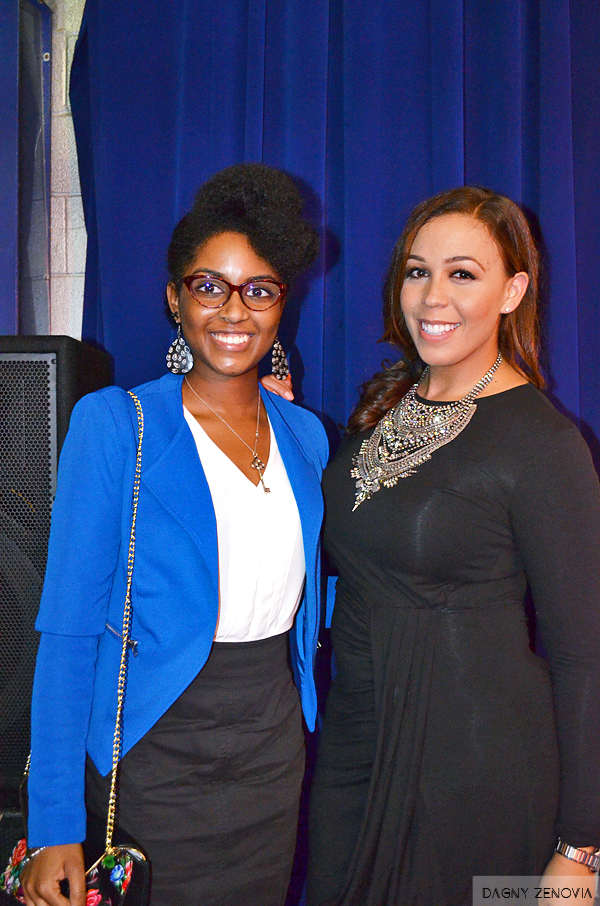
(L-R) My new friends! Shimeka, fashion designer, and Mickayla, non-profit director & radio promoter
The panel included Joy Sewing, fashion and beauty editor for the Houston Chronicle, Dr. Camille Cash, plastic surgeon in Houston, Denise Hamilton, CEO and founder of WatchHerWork.com and co-founder of JONES Magazine, Tera Roberson, Special Projects Producer for Houston’s NBC affiliate KPRC, and Suzette Turner-Caldwell, former engineer and current associate pastor for Windsor Village United Methodist Church. Devi Dev, music director for 93.7 The Beat and TV pop culture correspondent for CBS affiliate KHOU11, moderated the panel. First, I think Donna Byrd and her The Root team did an excellent job gathering local brilliant women to enhance this discussion with diverse experiences and views.
One of the big topics that was touched on a number of times was the struggle with obtaining opportunities. I loved how Denise set the tone by saying “it’s more about us opting out then us being kept out.” The analogy she gave is one that I think all of us can relate to – a job application lists requirements A, B, C, D. A woman would read that application and tell herself “I can do A, B, C, D, E, and F, but I don’t know…let me call my Mom and talk about it…maybe call my best friend…maybe I’m not qualified. A man would read that application and tell himself “I can do C…I can do that job. Submit.” Regardless if you fit this scenario or not, I think we all have been guilty of doubting ourselves. I have been diligently working on myself to recognize how my talents can apply to any job and switch my mindset to view my skills as abundant rather than lacking.
With Devi Dev, 93.7 The Beat
Speaking about mindset, getting cross the line to opportunity also involves checking your attitude towards your worth. Tera shared her life motto – “Live your own. Have your own. Be your own.” In some circumstances it is easier said than done, but it is so important to stay true to yourself while aspiring and achieving success. The challenges, competition, and disappointments will make you question what you stand for and why you are working so hard. Don’t let that make you forget who you are. This is why I loved when Devi said “find beauty in your struggle.” So much growth happens during personal struggle. When I look back at where I was 5 years ago compared to what I am doing now, I am humbled. I still have a lot of work and ground to cover, but I can see the progress and I can note what I gained from every challenge I pushed through.
With Donna Byrd, publisher of The Root
There was also a lot of wisdom shared about what excellence should look like. Sharing advice on how to focus your life and career, Suzette said, “Be prepared. Be very good at what you do. Be humble.” She also added that to be confident in yourself, you should always be prepared. I totally agree with that sentiment. Have you noticed a pattern among most success stories that opportunities do not usually appear as planned? That is why you always have to be ready to do your best because you never know who or what will open the next door for you. Excellence also involves constant change. I could totally relate to Devi when she said, “never get comfortable. Look for constant evolution.” This does not mean you should be selfish in always being unsatisfied, but you should always try to do better. I am constantly seeking knowledge and inspiration to expand and enhance my passions and my purpose. Constant evolution in yourself can include reading a book a day to mastering meditation to joining a community group to contributing to a new cause. It all depends on what you need and how you define your journey.
With Denise Hamilton, watchherwork.com and JONES magazine
Having an accomplished journalist on the panel was also a plus for me because she spoke to part of my niche. Joy shared how she visualized and spoke her dream of being a journalist into existence even at a time when the industry did not seem promising. “It’s not just about working hard,I love being a journalist,” said Joy. “If you want to do it, and it’s not about the money, then a way will be made for you.” She also noted the deeper reality black women face in having a successful career – “there is a part of you that you have to quiet to conform to what you’re working with.” There were a lot of head nods and finger snaps for that statement. Being a professional black woman is a challenging balancing act. Even though we encourage ourselves and each other to stay true to who we are, we still have to withhold some of our brilliance in certain settings but also be bold and step up in certain circumstances.
This point leads to my next overall comment on this event. I know the discussion was supposed to be 2 hours, and they did well to stick to that timeframe, but I would have loved for the conversation to continue for 4 hours. With more time, I think the panel could have taken this topic further and answered more questions. It is great to encourage attendees to clarify their goals and plan for their future, but if time permitted I think it would have been equally important to mention how to achieve this in an environment that seems to set us up for failure. Similar to what Denise touched on, “women are the keepers of culture and we need to start owning that.” I think owning that does not only include being great at what you do but also being great at taking care of yourself. We are in a troubling time now. The culture we have carried and supported throughout history is under attack. We cannot go by one day without reading, hearing, or seeing a story about our people being murdered, arrested, or suffering. I know this topic could branch out to all kinds of comments and would extend the discussion for hours. However, for next time, I think we should include one question for the panel along these lines – Regarding the troubling and tragic climate we are living in now, how do you continue to get across the line to success and opportunity? The responses might vary, but I feel they would enhance what the audience learns from the event. It is important for black women to pay attention to their well-being. I think it would be helpful if the event also provided resources for where to connect with mentors, how to find grants, how to strengthen one’s spirituality, etc. We cannot ignore the fact that what happens in our community directly affects us…it comes with the package of being a queen of black excellence.
What would my answer be, you ask? Part of the reason why I sacrifice so much, work so hard, and strive to be legit in everything I do, is to make sure my people’s pain is not in vain. I am building a legacy for those coming behind me to take notes and push further and I am hopefully making an impact so that our future is less tragic.
Overall, I enjoyed the event and am very happy The Root came to Houston. I also hope it won’t be the last time they host an event like this here. I left feeling inspired not only by what was said but also by seeing there are a lot of brilliant women in Houston doing great things to influence their community. We need more events like this here (or I need to get better at finding these events before they pass) to help facilitate these types of discussions and connections. If anyone is planning something like this here, I would love to contribute and/or help.
Also, check out The Root’s video recap. Me and my signature blazer make a few cameo appearances.
How are you getting across the line to success and opportunity? Have you attended The Root’s YFF event before?
Are Blacks and Africans really that different? Are they really that similar? Recently the debate (and slight tension) between these questions were brought up again with various twitter chats, articles, and documentaries. I agree everyone is entitled to their own opinion on this, but an informed perspective can make a world of a difference. To contribute to the conversation, I want to share my response to these questions and some resources for you to explore later.
The Constant Comparison Between Blacks and Africans
Whenever Blacks and Africans are compared to each other, a negative connotation is usually attached. Take for instance The Economist article “Building Afroamerica” that speaks to the fact that African immigrants are the fastest growing group in the American immigrant population and could possibly change what it means to be “African-American.” Noting the trajectory of African immigrants who relocate to the USA, they tend to live in the suburbs, are well educated, and “will succeed nonetheless because their education and motivation will allow them to climb into the middle class.”
This story features statistics and other quotes to enhance its credibility, which is all fine. However, was it really necessary to add this – “African migrants stand out from American-born blacks. Indeed, on most measures, they have little in common but their colour.” The article proceeds to subtly slight Blacks by giving the impression they are less educated, primarily younger, and less likely to live in the suburbs. These back-handed comments did not enhance the story but rather left a bad after taste. There is no need to dig a deeper division between Blacks and Africans. There is so much both groups can help and learn from each other. Why give the impression there is some competition to be the real MVP African-American? Do we see any articles comparing American-born Mexicans, Chinese, or Italians with recent immigrants from their respective countries? Are they pitted against each other to never solidify their community? No. Alas, their history is not as complex, tragic, and excellent as ours. So this team is more special and should be handled with care.
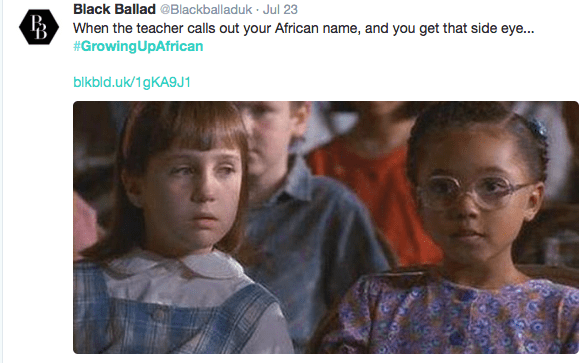
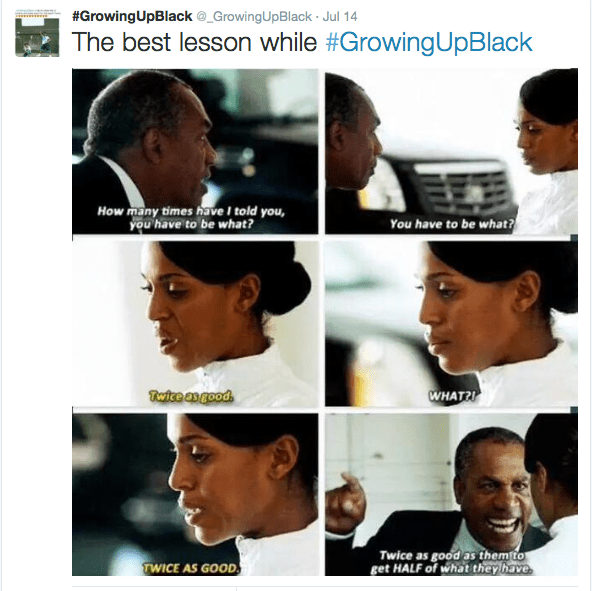
I would like to propose that there are more similarities between Blacks and Africans then we are comfortable to admit. For example, a few months ago two hilarious twitter hashtags took place: #growingupblack and #growingupafrican. I’m not sure which one started first, but scrolling through the responses, it was self-evident that both groups have a similar sense of humor when they describe the challenges and fond memories of growing up.
The strive for excellence…
The unique names…
The family responsibilities…
The methods of parenting…
We share similar struggles in aspiring for success and equipping our children with the tools and the strength to survive a world that does not support them. In spite of these challenges, we always save room for laughter. We enjoyed our upbringing and would not have it any other way.
If you are interested in learning more about what connects Blacks and Africans, I highly recommend you view the documentary “Bound: Africans vs African-Americans” by Peres Owino (which is now available on Amazon and iTunes). I attended a screening for it earlier this year and met the director, who is just brilliant. She incorporates history, candid interviews, and storytelling to strip away myths that surround the tensions and barriers between Blacks and Africans.
It Is Not Appropriation. It Is A Celebration.
I am sure you have come across the article “Black America, Please Stop Appropriating African Clothing and Tribal Marks” by now. The responses vary from complete support, disagreement, or just unsure. The author claims that the people pictured attending this years AfroPunk Festival were appropriating African culture as a trendy style. She further tries to compare this with the appropriation Blacks complain about when non-Blacks wear Black culture as a trendy style.
Blacks are not appropriating African culture. When Blacks speak against appropriation, they are referring to the historical and continued practice of non-Blacks in the USA using their style, culture, and ideas for profit without giving credit where it is due and intentionally skewing praise away from Blacks who are being themselves towards non-Blacks who are wearing Blackness as a trendy style. When Blacks dress to attend AfroPunk or incorporate motifs from different African countries in their style, they are paying homage to their royal ancestors. It is a sign of respect to wear African fabric, tribal markings, and cultural jewelry. It is used to create an independent connection to the continent their roots are from.
I was discussing this topic with my family the other day and they offered a brilliant comparison. When non-Japanese people get tattoos with Japanese characters, does it degrade or dilute Japanese culture? Is that trend ever referred to as appropriation? No. In fact, Japanese character tattoos and Afrocentric style are examples of globalization. It is the result of having increased access to cultures and people. This is exactly why I feel that the amazing and creative styles that were showcased at AfroPunk this year were not appropriation, but a celebration of culture, people, and black excellence.
Now that I have shared my opinion, you might be wondering where the source of my perspective comes from. My family is from Ghana, Liberia, and Switzerland. I was born in the USA and have lived here all my life. Thus, I am considered a first-generation, diasporan, and/or afropolitan. I like to think of these titles as part of a third group of people that have the insight and experience to bridge the gap between Blacks and Africans. We also tend to love discussing identity because we constantly have to define our own since it was not pre-packaged. I understand the challenges Blacks and Africans experience individually and collectively and see why both groups do not always agree. However, I also see the amazing potential Blacks and Africans could achieve as a winning team. Together our strength, resilience, creativity, and innovation are incomparable. We have been conditioned to never see value in ourselves and to throw shade before praise at anyone who looks like us. Hopefully with the help of globalization and the access to discuss these topics, others will be empowered to remove this padlock from their minds.
What do you think about the relations between Blacks and Africans? Do you think globalization is helping or hindering the connections between us?