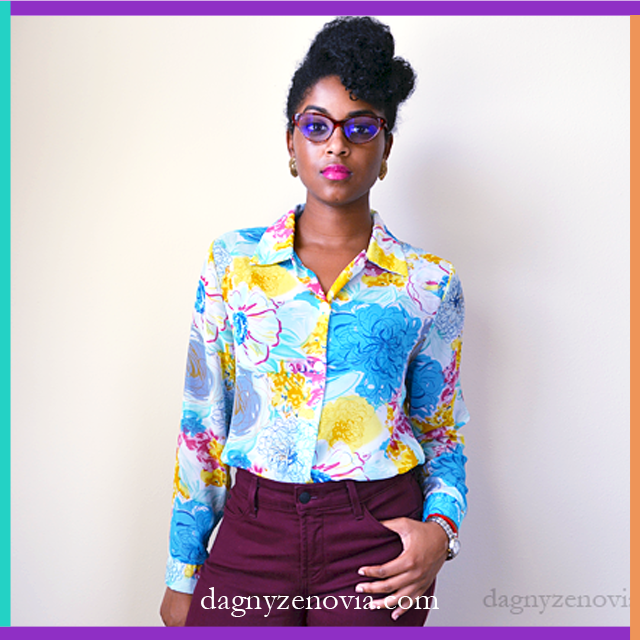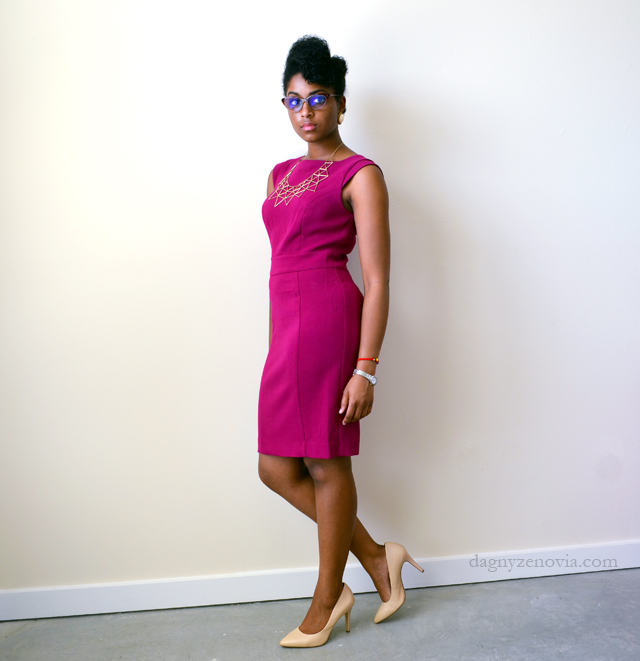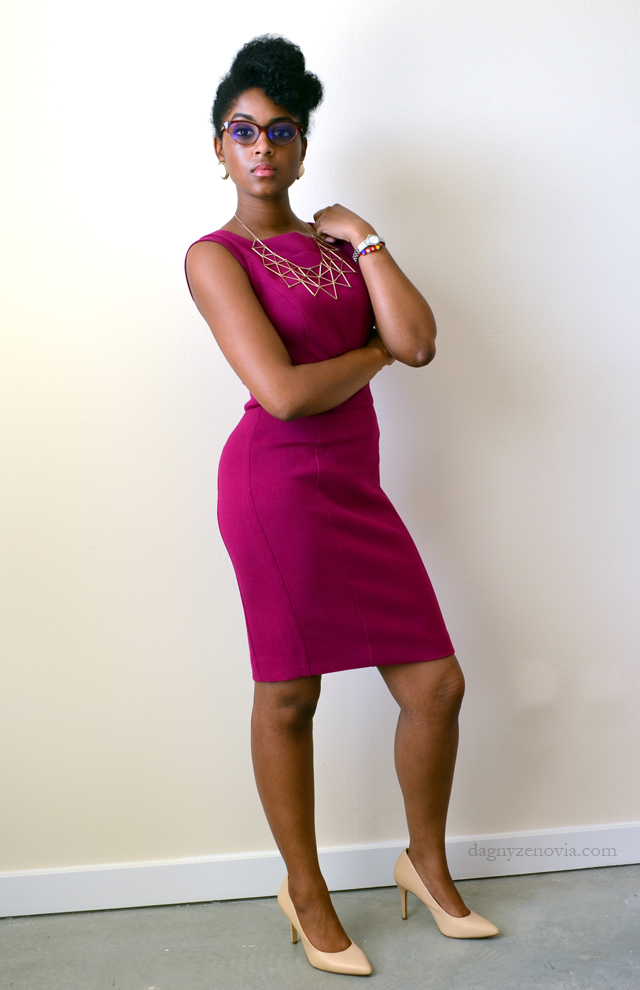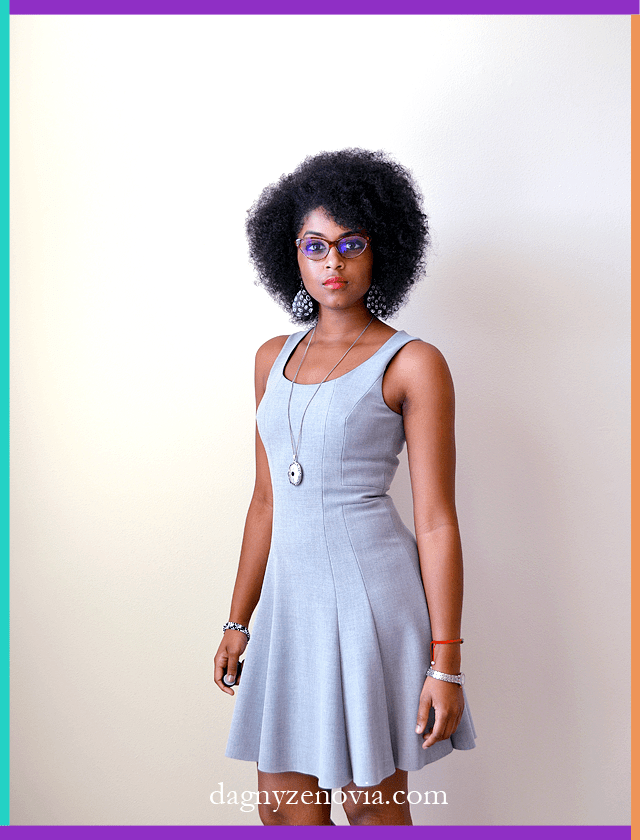
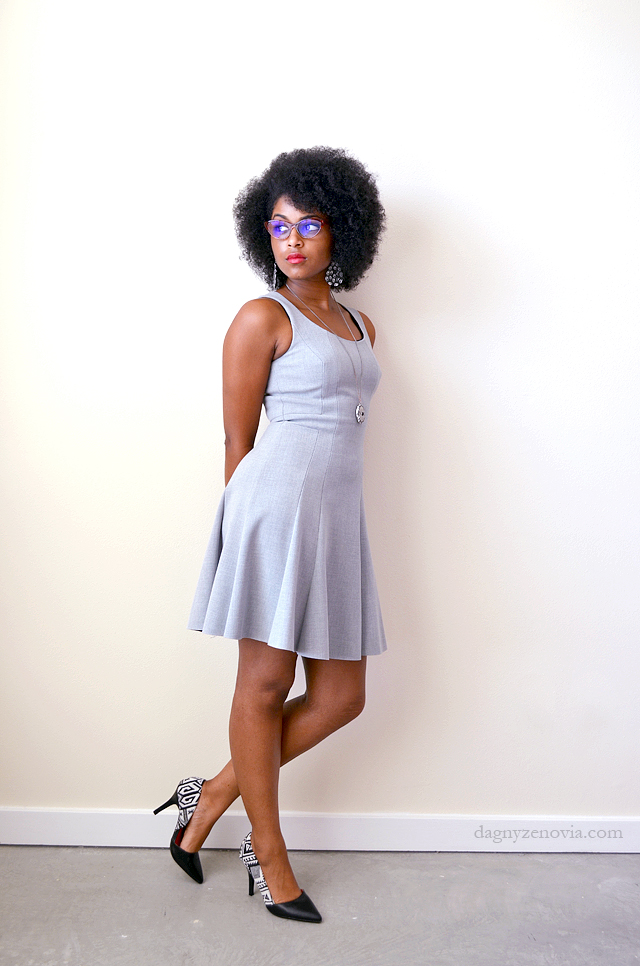
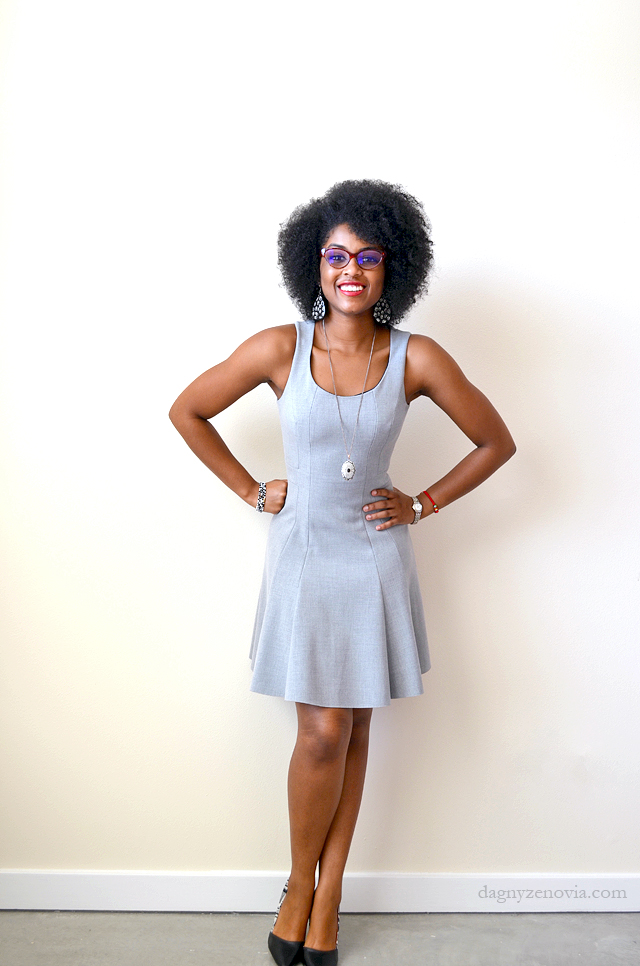
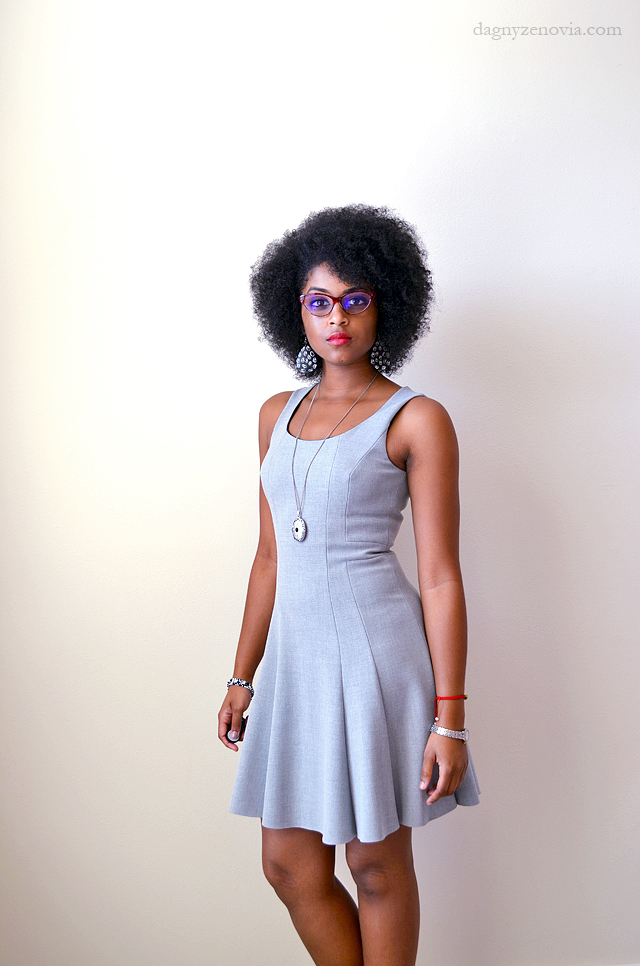
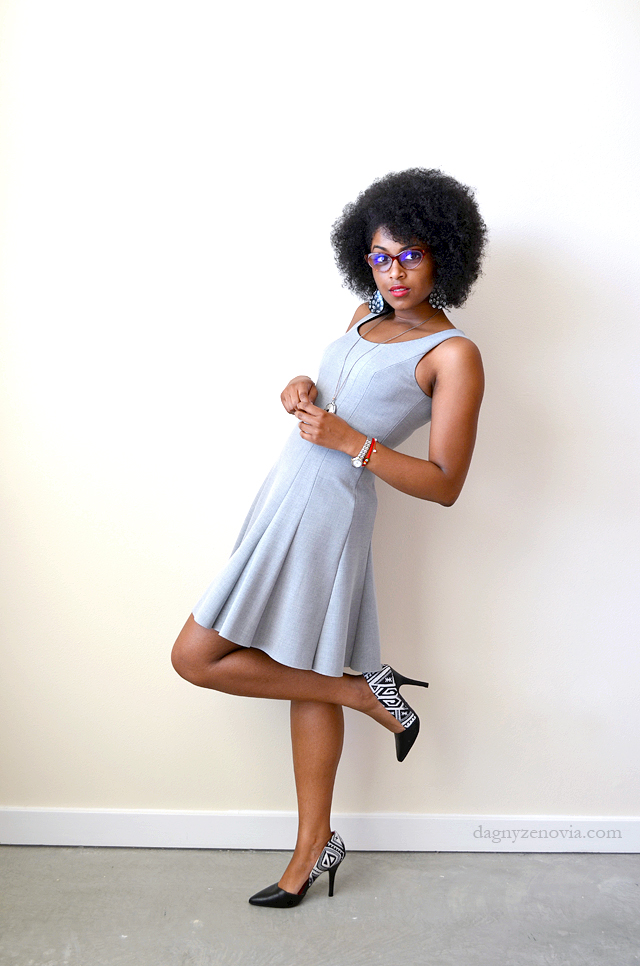
H&M Dress | Shoe Dazzle Heels | H&M Necklace


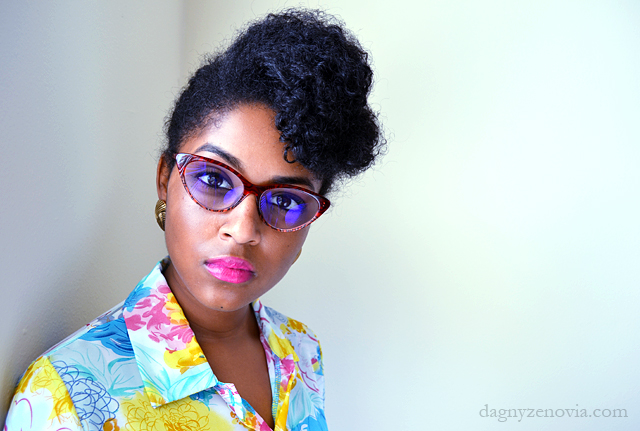
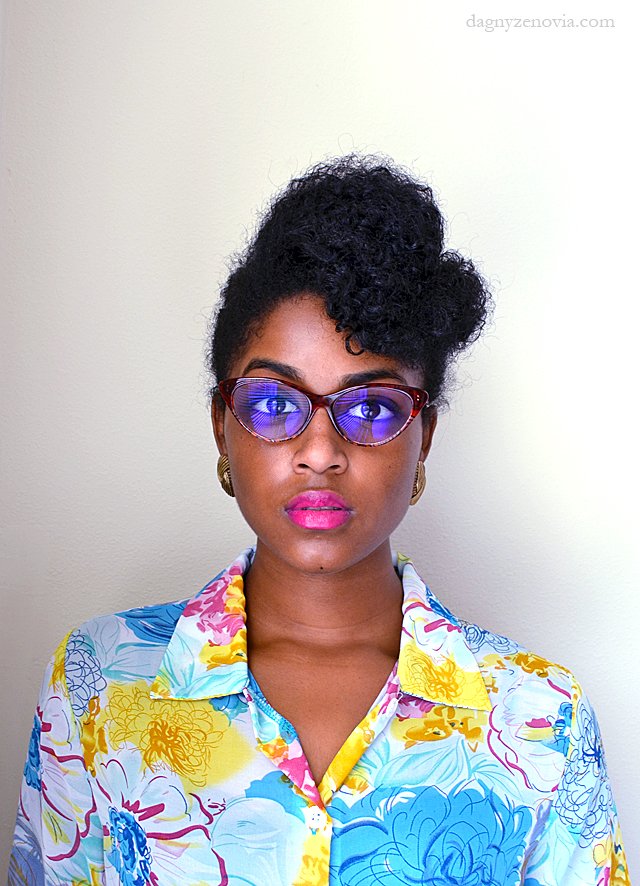
I was practically born with glasses on. Thus, lens technology is my kind of party. The red frames I am wearing now were a gift from my brother and father, who also have a healthy sense of style. Friends noted my glasses had a purple reflection, which I did not notice. It was only after editing my LookBook images that I saw what they were talking about. Out of all the glasses I have worn over the years, this is the first time my lenses have looked like this. Since I did not order purple-rain-lenses, I slightly panicked thinking the lab might have done something wrong. So, of course, I did some research and felt the need to share my discovery with the world.

My lenses have an anti-reflective coating. Even though I have had this on my previous glasses for the past 10 years, there has been a new development recently that causes this colored glare. The purpose of anti-reflective coating is to remove reflections from the lenses to improve the quality of vision and look of the lenses. It removes the “back-glare” that is caused by light hitting the back of the lens and bouncing into the eyes. This can cause eye fatigue and blurry vision while viewing a screen or driving at night. This coating is installed as layers on both sides of the lens to cancel out the intensity of the light reflected from the inner surface and outer surface.
Now, I always understood anti-reflective coating to remove all reflection from the lenses. At least, I figured that is why it was called “anti-reflective.” All advertisements and demonstrations show clear lenses.

So, why do my glasses have a glare…a purple glare? It turns out the color of the light reflection is determined by the quality of the anti-reflective coating. A blue or purple coating has 6 layers and a green coating has 9 layers. The heavier coating is prescribed for those who drive more at night and use the computer a lot. These colors are known as a “residual glare.”
My frames also have aspheric lenses. This is also a recent development in lens technology where the concave of the lens is reduced to minimize the magnified appearance of the eyes. My prescription is pretty strong and not the same for both eyes. For a long time my eyes have looked very big with one noticeably bigger than the other. These lenses do not completely cancel the magnification, but I do notice a change in size. Note aspheric lenses do not alter the quality of vision, but rather are a cosmetic adjustment.
Now, are these new developments worth it? To some, the purple residual glare looks cool. I do not see purple while wearing the glasses, so the glare does not distract me. However, looking back at the demo images, I was expecting my lenses to look clear. It might be that the combination of the aspheric lenses and the anti-reflective coating causes a bigger glare. Compared to my previous glasses, these seem to pick up more reflections. This is why I feel that stores and labs that specialize in lenses should make an extra effort to explain their products. There are so many options now to add to your lenses that the lack of a comprehensive menu of choices can lead to pleasant surprises or disappointments.

Do you have experience with different glasses? What is your opinion on the new anti-reflective coating?

Beyond producing and curating content, adding skills to their DIY branding tool box, keeping up with trends and news, and interacting with followers and influencers, a blogger must find time to think bigger. What kind of impact could your blog make if it reached a bigger audience, was supported by bigger brands, and/or reached a higher potential? I started to ponder this idea more after participating in the twitter chat #confessionsofablackblogger hosted by Black Bloggers United.
In addition to noting the discrepancies in which bloggers receive endorsements and are awarded for their work, a bigger discussion about a bloggers potential ensued. Even though there has been an increase in blogger networks, from Facebook groups to brand connectors, many bloggers can still feel isolated from any online community.
If you have ever found yourself in this predicament, I want you to reflect on why you are blogging. What is your purpose? What is your goal?
I see a lot of talk about brand endorsements, income reports, and monetizing strategies that all bloggers are encouraged to achieve. I admire those who have excelled in those endeavors and am inspired by what their brands stand for. However, that is not what I envision for my blog.
Like my logo says, my blog is a place to be informed, amused, and motivated. I am more interested in collaborating or working on projects that enhance and impact society, education, public policy, the arts, history…the list could go on. The posts I write might not include a clear-cut solution, but I hope they help my readers think, wonder, dream, and act. As I add to the LookBooks on my blog, it is not only about where I bought my clothes and how I look in them, but also to encourage my readers to find comfort in their unique radiance and learn how to accentuate it with style. In return, I am creating my opportunity to improve and explore my storytelling and design skills and connect with other brilliant people. These are things I enjoy doing, but I also have a bigger picture in mind. The blog is part of the foundation. The prize evolves with what is built on that foundation.
“The only thing that separates women of color from anyone else is opportunity. You cannot win an Emmy for roles that are simply not there. So here’s to all…the people who have redefined what it means to be beautiful, to be sexy, to be a leading woman, to be black.” – Viola Davis

Of course I was also inspired by the display of Excellence at the Emmy Awards. Viola Davis speech was on point and I applaud her, Regina King, and Uzo Aduba for being who they are and bringing us along for the journey. They created their opportunity and stuck to it not for an award but for the significance of their talent and presence in the arts and society.
I see bloggers (or freelancers or self-publishers or content creators) as people creating their own opportunities. When one of you win, we all win. Regardless of what your purpose is behind that opportunity, recognize its potential, not only for you, but for those you empower through your talent and presence.
What are you doing with your opportunity?
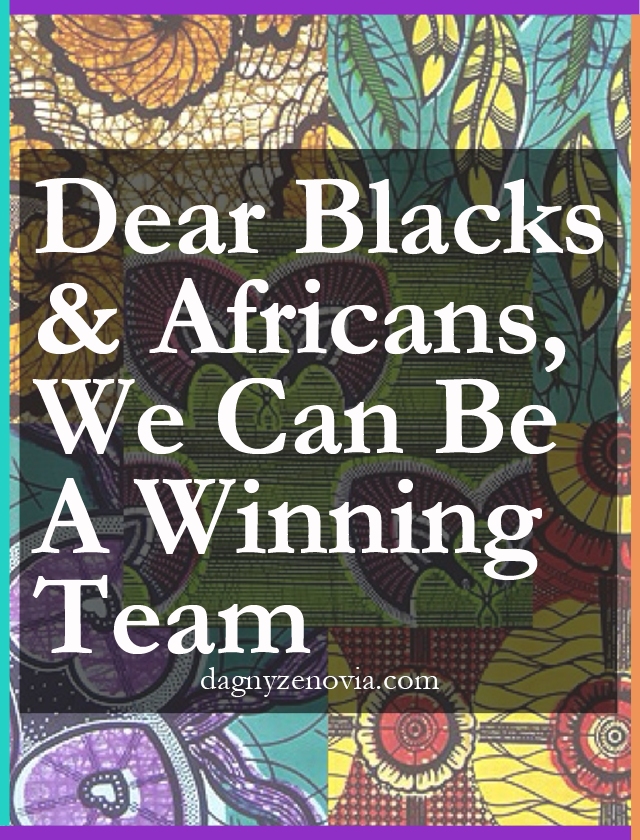
Are Blacks and Africans really that different? Are they really that similar? Recently the debate (and slight tension) between these questions were brought up again with various twitter chats, articles, and documentaries. I agree everyone is entitled to their own opinion on this, but an informed perspective can make a world of a difference. To contribute to the conversation, I want to share my response to these questions and some resources for you to explore later.
Whenever Blacks and Africans are compared to each other, a negative connotation is usually attached. Take for instance The Economist article “Building Afroamerica” that speaks to the fact that African immigrants are the fastest growing group in the American immigrant population and could possibly change what it means to be “African-American.” Noting the trajectory of African immigrants who relocate to the USA, they tend to live in the suburbs, are well educated, and “will succeed nonetheless because their education and motivation will allow them to climb into the middle class.”
This story features statistics and other quotes to enhance its credibility, which is all fine. However, was it really necessary to add this – “African migrants stand out from American-born blacks. Indeed, on most measures, they have little in common but their colour.” The article proceeds to subtly slight Blacks by giving the impression they are less educated, primarily younger, and less likely to live in the suburbs. These back-handed comments did not enhance the story but rather left a bad after taste. There is no need to dig a deeper division between Blacks and Africans. There is so much both groups can help and learn from each other. Why give the impression there is some competition to be the real MVP African-American? Do we see any articles comparing American-born Mexicans, Chinese, or Italians with recent immigrants from their respective countries? Are they pitted against each other to never solidify their community? No. Alas, their history is not as complex, tragic, and excellent as ours. So this team is more special and should be handled with care.
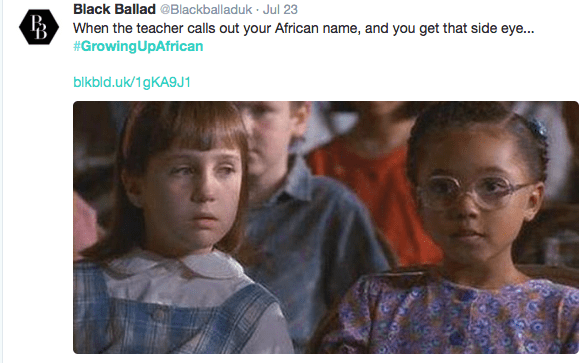
I would like to propose that there are more similarities between Blacks and Africans then we are comfortable to admit. For example, a few months ago two hilarious twitter hashtags took place: #growingupblack and #growingupafrican. I’m not sure which one started first, but scrolling through the responses, it was self-evident that both groups have a similar sense of humor when they describe the challenges and fond memories of growing up.
The strive for excellence…
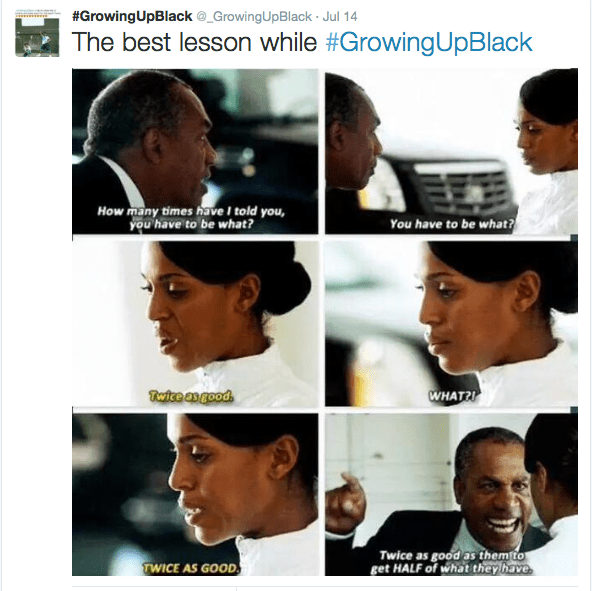

The unique names…

The family responsibilities…


The methods of parenting…


We share similar struggles in aspiring for success and equipping our children with the tools and the strength to survive a world that does not support them. In spite of these challenges, we always save room for laughter. We enjoyed our upbringing and would not have it any other way.
If you are interested in learning more about what connects Blacks and Africans, I highly recommend you view the documentary “Bound: Africans vs African-Americans” by Peres Owino (which is now available on Amazon and iTunes). I attended a screening for it earlier this year and met the director, who is just brilliant. She incorporates history, candid interviews, and storytelling to strip away myths that surround the tensions and barriers between Blacks and Africans.

I am sure you have come across the article “Black America, Please Stop Appropriating African Clothing and Tribal Marks” by now. The responses vary from complete support, disagreement, or just unsure. The author claims that the people pictured attending this years AfroPunk Festival were appropriating African culture as a trendy style. She further tries to compare this with the appropriation Blacks complain about when non-Blacks wear Black culture as a trendy style.
Blacks are not appropriating African culture. When Blacks speak against appropriation, they are referring to the historical and continued practice of non-Blacks in the USA using their style, culture, and ideas for profit without giving credit where it is due and intentionally skewing praise away from Blacks who are being themselves towards non-Blacks who are wearing Blackness as a trendy style. When Blacks dress to attend AfroPunk or incorporate motifs from different African countries in their style, they are paying homage to their royal ancestors. It is a sign of respect to wear African fabric, tribal markings, and cultural jewelry. It is used to create an independent connection to the continent their roots are from.
I was discussing this topic with my family the other day and they offered a brilliant comparison. When non-Japanese people get tattoos with Japanese characters, does it degrade or dilute Japanese culture? Is that trend ever referred to as appropriation? No. In fact, Japanese character tattoos and Afrocentric style are examples of globalization. It is the result of having increased access to cultures and people. This is exactly why I feel that the amazing and creative styles that were showcased at AfroPunk this year were not appropriation, but a celebration of culture, people, and black excellence.
Now that I have shared my opinion, you might be wondering where the source of my perspective comes from. My family is from Ghana, Liberia, and Switzerland. I was born in the USA and have lived here all my life. Thus, I am considered a first-generation, diasporan, and/or afropolitan. I like to think of these titles as part of a third group of people that have the insight and experience to bridge the gap between Blacks and Africans. We also tend to love discussing identity because we constantly have to define our own since it was not pre-packaged. I understand the challenges Blacks and Africans experience individually and collectively and see why both groups do not always agree. However, I also see the amazing potential Blacks and Africans could achieve as a winning team. Together our strength, resilience, creativity, and innovation are incomparable. We have been conditioned to never see value in ourselves and to throw shade before praise at anyone who looks like us. Hopefully with the help of globalization and the access to discuss these topics, others will be empowered to remove this padlock from their minds.
What do you think about the relations between Blacks and Africans? Do you think globalization is helping or hindering the connections between us?