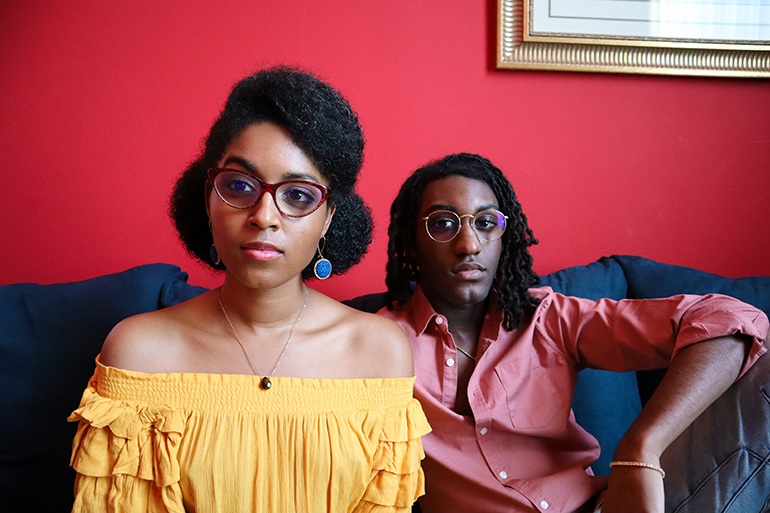
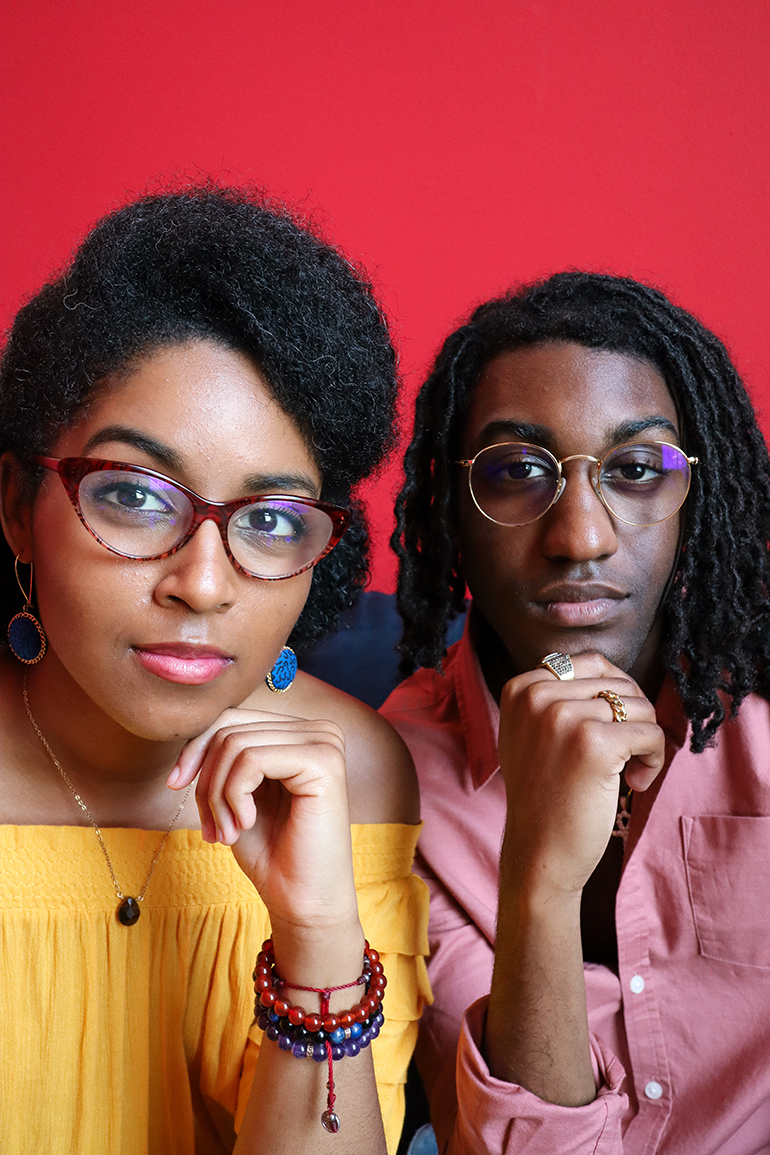
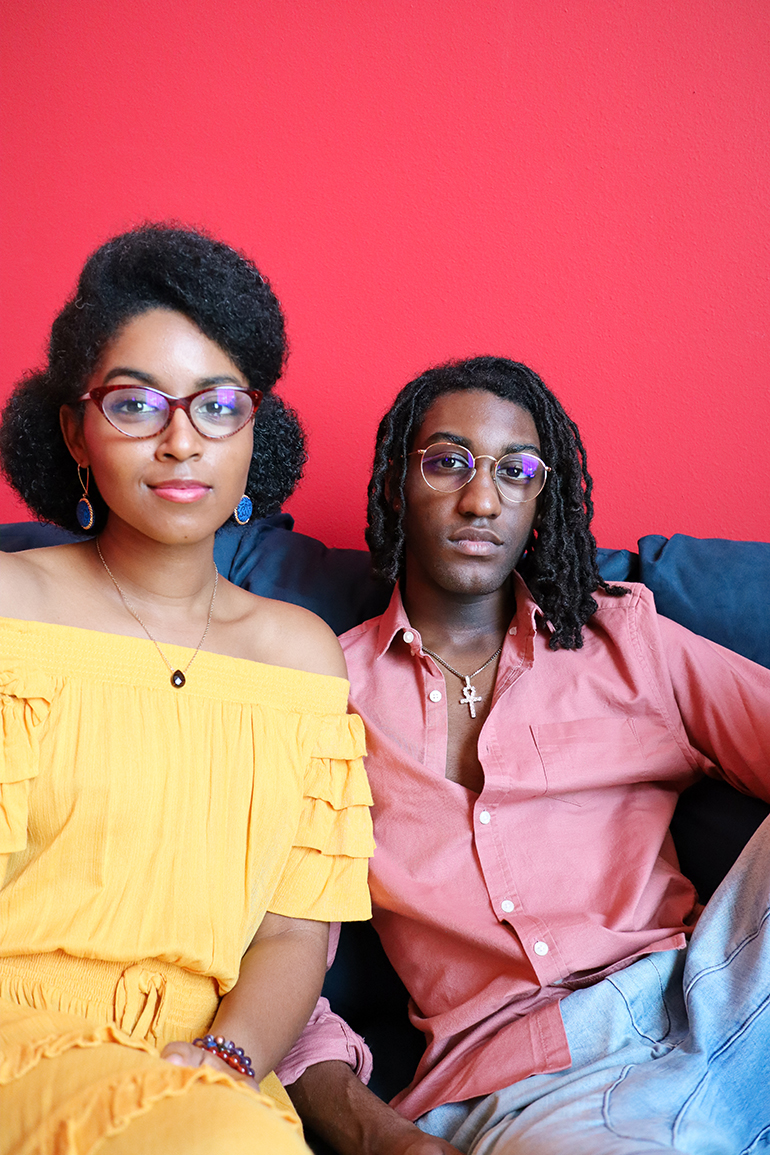
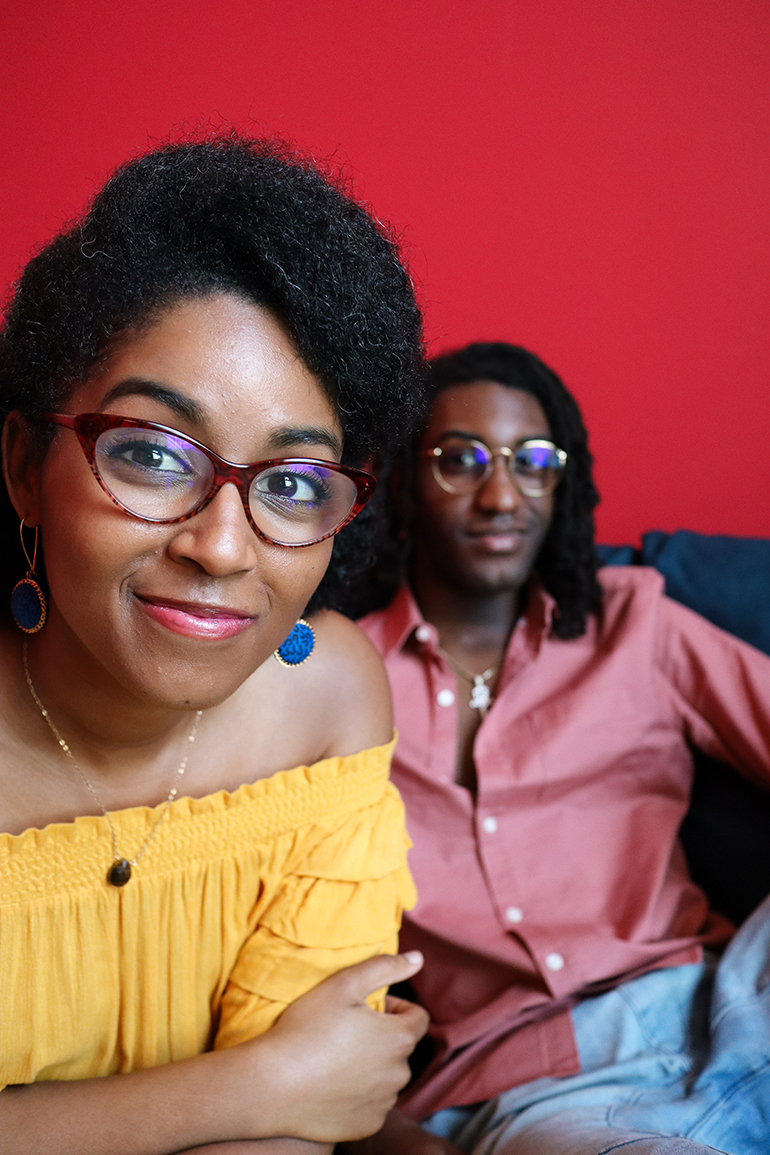
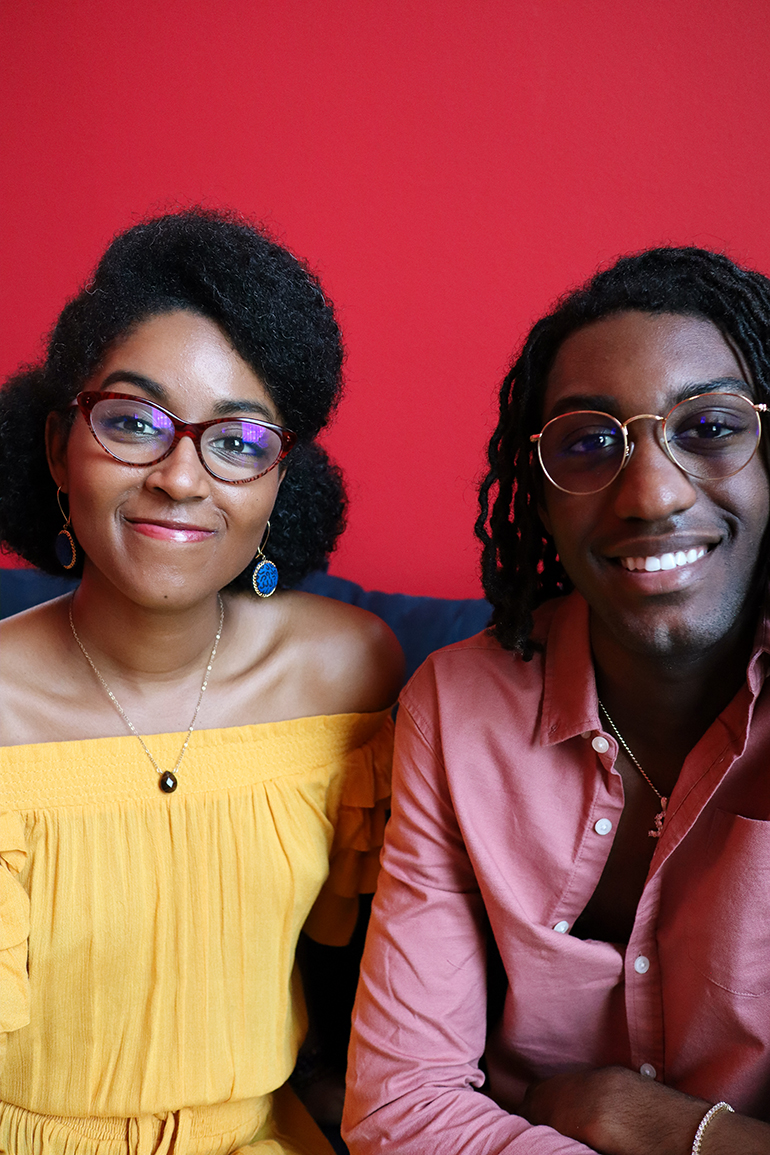
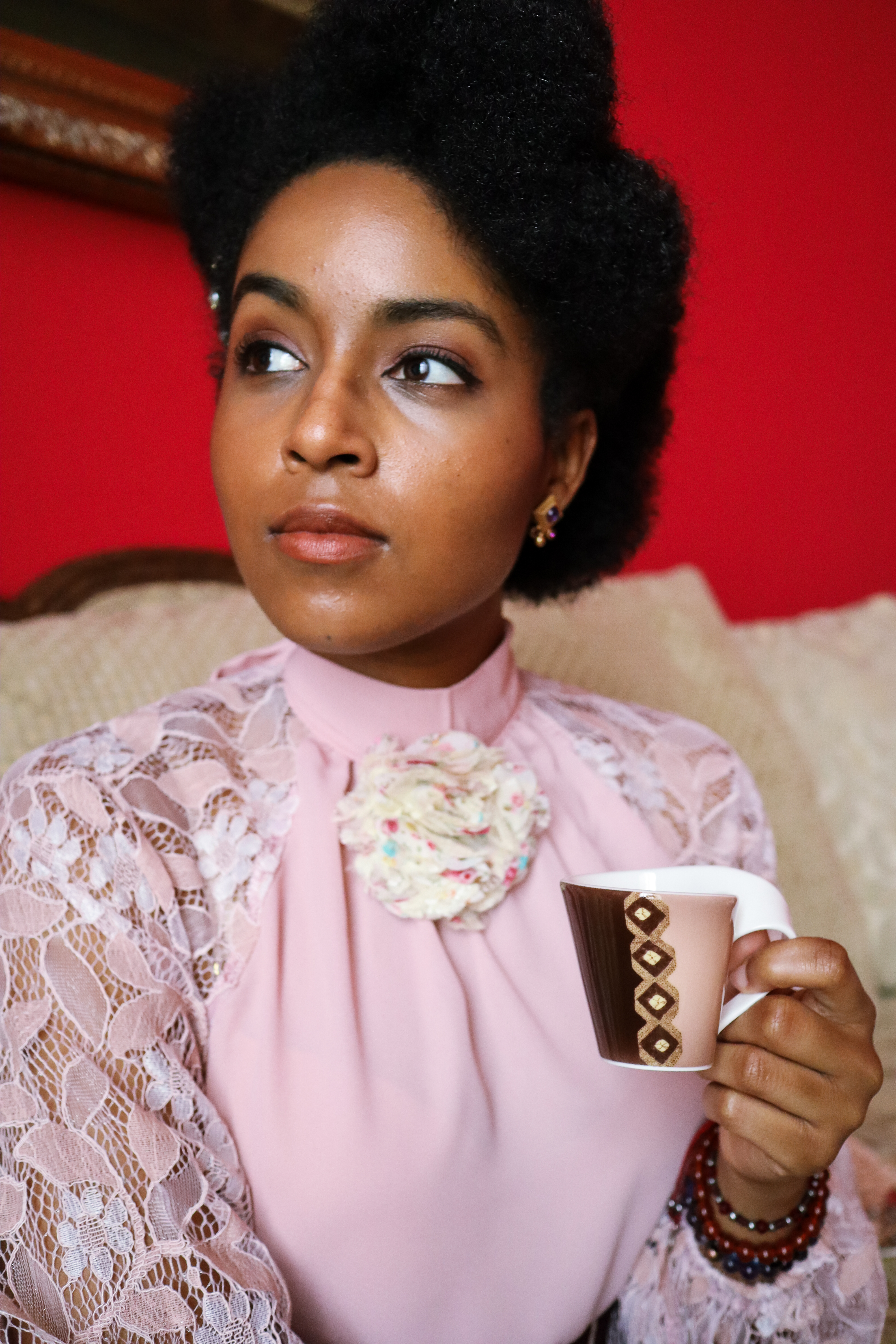
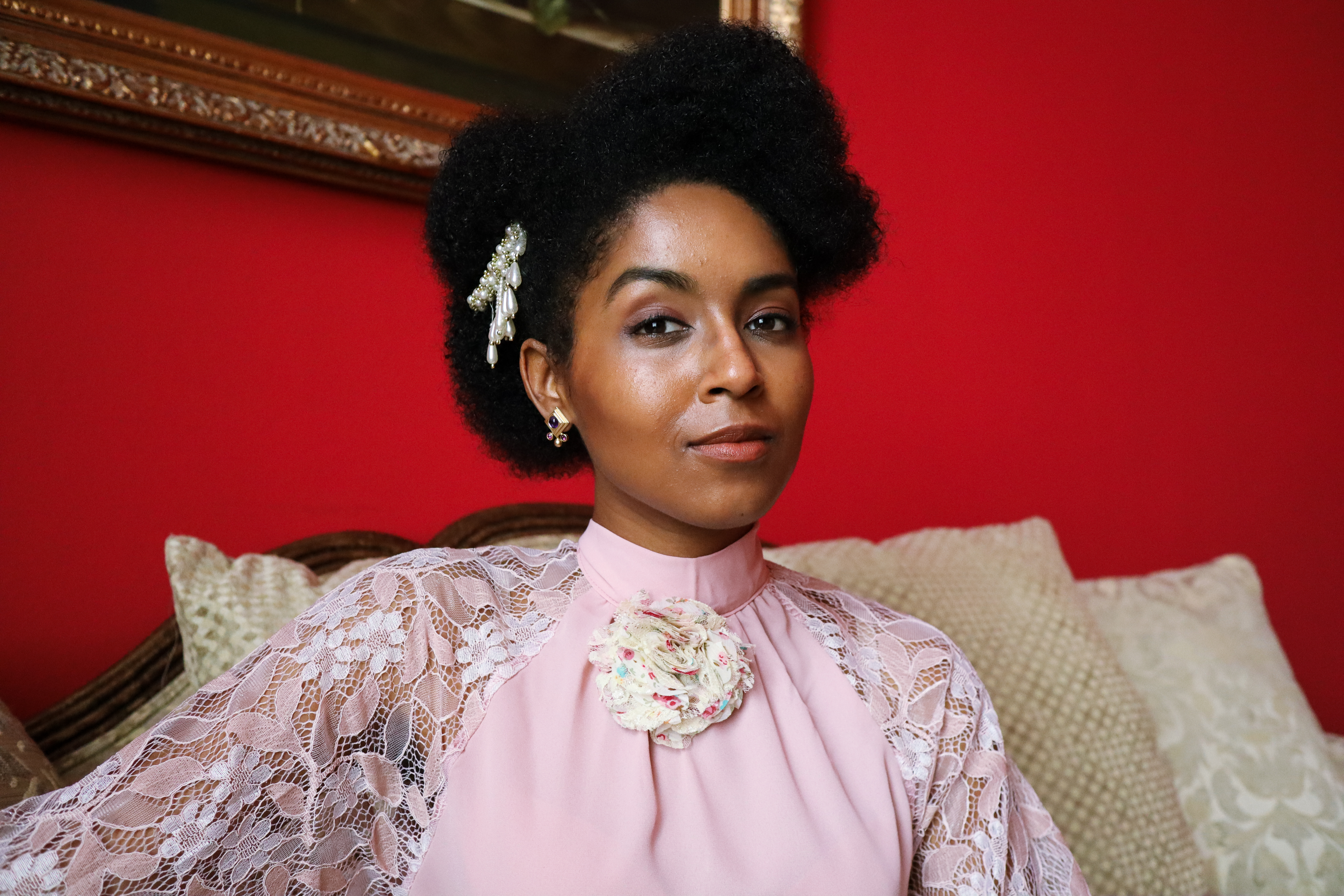
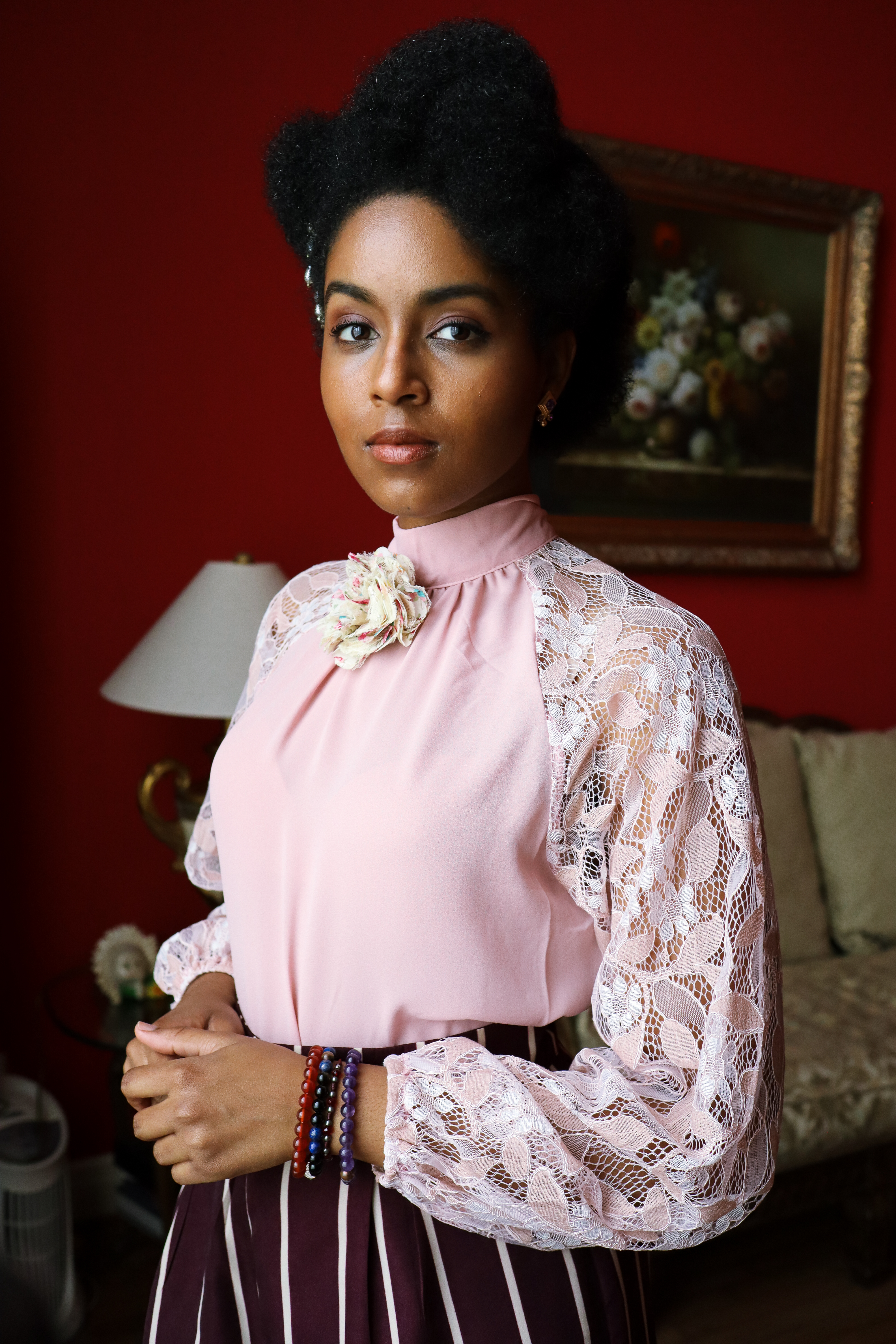
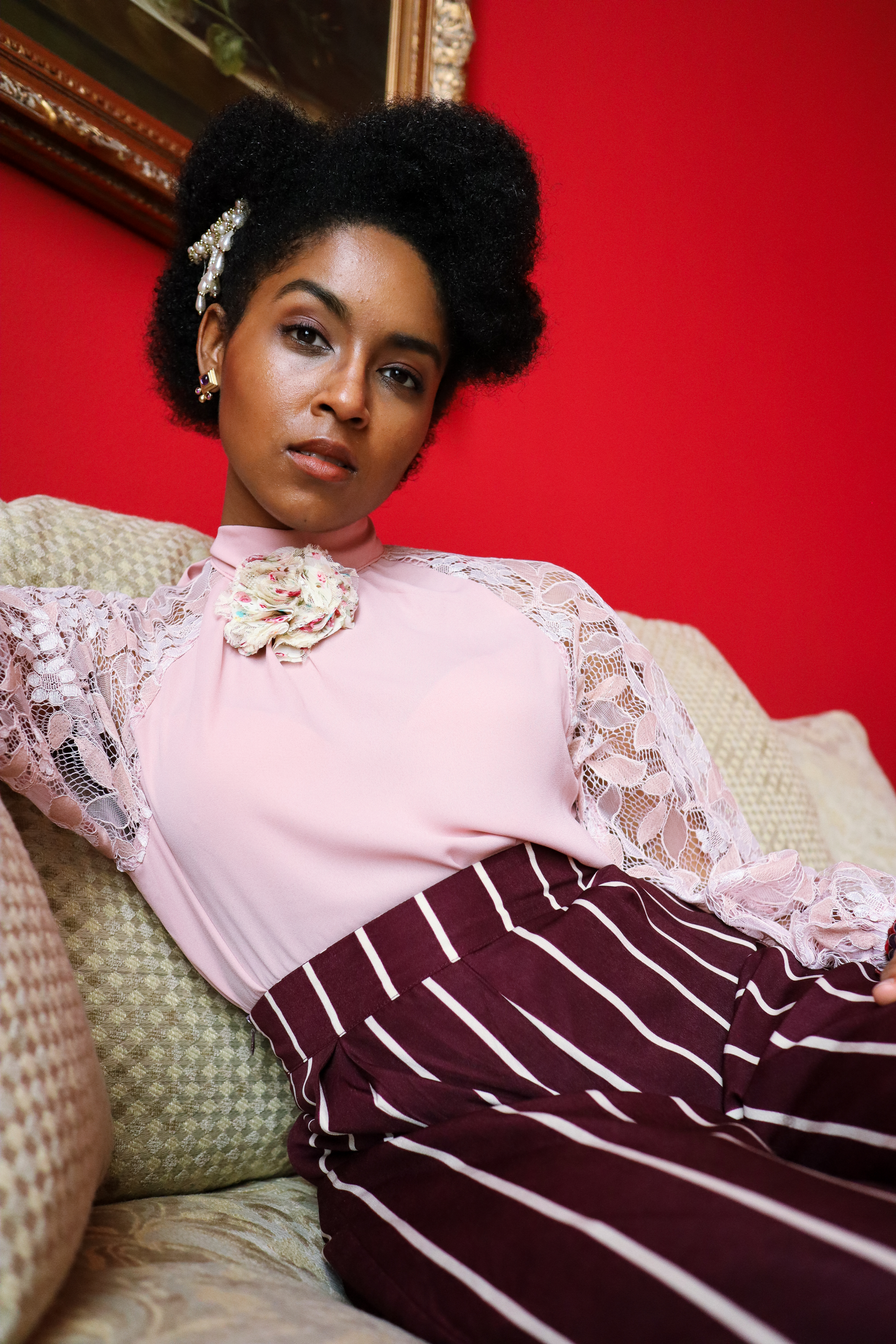
The Class of 2020 has already made history before even starting life after high school. They are the first class to have the longest senior skip day. Actually, I don’t know if they are the first in education history, but stick with me. Students have experienced a major interference in their lives due to the pandemic. This has revealed how much school impacts and influences youth, from internet access, to learning styles, to various home environments. Instead of broadly speaking on how school has been impacted, I wanted to narrow the focus to real experience. In this video, I am joined with a very special guest, my brother Dantes, to discuss how seniors in high school maneuvered the second half of their semester, whether online-at-home schooling really works, and the layers of importance behind inter-generational conversations.
Well, senior year did not end on a high note for the Class of 2020. I think there is a lot to be said on how these students handled this unexpected shift. So much has been revealed within the inadequacies of some school districts, which some really did leave students hanging, and the abundance of some communities, which stepped in to fill the voids as best they could. Online education is not as simple as scanning a syllabus to a forum and expecting students to do the assigned homework. For those who are developing online learning platforms, either for brands, businesses, or schools, I hope you are including the needs of this generation. You will need to balance the priorities of a group of people who are the most tech savvy, have a very different attention span, and really want to feel connected with their class.
Looking at the bigger picture, I feel they are the chosen ones. I can’t tell for what yet, but there is a reason why they are called to experience this. Before 2020, this generation already understood the need to nurture the environment, was already comfortable with respecting identified pronouns, and already strive to balance mental health. They understand a lot more than others give them credit for. They have been exposed to a lot more since the time their parents gave them their first cell phone at the age of 8.
Like Dantes mentioned in the video, his generation’s biggest fear is ending up like previous generations who are unhappy and not being able to do better than previous generations. For capitalism purposes, they are identified as Generation Z. I think that label will transform with time to illustrate the freedom and clarity they possess. Similar to how the term Millennials, my generation, no longer only refers to a group of people who created social media. My generation is leading the revolution all over the world. We decided to not hold “adulting” as an excuse to continue making a mess for the next generation to clean up. Before 2020, we already shook the table by creating unconventional lifestyles that did not rely on traditional gate keepers for news, careers, relationships, education, etc. We accidentally taught ourselves how to code through MySpace and later created after school programs to teach kids coding, arts, history, and tech. Millennials made mental health, travel, individuality, collective responsibility, and financial freedom look and feel cool. There is a reason why these two generations are so close and have so much energy at this pivotal time in history. Now, let me share some advice on how to handle these fears.
In regards to fearing regret, I think everyone of every age can resonate with this. The thing I focus on to avoid regrets is intention. Everything worth having takes time. If you are intentional with what you learn and experience, there is no room for regrets. People tend to live a life full of regrets because they hold on to excuses. There is always some reason why they did not show up for themselves, why they were waiting for permission, or why they were too busy projecting. You need to prioritize your mindset in order to avoid this. The sooner you gain clarity on who you are, everything else will fall in place. That clarity comes from releasing yourself from others expectations, be it personal or distant.
In regards to doing better than previous generations, this too is a recurring goal. We all want to make our parents and ancestors proud. Understand you already have by existing at this time. You are loved for who you are more than what you do. If you can create a reality where you are truly happy and healed, then our ancestors struggle was not in vain. If you can uplift yourself and those around you in a sustainable way, then our parents dreams have come true. You do not have to follow the rules because they were not written with your best interest in mind. Let go of what school tried to confine you in. You can color and think outside of the box now. Accept that you never stop learning in life. The stage is being set up for you right now, so take the time to create what you are proud to display.
I am so proud of you Dantes. I am proud of the Class of 2020. I am so glad to have you as part of the team and am so excited to see you take the lead.
How has 2020 influenced your education plans? What have you learned from it? What do you enjoy or look for in inter-generational conversations? Let me know in the comments.
Also, what would you like to see Dantes and I discuss next? It has been so long since we did a video together. We want to do more before the time comes for our location to change again.
Below you will find a list of Black-Owned businesses and initiatives you can support.
Remember to connect with me on Twitter, Instagram, or Facebook. I love hearing from you.
If you want to know why something is happening, follow the money. To further the discussion to heal the distance between Africa and its Diaspora, let us go over the historical and current economic oppression that influences and determines the Black experience.
In this video and post, I am focusing on Black America and Ghana. For Black people outside of America and Ghana, please do not feel isolated or excluded in this conversation. The point is for all of us to win. Understanding how we can strategically do that is key. As you read further in this post, I widen the focus to other parts of the world.
Let’s dive deeper. Starting with economic oppression and Black America, there are two layers to this agenda: the wealth gap and the income gap. The wealth gap was created by the exploitation of free labor from Black slaves, passing down of profits from that exploitation, and destroying and stealing from Black businesses.
The history of slavery in America is diluted and distorted in American history. The wealth gap began with cotton. America’s first big business, which pushed it to be the leading economy in the world, revolved around slavery. At one point, American cotton made up two-thirds of the global supply of cotton. This was all off the backs of slaves. Americans became millionaires off the bleeding backs of enslaved Black people. This is also where police brutality began. Aggressive and barbaric white “supervision” was used to return runaway slaves to the plantation while violently and brutally questioning the work and movement of slaves. This Vox article gives more details on how slavery became America’s first big business.
Like I mention in the video, there are two historical massacres that are referred to as the illustration of why telling Black people to pick themselves up from their bootstraps is not valid.
The Tulsa Massacre in 1921 occurred in Tulsa, Oklahoma in the Greenwood District, which was also known as Black Wall Street. It was an affluent Black American community that included thriving and peaceful Black businesses and residential areas covering 35 city blocks. The incident that started the massacre is still surrounded by rumors around what happened when Dick Rowland, a Black man, and Sarah Page, a white woman, stood in an elevator. A white mob formed reacting to this rumor that was further embellished as it spread through the town. Rowland was arrested and held at the police station. The mob outside was met with a group of concerned Black residents who understood that Rowland was in danger of being killed by either law enforcement or this white mob. This response added to the rumors that spread among the white mob pitting for a race war. The white mob grew in size and hate. They proceeded to burn and destroy Black Wall Street, leaving around 10,000 Black Americans homeless and murdering around 300 Black Americans. The Tulsa Historical Society and Museum have archived the details of the Tulsa Massacre through documents, photos, and audio on their website. They also provide a free exhibit.
The Rosewood Massacre in 1923 occurred in the predominately Black town, Rosewood, in central Florida. It also was instigated by an alleged rumor that a white woman was offended, in this case sexually assaulted, by a Black man. The white mob that responded to this acted on further embellished rumors to burn the town to the ground and lynch / murder any Black man they could find. Again leaving those who survived homeless. More details are in this Black Past article.
The income gap continues through occupational segregation. Let’s go over some numbers. In 2018, 20.8%, which is 8.9 million, of Black America were living underneath the poverty threshold, being the second largest group in America living in poverty. (Source from Talk Poverty) The overall largest group is Native Americans at 25.4%. Like I mentioned in the video, Black people in America got the shorter end of the stick and Native Americans did not get a stick at all. Systematic inequality cannot continue to wipe them out either. Let me know if you would like to learn more about the Native American experience so I can direct you to the voices you need to listen to. Regarding unemployment, in 2018, the overall rate was at 3.8% and the Black rate was 6.5%. In 2020, the overall rate is 13.3% and the Black rate is 16.7%. America has the biggest incarcerated population in the world. Prison policies and reform has more depth than a few percentages could show. This report gives more details on the issue of mass incarceration in America. The income gap is not only maintained by unemployment. There is an additional layer with wages. This article breaks down how the wage gap is widening further. For more insight, read this report on systematic inequality and economic opportunity.
When we talk about systematic racism and systematic inequality, these numbers are part of the picture. One cannot “catch up” when the game is fixed or when the goal post continues to be moved. The gap is not actually influenced by the mask of education, home ownership, or job title. The gap is only influenced and maintained by the deliberate effort to keep the gap. This article from CityLab about why we can’t close the racial wealth gap has some good insight. This is part of why it is so exhausting to be Black in America. Always working hard and following the rules accepting that you will always have to tolerate less in every industry, field, interaction, and experience.
This is also why America always starts sweating when the conversation about reparations comes up. It is not because it is impossible to calculate the wealth Black America created and never benefited from. It is not because Black America is living so much better now compared to the 1800s or 1960s. It is because America prefers to drag its feet. It is because America prefers to do everything but what was asked for, like painting Black Lives Matter on a street, manufacturing band-aids that match brown skin, and kneeling while wearing cloth that looks like Kente cloth.
How can we learn from this? For the first time in a while, Black America used its purchasing power as an effective tool and Black-Owned businesses made millions of dollars over night. This is a good start. How do we take this further?
Now, let’s talk about economic oppression and Ghana. When I compare what was happening in Ghana with the same historical dates I listed above, I see there is a lot Africa’s people, in and out of the continent, can learn from to heal the distance and enhance the link.
In the 1860s, which was during the height of the cotton empire in America, the export of slaves was gradually diminishing. Even though the import of slaves to America was outlawed in 1808, the demand for slave labor continued after that. Later, Ghana experienced a shift as colonizers pivoted to competing with each other for colonial territories. During this time there were a variety of alliances and struggles for power, including the Ashanti-Fante War and the Anglo-Ashanti Wars. The latter wiped out different levels of British forces.
The debate as to whether Africans sold Africans into slavery is an interesting one. I have noted Africans rebutting that there is no evidence that a sale transaction occurred. I have noted Black people outside of Africa express suspicion on whether Africans were sold or stolen. Some argue that trying to discuss whether Africans sold Africans is like discussing black on black crime, which is a distraction from the movement. To me, it sounds like both discussions trigger people in different ways. I believe in holding each other accountable, which includes looking in the mirror and reading real history. The primary point is to avoid repeating history. Stop trying to distance yourself from the problem. We need to do better.
British authorities in the 1920s in Ghana adopted a system of indirect rule. Even though they put traditional chiefs in position of local authority, they took instructions from their British supervisors. During this era, transportation, water supply, public buildings, schools, prisons, hospitals, and other services were developed by colonial rule and African hands. Ghanaians also assisted Britain in World War I and World War II. A national conscious, which lead to independence, developed after WWII when veterans and the growing educated population no longer were satisfied with the humble position colonial rule kept them in. In some respects, Ghana was lucky compared to other African colonies. They did not experience limbs being chopped off, like Belgium rule in Congo, or complete destruction, like French rule in Algeria. However, one could analyze a wealth gap in how much was extracted from Ghana during this time.
Before I fast forward to the income gap of today, let’s pause here. If we focus on the historical events listed above for both Black America and Ghana, what do you see? Black people in America had a different experience with white people compared to Black people in Ghana during that time. Both set of colonizers utilized economic oppression, but in different ways. I feel this needs to be understood by Africans and Africa’s diaspora. This might be the reason why there is a sense of urgency to fight the power on one end and a sense of confusion and no urgency on the other. Remember, colonizers do not want us to be on the same team. I feel education has a role to play in this too. When I speak to Ghanaians about colonialism and Ghana’s relationship with England now, I do not pick up a sense of animosity or disdain. The narrative is not focused on exploitation, but rather how the British enhanced Ghana, historically speaking. Like I noted above, development did occur during colonial rule. Also focus on the fact that British rule had authority over education and implemented the British educational curriculum in Ghana. Making sure the Ghanaian population learned British history under a British lens, it is no surprise the British continued to frame themselves as a hero. This is similar to the American education system, which continues to frame the founding fathers and corporations as heroes. However, Black Americans have a different narrative when they speak about slave masters, Jim Crow law, and police brutality. Black British and Black French also have a different narrative when they speak about their experience with colonizers, which does include police brutality, economic oppression, and pushing statues back into the sea. I do not have the answer yet, but this disconnect should not be dismissed nor should it allow us to create more barriers between us.
Fast forward to the income gap of today in Ghana. In 2016, 56.90% of Ghana’s population was living underneath the international poverty threshold. In 2018, the unemployment rate in Ghana was 4.16%. There is a lack of transparency in the value of labor and skills in Ghana. This is why the numbers, which are primarily calculated and reported on by NGOs and international corporations, may not always add up. The focus of these numbers are primarily on national policy, like this report on Ghana’s poverty rate and inequality. There is a discrepancy between what Ghanaians are paid and what expats are paid in Ghana. There is inequality between what women are paid and what men are paid in Ghana. More details on this inequality are analyzed in this Oxfam report. As development continues, the gap between the rich and poor continues to widen.
These numbers and lack of numbers is part of the picture. This is why the sense for most in Ghana is that nothing you do will really change the bigger things that keep your life the way it is. Some still spend half the day without electricity. The floods, that could be prevented, still kill and displace people every year during rainy season. This supports the assumption that big money only comes from abroad or corruption, not real work. When you compare this to how many foreign companies are making real profits in Ghana and taking it outside of Ghana, like this company producing organic bananas, I have to wonder if this attitude is systematic to reduce competition.
How do we learn from this? There are plenty of Black owned businesses in Ghana and Africa. There is a strong purchasing power in Ghana and Africa. However, there is still a mix-match. How can we fix it?
How do we learn from how economic oppression has been utilized against us to effectively protect what we build? On a people, corporate, and government level. How do we prevent our efforts from being destroyed by those who want to maintain the status quo? Let me know what you think.
The energy we are feeling right now is a golden opportunity. The shift and change is possible, if we continue speaking up, evolving, holding each other accountable, and making a difference. Below are more resources for you to continue supporting Black content and businesses.
Also, feel free to connect with me on Instagram, Twitter, and Facebook. I love hearing from you.
Freedom Agenda
Black Owned Apps
JoinMi – safe space for HBCU students to converse about concerns and life.
Gbook – e-commerce platform for students to buy/sell products and services.
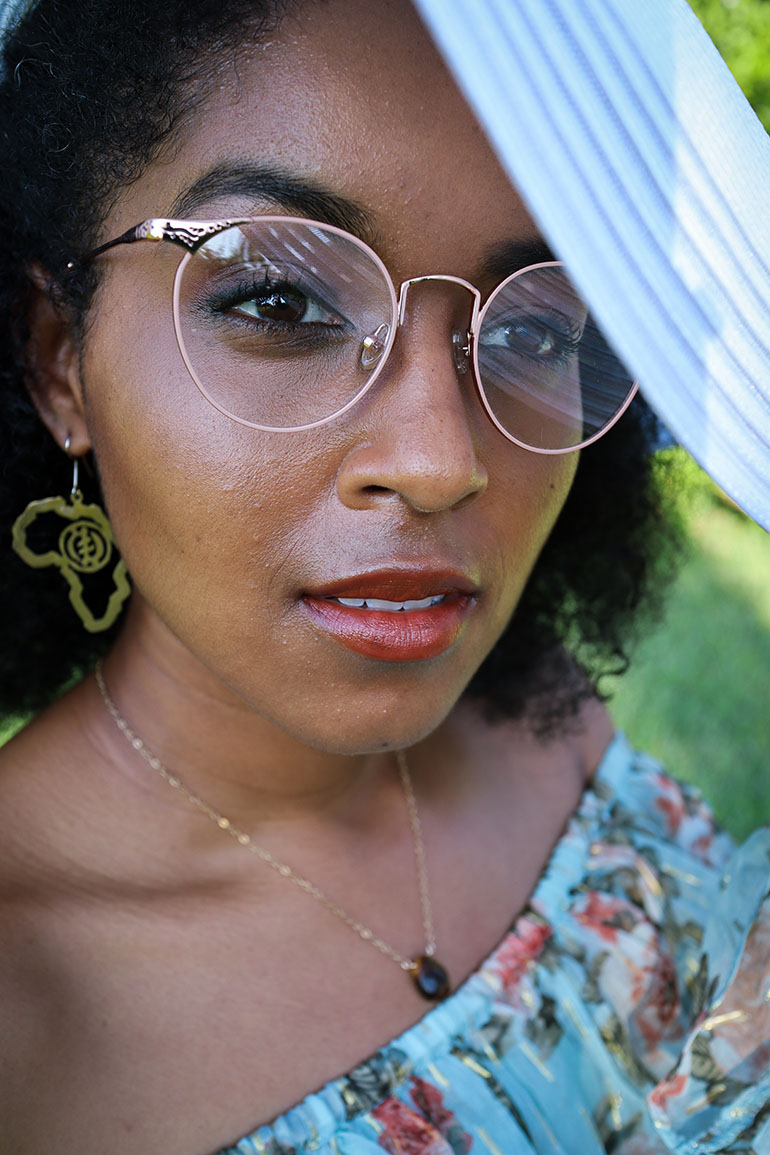
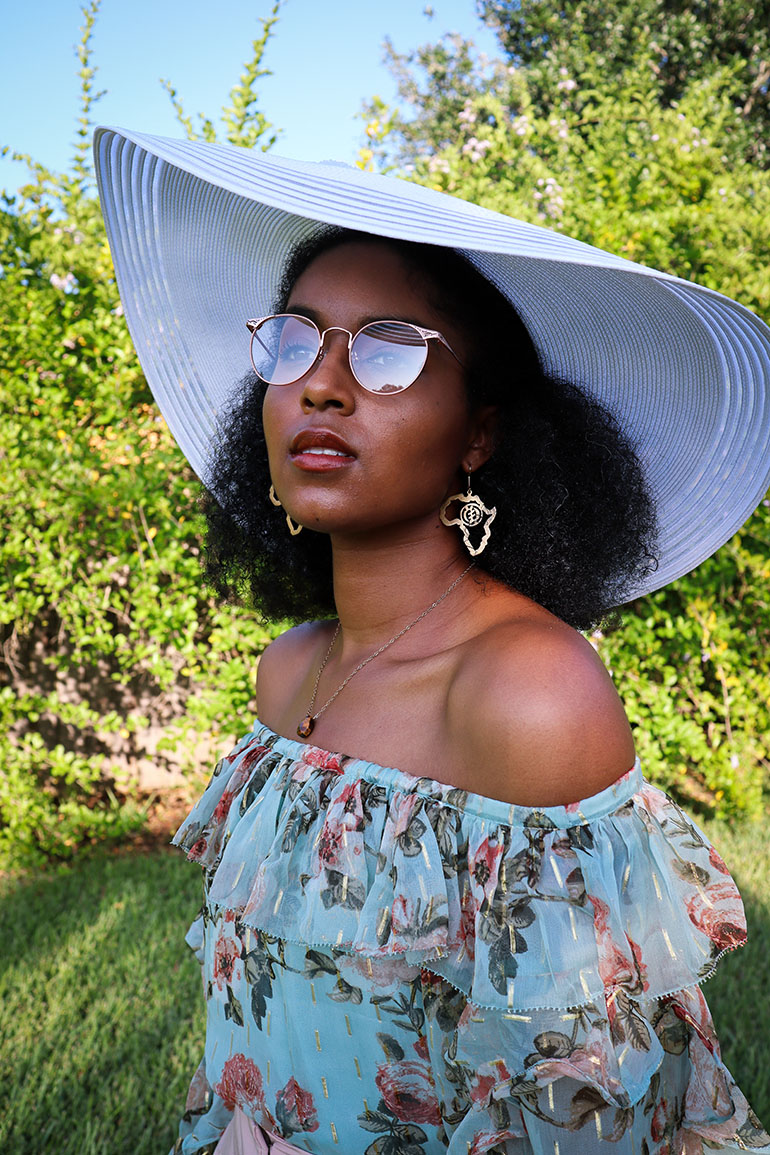
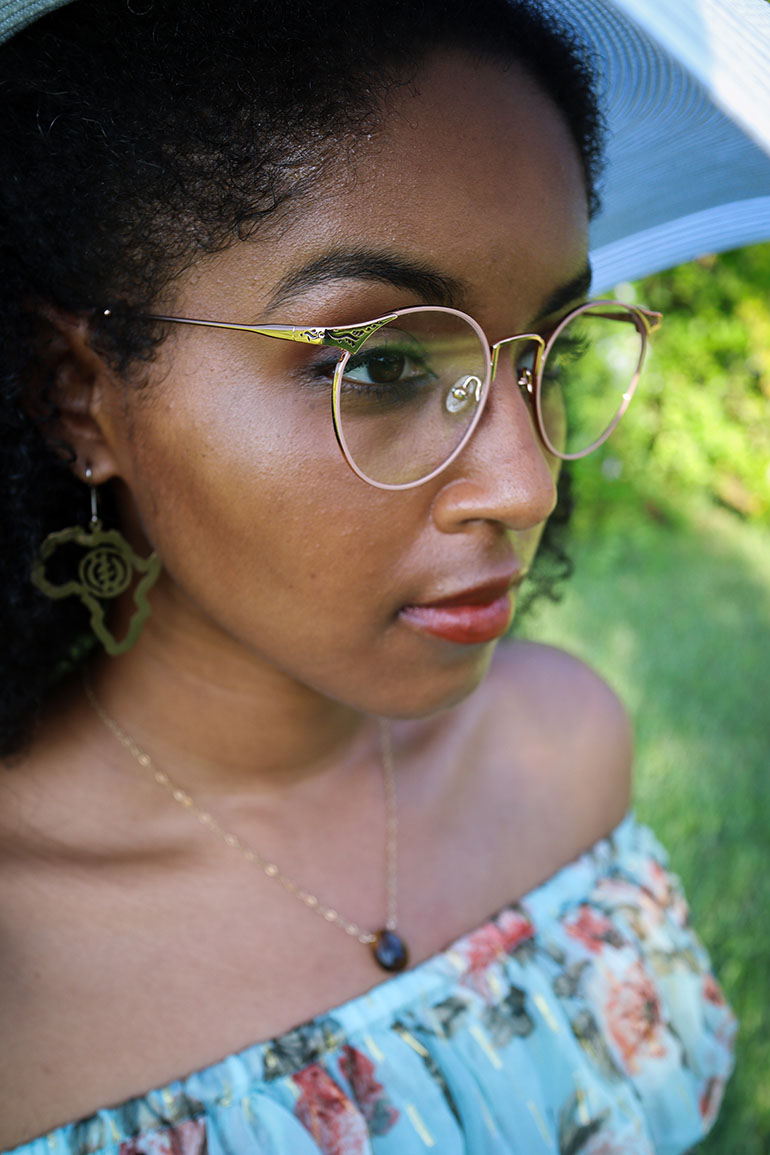
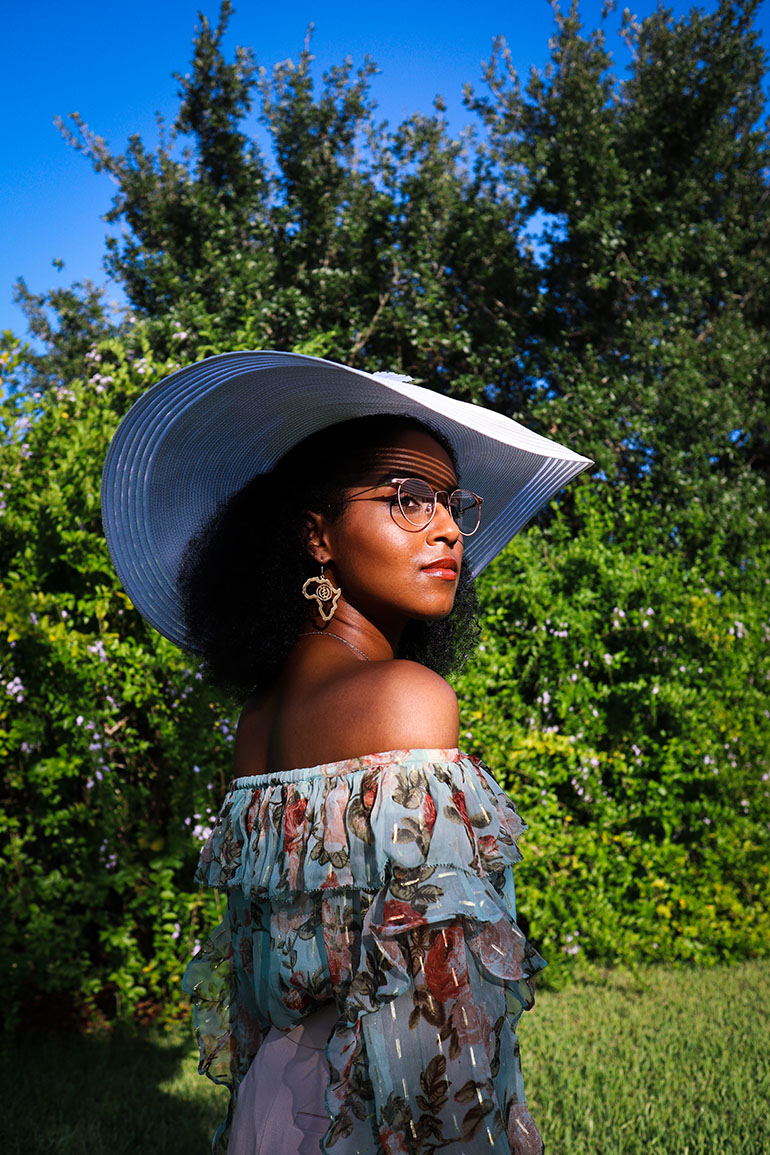
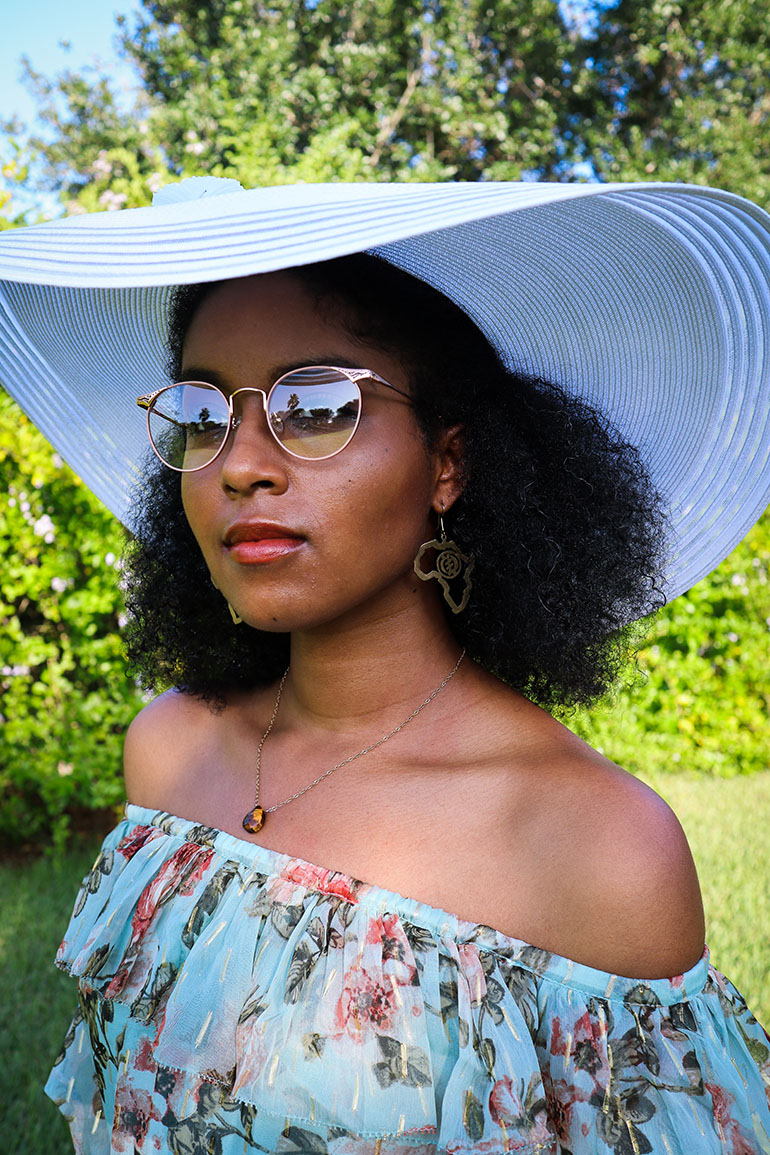
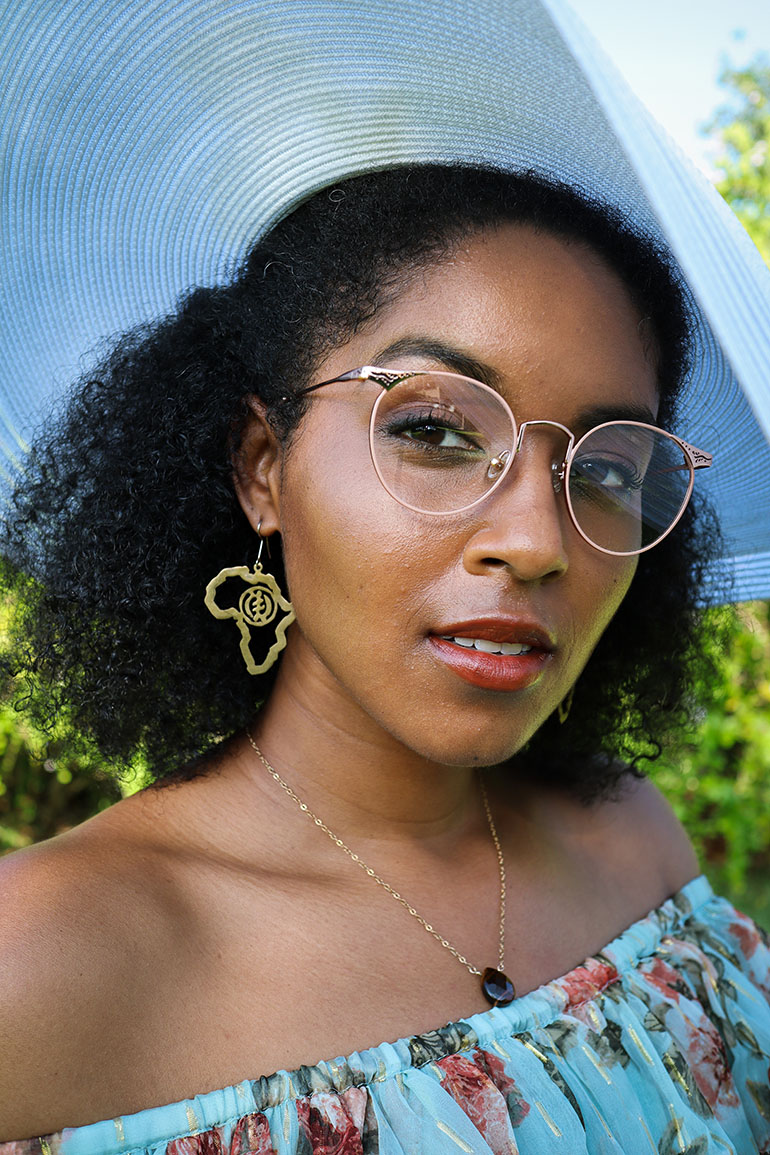
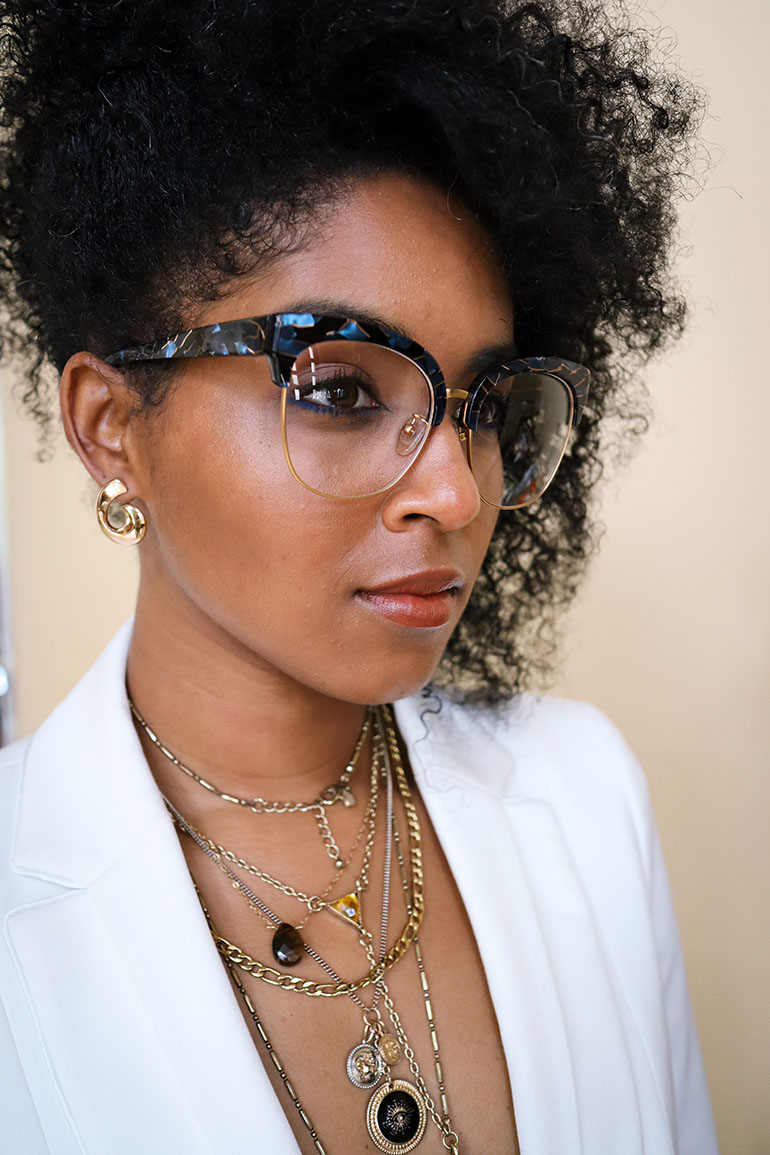
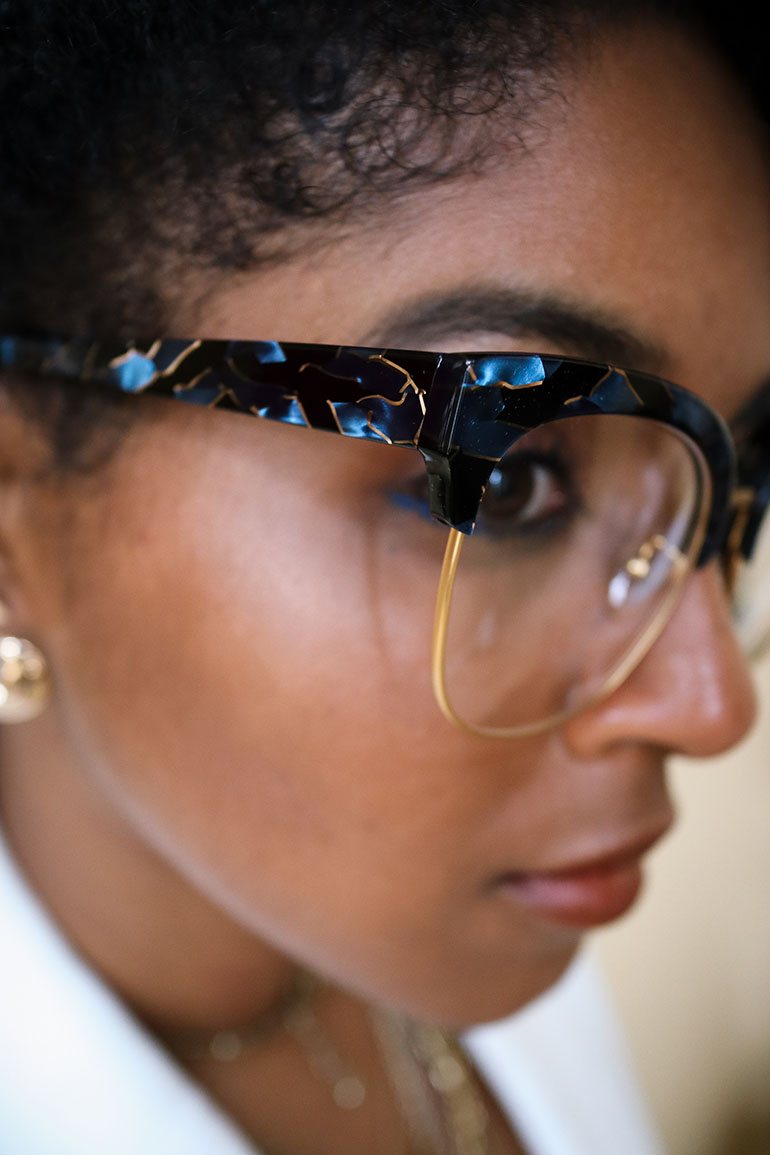
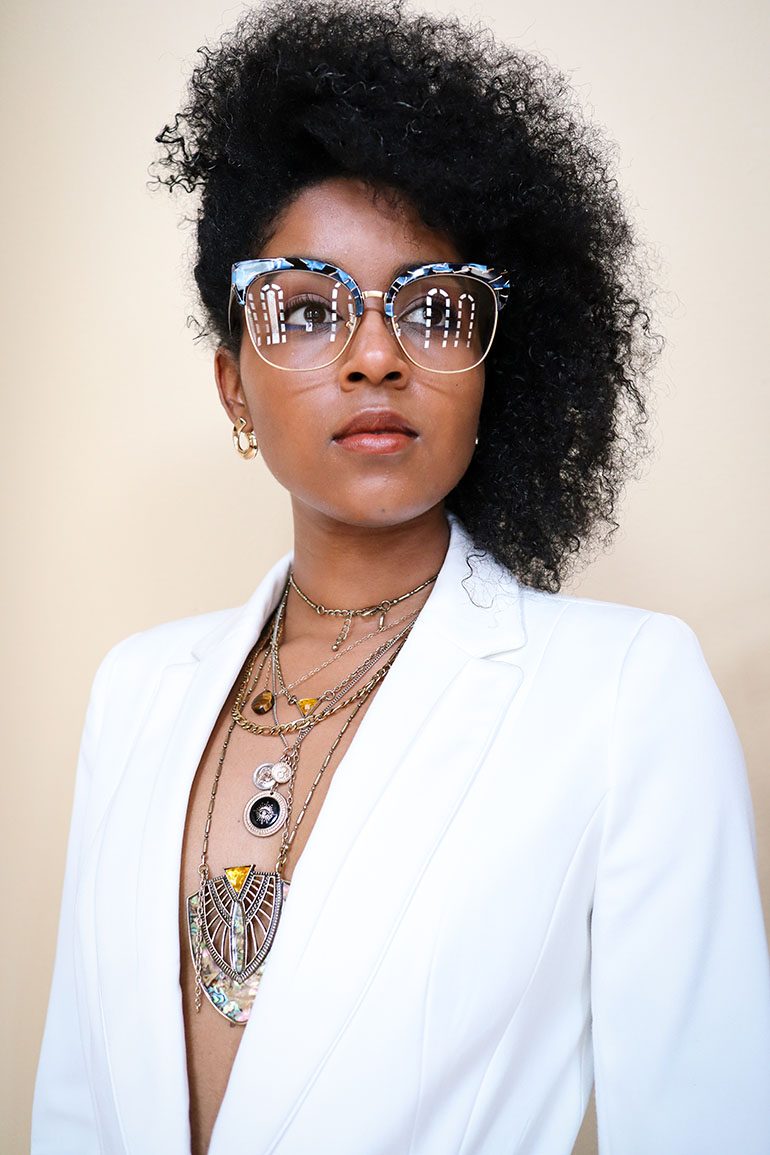
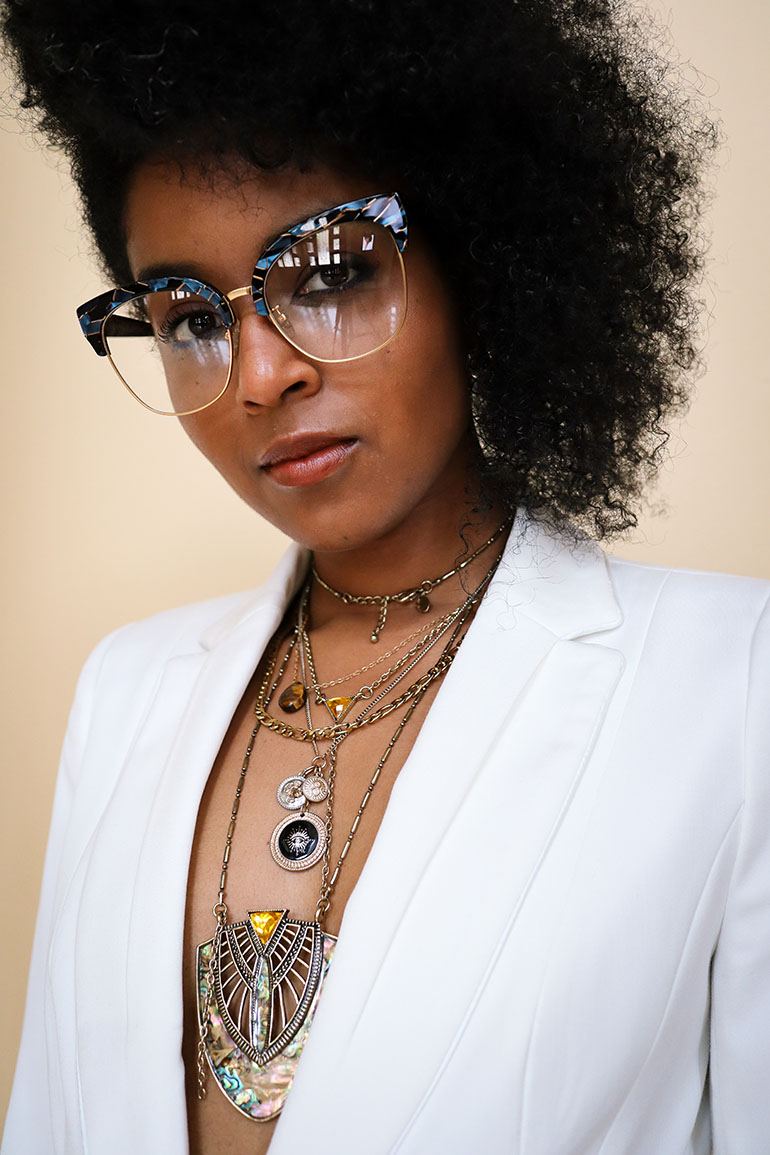
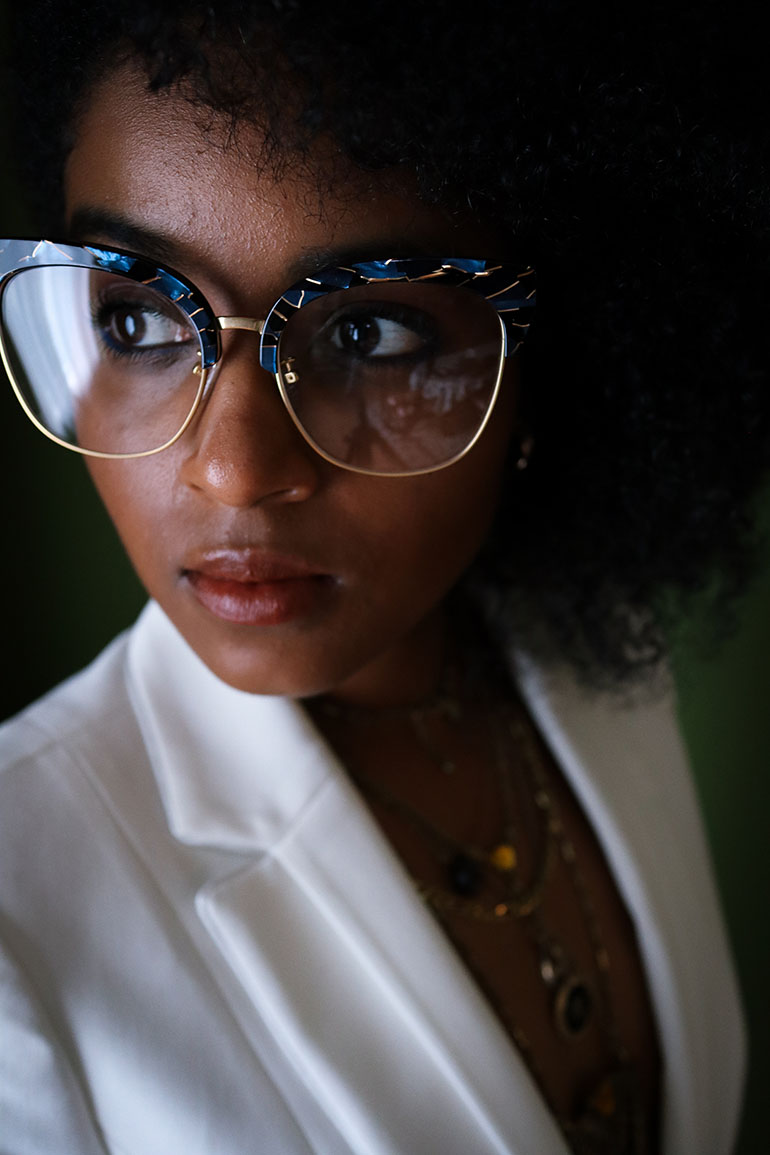
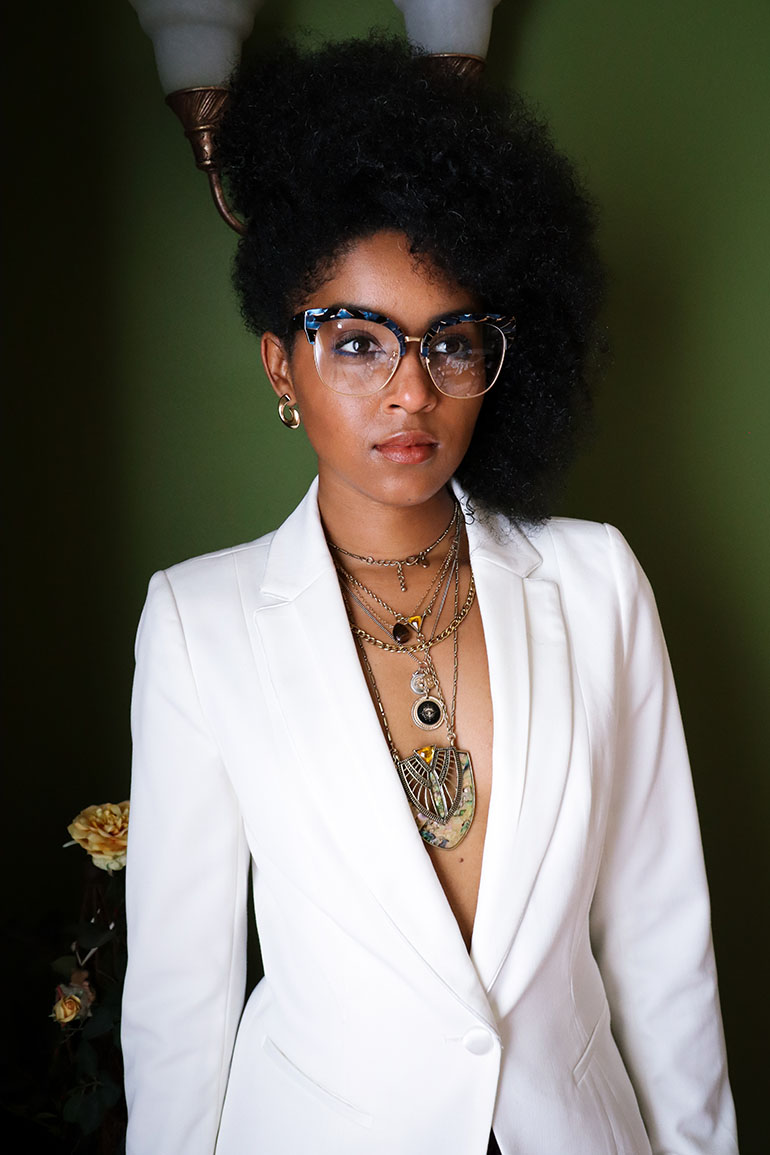
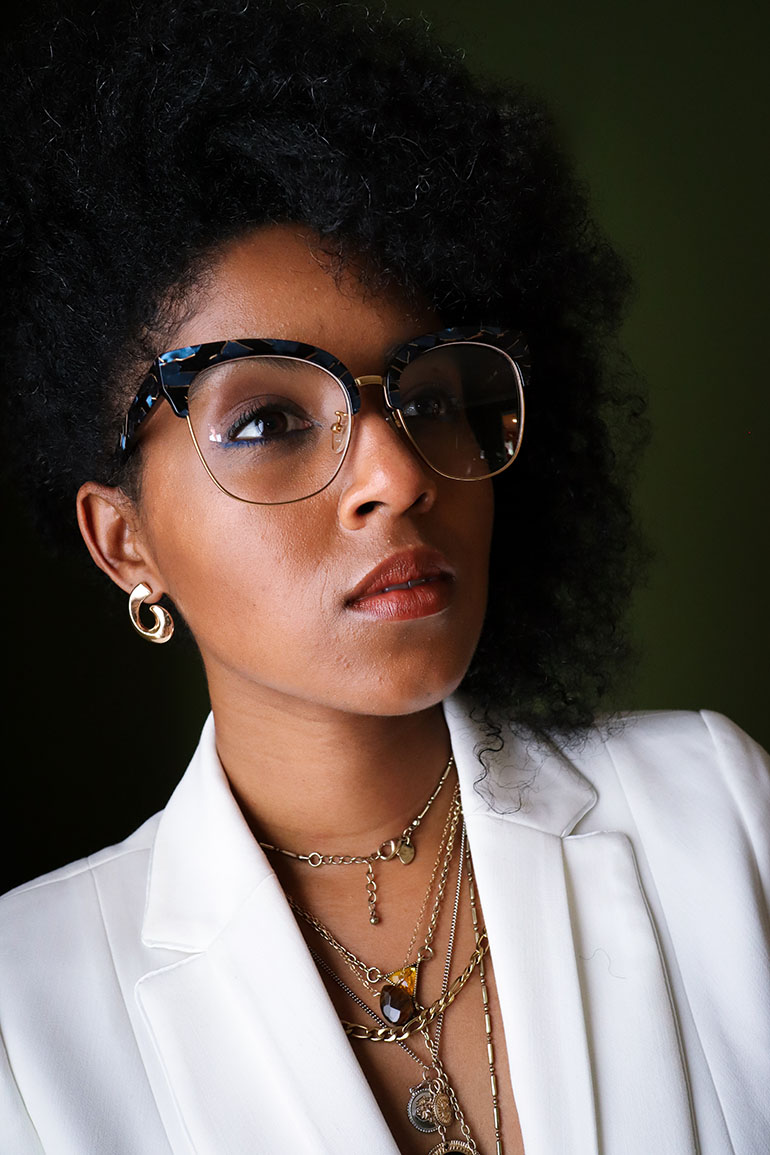
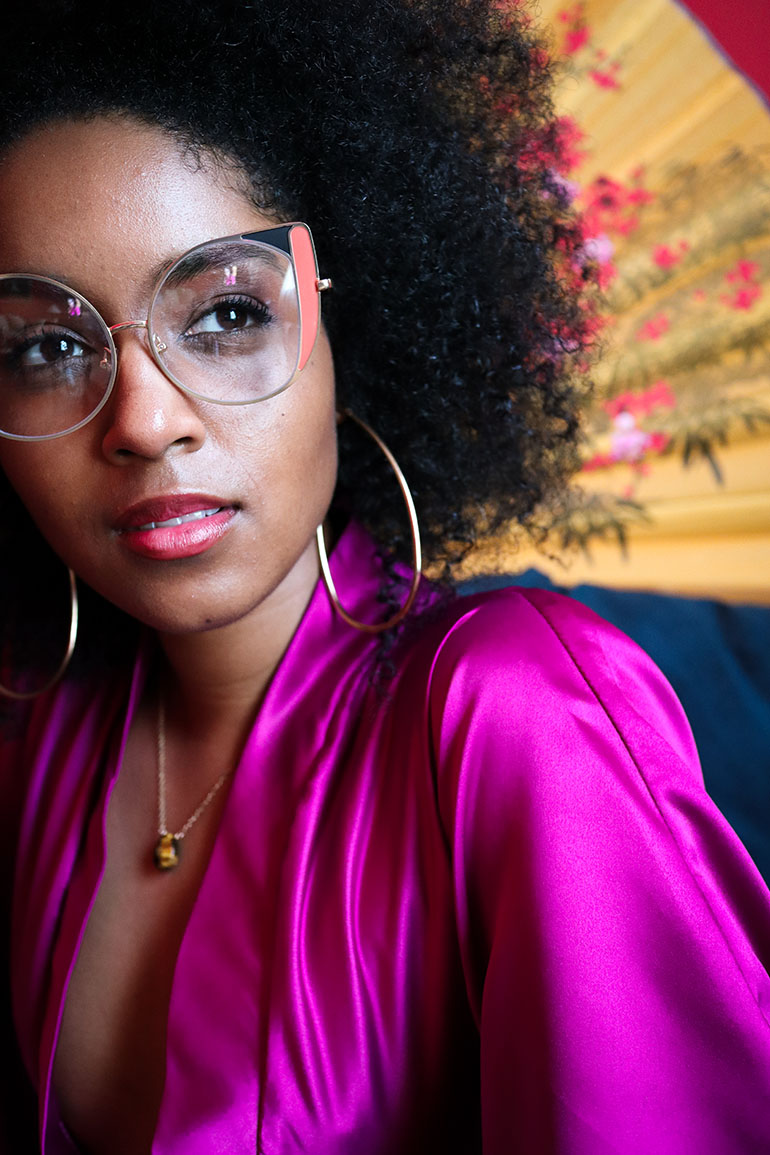
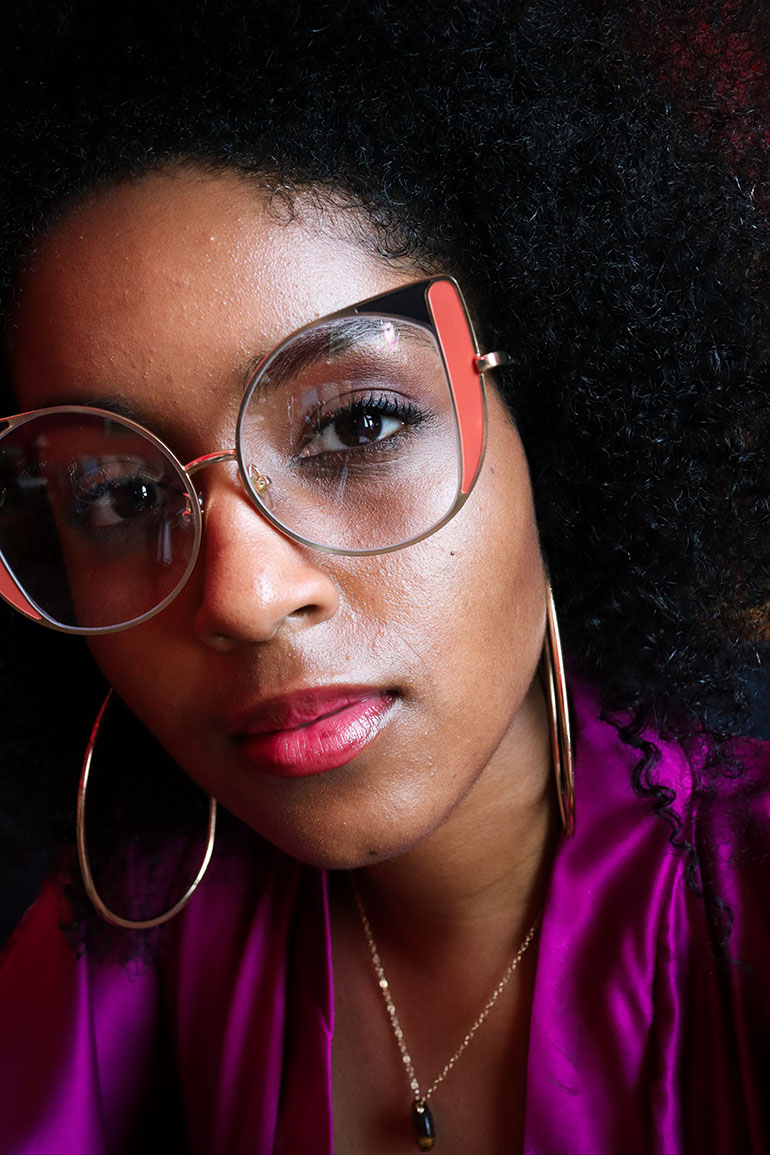
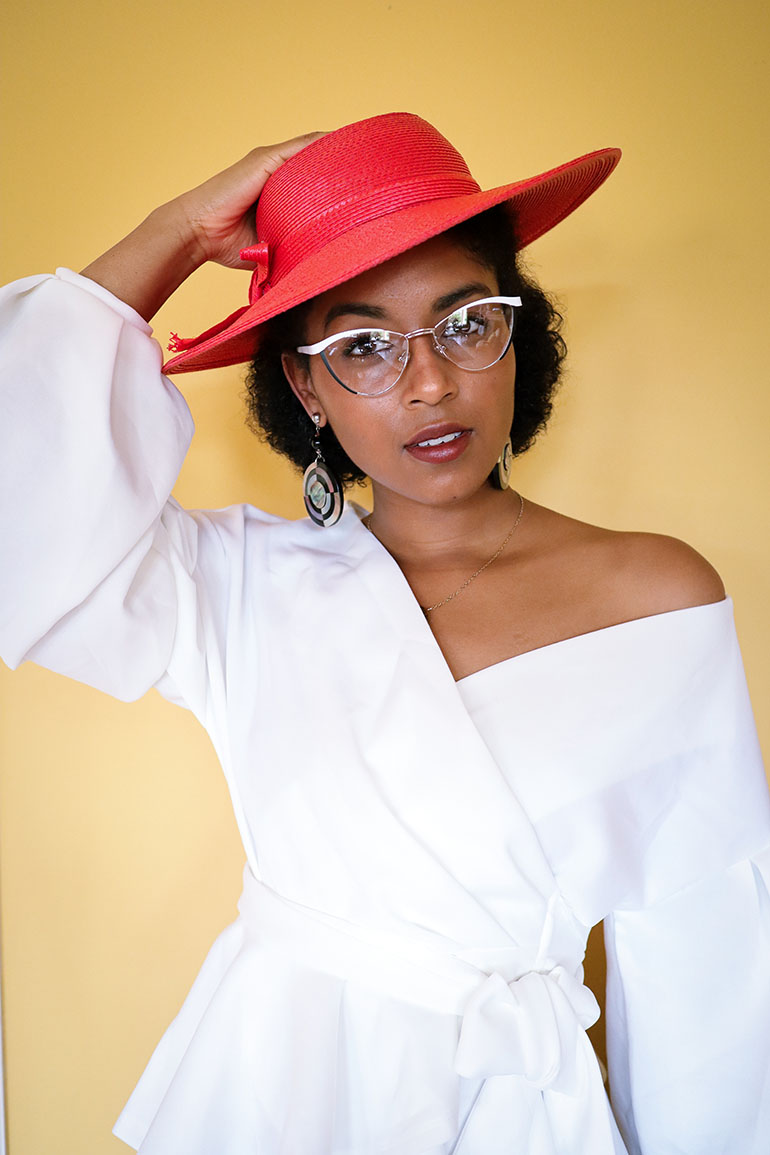
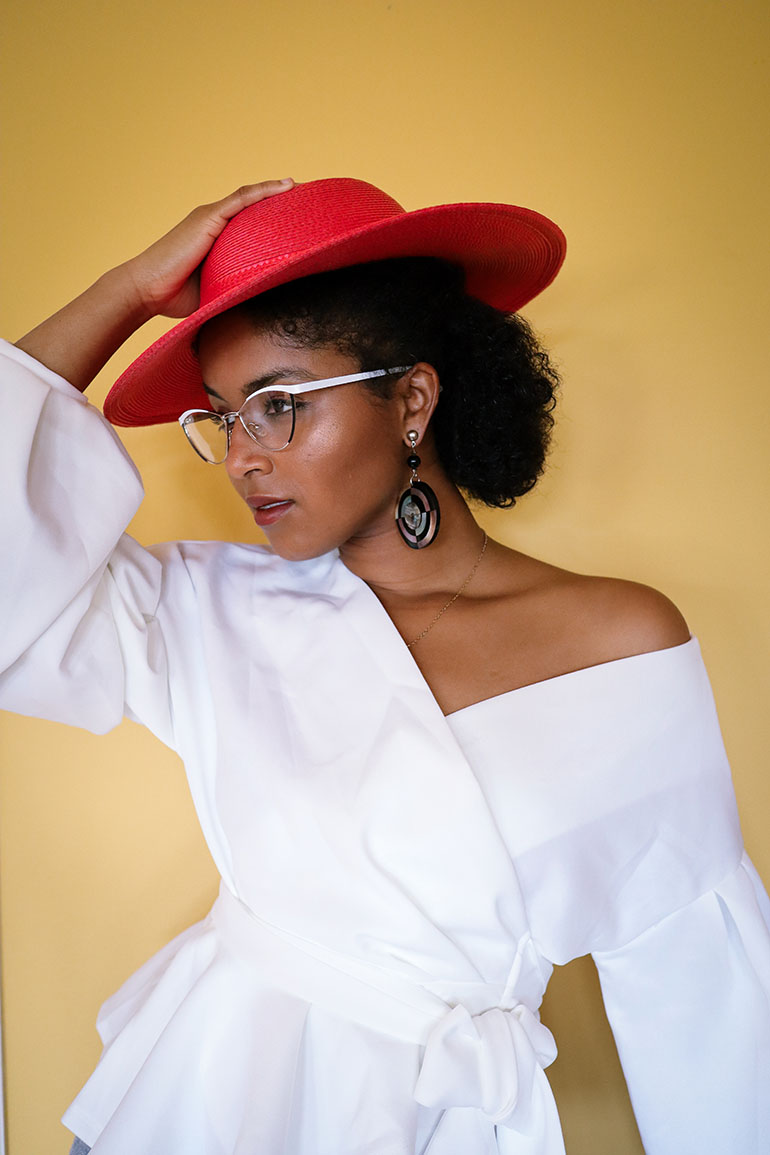
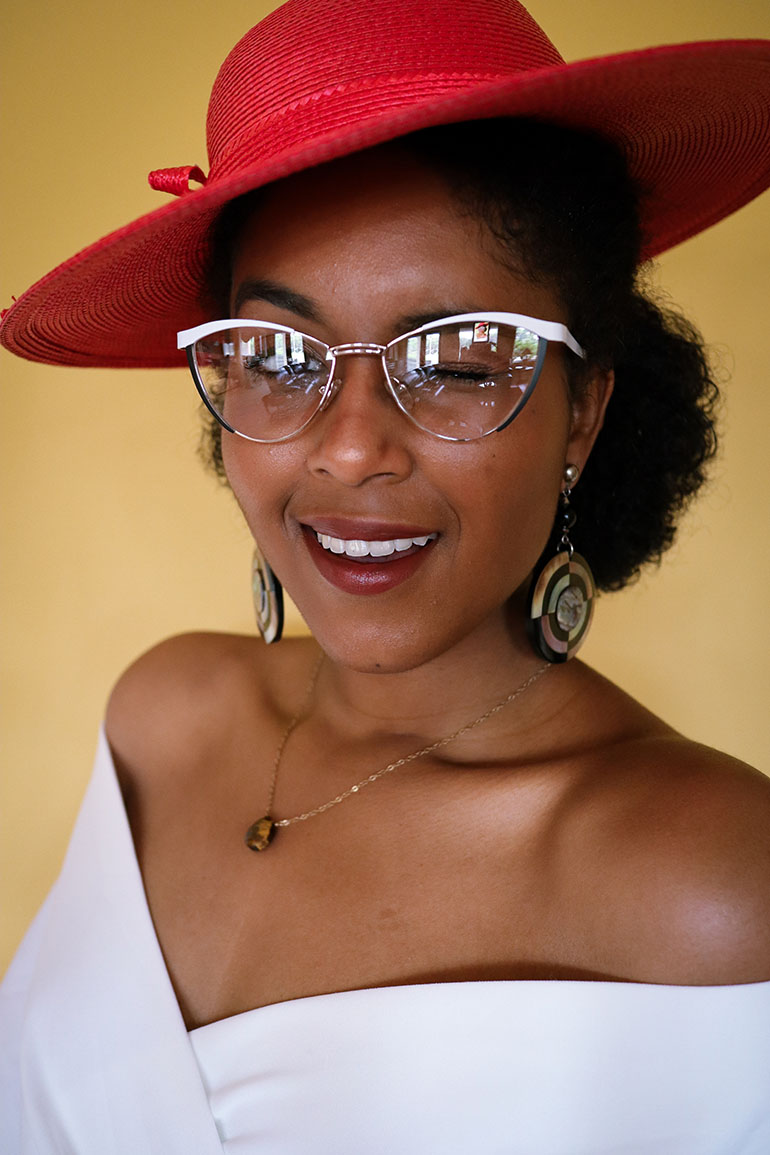
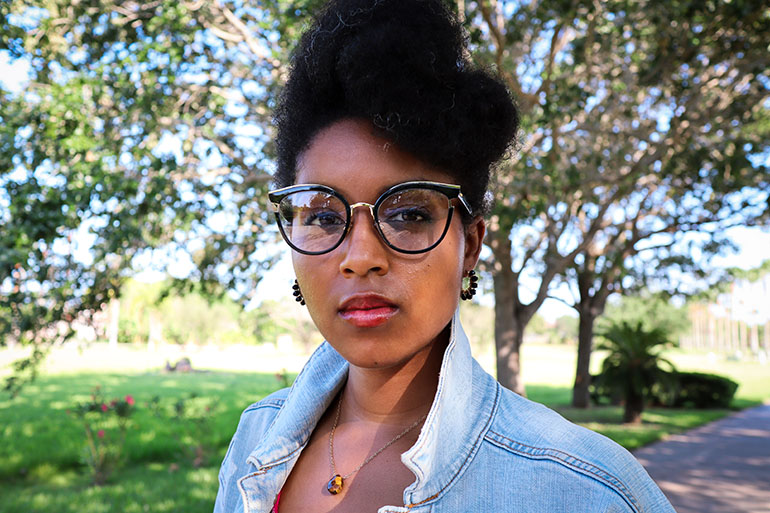
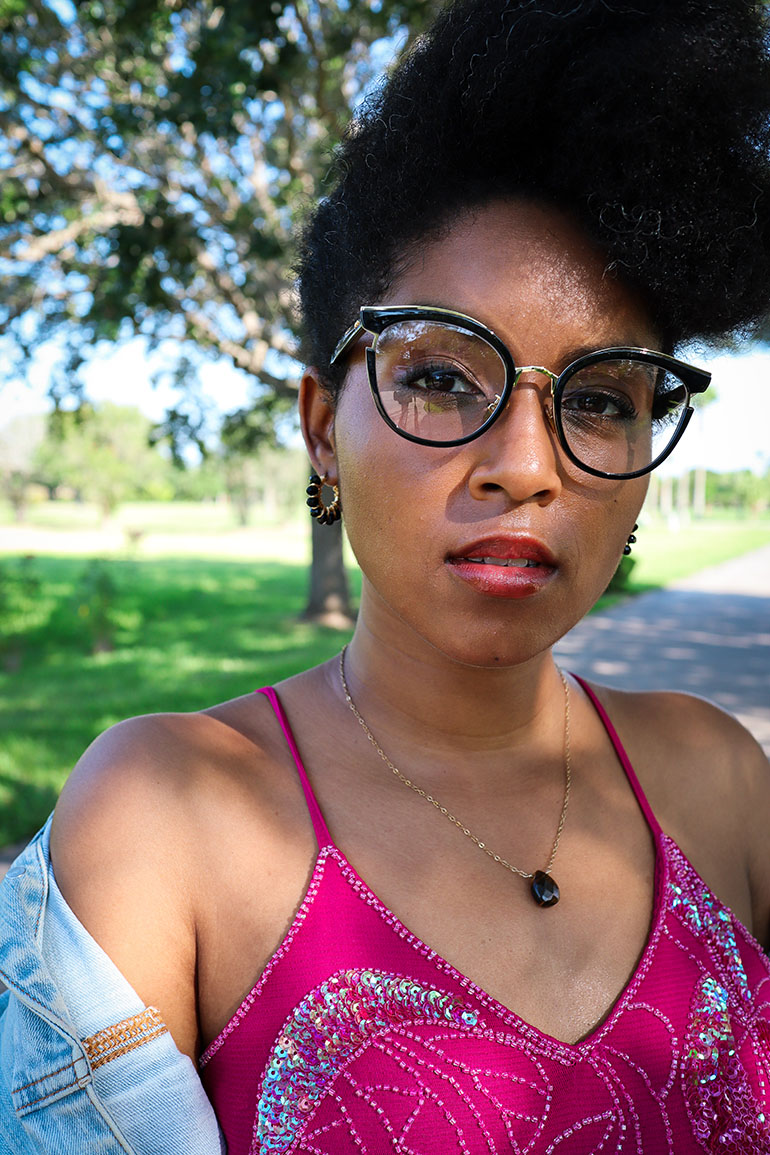
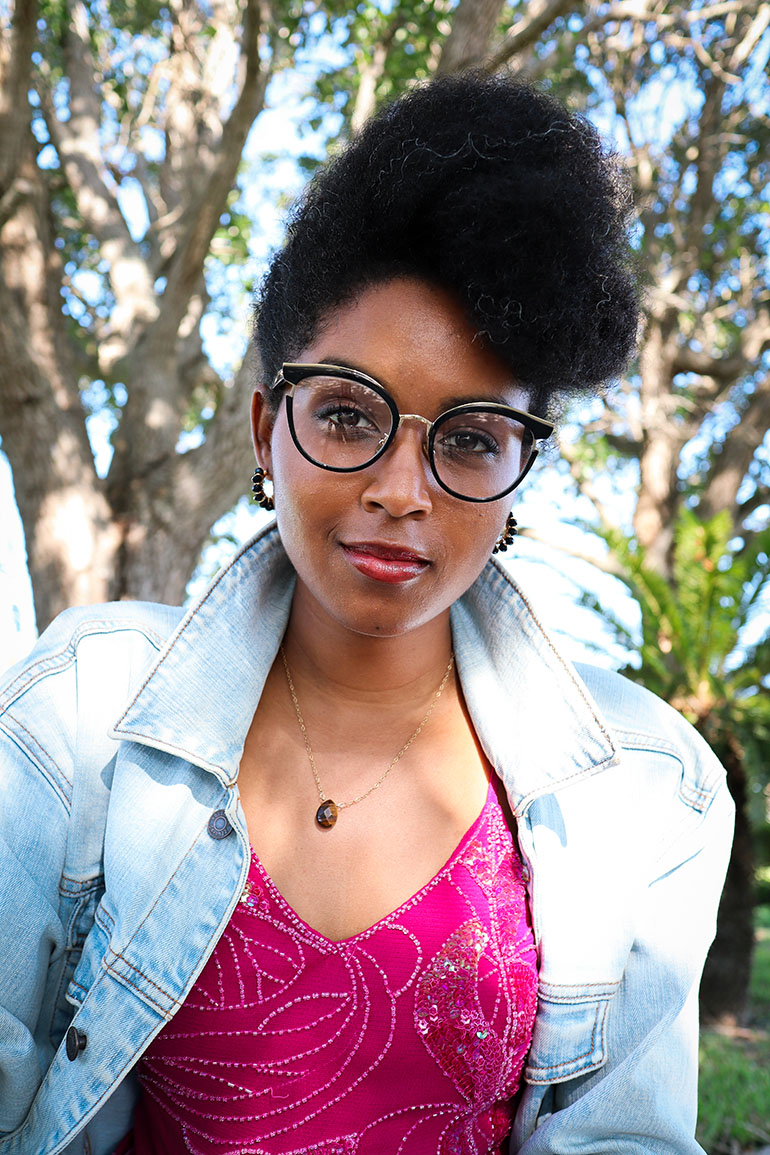
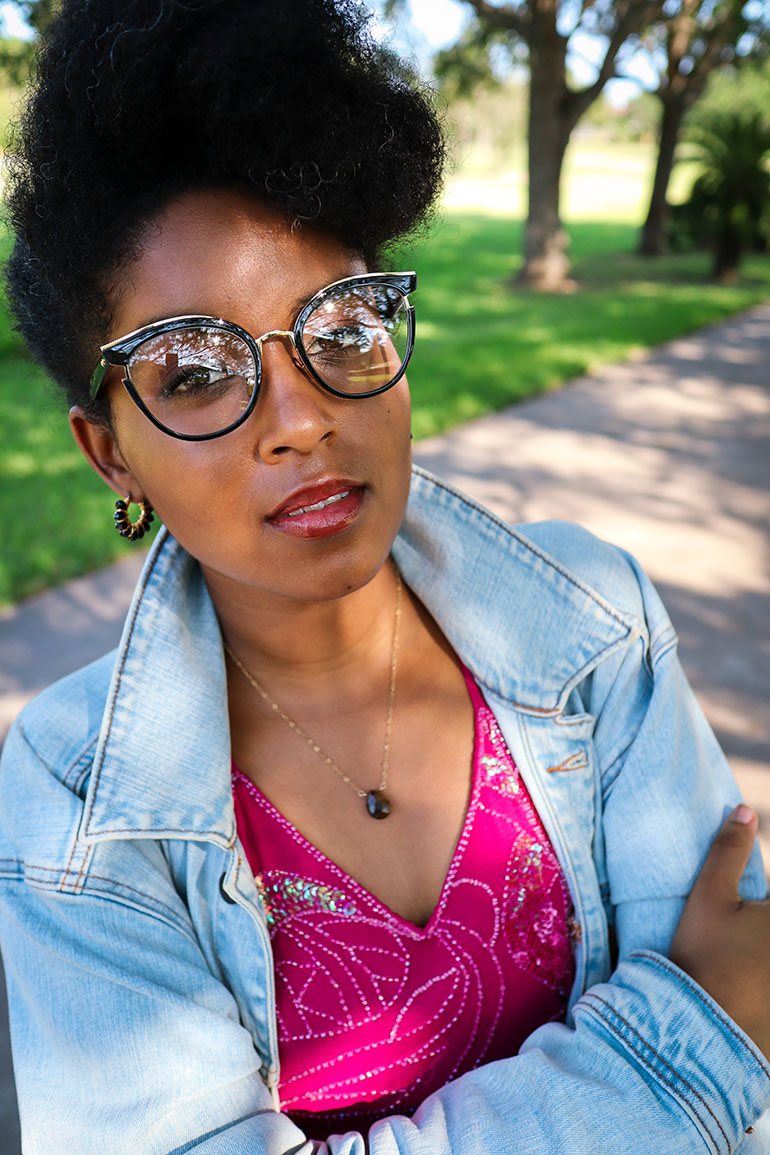
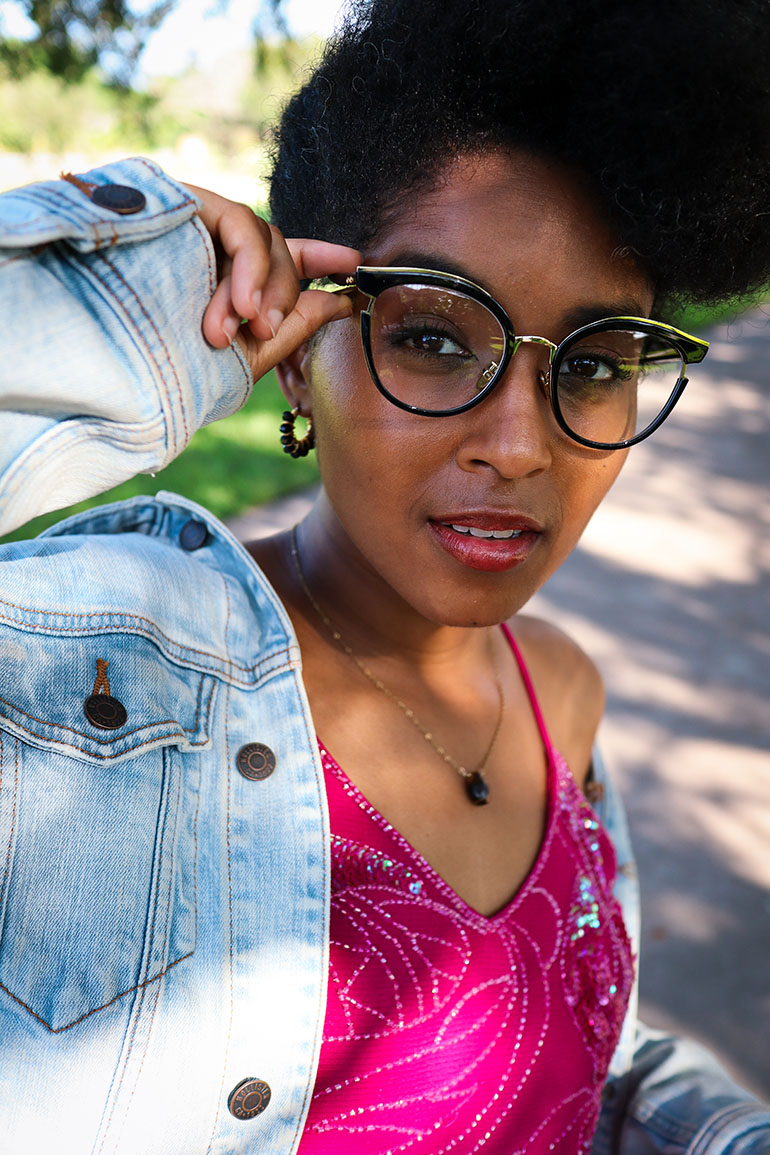
For the first time in my entire life, I ordered glasses frames online. I loved what I got so much, I felt the need to share them with you. In this video, I share details about the frames and how I found them.
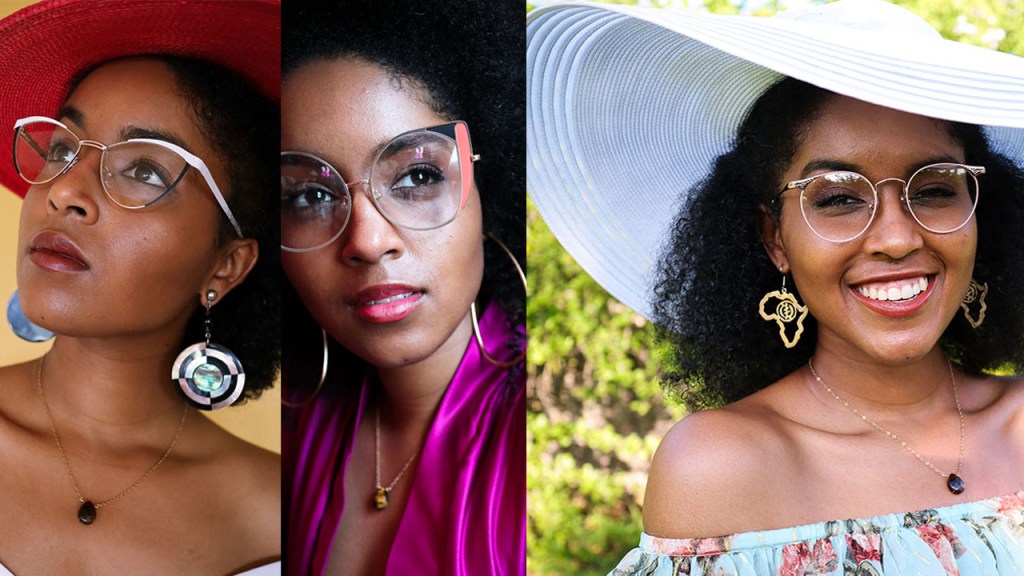
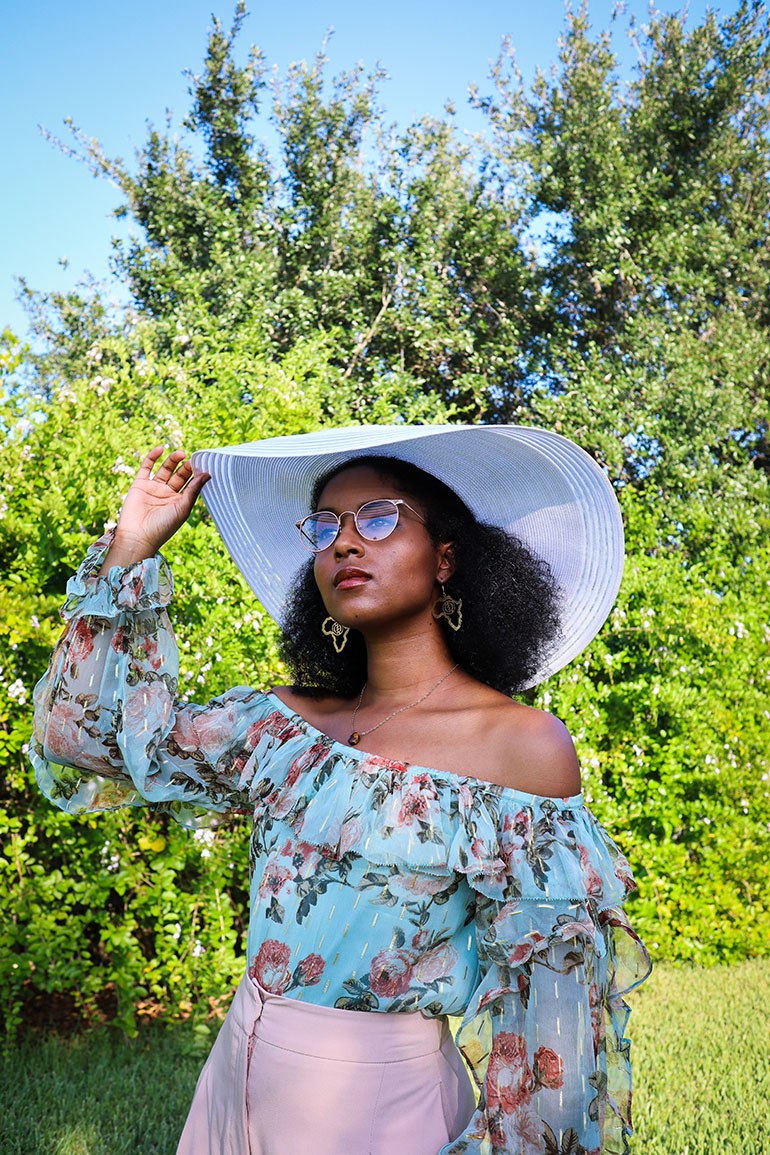
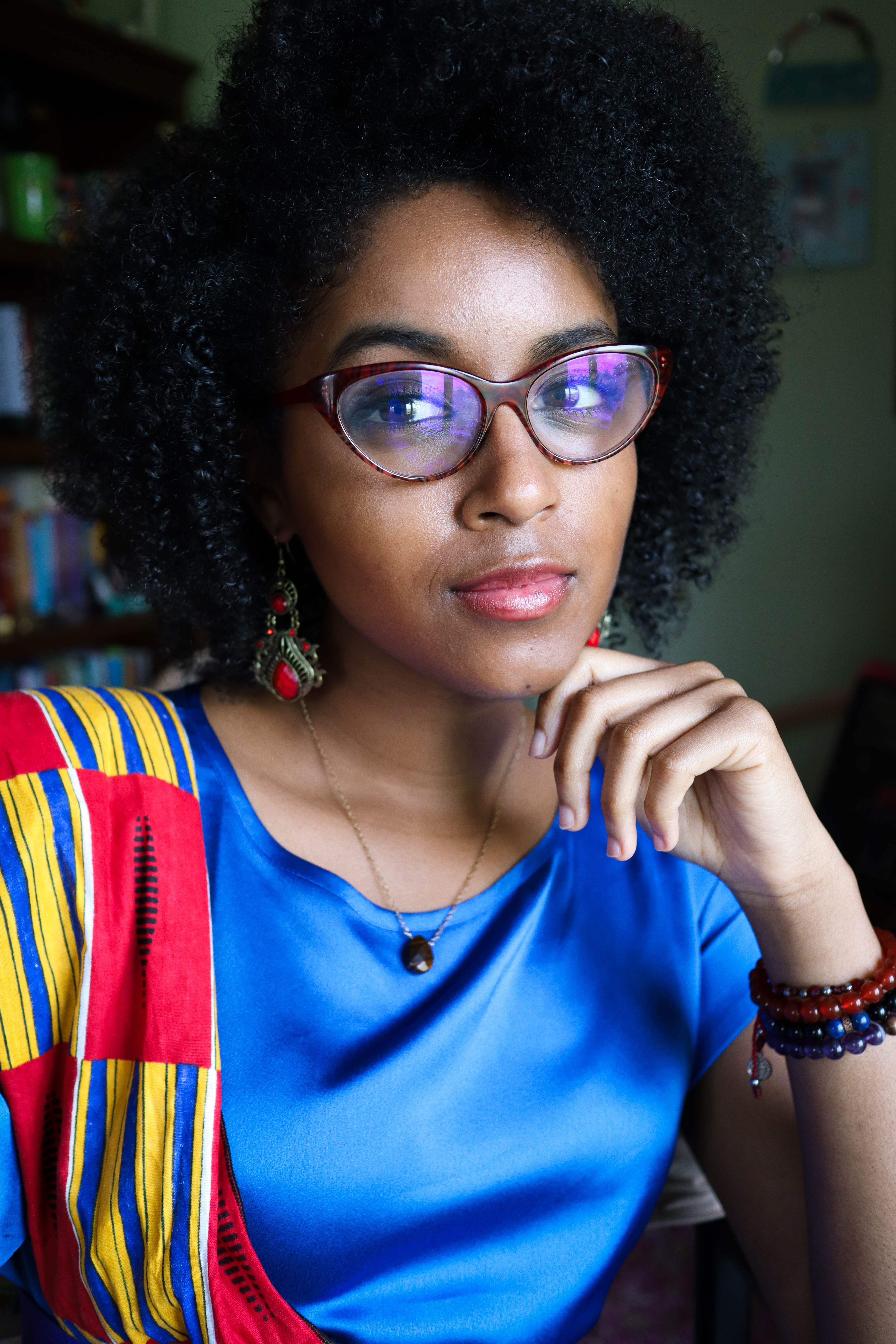
Now, let’s talk about these fabulous glasses. As you may now know, I have been wearing glasses all my life. Due to that, glasses have always been more of a utility. Growing up. my prescription evolved to be quite thick. Thus, back then, frames were not designed as jewelry and there was a limit to the style one can use with a thick prescription. Now, thanks to technology and fashion, there are more choices. The red frames you see me in now have been on my face for about 6 years. So, I have been itching for about a year and a half now for new frames, but had yet to find any in stores that catered to my personality. Thanks to now having extra time at home, I made it a project and treat for myself to explore different online eyewear stores.
First, Vint & York creates “eyewear for the modern nostalgic.” They take vintage trends to design stylish frames.
This is “Ella.” I chose the pink design and absolutely love them. Do you see the engraved details? They are elegant and edgy as well as discreet. The vintage design reminds me of My Fair Lady. They feel light weight on my face and are really comfortable.
This is “Zelda 2.” I chose the Belize Blue design and really love them. The design reminds me of African print and Vibranium. They are bold and sophisticated. This design reminds me of Afrofuturism. In terms of size, this might be the biggest in my history of eyewear. But, due to the design, I like that it does not swallow my face. Rather, it still accentuates my eyes. They also feel light weight and comfortable.
Next, Voogue Me tag line is “born to be unique.” They have a variety of styles that are classic, bold, and trendy.
This is “Eleni.” I chose the orange design. It reminds me of blaxploitation movies, like Cleopatra Jones, and R&B music in the early 2000s, like “Dip it Low” by Christina Milian or “Call on Me” by Janet Jackson. It also makes me think of anime. I really love this design. It is bold and funky. They are also light weight and feel good quality.
This is “Sydney.” I chose the black and white design. It reminds me of the Hollywood Glamour era with Audrey Hepburn, Eartha Kitt, and Dorothy Dandridge. I love this design’s twist on the cat eye shape. It is elegant and retro. They also feel good quality.
Finally, UBlins provides a variety of eyewear frames that are good quality and affordable.
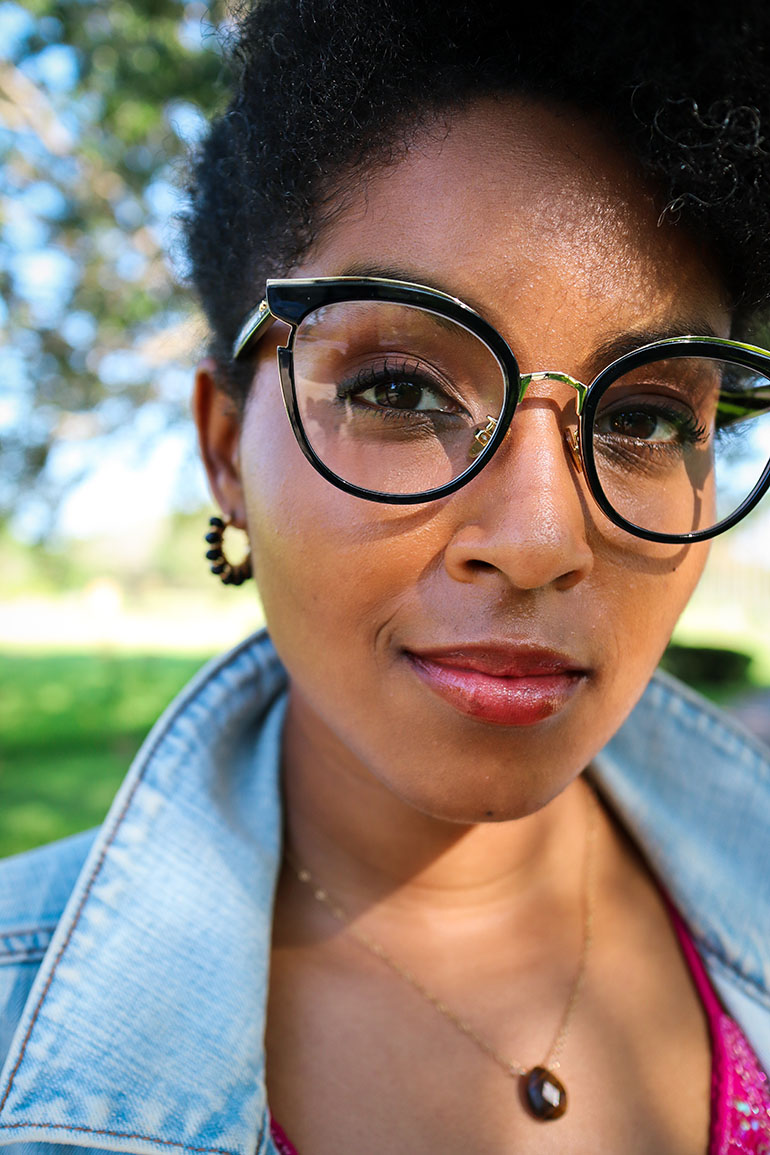
This is “Anna.” I chose the black design and tortoise design. They both have a professional feel with personality. Elegant and discreetly edgy with the gold accents and cut-out on the sides. They are light weight and feel comfortable.
Overall, I am so pleased with my purchases. This was my first time hearing about any of these companies and I am really glad my online search lead me to them. I am really glad to see how eyewear design continues to evolve. It is encouraging to have so many options to choose from, if you take the time to search for them. Also, creating mini-lookbooks for each frame was a lot of fun.
Which eyewear design is your favorite? Which look was your favorite? Share with me in the comments.
Also, remember to connect with me on Instagram, Twitter, and Facebook. I love hearing from you.
Let’s talk about money. The thing everyone wants and the thing most are uncomfortable sharing details about. Financial literacy really makes a difference in your life, regardless of where you live. How you spend and budget is equally as important to how much you earn. So, in this video, I discuss how I made a point to understand the variety of payment methods and transactions in Ghana and monitor what things cost and how much I spend.
The payments methods I use in Ghana are cash, debit card, checks, and MTN mobile money. The most convenient method is mobile money because it can be used to pay monthly bills, purchase products and services, and be used as a method to receive payments. In the video, I explain how to set up mobile money on your phone.
Living expenses can vary depending on where you live and your lifestyle. Like I said in the video, my monthly bills slightly fluctuate. For estimating purposes, my electricity bill is 200 Ghc ($40), diesel bill is 200 Ghc ($40), water bill is 20 Ghc ($4), internet is 350 Ghc ($70), groceries is 100 – 200 Ghc twice a month ($40 – $80) and gas is 170 Ghc ($35). Finding where to shop for essentials makes a difference in how much you spend. Accra has a number of grocery stores, including Palace, Shoprite, Game, Melcolm, MaxMart, and Koala. I have shopped at all of them and found each of them have such helpful people working there. I primarily shop for legumes, frozen vegetables, rice, couscous, and spices at MaxMart, bread at Koala, and plantains, avocados, and peppers at an outside mini market.
When it comes to keeping a budget, the first thing you need to do is monitor your spending, like what I mentioned above. I used a note on my phone. There are also a variety of apps you can use to monitor your spending. The information you need to focus on is the dates you spend and categorizing your expenses. Search the app store for “budget” or “personal spending” for options that fit your preference.
I monitored my spending for about 6 months because I was also learning the currency and what things cost. You can monitor your spending for at least a month. The categories are important because it helps analyze your data. For example, you may not have any control over your essential expenses, like rent and amenities, but you could find alternatives for lifestyle expenses, like take-out food. Once you have this data, you can compare it to the amount of money you earn. The goal is to balance spending less than you earn. You can do this intentionally without depriving your lifestyle by planning your future spending. Each month you stick to alternatives for your lifestyle expenses to maintain that balance. I find this helps shift your mindset around your power with money. It is needed to pay bills, but it can also be used to plan, invest, and save beyond recurring essential expenses.
Regarding consumerism culture, I have found my spending habits evolving while living in Ghana. I have always been frugal, but shopping, especially for miscellaneous things, was usually an isolated experience. I would check ASOS to see what they have, even if I have no where to go. Now, when I visit home, I still check ASOS, but don’t feel the urge to purchase as much. Instead, I really enjoy shopping in Ghana at pop-up events. Since the majority of my wardrobe has been Western focused for so long, I am more focused on adding statement pieces that are afrocentric and traditionally African. There are a variety of boutiques in Accra plus many talented designers and tailors. I love shopping at pop-up events because it feels more personal. I get to chat with the designer and brand owner. I always ask about their inspiration, how long they have been in business, and what their brand story is. During every national holiday that creates a long weekend, the Accra Goods Market hosts a pop-up event. It features several vendors in clothing, accessories, fabric, decor, and food. Plus a DJ to keep the party vibe. I have attended three of their pop-ups so far and have purchased so many unique gems each time.
My consumerism behavior has become more intentional while living in Ghana. I feel this is because there is more of a sense of community and more opportunities to shop local. My purchase goes beyond a faceless transaction between a product and currency. Each piece has its own personality, which makes the shopping experience more worth while.
How do you keep a budget? What is your shopping personality? Share with me in the comments below.
Also, remember to connect with me on Instagram, Twitter, or Facebook. I love hearing from you.
“Next time you want to jump out of a building, tell me so I remember not to answer your call,” shouted Detective Khalid. He took off his blazer, drenched with water, as he tried not to slip on the marble rocks next to Bruce. They both had just jumped from a window of FAXX Corporation, a 12 story building, diving into the river on the other side. It was dark and the sound of the water blocked surveillance monitoring catching their presence. Bruce stood very still, looking up. Smoke and flames engulfed the window of the office they were just in. They could hear the sirens of emergency responders taking position at the front of the building. Guards, human and robotic, patrolled the remaining floors. Bruce continued to ignore Khalid’s complaints as he pulled out the corner of a handful of files from his backpack. “At least I got these,” Bruce said, which made Khalid freeze. Now, looking back up to the window, Khalid sighed deeply, “It looks like someone did not want us to find something.”
The next day, all news outlets were covering the overnight explosion at FAXX Corporation. Reporters: “The office of Dr. Reptar burst into flames last night, destroying almost all of its contents. FAXX has made an official statement ensuring a full investigation continues. If viewers recall, Dr. Reptar was found dead in his office almost 2 weeks ago. Surveillance footage and his personal robotic assistant are still missing. Sources say the scientist was about to make the biggest announcement of his career before his untimely death. Law enforcement asks for anyone who has any information to help with the investigation to report to the station immediately.”
Khalid switched the wall screen projection to mute. He turns to face Bruce, who is sitting in the middle of a chaotic table full of papers, books, maps, and pens. Bruce takes a photo of a map with his tablet, writes a note on the screen, and swipes right to transfer the image to the screen on the other side of the room. Khalid’s study looks like a time machine glitch. The floors and walls are wood paneled and all the furniture is wood. One wall holds a large bookshelf and several filing cabinets with every size of paper, books, floppy disks, cassettes, DVDs, and external hard drives stacked in a way that only Khalid could know where to find anything. The two opposite walls hold screen projections. The last wall has a medium sized window looking onto the street. Bruce gets up to look over the screen projection. Him and Khalid have created a web of images, maps, and notes, with lines looping and cutting to connect the details.
Clearing his throat, Khalid takes a closer look at the screen. “If Dr. Reptar was showing signs of mental incapacity,” said Khalid, “according to FAXX, why are his lab notes up to his alleged death so advanced?” Bruce drew a line between an image of the FAXX owner and a sketch of a black panther found in Dr. Reptar’s lab notes. “Animals have not been used for corporate or scientific experiments since the 2000s,” said Bruce. “It seems that whatever Doc was building was not going to be used as he expected.”
As they examined the screen, they both realized that the murder they were hired to solve is much more complex then expected. Their collaboration on this case is also complex and unexpected. Khalid is a highly sought after and controversial detective. Bruce is a very effective assassin. They actually met years ago during college study abroad in Istanbul. They stayed in touch and kept a pulse on each others work. For this case, the CEO of FAXX hired Khalid to lead the investigation on Dr. Reptar death, which was alleged as a suicide. At the same time, Bruce was hired by the owner of FAXX to investigate Dr. Reptar’s death, which was alleged as a homicide. On the night of the explosion, Khalid and Bruce went to Dr. Reptar’s office, unbeknownst to each other, to gather more clues. They met in the same elevator going up to the office and quickly realized they were working on the same case and that the story behind Dr. Reptar must be more complicated than they anticipated. While they were looking around in Dr. Reptar’s office, the lights on that floor went out. They heard footsteps approach the office. Someone dressed in what looked like a ninja uniform entered the office with a duffel bag. Approaching the desk to place it on the desk, the ninja uniform took out a remote from the bag. Bruce stepped out of his hiding place with his gun raised. Of course, an acrobatic fight ensued. Khalid stepped in to help and distracted the ninja uniform for a moment, but then, the ninja uniform pressed the remote.
The duffel bag buzzed as an electric current pulsed through the desk and spread through the room. Then it started beeping, as if a clock was counting down. Twenty seconds left. Bruce grabbed what he could from the shelf next to him and the files he was looking at before this interruption and quickly placed it in his backpack. Twelve seconds left. Khalid was focused on the duffel bag trying to figure out how to dismantle the bomb, but having difficulty avoiding the electric shock. A spark snapped from a corner of the office. Khalid and Bruce whirled around and found the ninja uniform had disappeared. Five seconds left. Bruce grabbed the desk chair and smashed the window with it. He then grabbed Khalid, who was protesting, and they both ran and jumped out the window, right before the bomb exploded.
Back in Khalid’s study, the screen projection was filled with more details. Why did the owner and CEO of FAXX hire two different professionals to solve this? Why did they both give them different information? What was Dr. Reptar’s announcement? Who wants to hide the evidence? What type of machine did Dr. Reptar build? Why are there so many sketches of black panthers in his notes? The list of questions continued to grow without many answers. What was for sure? The announcement and his recent project is connected to his death. FAXX may or may not be behind it, but the fact that the top security corporation in the world cannot explain how surveillance footage and a robotic personal assistant is missing in their own building is suspect. Khalid had picked up a book from the shelf and was fervently flipping through it. “Aha!,” he said while placing the book open on the table. “I know who we need to add to our team.” Bruce looked at him annoyed. “Team?,” he asked. Khalid gestured to him to come closer to look at the book.
“I knew Dr. Reptar looked familiar,” continued Khalid. “Here he is with my dear friend Dr. Fly. Some years ago they collaborated on a research initiative which created the vaccine for plastic allergies. I’m sure they must have kept in touch.” Bruce looked at the page Khalid held open. Pictured was Dr. Reptar and Dr. Fly wearing their lab coats smiling and shaking hands. “Why would she know anything,” asked Bruce. Khalid’s face lit up. “Because,” Khalid said, “she is an extraordinary.”
The Fly house is one of the most colorful homes in the neighborhood. As Khalid and Bruce rang the doorbell, they heard Hip Hop Jazz playing in the home. A woman with bright silver hair, high cheekbones, and a wise stern look opened the door. She eyed the two men with a mixture of suspicion and indescribable knowing. “How can I help you?,” she said. Khalid gave a slight bow as he introduced himself and Bruce. “We are here to meet with Dr. Kamali Fly,” said Khalid. “She is expecting us.” Bruce nodded in agreement. “One moment please,” the woman said. She closed the door. A moment later she opened it again, “You are welcome. Please follow me.” Stepping into the foyer and looking around them as they waited, Khalid and Bruce felt as if they had stepped into another dimension. Black and white tiles lined the floor. The walls had gold accents with African masks hanging up to the top of the high ceiling. The music continued to play in another room to the left of the foyer, now with added chatter. The woman lead them to another living room to the right of the foyer to wait. She left and returned with two glasses of chilled Ribena and a bowl of plantain chips and pistachios. As Khalid and Bruce waited, they could see part of the other room across from the foyer. The room was full of stunning, beautiful people all dressed colorfully and edgy. It looked like they were having more of a meeting than a social gathering, in spite of the upbeat music. Everyone was holding a tablet with the same crest engraved on the back. Then, everyone’s attention shifted to one part of the room and stopped talking. One woman addressed the group, thanking them for their attendance and summarizing their points of discussion. They have scheduled a health mission trip, an inter-generational mentoring brunch, and have a new collection of art ready for their next exhibit. She hugged each of them as they filed out of the room and out of the house. The music decreased in volume and transitioned to an afro house mix.
The woman walked in the room with her own glass of a juice mixture. Khalid and Bruce stood up when she entered. “Hello Kamali,” said Khalid. Kamali grinned, opening her arms to give Khalid a hug. Bruce noticed a flash of orange quickly appeared and disappeared in her hair, like a streak of electricity surrounding her curls. “It’s been a long time,” said Kamali. She stepped back and looked directly at Bruce. Khalid introduced them as they shook hands. She then sat on the lounge chair across from the. “So,” she said, “what adventure are you mixed in now?”
Khalid and Bruce explained their findings about Dr. Reptar’s research and death and their suspicions of FAXX and the ninja uniform. Kamali listened intensely. When they finished their story, silence fell on the room as the afro house music continued to loop in the background. Again, Bruce noticed Kamali’s hair. This time, a spark of blue flashed around her curls. Bruce quickly looked at Khalid, who was already eyeing him with a knowing smile. He mouthed the words “an extraordinary.” Kamali took the last sip of her drink and sat back in her seat.
“Have you heard of the Corks?” Kamali asked. Bruce sat up straighter and Khalid raised both eyebrows. She continued. “The news paints them as a little gang, but they are actually a very organized and highly connected mafia group that has this government wrapped around it’s pinkie toe. FAXX is not as far removed from them as they seem. Rep, that is what I called Dr. Reptar, was so committed to his research. I’m sorry I don’t know the details about his announcement or project. I know it meant a lot to him. He even sent me a calendar invite to make sure I did not miss it.”
Bruce returned his glass to the ornate table between them. “The Corks are lethal,” said Bruce. “They have too much money and too many underground businesses to care about one scientist.” Kamali looked at Bruce with a raised eyebrow. “Well,” she said, “that announcement and that machine must have meant a lot to them.”
Khalid took out his tablet, “Have you seen anything similar to this?” He reached over and passed the tablet to Kamali. On the screen was one of the sketches of a black panther from Dr. Reptar’s notes. Kamali looked at it, gasped, and stood up quickly. “Come,” she said, as she walked out of the room. Khalid and Bruce looked at each other and stumbled over the table to keep up with her. Walking further into the house, they passed more ornate figurines, African carvings, family portraits, and tapestries. Kamali was standing in the library. The windows and shelves reached from the floor to the high ceiling. There were elegant nooks and desks to read and write throughout the two story room. She was standing in front of a painting. As Bruce and Khalid moved closer, they noticed that the painting moved too. “Don’t be frightened,” said Kamali. “It is one of my own masterpieces.” The painting was of a black panther, similar to the one illustrated on the tablet and in Dr. Reptar’s notes. However, this one moved within the canvas. As all three of them stood in front of it, the black panther in the painting paced from left to right watching them. Finally, it climbed back up on the tree within the painting and watched them from a higher level.
Bruce did not have much patience for mysteries or manners. He now turned to Khalid. “Alright. Why are we here? What is up with her hair? Why is that cat moving?”
The panther in the painting and Kamali turned to look at both Bruce and Khalid at the same time. Kamali wrinkled her nose at Khalid and turned to Bruce. “So, dear Khalid did not have the decency to explain anything to you?” she said. “I am an extraordinary. My hair changes color with the shift in my mood. I love to paint and whatever I create lives in the canvas. I can heal wounds with the power of nature. Professionally, I am a doctor.” Bruce nodded slowly, but his face showed the million questions he wanted to ask.
“Now,” said Kamali, “this panther in Rep’s notes is the same as my painting. We have a heart for real animals you see. Did you know there is a group of panthers that escaped and continued to evolve? They are the last real animals. Some say it’s a conspiracy, but the last panthers can be used to create a weapon of mass destruction. Of course, they would have to be slaughtered. Rep told me about it.”
Khalid asked for the tablet back and examined it next to the painting. Bruce paced back and forth near one of the windows. He paused and turned to the other two. “FAXX and the Corks must be the same entity,” Bruce said. “Or a paid accomplice,” said Khalid. “You will need a lot more evidence than a sketch and a hunch to go public with that statement,” chuckled Kamali.
The sound of plates and cutlery came from the dining room. Kamali’s hair sparked a flash of pink. “Oh,” she exclaimed, “I know both of you are staying for dinner.” Bruce and Khalid started shuffling towards the door slowly while mumbling about work and needing to get back. “Nonsense,” she insisted. “Quincy is on his way back and we already prepared for guests this evening. I think they would love to hear about your new adventure.”
Bruce and Khalid stopped shuffling. “Who is coming for dinner?” Khalid asked. As she walked out of the room, Kamali twirled around with a grin. “Well,” she said, “Pepper and Gold.”
Visuals
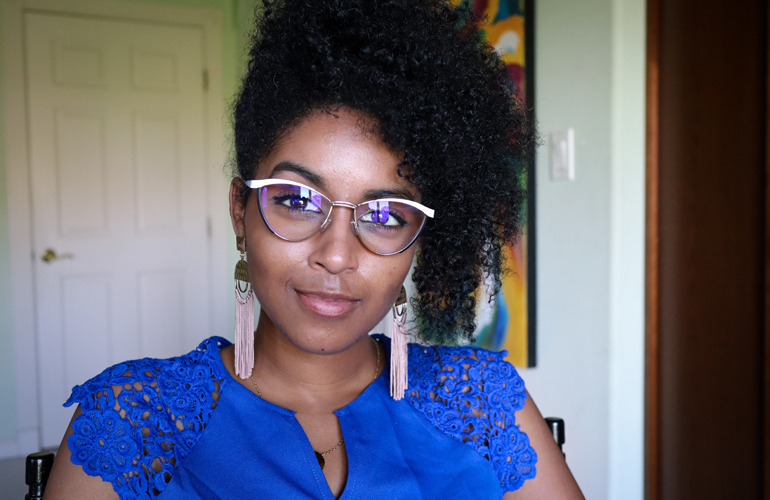
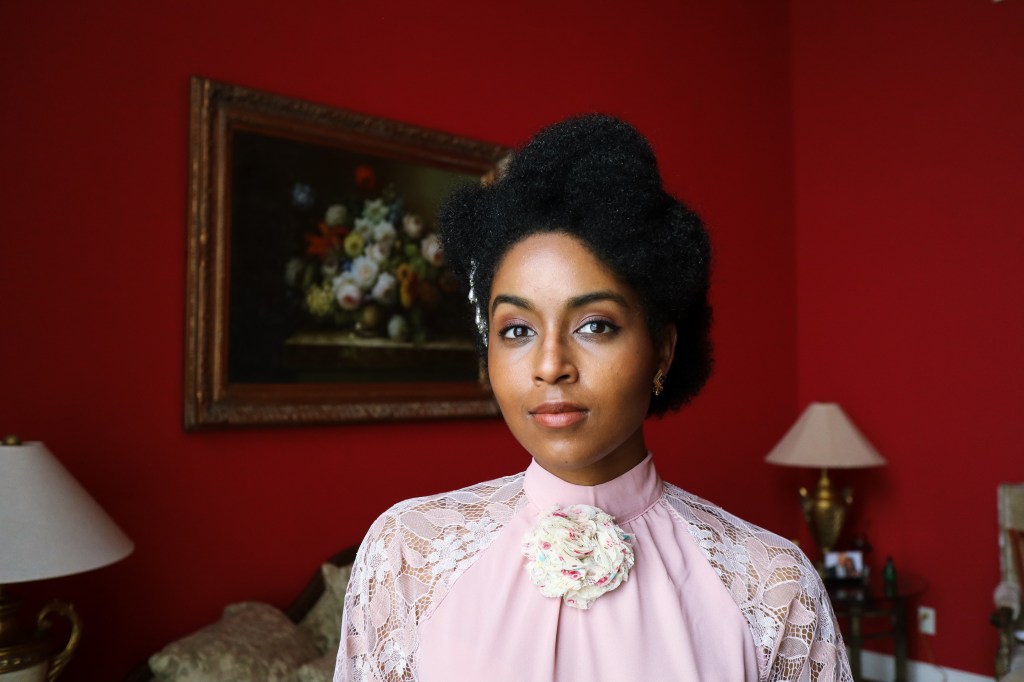
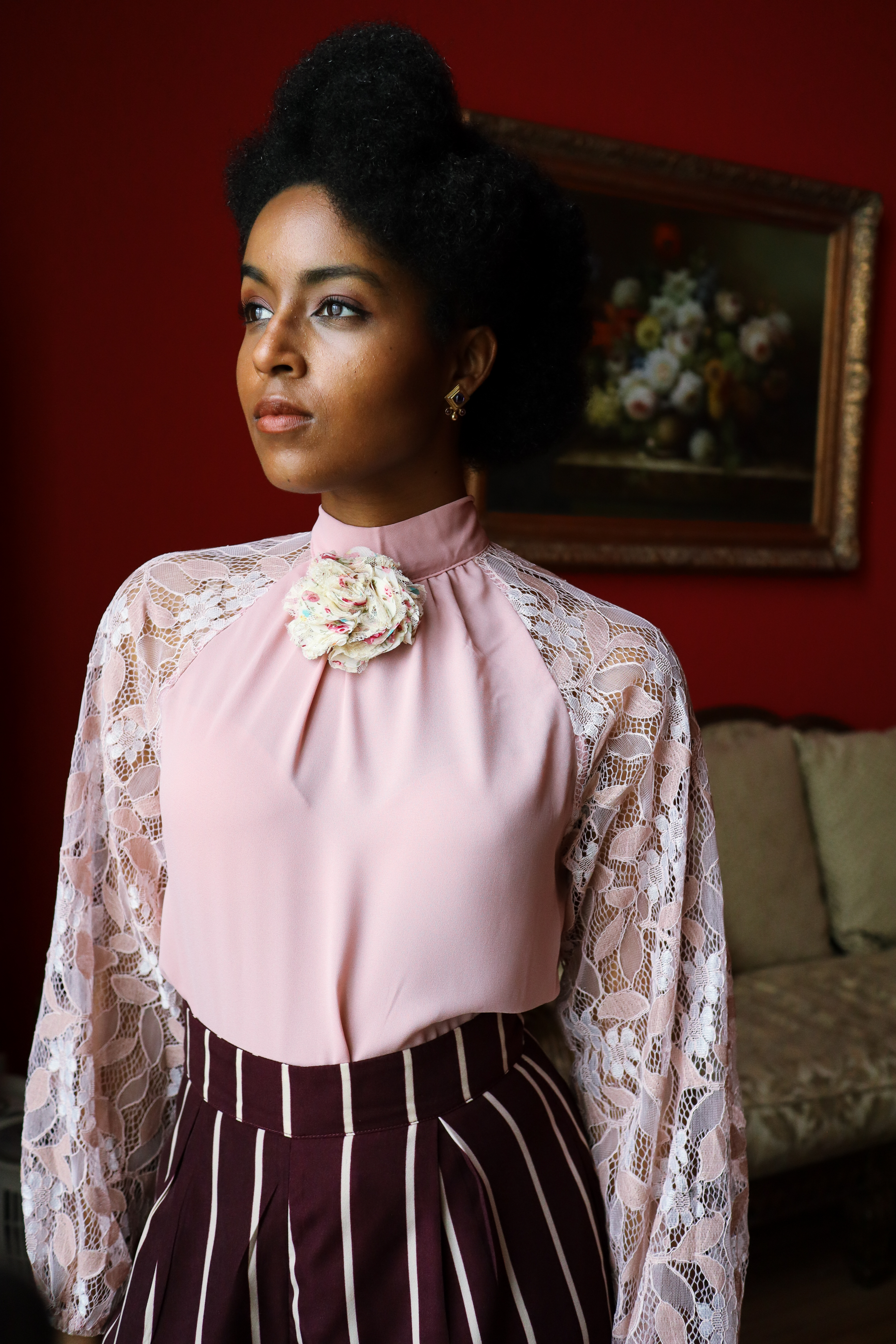
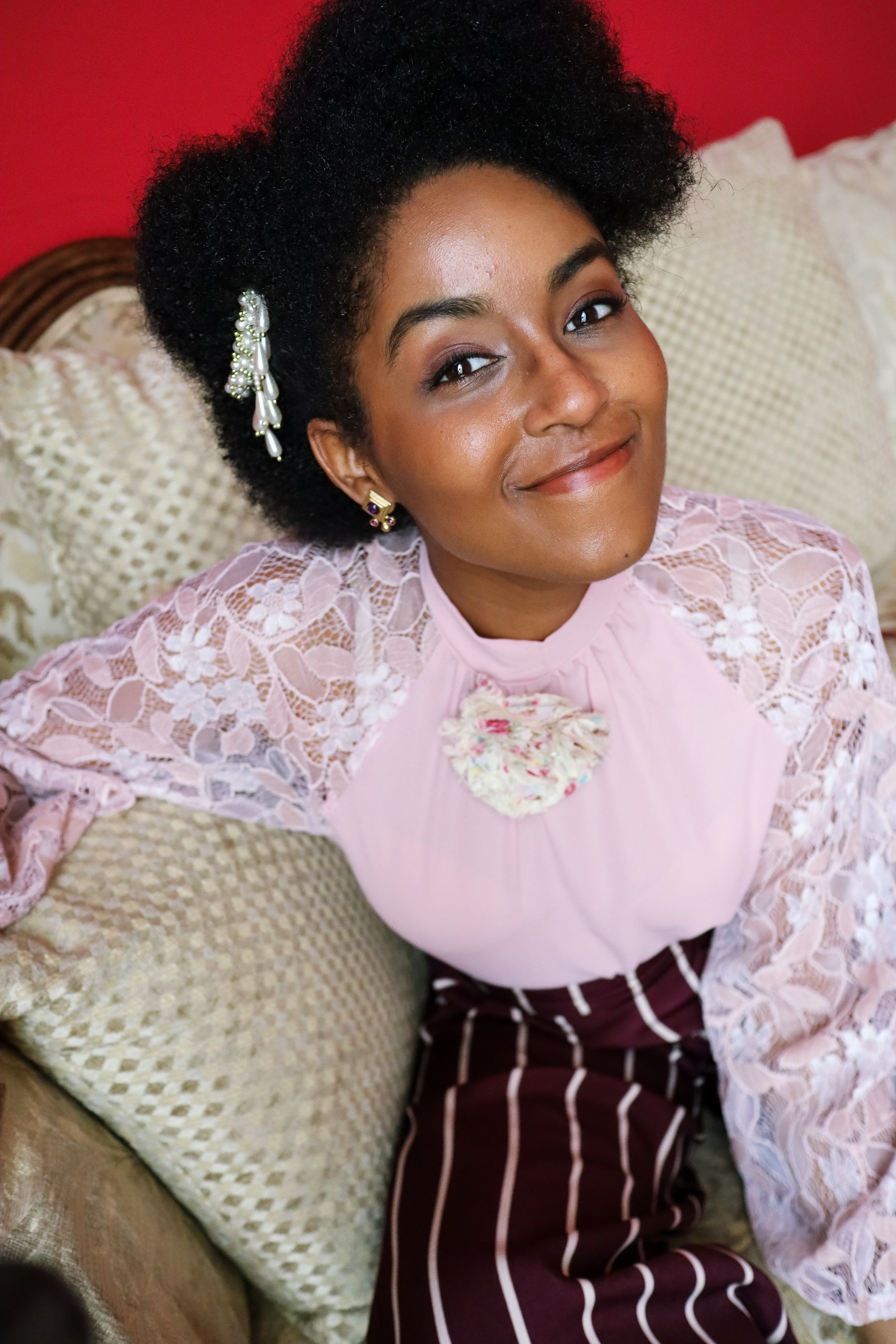
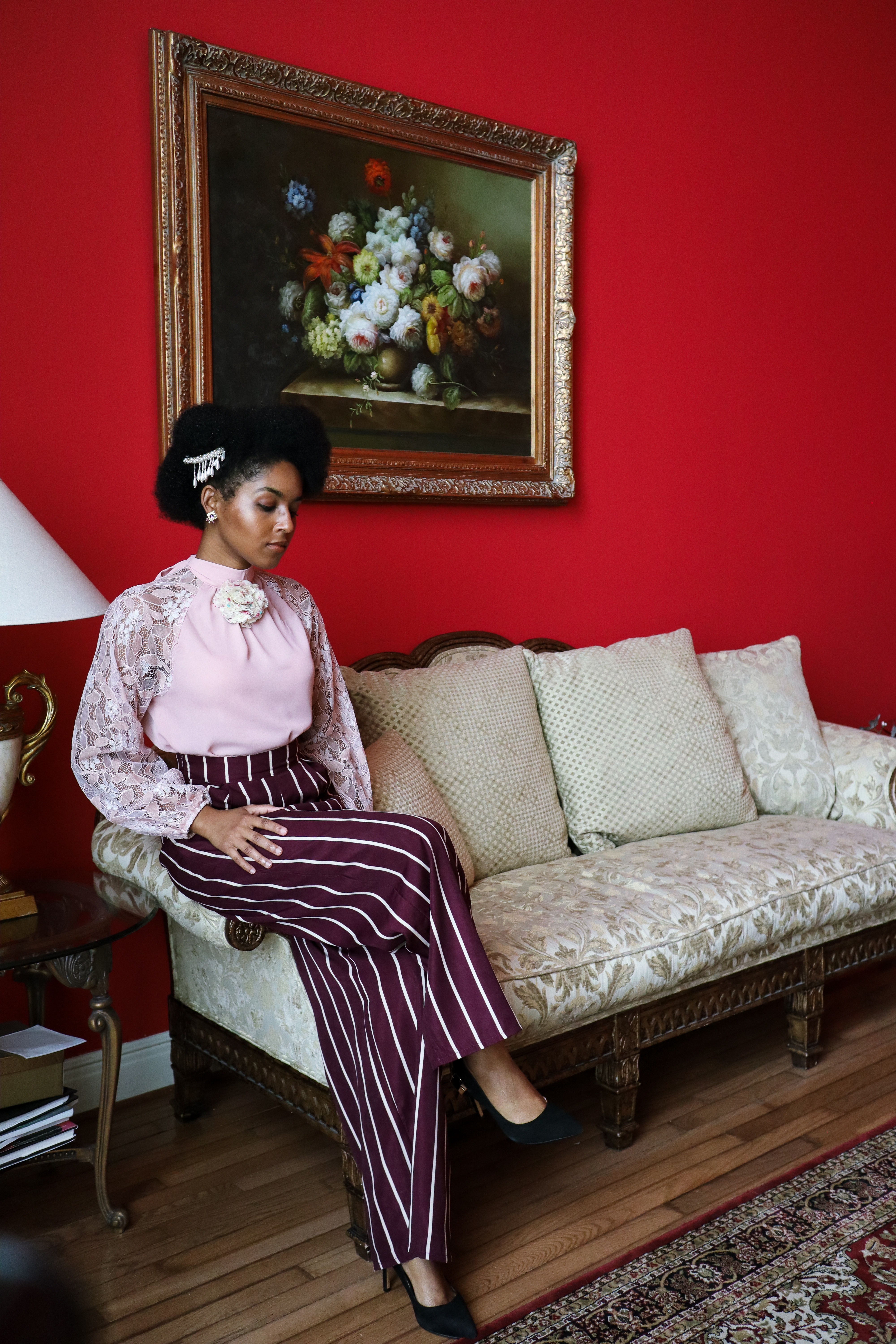
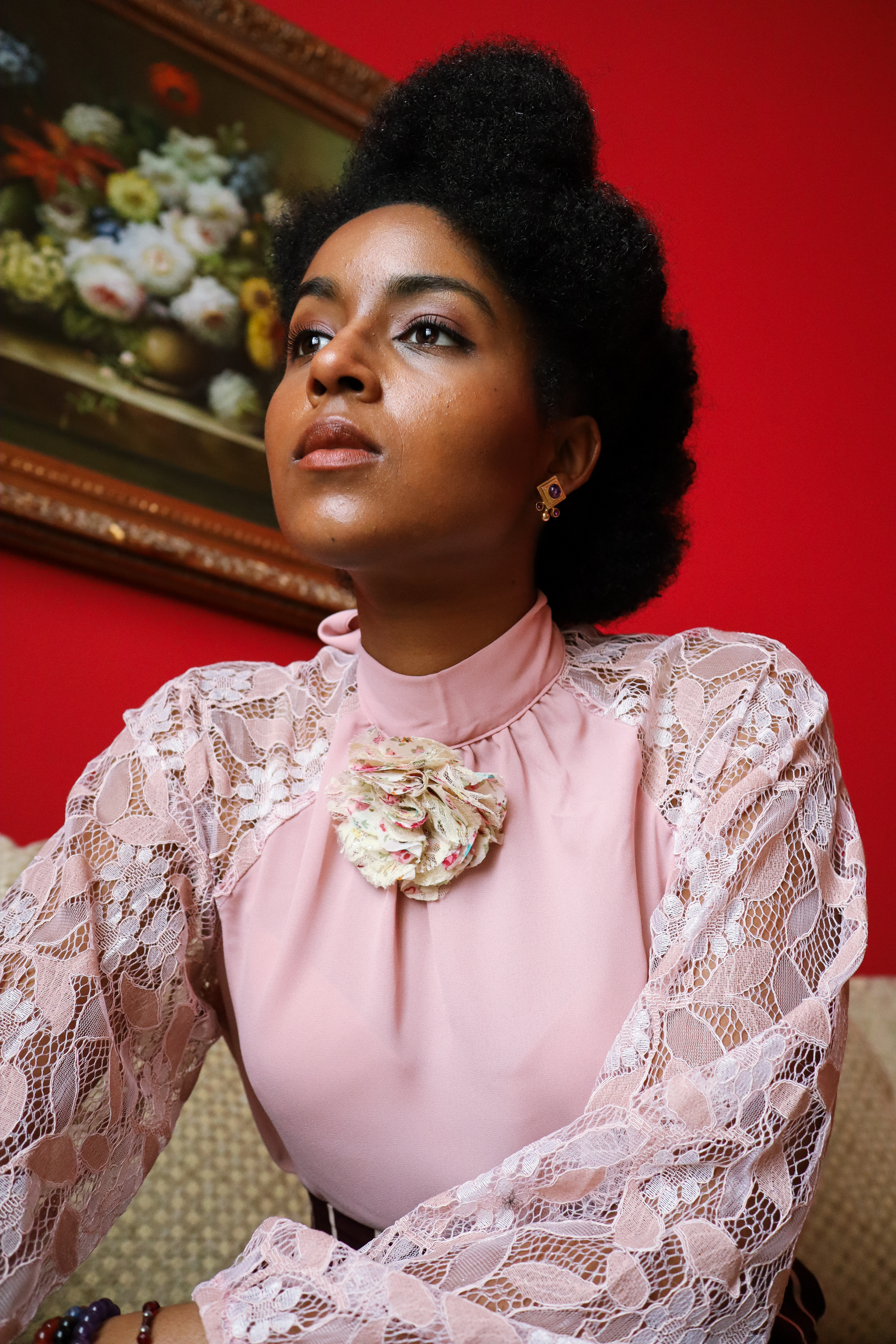
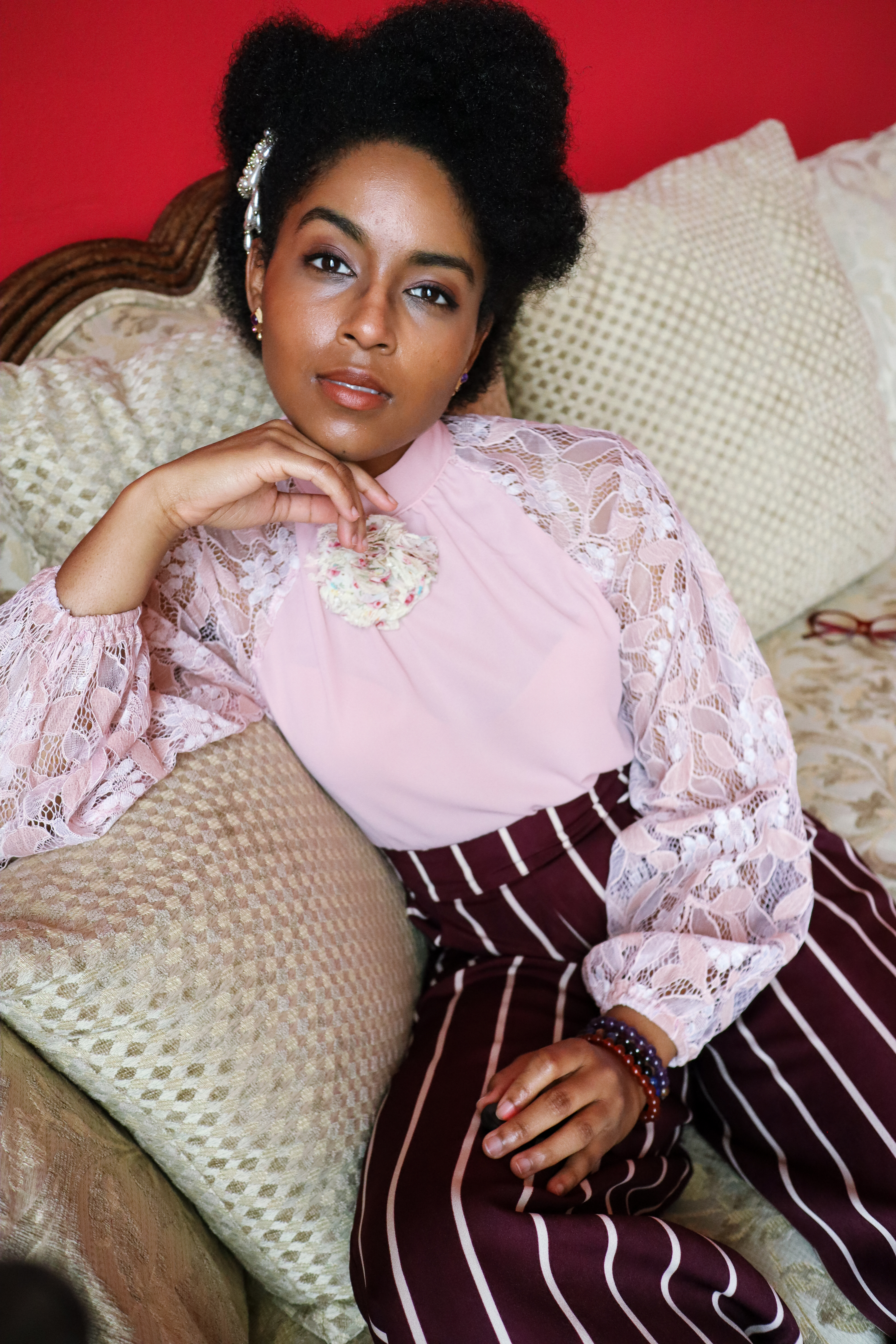
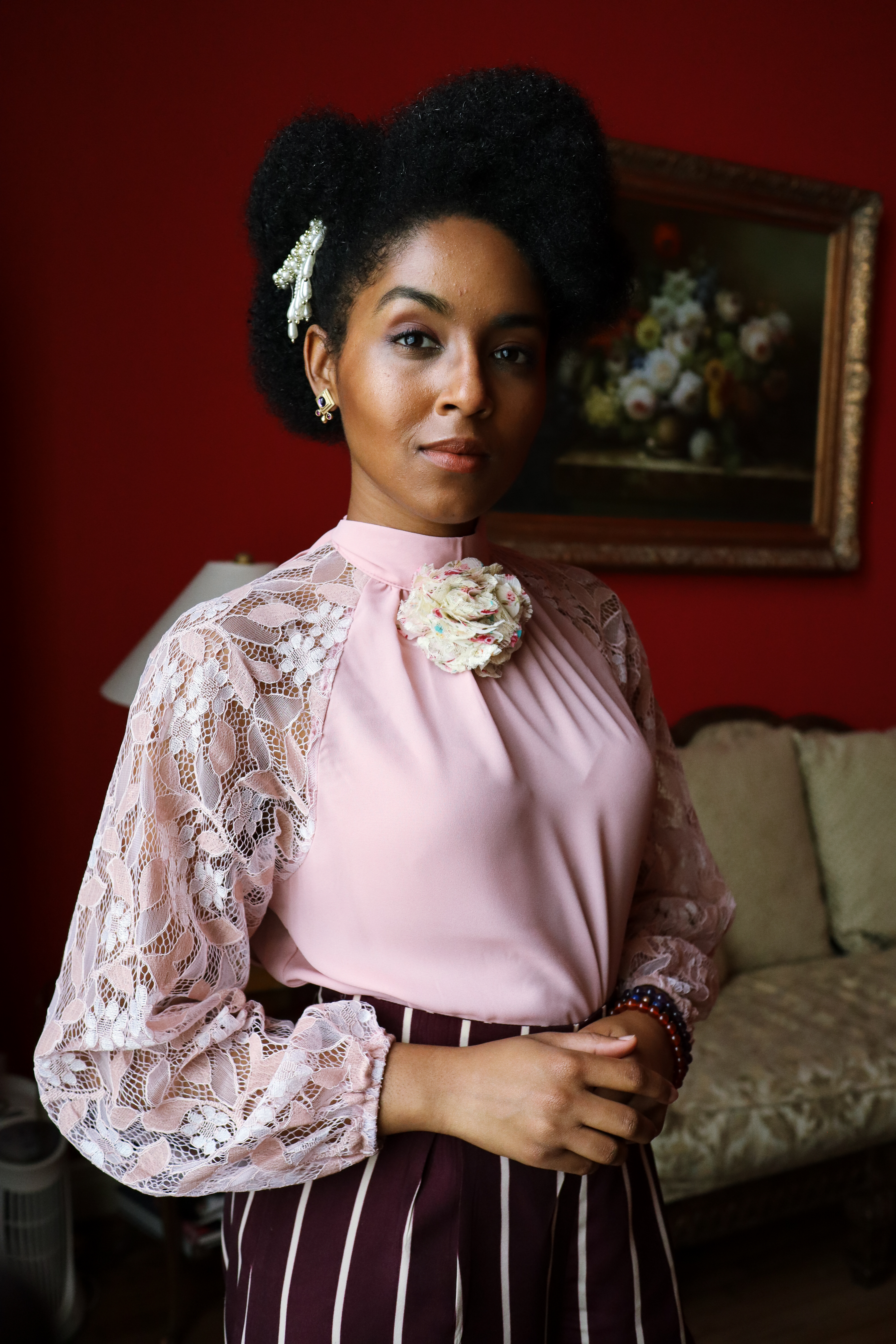
I really enjoyed putting this look together and playing the character Kamali.
Wearing: SheIn Lace Blouse; ASOS high waist pants; ALDO black heels; Fenty Beauty primer and foundation; Black Radiance contour and highlight; LipBar lipstick
What do you think of the story so far? Who is your favorite character? What do you think will happen next? Share with me in the comments below.
Also, remember to feel free to connect with me on Instagram, Twitter, and Facebook. I love hearing from you.
Africa is the future. The real question is, whose future does it benefit? What does Beyond the Return look like now? Before moving to Ghana, I did a lot of research to try to understand the country and see where I could fit. Even though that helped to encourage me to take the first step, it did not compare to what I needed to learn on the ground. In this video, I discuss what has worked for me in finding and creating my niche in Ghana and Africa.
As I discussed in the video, nothing compares to learning from experience. Being patient, adaptable, and open to learning will take you much further, if you are looking to find and create your niche in Ghana and Africa.
Networking does play a role in your success. Instead of insisting there is only one way to do this, I encourage you to explore what works for your industry and your personality. Some people need to be in everyone’s face. Others prefer to keep their circle of contacts small and close. I have found that a mixture of in person socializing and online outreach allows me to have a diverse network of people to learn from, collaborate with, support, and work with. This lends itself to the work culture in Ghana. You do not need to limit people to one transaction or interaction. The person you purchase furniture from can also introduce you to a business opportunity, help you with your garden, invite you to meet their family, or find that particular gadget that is not available in stores. The person you met at an event can also collaborate with you on a project, introduce you to the manager of a bank, teach you how to cook traditional dishes, or introduce you to their tailor. It all depends on how you value and maneuver your interactions.
Even though these connections feel more wholesome compared to the isolating transactions I experienced in Houston, or America in general, I am still learning how these interactions evolve to create your closer circle of friends. This might be influenced by the societal notion that everyone should know their place. Some people, in spite of interacting with each other for an extended period of time, may never feel comfortable enough to invite me into their home. As an American, this is not unusual because we all have friends who don’t know where we live. From my understanding, Ghanaians do invite their real friends home and introduce them to their families. I have also learned that people in Accra are different from people based or born and raised in other parts of Ghana. This might be similar to other big cities, but the sense that not everyone is truly as they seem or say is not foreign in Accra. I am very grateful that I have met and continue to connect to the people who are wholesome, supportive, authentic, and interesting.
Regarding the established network groups I mentioned in the video, I feel they are a great start to get a sense of who is around, what people are talking about, and what you can connect to. Ahaspora is a group for young professionals. I have also used their job listing to find opportunities. AAAG, the African American Association of Ghana, is the group that introduced me to the W.E.B. Du Bois Center in Accra. Ghana Must Read Book Club is a lovely group of book nerds. I really enjoyed the meet up I attended to discuss Children of Virtue and Vengeance by Tomi Adeyemi. This year, each month is dedicated to a different region of the world. There are many more groups for a variety of interests through out Ghana. These are the ones I have participated in thus far.
When it comes to figuring out if your industry exists in Ghana, or another country in Africa, it is important to remember that it may look different than what you are used to. Even though most of the data you need will come from word of mouth, there are startups developing ways to gather that data for all industries. Survey54 is a platform focused on emerging markets in Africa and its diaspora. I met the founder, Stephen Eyeson, in Ghana during the December holiday season. Him and his team are doing an impressive job developing their product. This article in African Business Magazine discusses the industries that are buzzing due to need to shift the economy into a digital landscape. Like I mentioned in the video, mobile financing, online education, and tele health are on their list. There is also a luxury market in Africa that continues to expand and grow. Another article from African Business Magazine discusses this in more detail. The speed of development, debt, and demand creates an interesting environment in Ghana and Africa. The mixture provides a blank canvas for you to choose how you further your business, make an impact, and gain in every aspect of your life.
So far, this is what has encouraged me to continue my journey. Are you looking to move or work in Ghana or another country in Africa? Are you already based in the royal continent and looking to expand or pivot? What do you find helpful? Let me know in the comments. Let’s continue the conversation.
Also, feel free to reach out and connect with me on Instagram, Twitter, or Facebook. I love hearing from you.