What does it take to make money move in Ghana? In this post, I share my experience discovering the challenges with moving money in and out of Ghana, the dynamics behind mobile money, and the challenges in finding investment options.
Let’s dig deeper into the reports I found. Like I said in the video, this experience lead me to do more research on what the digital financial services industry is doing in Ghana and Africa.
There is a lot of talk about digital financial inclusion in Africa. Half of the world’s mobile money transactions happen in Africa. Thus, financial tech is pushing to further develop this sector and formal banking still has room for improvement. According to the World Bank, in Africa, savings and credit are conducted through a semi-formal method with family and friends…not with a bank. Having mobile money be an option across all transactions may become a reality sooner than we think. Due to the pandemonium (in part), this demand pushed innovation into gear to expand mobile money access. According to the Africa Report, we are now in a new chapter for mobile money transactions in Africa where we might start to have “super apps” to pay for transportation, medical appointments, and other things all through mobile money. This is also why all tech eyes are on Africa to expand mobile money into savings and lending.
It is exciting to see how this industry continues to evolve. I do hope we truly fill the voids and implement solutions beyond the hype and buzz.
Have you had a similar challenge to what I discuss in the video? Did you find a solution? Share with me in the comments. Do you know other investment options in Ghana, beyond real estate and treasury bills? Share with me in the comments.
Also, remember to connect with me on YouTube, Instagram, Pinterest, Twitter, and Facbobok through the icons below. I love to hear from you.
Social media never runs out of opportunities to experience creativity, scandals, and thought-provoking conversations. I feel the recent Akuapem Poloo case in Ghana showcases all three. In this video, I recap on developments from the case and discuss how Ghana handles freedom of speech, nudity, and social media etiquette.
The Akuapem Poloo case is about Akuapem, a Ghanaian actress, being arrested and sentenced for 90 days in jail for posting an Instagram photo of herself nude with her son wearing underwear to celebrate his 7th birthday. Misunderstandings over artistic expression, publishing obscene materials, and domestic violence brought this case to court. I took this opportunity to dig deeper to learn and reflect on Ghana’s track record on freedom of speech, cultural norms surrounding nudity and women’s autonomy, and social media etiquette for the African market.
Let’s make sure we are all caught up with the facts of the case. In June of 2020, Akuapem Poloo, a Ghanaian actress, posted a photo on Instagram to celebrate her son’s 7th birthday. In the photo, she was naked, crouching sideways and posing in a way to not expose any explicit body parts. Her son was standing holding her hands wearing only underwear. The caption for the photo was the following:
“I’m naked in front of you because this is how naked I was giving birth to you. So in case you find me lying somewhere don’t pass by but see me as your Mom who brought you to life.”
Akuapem Poloo via Instagram
The complainant is the director of Child’s Rights International Ghana, Bright K. Appiah, who stated that her conduct undermines the privacy or likely detracts the dignity of the son. Below, he is interviewed explaining the NGO and the reason why he brought this case. (Note: if you could help me translate parts of the interview and summarize his response, please comment below. I’m still learning.)
She was arraigned in the Accra Circuit Court in November of 2020. Later in April 2021, she was charged and found guilty of publishing obscene materials, domestic violence, and undermining the privacy and integrity of another person. She was sentenced to 90 days in jail. Judge Christina Cann was quoted about the sentence that “it has become a worrying trend on Ghana’s social media indicating that this message should serve as an incentive to others.”
During this time, over 29,000 people signed a petition pleading with President Akufo-Addo to free Akuapem Poloo, which was signed and shared by Ghanaian celebrities, socialites, and fans.
On April 21st, the Accra High Court granted her 80,000 Ghc bail under the conditions that she reports to her case investigator every two weeks and the court registrar confiscates her passport. The case is now on appeal.
Later, on April 24th, Akuampem Poloo held a press conference in response to the case.
Freedom of Speech in Ghana
Like I said in my video, the first thing I thought of when I heard about this case was freedom of speech. So, I did some digging to learn about how Ghanaian law defines that right and how it has been implemented.
The 4th Republic of Ghana adopted a constitution that established the right to free speech in 1992. It states “all persons shall have the right to freedom of speech and expressions, which shall include freedom of the press and other media.” That constitution guarantees that the press and every individual in Ghana has the right to say anything they want, whenever they want and wherever they want. The only time this right can be revoked is when its use by an individual threatens the very life of another individual.
Ghana has been listed as the number one nation in Africa on the World Press Freedom Index. However, discussions of freedom of the press in Ghana question this status with the murder of Ahmed Suale, the investigative reporter most known for his film exposing corruption in Ghanaian football, and other incidents of confiscating equipment and intimidating journalists. Concerns have also been raised about the source of voices in media. Reportedly, in 2014, Ghana’s mainstream media is dominated by men, taking up 83%. Apparently, these men are exclusively part of the political, elite, and/or capitalist class. This leaves no voice for the rest of Ghana’s population, including women, disabled, and those who live outside of Accra.
Now, remember, freedom of speech did not come up in the Akuapem Poloo case. I still wanted to see if there were any previous cases in Ghana about posting on social media. I found one recent case. In 2020, Bless Amedegbe posted a video claiming the stay at home initiative was a hoax for the government to install 5G cables to kill Ghanaians. The video went viral and he was arrested. He was arraigned and remanded in court under the charge of false communication, assault on a public officer, contravening electronic communication act, criminal and other offenses act. He later stated the video was an act for kids. This case is a better example of how Ghana law is implemented to deal with content posted online that could incite harmful behavior.
Since the Akuapem Poloo case is focused more on the privacy and dignity of the child, I was expecting to find evidence of a child psychologist’s examination or statement. I have yet to find evidence of that. I also wondered if the NGO that is pressing charges has the same authority similar to Child Protective Services. Like, who is representing and advocating for the well-being and protection of the child in this case? These are questions I am still looking for answers for.
Nudity and Women’s Autonomy in Ghana
Among public discussion about this trendy topic, the concept of nudity and women’s autonomy over their bodies in Ghana came up. This extended to discussions about women’s rights in Ghana. Like I said in the video, I feel the attitude surrounding nudity in Ghana, especially of women, is nuanced. Generally speaking, in Ghana, everyone is expected to be fully clothed, regardless of religion or gender. Thus, using nudity for artistic expression attracts different responses. There are traditional wood carvings and paintings of naked women here. There are modern paintings of naked women here. There is a portion of social media content here dedicated to Ghana’s version of IG models, sometimes almost naked. As far as I know, none of this has been confiscated as obscene materials.
So, when it comes to a woman, in real life, choosing to be “going out more and dressing less,” or post her own photo naked, she is not expecting to be arrested. There is no clothing police in Ghana. Rather, her reputation is up for grabs. Some people will place her in a box that determines how much respect she deserves. Again, I’m not here to say if this is right or wrong. I’m taking this opportunity to learn more about Ghana through how its people think, interact, and respond.
The judge in the Akuapem Poloo case was quoted in saying that she is charging this case to make it an example and deterrent against all the inappropriate things that are being posted on social media in Ghana. Compared to all the other things happening in Ghana, some can’t help but feel this might be hypocritical, looking at other incidents of perversion and abuse that were not given the same treatment. I feel the discussion about nudity in Ghana must also include the fact that our concept of nudity is heavily influenced by the hypocritical, puritanical missionaries who came to Ghana. Prior to colonization, Africans were not walking around butt-naked. They dressed in a way that was appropriate for the climate and environment they lived in. They also had organized a society that was appropriate for their livelihood. So, in this case, it makes some sense to focus on the child instead of whether a woman can choose to showcase her nudity. But, we should also recognize that we are partly looking at this through the Western lens, which hyper-sexualizes everything, especially when it comes to women. If this is supposed to be used an example to determine how the younger generations coming up think about this, wagging our finger and saying “no” is not the best method. The youth have access to information and are aware of the hypocrisies in every aspect of our society. Maybe, to respect their curiosity and intelligence, it is time to use honesty instead of status-quo authority.
Social Media Etiquette in the African Market
Finally, I feel this case can be added to the growing list of examples of how the African market is defining it’s own social media etiquette. This reminded me of the case in Egypt where five women were arrested for violating public morals by posting videos on TIkTok. As well as the cases of social media and internet connection being shut down or censored deliberately during protests in Nigeria and Senegal. Also the cases of Uganda, Kenya, and Tanzania placing a tax on social media and internet contributors. Technology continues to carry Africa through this turbo-jet leap-frog jump in development. Thus, everybody is constantly running to catch up. African governments, in different ways, are evolving and stumbling in how they maneuver how important the internet space is for its people and the desire to maintain and preserve its culture and history, as well as protect it’s people from fake (or accountable) information.
This is a really fascinating time to be alive as we observe how this evolves. On the one hand, we do not want to create an environment that holds social media and the internet hostage for the sake of censorship. The internet has created somewhat of a level playing field for African innovators, creatives, and youth. Africa is being seen and experienced differently thanks to these Africans sharing there story, talent, and pride online. Africans are gaining access to new avenues to earn revenue and change their livelihood thanks to their presence online. Censorship, restrictions, and taxation on the internet space in Africa should not be taken lightly.
On the other hand, I understand the desire to attempt to preserve what is “truly African.” Just because we can see online how the rest of the world lives does not mean we should completely copy that here. However, we can protect our culture and history while also allowing the definition of “truly African” to evolve with the current times. Questioning what we have always done or thought does not automatically cast it as wrong or negative. Rather, it means we are evolving and hopefully growing in a better direction. Multiple truths can exist and be respected in the same space.
Regarding the Akuapem Poloo case, what does this mean for social media public figures in Ghana? Should they censor themselves? Should the money they earn be determined by the representation of morals on their online feed? This is where understanding what media we consume comes into play. Social media public figures can be both praised as a hero and dragged as a scapegoat. As much as we focus on them and what is being posted, we should also seek to better understand how to decipher information and take care of each other out here.
Overall, I enjoyed digging deeper into this discussion. What do you think about this case and the topics brought up? Do you have anything to add? Share with me in the comments. Again, I feel it would be inappropriate of me to state whether or not this case or the way it was handled was right or wrong. I am using this opportunity to continue learning about Ghana through how its people think, interact, and respond.
Also, remember to connect with me on social media. I love hearing from you.
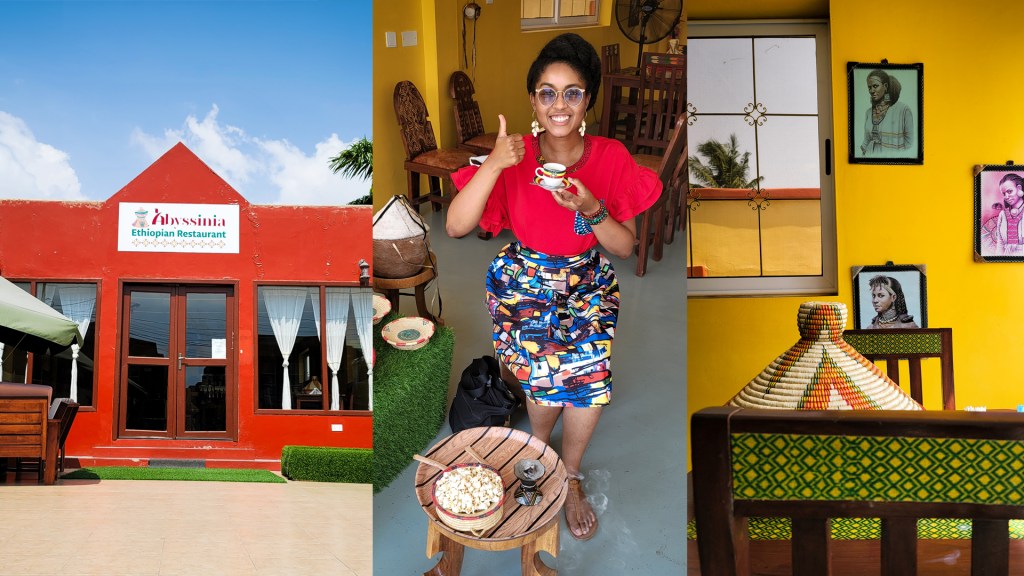
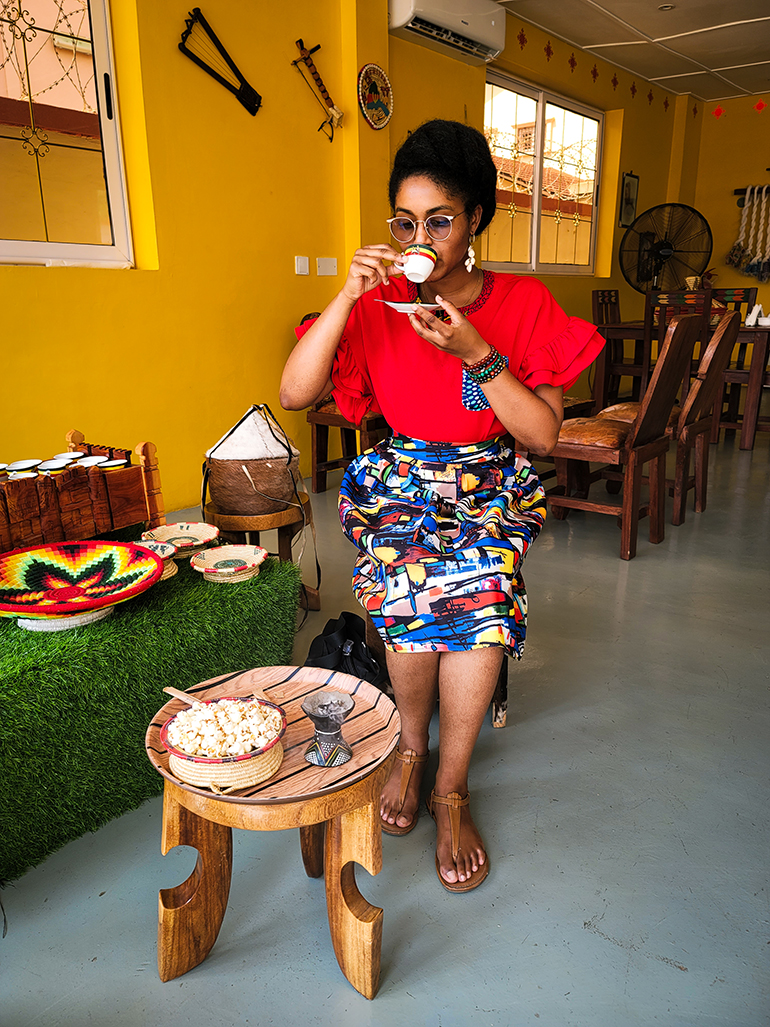
If you are looking for a new spot for food and experience in Accra, you need to check out Abyssinia Ethiopian Restaurant. Located in Cantonments, this restaurant provides an authentic Ethiopian food experience. From the decor, customer service, and menu, this place is really cool. In this video, I take you with me to order food, see their coffee ceremony, and eat at home.
Another cool thing about the ambience at Abyssinia Ethiopian Restaurant is that you can stay as long as you want. I did not feel as if I was being rushed out or hounded to order something else. Instead, you are invited to try a sample of their honey wine, bread, and some appetizers while you wait. You are welcomed to chat and relax for as long as you like. It almost feels like you are sitting in your own courtyard at home.
Do note that at the time of making this video, the manager was Daniel. I have subsequently been informed that he is no longer the manager. So, do not go there and ask for him.
Also note that this post is not endorsed. I ordered my own food and enjoyed my experience so much that I had to share it with you.
Have you been to this restaurant? What did you think? Share with me in the comments.
Also, remember to connect with me. I love hearing from you. You can find my social media at the bottom of this page.
Is it too late or too early to talk about how much I love this Christmas movie? Jingle Jangle: A Christmas Journey is a wonderful and magical story the entire family can enjoy. In this video, I share what I loved about the movie. Note, there are no spoilers in this video. I stick to what you would see in the trailer.
From the wardrobe, to the music, to the talent, I was so impressed by this movie. I will admit that I might be a little biased. I love everything Phylicia Rashad is in and want to be like her when I grow up. Also, I was a theater kid, so these types of productions brings me a lot of joy.
The underlying message within the movie was the most beautiful part. It’s one thing to talk about how important it is to believe in yourself. It is a whole other thing to illustrate how self-doubt results in losing your glow and believing in yourself results in regaining your glow.
What did you think of the movie? Share with me in the comments.
Also, remember to connect with me. I love hearing from you.
Being healthy in Ghana is becoming easier as I find more opportunities to use local ingredients. That is why I was so excited to find Tatale Vegan Restaurant. Located in Osu, the restaurant has a peaceful and cute vibe. Customer service is great as the waiters and owner are very attentive and helpful. They really understand the importance of presentation. The food is so good, you will forget there is no meat on your plate. You might even consider the vegan lifestyle for yourself. In this video, I take you with me to order the food, pick it up, and eat it at home. I really enjoyed my meal and look forward to trying everything else on their menu.
Note that this post is not endorsed. I ordered my own food and loved it so much I had to share.
Have you been to this restaurant? Would you try it? Share with me in the comments.
Also, remember to connect with me. I love hearing from you.
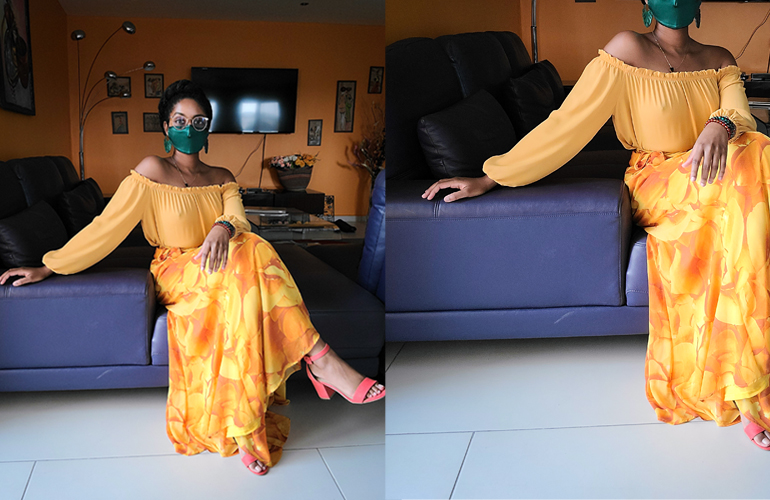
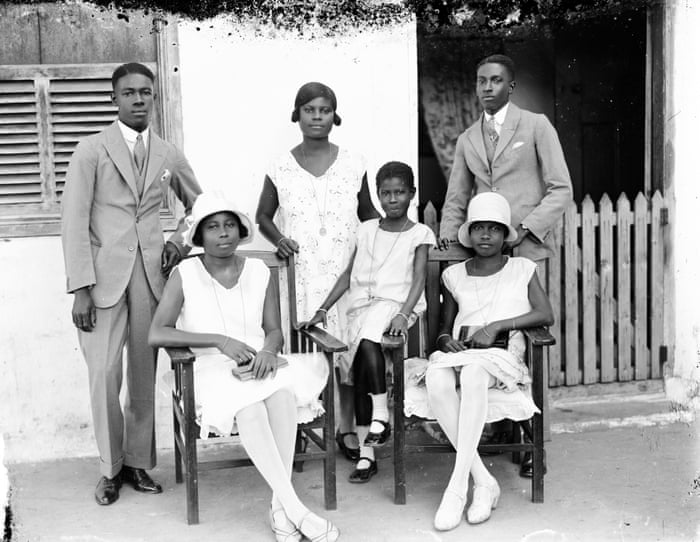
Is it truly a bad thing if certain history repeats itself? For instance, comparing the current Panoramic decade to the 1920s, would it be beneficial or chaotic if our behavior turned out to be the same? Along with developing a collection of masks to coordinate with my outfits, I have been wondering if there is any correlation between these two decades. This lead me to discover what different parts of the world were experiencing in the 1920s and if any of that compares to how we all will maneuver this decade.
Let’s start with the 1920s in the US. The jazz age. The Great Gatsby. The delicate clash between glamour and rebel. During this time, there was a dramatic rise in consumerism. Film and literature hyped up the parties and lifestyle a portion of the population was experiencing. On the other hand, the US was clamping down on immigration through legislation. The stock market began its descent. Henry Ford introduced the 49 hour work week with the auto industry. The younger generations of the time were pushing back against traditional taboos. Overall, it seems as if the 1920s in the US was a vibe.
In contrast, the 1920s in Ghana had a different vibe. During this time, the Gold Coast was still exporting gold and producing more than half of the world’s supply of cocoa. Due to this continued wealth, the 1920s was a decade of industrial and economic development in Ghana under the orders of Governor Gordon Guggisberg. He took on a 10-year development program and proceeded to develop and improve transportation, water supply, drainage, hydroelectric projects, public buildings, schools, hospitals, prisons, and communication lines. Their set goal was to fill half of the colony’s technical positions with Africans as soon as they could be trained. It seems that to an extent Ghanaians did benefit from the developments in this decade, which also aligned with growing resistance against British rule over Ghana.
Next, in Brazil, a similar resistance was happening. The 1920s in Brazil was partly defined by a modern art movement. As Brazil celebrated 100 years of independence from Portugal, artists began to produce avant-garde artwork that focused on human naturalism and anatomy. Of course, at first, the general response was a mixture of horror and shock. However, there was a desire to rid Brazil of imported art, literature, ideas, and ideology to push back against European art being seen as superior to Brazilian art. Also, fun fact, in the 1920s, many small towns in Brazil educated children in German or Japanese and Portuguese was rarely spoken. This was due to the mass migration to Brazil from Europe and Asia in the 1890s. However, when it was disclosed that the German government was aiding anti-government groups in Brazil, the Brazilian authorities closed schools that did not teach primarily in Portuguese.
Are you starting to notice a pattern? Surrounding resistance, identity, and drama? Let’s add one more.
This pattern was also happening in Japan. In the 1920s, a form of nationalism took hold in Japan to preserve traditional Japanese culture and reject Western influence. The British Empire ended its 21-year “alliance” with Japan, signaling the West’s apprehension of Japan’s growing power in East Asia. However, many Japanese who lived in the cities watched Hollywood movies, enjoyed Western-style dancing, and found Baseball, golf, and tennis popular. They also appreciated Western examples of democracy, liberal institutions, labor unions, and Women’s rights and proceeded to implement a version of these ideologies that worked for them at the time.
Looking at this sample of the world, the 1920s was a decade of resisting the traditional, redefining and reprioritizing identity, and experiencing an overwhelming amount of drama. The West was fighting among themselves, while countries colonized or hijacked by the West were starting to shake the table. All while everyone was wearing similar fashion styles and listening to similar music.
Now, fast forward to today. The first year of the 2020s was defined by resisting a virus and the traditional forms of basically everything, redefining identity and equality, and experiencing a devastating amount of drama. This time, it was overwhelmingly documented. So, what will the 2020s decade look like? What can we learn from the 1920s?
I’m glad you asked. I don’t know. Got ya! Ok, I have some ideas. The added layer to this experience is the technology and a global virus. Countries had to turn inward, after spending years getting comfortable with the good and bad side of globalization. People found creative ways to collaborate across borders and produce locally. Even I got to work with and get involved with groups of people I would have never crossed paths with if it was not for this push for community online. I feel it is also due to this turning inward that there was an increase in holding the failings of traditional norms accountable. The question is, how will this decade resolve all the issues we learned about and protested against in 2020? We all did a lot of talking while we had to stay in place or stay at home. Now that movement is becoming the norm again, we need to walk the walk too.
Despite all the varying and confusing information about The vaccine, I feel we still need to applaud humans on Earth. You made history! Developing a vaccine and rolling out distribution all in one year. That is awesome. Now, of course, me being someone who has no B.S. behind my name, (get it? Because I did not study science, but we should always question rules too) I must ask why it is taking so long to develop a malaria vaccine when a large part of Africa and Asia are heavily affected by it. Hopefully, we can get on that next.
From an individual standpoint, mental health is the bigger conversation that might shine during this decade. Again, thanks to technology and the people who are brave enough to share their authenticity, access to a community, resources, and solutions are expanding in ways like never before. The way this progresses will have such a major impact on everyone as a whole. Mental health is not only about what is happening in your mind. Cultures around work, relationships, health, consumerism, education, authority, and society at large are all influenced by mental health.
I feel we have set ourselves up for quite a fascinating decade. I am grateful to see beyond the year of doom. I feel more aligned with who I am and more comfortable in how I choose to create my reality. As calm and cool as that might be, I also deeply feel the continued unnecessary suffering the world and my mind still face. It is such a surreal balance because it keeps me very present at the moment. Looking at what was going on in the 1920s and how that influenced decades later, it seems like we are right on time in how we are defining the 2020s.
What do you think? I hope you have been keeping safe. Share your thoughts with me. Also, remember to connect with me on YouTube, Instagram, Pinterest, Twitter, and/or Facebook. I love hearing from you. As wonderful as the internet is, being online still gives me this surreal isolated / connected feeling. You know what else is funny? In January of 2020 I posted a short story called The Year 2020. At the time, I had no idea how the year was going to be, but the story has some foreshadowing. It is fascinating how the imagination works.
Also, this mix is officially part of my 2020s soundtrack. Wouldn’t it be cool to chill at a lounge or picnic with this vibe? Enjoy.







 Dagny Zenovia