What does it take to make money move in Ghana? In this post, I share my experience discovering the challenges with moving money in and out of Ghana, the dynamics behind mobile money, and the challenges in finding investment options.
Let’s dig deeper into the reports I found. Like I said in the video, this experience lead me to do more research on what the digital financial services industry is doing in Ghana and Africa.
There is a lot of talk about digital financial inclusion in Africa. Half of the world’s mobile money transactions happen in Africa. Thus, financial tech is pushing to further develop this sector and formal banking still has room for improvement. According to the World Bank, in Africa, savings and credit are conducted through a semi-formal method with family and friends…not with a bank. Having mobile money be an option across all transactions may become a reality sooner than we think. Due to the pandemonium (in part), this demand pushed innovation into gear to expand mobile money access. According to the Africa Report, we are now in a new chapter for mobile money transactions in Africa where we might start to have “super apps” to pay for transportation, medical appointments, and other things all through mobile money. This is also why all tech eyes are on Africa to expand mobile money into savings and lending.
It is exciting to see how this industry continues to evolve. I do hope we truly fill the voids and implement solutions beyond the hype and buzz.
Have you had a similar challenge to what I discuss in the video? Did you find a solution? Share with me in the comments. Do you know other investment options in Ghana, beyond real estate and treasury bills? Share with me in the comments.
Also, remember to connect with me on YouTube, Instagram, Pinterest, Twitter, and Facbobok through the icons below. I love to hear from you.
Social media never runs out of opportunities to experience creativity, scandals, and thought-provoking conversations. I feel the recent Akuapem Poloo case in Ghana showcases all three. In this video, I recap on developments from the case and discuss how Ghana handles freedom of speech, nudity, and social media etiquette.
The Akuapem Poloo case is about Akuapem, a Ghanaian actress, being arrested and sentenced for 90 days in jail for posting an Instagram photo of herself nude with her son wearing underwear to celebrate his 7th birthday. Misunderstandings over artistic expression, publishing obscene materials, and domestic violence brought this case to court. I took this opportunity to dig deeper to learn and reflect on Ghana’s track record on freedom of speech, cultural norms surrounding nudity and women’s autonomy, and social media etiquette for the African market.
Let’s make sure we are all caught up with the facts of the case. In June of 2020, Akuapem Poloo, a Ghanaian actress, posted a photo on Instagram to celebrate her son’s 7th birthday. In the photo, she was naked, crouching sideways and posing in a way to not expose any explicit body parts. Her son was standing holding her hands wearing only underwear. The caption for the photo was the following:
“I’m naked in front of you because this is how naked I was giving birth to you. So in case you find me lying somewhere don’t pass by but see me as your Mom who brought you to life.”
Akuapem Poloo via Instagram
The complainant is the director of Child’s Rights International Ghana, Bright K. Appiah, who stated that her conduct undermines the privacy or likely detracts the dignity of the son. Below, he is interviewed explaining the NGO and the reason why he brought this case. (Note: if you could help me translate parts of the interview and summarize his response, please comment below. I’m still learning.)
She was arraigned in the Accra Circuit Court in November of 2020. Later in April 2021, she was charged and found guilty of publishing obscene materials, domestic violence, and undermining the privacy and integrity of another person. She was sentenced to 90 days in jail. Judge Christina Cann was quoted about the sentence that “it has become a worrying trend on Ghana’s social media indicating that this message should serve as an incentive to others.”
During this time, over 29,000 people signed a petition pleading with President Akufo-Addo to free Akuapem Poloo, which was signed and shared by Ghanaian celebrities, socialites, and fans.
On April 21st, the Accra High Court granted her 80,000 Ghc bail under the conditions that she reports to her case investigator every two weeks and the court registrar confiscates her passport. The case is now on appeal.
Later, on April 24th, Akuampem Poloo held a press conference in response to the case.
Freedom of Speech in Ghana
Like I said in my video, the first thing I thought of when I heard about this case was freedom of speech. So, I did some digging to learn about how Ghanaian law defines that right and how it has been implemented.
The 4th Republic of Ghana adopted a constitution that established the right to free speech in 1992. It states “all persons shall have the right to freedom of speech and expressions, which shall include freedom of the press and other media.” That constitution guarantees that the press and every individual in Ghana has the right to say anything they want, whenever they want and wherever they want. The only time this right can be revoked is when its use by an individual threatens the very life of another individual.
Ghana has been listed as the number one nation in Africa on the World Press Freedom Index. However, discussions of freedom of the press in Ghana question this status with the murder of Ahmed Suale, the investigative reporter most known for his film exposing corruption in Ghanaian football, and other incidents of confiscating equipment and intimidating journalists. Concerns have also been raised about the source of voices in media. Reportedly, in 2014, Ghana’s mainstream media is dominated by men, taking up 83%. Apparently, these men are exclusively part of the political, elite, and/or capitalist class. This leaves no voice for the rest of Ghana’s population, including women, disabled, and those who live outside of Accra.
Now, remember, freedom of speech did not come up in the Akuapem Poloo case. I still wanted to see if there were any previous cases in Ghana about posting on social media. I found one recent case. In 2020, Bless Amedegbe posted a video claiming the stay at home initiative was a hoax for the government to install 5G cables to kill Ghanaians. The video went viral and he was arrested. He was arraigned and remanded in court under the charge of false communication, assault on a public officer, contravening electronic communication act, criminal and other offenses act. He later stated the video was an act for kids. This case is a better example of how Ghana law is implemented to deal with content posted online that could incite harmful behavior.
Since the Akuapem Poloo case is focused more on the privacy and dignity of the child, I was expecting to find evidence of a child psychologist’s examination or statement. I have yet to find evidence of that. I also wondered if the NGO that is pressing charges has the same authority similar to Child Protective Services. Like, who is representing and advocating for the well-being and protection of the child in this case? These are questions I am still looking for answers for.
Nudity and Women’s Autonomy in Ghana
Among public discussion about this trendy topic, the concept of nudity and women’s autonomy over their bodies in Ghana came up. This extended to discussions about women’s rights in Ghana. Like I said in the video, I feel the attitude surrounding nudity in Ghana, especially of women, is nuanced. Generally speaking, in Ghana, everyone is expected to be fully clothed, regardless of religion or gender. Thus, using nudity for artistic expression attracts different responses. There are traditional wood carvings and paintings of naked women here. There are modern paintings of naked women here. There is a portion of social media content here dedicated to Ghana’s version of IG models, sometimes almost naked. As far as I know, none of this has been confiscated as obscene materials.
So, when it comes to a woman, in real life, choosing to be “going out more and dressing less,” or post her own photo naked, she is not expecting to be arrested. There is no clothing police in Ghana. Rather, her reputation is up for grabs. Some people will place her in a box that determines how much respect she deserves. Again, I’m not here to say if this is right or wrong. I’m taking this opportunity to learn more about Ghana through how its people think, interact, and respond.
The judge in the Akuapem Poloo case was quoted in saying that she is charging this case to make it an example and deterrent against all the inappropriate things that are being posted on social media in Ghana. Compared to all the other things happening in Ghana, some can’t help but feel this might be hypocritical, looking at other incidents of perversion and abuse that were not given the same treatment. I feel the discussion about nudity in Ghana must also include the fact that our concept of nudity is heavily influenced by the hypocritical, puritanical missionaries who came to Ghana. Prior to colonization, Africans were not walking around butt-naked. They dressed in a way that was appropriate for the climate and environment they lived in. They also had organized a society that was appropriate for their livelihood. So, in this case, it makes some sense to focus on the child instead of whether a woman can choose to showcase her nudity. But, we should also recognize that we are partly looking at this through the Western lens, which hyper-sexualizes everything, especially when it comes to women. If this is supposed to be used an example to determine how the younger generations coming up think about this, wagging our finger and saying “no” is not the best method. The youth have access to information and are aware of the hypocrisies in every aspect of our society. Maybe, to respect their curiosity and intelligence, it is time to use honesty instead of status-quo authority.
Social Media Etiquette in the African Market
Finally, I feel this case can be added to the growing list of examples of how the African market is defining it’s own social media etiquette. This reminded me of the case in Egypt where five women were arrested for violating public morals by posting videos on TIkTok. As well as the cases of social media and internet connection being shut down or censored deliberately during protests in Nigeria and Senegal. Also the cases of Uganda, Kenya, and Tanzania placing a tax on social media and internet contributors. Technology continues to carry Africa through this turbo-jet leap-frog jump in development. Thus, everybody is constantly running to catch up. African governments, in different ways, are evolving and stumbling in how they maneuver how important the internet space is for its people and the desire to maintain and preserve its culture and history, as well as protect it’s people from fake (or accountable) information.
This is a really fascinating time to be alive as we observe how this evolves. On the one hand, we do not want to create an environment that holds social media and the internet hostage for the sake of censorship. The internet has created somewhat of a level playing field for African innovators, creatives, and youth. Africa is being seen and experienced differently thanks to these Africans sharing there story, talent, and pride online. Africans are gaining access to new avenues to earn revenue and change their livelihood thanks to their presence online. Censorship, restrictions, and taxation on the internet space in Africa should not be taken lightly.
On the other hand, I understand the desire to attempt to preserve what is “truly African.” Just because we can see online how the rest of the world lives does not mean we should completely copy that here. However, we can protect our culture and history while also allowing the definition of “truly African” to evolve with the current times. Questioning what we have always done or thought does not automatically cast it as wrong or negative. Rather, it means we are evolving and hopefully growing in a better direction. Multiple truths can exist and be respected in the same space.
Regarding the Akuapem Poloo case, what does this mean for social media public figures in Ghana? Should they censor themselves? Should the money they earn be determined by the representation of morals on their online feed? This is where understanding what media we consume comes into play. Social media public figures can be both praised as a hero and dragged as a scapegoat. As much as we focus on them and what is being posted, we should also seek to better understand how to decipher information and take care of each other out here.
Overall, I enjoyed digging deeper into this discussion. What do you think about this case and the topics brought up? Do you have anything to add? Share with me in the comments. Again, I feel it would be inappropriate of me to state whether or not this case or the way it was handled was right or wrong. I am using this opportunity to continue learning about Ghana through how its people think, interact, and respond.
Also, remember to connect with me on social media. I love hearing from you.
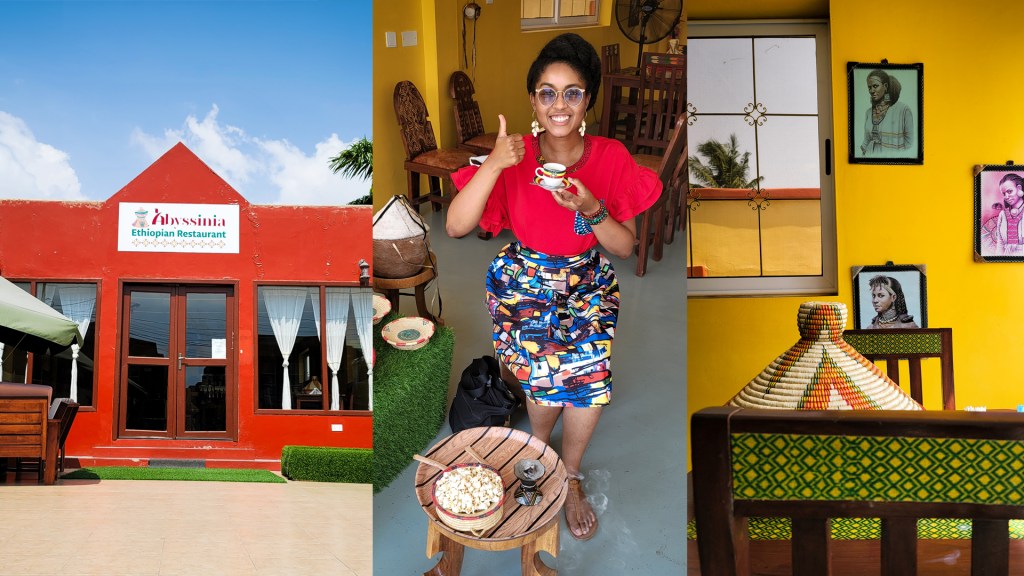
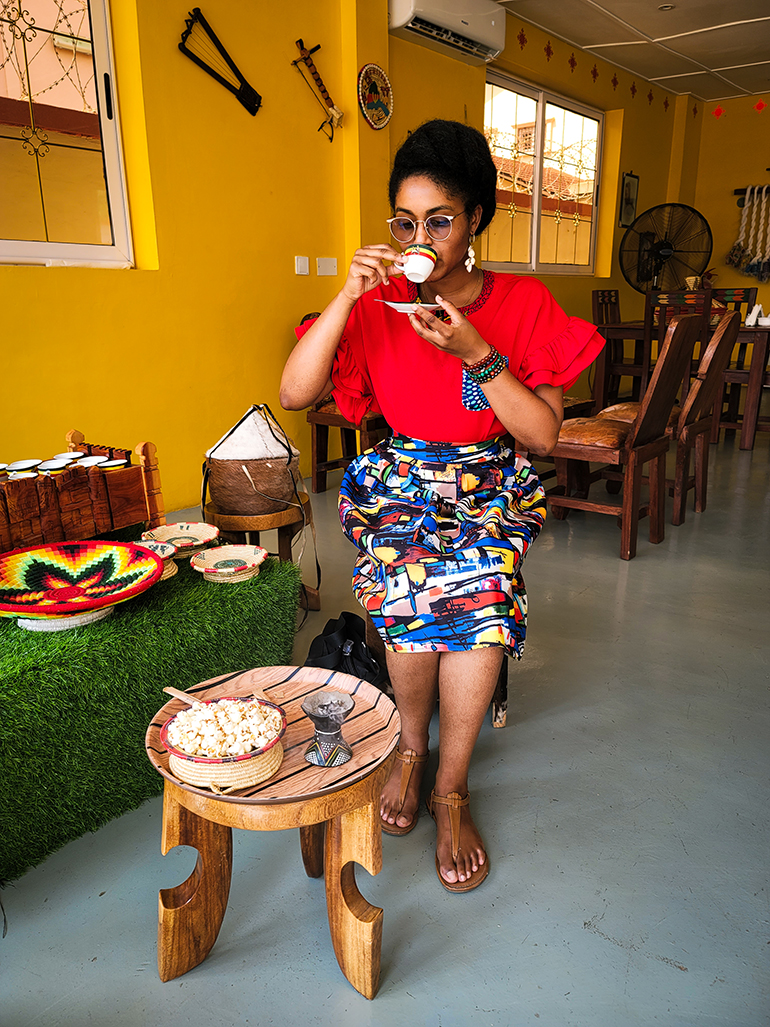
If you are looking for a new spot for food and experience in Accra, you need to check out Abyssinia Ethiopian Restaurant. Located in Cantonments, this restaurant provides an authentic Ethiopian food experience. From the decor, customer service, and menu, this place is really cool. In this video, I take you with me to order food, see their coffee ceremony, and eat at home.
Another cool thing about the ambience at Abyssinia Ethiopian Restaurant is that you can stay as long as you want. I did not feel as if I was being rushed out or hounded to order something else. Instead, you are invited to try a sample of their honey wine, bread, and some appetizers while you wait. You are welcomed to chat and relax for as long as you like. It almost feels like you are sitting in your own courtyard at home.
Do note that at the time of making this video, the manager was Daniel. I have subsequently been informed that he is no longer the manager. So, do not go there and ask for him.
Also note that this post is not endorsed. I ordered my own food and enjoyed my experience so much that I had to share it with you.
Have you been to this restaurant? What did you think? Share with me in the comments.
Also, remember to connect with me. I love hearing from you. You can find my social media at the bottom of this page.
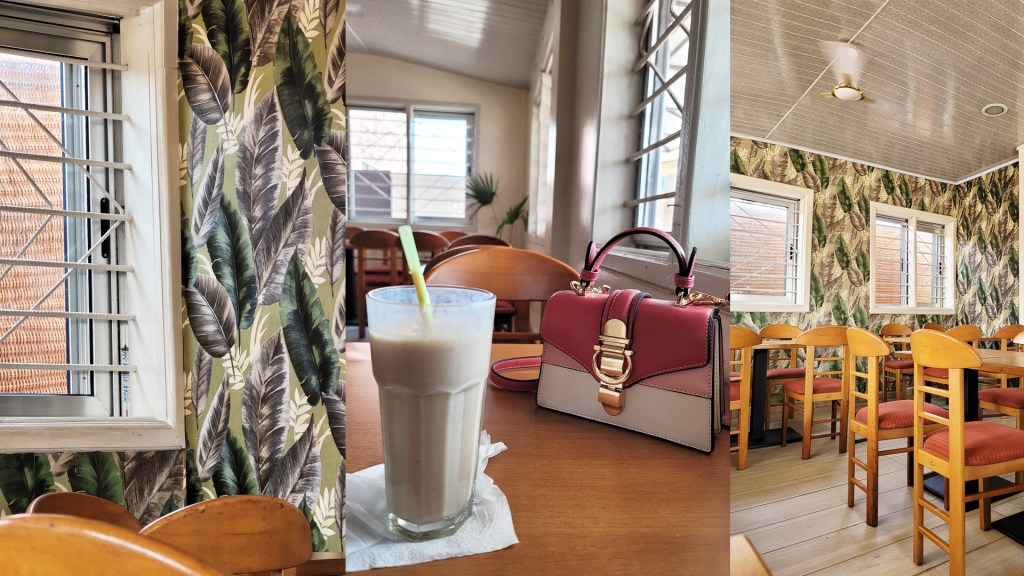
Being healthy in Ghana is becoming easier as I find more opportunities to use local ingredients. That is why I was so excited to find Tatale Vegan Restaurant. Located in Osu, the restaurant has a peaceful and cute vibe. Customer service is great as the waiters and owner are very attentive and helpful. They really understand the importance of presentation. The food is so good, you will forget there is no meat on your plate. You might even consider the vegan lifestyle for yourself. In this video, I take you with me to order the food, pick it up, and eat it at home. I really enjoyed my meal and look forward to trying everything else on their menu.
Note that this post is not endorsed. I ordered my own food and loved it so much I had to share.
Have you been to this restaurant? Would you try it? Share with me in the comments.
Also, remember to connect with me. I love hearing from you.
What is the big deal with that guy who allegedly traveled to Ghana with no connections and met with the Vice President of Ghana to build a new city? Why is there so much frustration for those who want to build and thrive in Ghana? In this video, I am sharing my take on the Twitter fiasco and the cycle of draining intellectual energy in Ghana and Africa. I believe we can do better and prevent this cycle, but we need to put our heads together to make the change long-lasting.
The answer to this might not be as complicated as we assume. I feel a lot of it has to do with holding ourselves accountable and no longer tolerating the status quo.
What do you think? Share with me in the comments and let’s continue the conversation.
Also, remember to subscribe to my YouTube channel. I love hearing from you.
As we continue our journey to explore and learn about Africa and its Diaspora, the spectrum of opportunities and possibilities can feel overwhelming. I like to think of the New Africa Renaissance as a mindset that is the foundation behind claiming Africa as the future. In this video, I share business opportunities in Africa, including real estate, agriculture, and tech, plus how you can find and connect to the right opportunities, including how to move, Odanna Connect, and the New African Renaissance.
Real estate is a popular investment topic across the continent. As I mentioned in the video, I feel this has two branches. One is building new cities and renovating established cities. For example, Akon City is a futuristic, cryptocurrency themed, city that will be developed in Senegal, West Africa. Akon recently announced he secured a $6 billion contract to build it. Phase 1 of construction is scheduled to be completed in 2023. For more details, I wrote about how Akon plans to bring Akon City to life on Africans On China. There is a big need for these types of projects. As Africa grows more urban, the infrastructure and industrialization needed to support that urbanization has a lot of room to catch up. Now, when I say “urban,” I do not mean building mini Houston or Paris in Africa. I mean combining technology and creativity to protect the environment, enhance the people’s well being, and modernize convenience. I am really excited to see how this becomes a reality across the continent.
The second branch of real estate opportunities is focused on residential and commercial. From what I have seen, the sales point for both of these is investment. As in, purchase to rent to someone else. That is cool. I would also suggest building and selling to customers who want to live or work there. For example, a lot of the Diaspora who is looking for real estate in Ghana or Africa do not only want rental investment. Some want to live in a neighborhood with a community of like-minded people, convenient location for groceries, business, and leisure, plus open spaces to hang out or collaborate. I am not sure yet how the after-effects of The Virus will influence this, but the fact that working from home or co-working is needed even more should be incorporated in your building blueprint. We also need to expand the “affordable” spectrum. Quality housing across the board is in dire need of fulfillment. Plumbing, electricity, and paved roads still do not reach everywhere. Not to put a damper on your enthusiasm…and I am not expecting anyone to put on a superhero cape…but, I feel the rise in innovation and development should narrow the gap between the haves and have nots, not widen it.
Agriculture in Africa has so much to offer if done the right way. Every sector of food has room for improvement plus voids that need to be filled. For example, Bountifield International invests and creates agricultural opportunities in Africa by providing tools and services for African rural entrepreneurs to efficiently process, save, and sell more food.
Tech in Africa is exciting because it is capable of supporting so many industries, sectors, and demographics while solving so many issues. Balancing culture, security, and convenience is key. One example I share in the video has to do with eCommerce. If you want to take advantage of this growing opportunity, look beyond creating a product. Infrastructure, manufacturing, inventory storage, customs, and shipping also have voids that need to be filled efficiently. This TechPoint Africa article does a good job breaking down the challenges eCommerce in Nigeria is currently facing.
Now, where do you fit in all of this? I am glad you asked.
This free ebook, “How To Move To Africa, Specifically Ghana,” provides insight and resources to understand how to prepare before you purchase your ticket and what to expect in maneuvering your new reality. The ladies behind it, Bridget and Nana, have combined their experiences as educators and entreprenuers to give you and easy-to-read guide to make your move a success.
Odana Connect is an online platform to connect and collaborate with hard to find Africans for investment, business opportunities, job opportunities, and experts in the field. At the time of writing this article, the waiting list is still open to sign up before its launch. It is by the people behind Odana Network. If you are interested in Africa, I am sure you have seen one or multiple videos on their YouTube channel showcasing African business and innovation. I am excited to see how this platform develops.
The New African Renaissance hosted it’s debut conference, virtually, in June 2020. They are creating a community to build capital for Africa’s development. Their funding focuses on building new cities, invest in startups in Africa, plus investing in education and talent accelerator programs.
Impact Hub Accra recently launched New Economy Booster, an accelerator program. They are providing resources and tools for entrepreneurs and startups, and non-profit organizations who are contributing to Ghana’s post-pandemic economy recovery.
The list above is not exhaustive, but I feel these initiatives will enhance your experience and plan as you continue your search. Regardless if you are planning to visit or move or have been living in Africa all your life, there is something here for you.
I hope you found this helpful. What would you like the New African Renaissance to look like? Comment below and lets continue the conversation.
Remember to connect with me on Twitter, Instagram, or Facebook and subscribe to my YouTube channel. I love hearing from you.




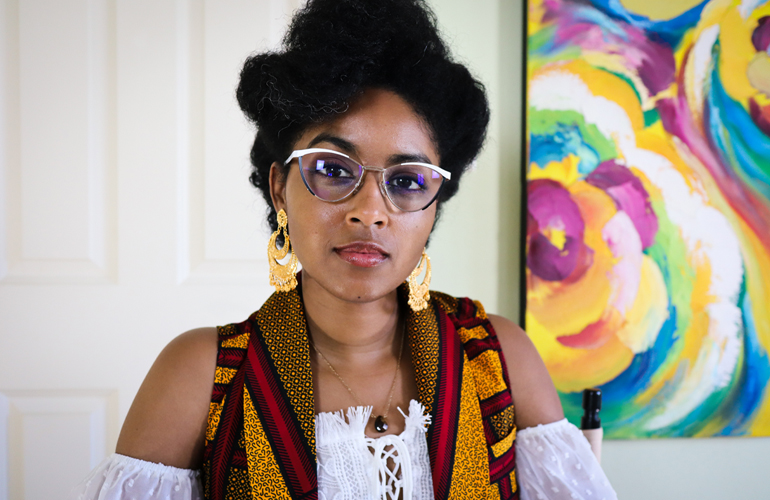

 Dagny Zenovia