Blog

  • Slave To The Rhythm – Unreleased Michael Jackson Single

    As some of you might know, I am a Michael Jackson Scholar. Thus, I rarely share or seek any posthumous productions that come from his Estate or anyone else. However, I came across this track, which I had never heard before, and noted a heated debate from fans comparing this to a Justin Bieber version. I did some digging and was able to connect the dots. For those who are interested, here is some MJ trivia to add to your collection:

    • “Slave To The Rhythm” was created in the early 1990s when Michael was working on the Dangerous album. It was completed in 1998 but never released.
    • For the 2010 posthumous album Michael, Max Methods re-produced “Slave To The Rhythm” to give it a new electro-dance beat, but it did not make the cut for the album. It was leaked to the internet later that year and immediately disappeared.
    • Justin Bieber re-recorded the song as a duet with him and Michael. It was leaked in August of 2013 and Michael’s Estate is still attempting to remove the song from as many websites as possible.

    At first, I could not understand how Justin Bieber could get a hold of an unreleased Michael Jackson track without the Estate’s permission, but I guess there are loop holes celebrities can jump through too. I heard a few seconds of the stolen version and it is nothing to get excited about. Honestly, I do not think anyone should be allowed to record any so-called duets with Michael’s pre-recorded vocals. It is rude and demeans his legacy. A duet with Michael was always earned. It should stay that way.

    Now for the original single, which you can listen to below…until it is taken down from youtube, showcases Michael’s amazing passion and energy. I like the rhythm and I could see Michael creating a killer dance routine to it, but it would be nice to hear the original demo version with the 1990s beat too. It would have also been nice to hear all these unreleased tracks when Michael was alive to re-emphasize the fact that his musical brilliance never faded, but that discussion deserves a separate blog post. Nonetheless, it is worth a listen. Enjoy.

  • André 3000 brilliance in “Sixteen” and “Sorry”

    Andre 3000

    Andre 3000 Andre 3000

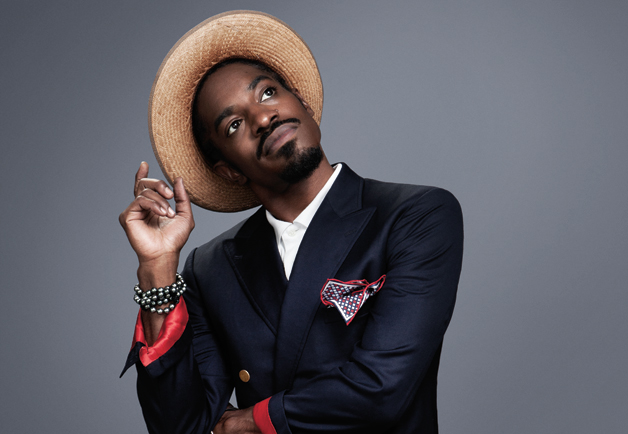
    André 3000 is an American rapper, singer-songwriter, instrumentalist, actor, and the other half of the hip hop duo Outkast. For the past few years he has only done features for other artists’, but every time, in my opinion, he outshines them with his rhythmic poetry. André has a way with words that are so honest and thought-provoking. I recently stumbled onto these two tracks and loved the story line in both. Enjoy.

  • Dojo Cuts ft. Roxie Ray

    Dojo Cuts Roxie Ray Dojo+Cuts+feat+Roxie+Ray+485207_10151590972125164_18959

    Dojo Cuts is a soul and funk band from Australia. Live instruments, contemporary funk, authentic soul, smoky vocals, and jammin’ fun. They released their second album in 2012 and it is packed with grooves I highly recommend you listen to. Enjoy.

  • Pancake Sponge Brain: The Internet and Digital Media Stretches Us Thin and Feeds Wisdom Depending on Who Is Using It

    Source: johnpiippo.com
    Source: johnpiippo.com

    The Internet and digital media have revolutionized the way we access the news. Ironically, it has hindered full exposure of the truth and has assisted in building the most comprehensive source of knowledge. To what extent this medium is a curse or a blessing primarily depends on those who utilize it.

    The most obvious protagonist in this dynamic play is Google. In “Is Google Making Us Stupid,” Nicholas Carr speaks to the fact that the brain can reprogram itself and adapt to every technologically development. Gradually, we have evolved from reading in-depth to only skimming. However, Google believes the human brain is an outdated computer that needs a faster processor and bigger hard drive. Carr introduces the pancake-people as we are spread wide and thin as we connect and skim through a vast network of information.

    The skimming trend leads to the concern of maintaining context and diversity as a priority. According to Michiko Kakutani in “Texts Without Context,” one of the main issues the Internet causes is cyberbalkanization. Since people can filter everything they view, they tend to not encounter other people or ideas that are different from their own, which reduces a sense of consensus and common ground.

    Switching our focus to those who produce the material we skim and filter, J. Hebert Altschull in “From Milton to McLuhan: The Ideas Behind American Journalism” points out that journalists are confined by the time and space of the news production system and tend to avoid reflecting on the fundamental ideas of their work. Thus, a lack of context is tolerated to meet a deadline and serve readers with no time to fully view their work.

    In The Guardian article “We Need a New Era of Digital Journalism,” Frederic Filloux explains that journalism is in need of an evolution to cater to today’s readers who “want to be taken from A to B, with the best possible arguments, and no distraction or wasted time.” A possible solution to this is to create a new journalistic genre for digital media.

    Thus, a form of digital media etiquette should be required for both producers and consumers of news to insure that the truth behind issues and events are clear and comprehensive. For example, the Guardian posted an article about Ghana’s first farmer’s market, implying that organic and local produce are becoming a trend due to Ghana’s growing middle class and are being hosted in markets for the first time. The article failed to mention the long history of food markets in Africa or how African farmers are undercut in the global economy or the recent health issues Ghana has faced due to its desire to compete and keep up with globalization. All of this information the article lacked are easily accessible via the Internet and digital media, but could possibly get lost beneath our skimming and filtering habits.

  • Mafikizolo

    mafizolo mafizolo mafizolo

    Mafikizolo is a musical group from South Africa, producing fun jams since the 1990s. They have a unique style that re-adapts the genre Kwaito. Their two recent singles are so colorful and cool. The rhythm is moving and both of their voices are full of emotion. I love their style. Enjoy!

  • Story: The School-To-Prison Pipeline

    Story: The School-To-Prison Pipeline

    *Update June 5, 2014: Published via The Austin Chronicle. View details.

    Source: state.sc.us
    Source: state.sc.us

    For my master’s report, I will be discussing the school-to-prison pipeline theory in terms of it’s solutions. Most stories and documentaries about this issue tend to take the blame-route, primarily focusing on the types of children who are in trouble and the types of institutions that are to blame. I am currently taking a class about this theory and have read a variety of studies and stories about this issue. From what I have gathered, a lot of programs and legislation has been implemented to address this issue, but has not eliminated it. For instance, according to a Texas Appleseed report, Texas has decreased the population in state secure facilities by 60%, increased funding for community-based programs, and closed a few facilities. From this perspective, it looks like we have made a lot of progress in a short amount of time. In contrast, I visited a juvenile courtroom and detention center a week ago and sadly it was not empty. Observing the cases and touring the facility, I could feel my heart weep for all these youth who do not get a chance to tell their full story and are given an orange suit too quickly. I suspect there is a disconnect between the implemented solutions and the existing issue. To find the answer to this dilemma, I am interviewing individuals who have worked in education, detention facilities, and promising programs to dig deeper in what has been implemented and their take on what still needs to be done. I will also be using data analysis and research from a variety of organizations dedicated to solving this issue. This project will be a long-form article with a creative media component. If you or someone you know have a story to share about this or suggestions for resources, please comment here or contact me.

    Source: pbs.org/tavissmiley
    Source: pbs.org/tavissmiley