I hope you are having a happy new year as we cross mid-January. Mine has been going pretty well. Every new year I reflect on what I planned to do the year before, what I did achieve that year, and what I will do the next year. Last year I was determined to make 2014 count, which entailed being selfishly happy, building my purpose, and pushing myself. It was not easy. Some who are close to me considered it a little extreme, but I needed the time to re-evaluate my priorities and journey. I learned from that experience and am ready to create the plan for this year. These are my top three goals for this year. What are your goals for 2015? Let me know in the comments below.
1. Appreciate and celebrate the present
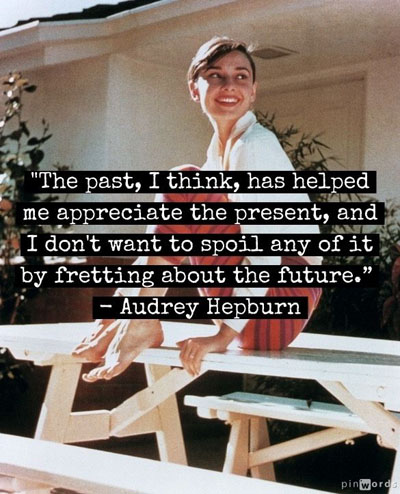
I have this habit of spending time dwelling on past decisions or experiences wondering if they were worth it and imagining my future wondering if I am on the right path. I figure this trait is not unique, but it never leaves me feeling happy or content. Rather I feel disappointed or deflated. Imagine how much better it would feel to recognize how wonderful your present is. To wake up to a brilliant blue sky. To have a reason to pursue aspirations. To recognize how far you have come in order to experience your present reality. This year, appreciate the present and celebrate every pleasant and challenging moment.
2. Live with an open heart
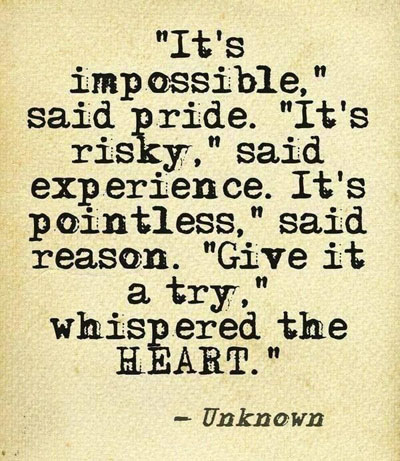
Life comes with bruises and scratches. Disappointments seem to pile up larger then successes. Gradually (and subconsciously) I distanced a part of my self from the world for self-defense. It is safer not to share your essence or not allow your emotions to get attached to prevent anyone from using it against you. With the enormous amount of pain and suffering felt around the world, how can anyone believe in love (all kinds of love)? Do not allow the world to freeze your heart. I cannot ignore the hatred, pollution, and injustice, but I can choose to see and believe in the beauty of this world. This year, open your heart to see the kindness and generosity that still exists and share it with others.
3. Be your version of happy
This past year entailed a lot of hard work (this coming year will probably be the same in that regard) and I had put my happiness on hold thinking I did not have time to spare. How valuable is achieving your goals if it lacks happiness? Slide out of your comfort zone. Learn a new skill. Paint every wall in your room a different color. Host a picnic. Babysit pet hamsters. Do what makes you smile on the inside and outside. Spend time with people who make you laugh. Do not waste an opportunity to enjoy your life. This year, treat yourself every month with something that makes you happy.
The beginning of a new month can be exciting, frustrating, inspiring, and encouraging (not exactly in that order, but you get the idea). This fall I started a new chapter in my life as I pursue another adventure to get closer to achieving my purpose in life. With every new chapter, I try to add something new to make the experience wholesome. On twitter I came across GG Renee’s #30Layers30Days Self-Discovery Challenge. If you sign up for her newsletter, for the month of September she will send an e-mail with prompts to get you to reflect on what your reality is now and what your future can be. I love this idea!
This past summer I got a new journal as a gift and had been pondering what type of thoughts to fill it with. When I was younger I would write daily about my activities for the day and slowly…got…bored. A few years ago I started an idea journal, filling it with visions and things I wanted to accomplish. I have yet to fill that journal, so I wanted this new one to take on a different direction. I’m going to start it with this challenge. I will be tweeting some of my responses and will probably do a blog post about the whole experience at the end of the month.
I would like to share with you Day 1:
START. STOP. CONTINUE.
START: What do you want to start doing? What do you want more of in your life? What feelings, what activities, what energy? What baby step can you take today?
I want to start being open to new connections and opportunities that are beneficial to my life.
STOP: What have you had enough of? What are you tolerating or feeding into that is not adding value to your life? What area of your life is begging for more boundaries?
I’m going to stop retreating to observer-mode when I feel uncertain about my surroundings.
CONTINUE: What habits or trends do you want to continue? What’s been working for you? What can you do to ensure you keep it going?
I’m going to continue being true to myself regardless if it makes others uncomfortable.
As promised, I am sharing the clip I submitted to audition for Cirque du Soleil’s Michael Jackson Immortal show.
In 2010, news started spreading that Cirque du Soleil and MJs Estate were planning a collaboration unlike any other. While reading up on this, I found the casting call for dancers for the show. From what I recall, the criteria basically asked for someone with dancing technique who believed in Michael Jacksons message. Sitting in my small dorm room in Washington, DC starting my junior year of college, I decided to give it a shot. I was not a member of a dance company and I had not performed on stage since high school, but I felt I did have something to add. Also, at that time, I was not doing any writing or media production yet…I didn’t even have a camera. Luckily, I had digitize some footage from plays I did in high school. In my dorm I choreographed a routine for “Wanna Be Startin Something” and practiced sharpening my repretoire of MJ moves. I was also excited to use my recently made MJ jacket (more on that later). I spent about a month and a half editing my audition clip to match the listed requirements. Finally, I uploaded the clip to the audition portal and mailed a DVD to their Canada address. Their rejection letter was generic, but polite. I knew the other candidates probably had better footage and experience and connections, but for a moment I felt I might have a chance to take part in something wonderful and MJ related. Come to think of it, the majority of my memorable experiences in life were lead by overcoming the fear of the unkonwn and just putting myself out there. I believe that if you are in control of the situation, you have nothing to lose but a missed opportunity. A year later I did see the Immortal show in Las Vegas. You can view my comments on that on my previous blog.
During the summer of 2010, I had brought closure to Michael’s passing and started a new chapter in my impersonation catalogue by creating my own MJ jacket. In May I had sketched some outfit ideas to go with my new black and white tuxedo shoes, but none of my ideas were coming together like I knew they could. In June I traveled to L.A. to visit Michael Jackson’s grave site to mark the one year anniversary of his passing. It was an emotional trip and seeing so many people come from all over the world to celebrate one person was sad and beautiful. Everyone was dressed up in either MJ fan accessories or full impersonator attire. I wrote a note to Michael and attached it to a red rose and a green mini-lock to symbolize my continued love for MJ and promising to leave the pain and mourning behind to move on with my life. It is sometimes difficult to articulate this type of connection to people who might not be big MJ fans. It’s more than just liking the music or knowing the words to a song. I noted that everyone there agreed that they felt Michael was a part of their family. Everyone I spoke to had a story about how MJs song, video, poem, or performance made a difference in their lives. To mark the exact time of his passing, everyone gathered near the barricades that were closest to the entrance of the colosseum, held hands, and sang “Heal The World” and “Cry” together. It was really beautiful. I also left a candle near his star on the Hollywood Walk of Fame.
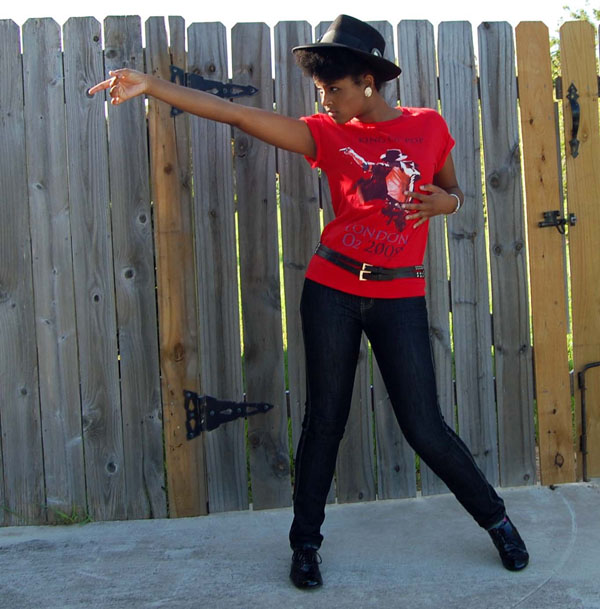
Returning from that trip inspired me to finish my sketches and create my own MJ jacket. As a female impersonator, I wanted the design to be influenced by MJs style and also incorporate my love for color and vintage pieces. After some dedicated thrifting, I found some vintage jewelry broches and beads that fitted perfectly with my concept idea. I also bought sequins, jumbo clothes pins, plastic jewelry, and hot glue from Wal-Mart. It took me about two months to make the jacket. I sewed the broches and beads to the shoulders and glued the sequins and individual jewelry pieces one-by-one on the rest of the jacket. I also added a red ribbon band for the arm like Michael would wear. Once it was completed, I decided to call it the “HERstory Jacket.” Naturally, I had to do a photoshoot to savor my new creation.
Before Michael Jackson’s passing in 2009, that year was going to be the best time of my life. I remember how excited I felt when I saw his press conference announcing his last concert. That emotion quickly transformed into anxiety when Ticketmaster claimed they were sold out. I did get a ticket via Viagogo.com in March of 2009. Words cannot describe how elated I was. I even helped him pick the song list…according to the voting campaign that was on his website. I do remember feeling a little worried when the increased number of concerts was announced and later the shift in a later starting date, but I knew the show would still go on. This was going to be the perfect icing on the cake…to experience my icon LIVE.
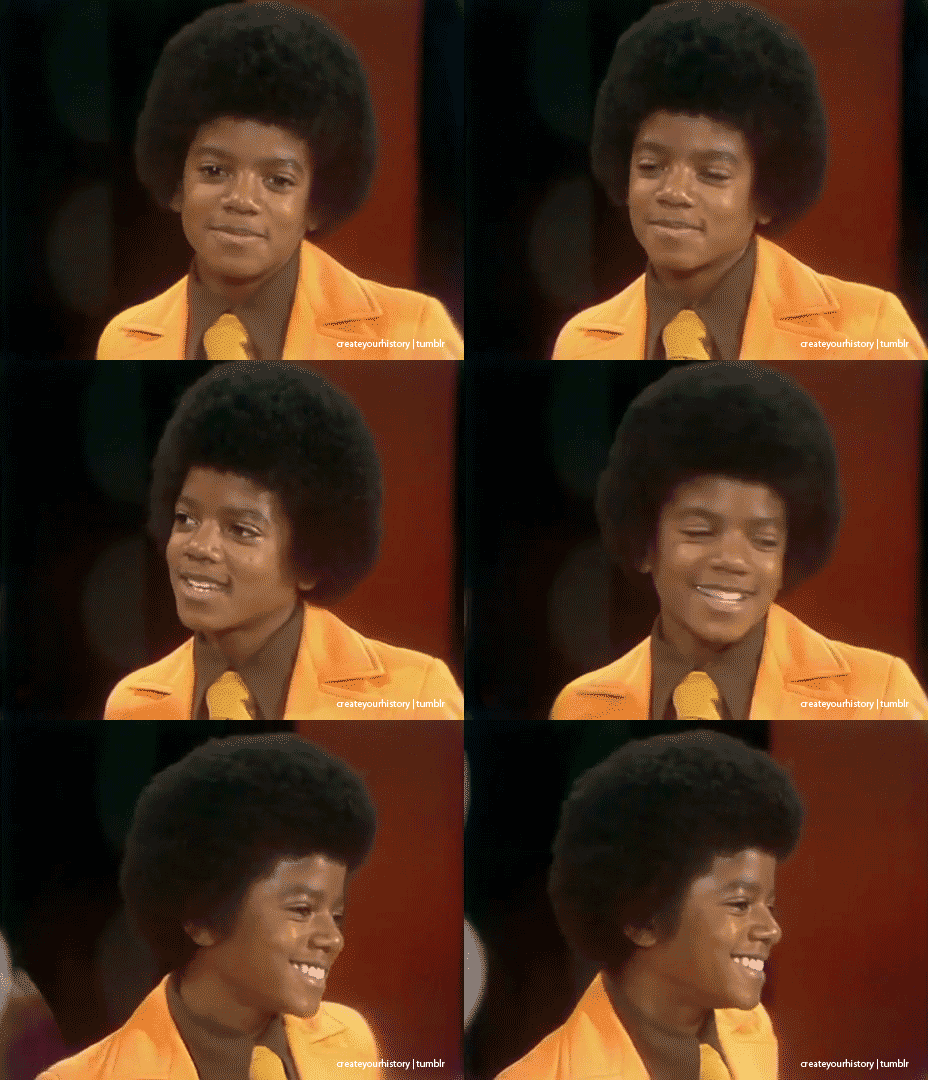
I always felt drawn to him as an artist and person, but it was in 6th grade when I started to follow his work and collect everything I could find about him. At that time, in 2001, he released the Invincible album and had re-released all of his previous albums as special editions and his videos on DVD. Before that, the only MJ stuff my family had was the Off The Wall album and the HIStory Volume I VHS tape. I remember re-watching that tape so many times when I was in kindergarden, fascinated by the different characters and movements. Returning to 2001, one day, while watching one of his DVDs, I paused the clip, stood up, and tried to do the front-kick. I don’t remember what caused me to try this, but next thing I knew I was practicing the moonwalk, the side-kick, the neck-roll, the robotic moves…even the way he walked on stage. I started choreographing routines to almost all of his upbeat songs. Even if his music was not playing, I would imagine routines in my mind. Along with this, I continued to read everything I could find about him. This was before YouTube existed, so I would check VH1.com to search for any schedueled TV appearances of Michael. It had become more than just being a fan, the art of Michael Jackson became my hobby. For years after that, people around me knew me as the Queen of Pop and always found MJ related gifts for me.
I really enjoyed those days, not only because of the challenge and inspiration to continuously improve my routines, but also for the fun I could see my audiences having by being entertained. There was no promise of a contract or fame and I never did meet Michael Jackson, but this was my creation that I felt needed to be shared. To this day, he is still one of the few artists that continue to inspire me regardless of what I’m going through or how old I am. To me his legacy will always represent love. He encouraged me to be true to myself, nurture my creativity, moonwalk out of my shell, and see the world as full of loving possibilities. I hope this post was able to share some of that with you.
I wrote an article about Austin, Tx, the school-to-prison pipeline, and community-based programs. It was published today in The Austin Chronicle!
I started working on this story in January of 2013, while I was planning my master’s report. My research continued in the fall of 2013, when I took a graduate seminar, “The School to Prison Pipeline,” and monitored a variety of news outlets on this issue. My initial goal was to discover the solution to this problem and blow everyone’ s mind with this new angle. Subsequently, my focus lead me to community-based programs in Austin and showcasing what is happening on the ground to protect youth from the criminal justice system. From November 2013 through April 2014, I interviewed plenty of individuals, visited schools and program centers, added a lot of PDF research files to my hard drive, and found an angle that still spoke to my initial goal. I am grateful and very appreciative of everyone who shared their story with me, provided a resource, edited my paper, and exposed my article to a broader audience.
The resurgence of poaching in Africa needs to be re-introduced to the West to portray the magnitude of the threat in having a world without elephants or rhinos. Unfortunately, there are not many journalists covering this important story. The Western media maintains a distant narrative on this issue. Focusing on numbers and corruption limits their audience reach to animal or environmental conservationists. Media outlets should focus on raising awareness among all viewers by shifting their narrative to one that is more personal, comprehensive, and accurate.
To portray this story with a personal tone, journalists should make a point to focus on the experience of animals that are suffering.
Keith Lindsay is a researcher for the Scientific Advisory Committee for Amboseli Trust, an elephant research and conservation project based in Kenya, and understands the effects of poaching on elephants at an individual level. “[It] is pretty devastating,” said Lindsay, “they take the biggest and oldest individuals first because they have the biggest tusks, which messes up the whole social structure of the elephants. The older animals are the ones who are wiser and learned lessons about dealing with people. When you remove them, conflicts with people will increase as well.”
Even though they have not experienced as many losses as other conservation parks, researchers at Amboseli Trust have noticed the disruption of social and reproductive strategies among elephants due to the resurgence of poaching.
“If elephants are wiped out,” said Lindsay, “the whole conservation movement loses an aspect for their reason to be.”
For viewers to understand the bigger picture behind poaching in Africa, journalists need to provide a comprehensive narrative that explains how this issue effects and involves a variety of factors and people.
“We’re losing diversity with a flagship species that is usually used to outline the parks,” said Dr. Thoralf Meyer, lecturer in the department of Geography and the Environment at the University of Texas at Austin, who also lived and worked in Botswana prior to his work at UT.
“The trade of illegal wildlife product, according to my knowledge, is the third biggest illegal economy in the world after the illegal sales of weapons and drugs,” said Dr. Meyer. Thus, the militarization among poachers and rangers has become the main focus for resources. “Public money is forcibly spent on anti-poaching operations,” said Dr. Meyer, “but we also shouldn’t forget that a lot of money should actually be spent on efforts to eradicate the demand. So at the moment we’re just fighting the effects, but we’re not solving the problem.”
The biggest demand for ivory is traced to South East Asia, in particular China. It has been reported that ivory and rhino horn is used in South East Asia for jewelry and traditional medicine.
“Basically,” continued Dr. Meyer, “other nations are destroying other people’s heritage.” Due to the level of poverty in these rural regions, it is relatively easy to recruit poachers for much less then the price ivory is sold for. “I don’t think these people want to poach,” said Dr. Meyer. “I think this is done for a different reason, simply for the fact that they need money for whatever they need the money for. These are some big issues for countries like Zimbabwe, Botswana, and South Africa to handle efficiently.”
Additionally, avoiding inaccuracy requires starting a conversation with animal and environmental conservationists who have either worked in the region or with government organizations that can speak to how the international community must collectively pay attention to this issue.
On November 14th, the US Fish and Wildlife Service (FWS) publicly denounced poaching by crushing six tons of seized ivory for the world to see. Dr. Richard Ruggiero, the chief of the Africa branch for FWS, said they “intended this event to make a strong statement that the government of the US is taking a stand and confronting the ivory crisis firmly with our full attention.” The pieces that were crushed included a large collection of elephant tusks, carvings, and jewelry.
“Efforts should be focused on three main areas,” noted Dr. Ruggiero, “securing the habitat, breaking up the trafficking networks, and the market demand. There is not one cure for this ailment.
“You need a lot of money,” said Dr. Meyer, “man power, technology, and a lot of intelligence as secret service information to do this effectively.” The trafficking networks could be affected at the grassroots level. “ Hopefully we can make these communities somewhat aware of these poaching problems,” continued Dr. Meyer, “so if they see something suspicious they will point it out or to educate them in a way so that they actually see poaching as a threat to themselves that threatens their economy or heritage.”
“We need education campaigns combined with good evidence based data,” said Lindsey, “to show that the way they are trying to change opinions in South East Asia is actually having some effect.”
“The ivory crisis is a global problem. The solution must also be global,” said Dr. Ruggiero.
Of the few media outlets that have covered this topic, the personal, comprehensive, and accurate tone is lacking in their stories. This small cohort of journalists, who most are out in the field covering this story, are not accessible by phone or e-mail, which also effects their story’s tone and reach.
The New York Times and the Guardian are two of the few media outlets that have published articles reporting on this issue. The New York Times published “The Price of Ivory” in 2012 as an online multimedia series to curate all the articles and media their reporters post on this topic. Jeffrey Gettleman, the New York Times bureau chief for East Africa, is the main journalist for this series. In these stories, Gettleman illustrates the green jungle in Kenya, armed rangers in the Democratic Republic of the Congo, and the underlying theme of corruption throughout the continent. The Guardian published two new blogs – “Nature Up” by Adam Welz and “Africa Wild” by Paula Kahumbu – in March of 2013, which also primarily portrays the facts and corruption narrative. These two publications do not provide their readers with a comprehensive narrative to gain a better understanding or a personal tone to provide a better connection.
An example of an encouraging attempt to cover this story is Journeyman Pictures’ documentary “Where Have all the Elephants Gone?” for ABC Australia. Even though they feature conservation rangers, elephant orphanages, and animal traffickers, the film could have gone a step further in giving insight on where the demand and profit for ivory is coming from. Again, corruption and poverty were the protagonists in their story, with elephants casted in a supporting role.
Finally, poaching in Africa is a big and complex issue. Thus, it is even more important for the western media to pay close attention to how it reports this tragedy. The resurgence of poaching in Africa is not just about corruption, facts, and distant politics. This genocide against elephants and rhinos is about the future of our planet, the straining relationship between the animal kingdom and human beings, and the undeniable source of demand leading to criminal violence against both animals and people.
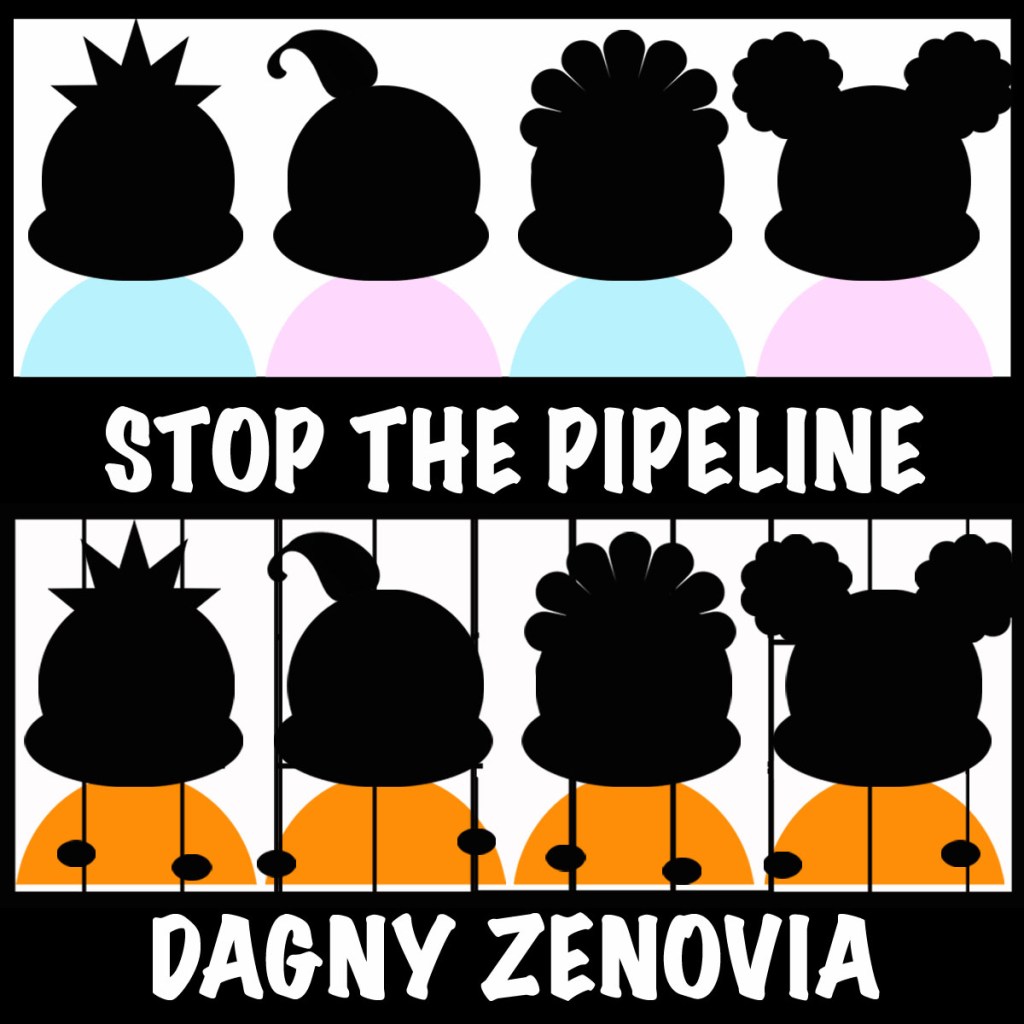
“Stop The Pipeline” is a music video, public service announcement, educational tool, and news supplement attempting to fill the gap between those affected by the school-to-prison pipeline and those who should be paying attention to the pipeline.
The purpose of my thesis, a.k.a. masters report, is to focus on the school-to-prison pipeline and the need to intervene with school discipline that pushes students out of the classroom and into the criminal justice system. It showcases services and programs in Austin, Texas, including Southwest Keys, Webb Youth Court, and Council for At-Risk Youth as examples for solutions. My report incorporates research and expert advice on the safety and well-being of students while advocating a need to change the policies and culture surrounding schools.
I am still in the process of pitching my report to news outlets and am hoping they will accept the article and video as a full news package.
This media project is my contribution to innovative journalism. A form of storytelling that connects viewers, educates listeners, and inspires all. I know initiatives like this tend to spur conversation, but I hope it also leads to action that really makes a difference.
In January of 2013 I decided to dedicate my thesis to the school-to-prison pipeline. I had noted an increase in conversations and news stories about this issue and I wanted to contribute to the search for a solution. At first I was not sure what aspect of the pipeline I would focus on, but I was convinced I would uncover the answer that no one had ever imagined. As I continued my research that summer, I noted that the majority of voices that were raising awareness about this issue were adult experts. The youth voice was usually casted as the victim or the face of evidence. I felt this agist gap needed to be bridged in order for progress to continue on the right path. I did not want my long-form public affairs news story to only be read by those who still subscribe to a newspaper, but also reach those who are directly affected by the pipeline. My creative side kicked in and started visualizing a civic media project to broaden the audience for my report and contribute to the conversation. In the fall of 2013 I included the media project idea in my proposal noting that I would write a full 4,000 word article as if there is no media – the curriculum does not list a music video as a multimedia option. My readers at the time agreed to it. One Saturday in December of 2013, I sat with my sister, brother, and mother to brainstorm the lyrics for my song. I had written a number of phrases to give the idea of the storyline I wanted to use. Together we created a rap, chorus, bridge, and spoken word segment. We also recorded a demo with GarageBand. It’s always fun to collaborate with my family when we have time. We are kind of like a combination of the Jacksons and the Huxtables with a pinch of loving-crazy.
I was not completely happy with the demo we recorded. Granted, this was the first time I had attempted to create an original song and I was a little hesitant in measuring if it was good or not. Thus, I stepped out of my comfort zone and reached out to strangers to take my project further. From January to March of 2014, it seemed everyone I spoke to were either busy or would disappear and not respond to a second message. In addition to this, my readers seemed to backtrack on their agreement with the video. They wanted to see footage with the first draft of my paper (due in February) and repeatedly noted that their expertise did not include critiquing music videos and they wanted to make sure it was not a form of propaganda. As a creative person, any slight negativity surrounding a project can kill my vibe. I was hoping my project would be seen as a step towards innovative journalism that future students could look to for inspiration. I wanted my project to move further then skim the surface of this issue. I somewhat understood their hesitancy, since this was the first time anyone in this program had attempted such an endeavor, but it would have been nice if they could have been a part of this project. Nonetheless, they were very helpful in editing my written report. I refused to allow this disappointment to detour my inspiration and decided to remove the video from my thesis report. Since I could see the video so vividly in my mind, I was determined to make it a reality. The main dilemma then was figuring out how to convince others to collaborate with me on a project that was not connected to an assignment or monetary source. Luckily, I was taking a second course, Critical Hip Hop Studies, with people who could see the value in my project. After discussing the matter, my professor agreed to accept the video project, along with a bibliography, script, etc, as the final assignment for the class. We also had a special guest, MC AtLas, speak to our class and give a lyricism workshop in the undergrad class equivalent. Along with her inspiring story and encouraging tips, I showed her my lyrics. She gave me some pointers on how to create a melody and noted that my lyrics were good. It was at that point I stopped feeling unsure about my new songwriting abilities. Things were looking up!
The week after Spring Break, I was scrolling through my twitter feed when I noted a tweet about Longhorns Hip Hop and SXSW. It mentioned a few UT students involved with the show. The only one that had a link to a website and portfolio was Avalon Gordon, whom I later learned is a talented, connected, and brilliant producer. I reached out to her on twitter about my project, we e-mailed each other more details, and she was on the team. I must admit that this project would have never gotten off the ground if it wasn’t for Avalon. She connected me to Jared Kinsler with SoundNoodle, who produced the music, posted the casting call, scheduled the film shoot, found the location, monitored our budget, put together a solid crew with a great director and gaffer along with my fellow video journalist Efren Salinas, introduced me to a brilliant editor, Karla Diaz, and was all around pleasant to work with. In one month – April – my project went from a page of lyrics and sketches to a polished song and music video. The way this project came together was amazing. I really am grateful to the cast and crew for contributing all of their talent and time.









 Dagny Zenovia