It’s a beautiful day in the new normal. In this vlog, I run some errands, bake Oat, Coconut, Chocolate Chip cookies from scratch, dance in the kitchen, and work from home. I talk about what I have been watching and listening to recently. I also share details about the work I am doing with the platform Africans on China.
Regarding skincare, I have been developing a routine since I was in middle school. For the past 3 or 4 years, I have been using Palmer’s Cocoa Butter Formula Skin Therapy Cleansing Oil, Skin Therapy Face Oil, and recently added their Coconut Sugar Facial Scrub. I have seen a great improvement in my skin with these products. My skin tone is more even and my natural glow is brighter. Due to the success of my skin, I have also convinced my mother, sisters, and brother to use these products. They all have different skin types and they all love how these products work on their face.
Like I mentioned in the video, I do recommend using cotton pads. I have been using them for a few years now and I do feel they have made a difference with my cycle. They also feel more comfortable. I use L, which does not only produce a quality organic product, but is also supporting education and access (read more on their website). I also finally got my hands on The Honey Pot, which is Black-owned and the first feminine hygiene care system powered by herbs.
Are you going out a lot these days? I feel uneasy when I do go out for essentials things. It is so worrisome knowing any and all precautions taken carry no guarantees.
The cookies! This is the oatmeal cookie recipe I used. For this batch, I substituted the coconut oil with almond milk and oat flour with almond flour. This is possibly why the texture came out more like a lump than a circle. It did taste delicious. This is a great dessert option if you are looking to cut down on sugar. The whole family liked it and demanded I make more. It was also a fun activity for me. As you may notice, if I continue doing vlogs, I must play music while I cook or bake. The food does not taste right when it is quiet in the kitchen.
I am currently reading the Inheritance Trilogy by N. K. Jemisin. It is so good! I am really enjoying the story. This author is so clever. I will share more about it once I finish it. The music I mentioned in the video are two albums I have been listening to fully back to back. Sauti Sol is a Kenyan Afro-Pop group. Their new album Midnight Train is really nice. I like the vocals and lyrics. It has a positive vibe.
Chloe x Halle are an American R&B sister duet. Their new album Ungodly Hour is really cool. I like the variety in beats and their rich vocals. It has a smooth vibe.
In terms of life in general, I am OK. Kind of feel like I am on a really long roller coaster…and I am not fond of real roller coasters. One week I feel balanced and productive, the next week I am wondering why I bother to thrive. It is weird and surreal. I am grateful.
Like I mentioned in the video, I am now part of the team behind Africans on China. It is a media platform that builds leadership capacity and boosts the agency of Africa in the China-Africa relationship. It is also a consultancy firm that provides strategic advisory services for individuals and businesses in both China and Africa. Currently, I am producing content. Feel free to check out my recent article, “The Surprising Way TikTok is Empowering African Artists.” The website has been up for a few weeks. So, we are working on building the brand voice and position the content to reach people who are interested in learning and contributing. Would you be interested in hearing more about this topic? Let me know in the comments.
Also, I am always looking for new music to listen to. Do you have any suggestions? Open to all genres. Share with me in the comments.
Remember to connect with me on Instagram, Twitter, or Facebook. I love hearing from you.
I am thinking about life choices and attachments. Yes, part of this is inspired by the recent chatter about Will Smith, Jada, and Entanglements. In this video, I discuss my perspective on how Will Smith, as a character and career, is a great case study to reflect on how to maneuver life choices for success. In particular, how attachments can make or break your success.
Like I mentioned in the video, I have a few questions that I have yet to find the answer to. How do attachments make or break my success? Looking at what I find inspiring about Will Smith, work ethic and discipline means everything. A lot of that is a solo mission. No one can do the work for me. So, how does that translate to attachments? Maybe that becomes easier as I gain clarity on my value and purpose. The balance of making connections to exchange value can be slippery if you look at it as solely a transaction. Maybe not everyone is my real “friend,” but I do care about the people I connect with.
So, I focus more on what I give and experience. I check if I am coming from a space of clarity, generosity, and accountability. I pay attention to whether I feel drained, neutral, or rejuvenated while interacting with someone. I observe how receptive we both are regarding each others priorities. This all sounds good in theory, but it can get confusing in reality. Life and time can change people. Or, maybe, life and time allows people to reveal their true colors.
Regarding family, how do I effectively build a legacy? It seems like there are two parts to it. First, build it. Second, raise children in a way that aligns them to take what I built to the next level. Or, alternatively, it could be to first, build it and a team, and second, manage that team to take what was built to the next level. Or, it could be a combination of both. My question is, are you working on both parts simultaneously? While I am building, should I be thinking of how my future child or future team will make this better? Or does that come later? I want to develop and establish generational wealth. If later my future children or future team decide to go in a different direction, does that make my work a failure? Or is it still a success because the generational wealth enabled them to go in that direction?
This is why I find Will Smith’s career and insight motivational. He has built and obtained success while being transparent about chasing perfection. This is important to me because perfection is what I have tried to obtain for the majority of my life, which has left me feeling a bit empty. I now feel that great quality work and results is more fulfilling than the persona of perfection. When it comes to entanglements, this recent gossip-turned-news illustrates that marriage is not perfect (even though I still feel this story and explanation is none of our business). I am not sure yet if that really is relationships in general, or the individuals who choose to be in the relationship.
What do you think? Let me know in the comments below.
Also, feel free to connect with me on Instagram, Twitter, and Facebook. I love hearing from you.
Half of the year 2020 is now complete. Can you believe it? I don’t really know what or how to feel. A good thing about this period of time is taking note of the things we claimed we did not have time for before. I have read 9 books so far in 2020. In this video, I discuss those books and share my take on what I loved and what I could do without. From Hip Hop culture, to relationships, to Afrofuturism, overall I really enjoyed these books.
Children of Virtue and Vengeance by Tomi Adeyemi. I loved the alternative world the author created for this story. I also was fascinated by how she described the interactions between the tribes. The theme of power was strong throughout the story. I liked how the source of that power determined the results or destiny of certain tribes. For example, the story focuses on two tribes. One finds their source of power through nature. Everything they do is a balance of give and take with nature. The other finds their source of power through conquest. Everything they do is pushed by taking and conquering. It is fascinating to observe them interact and learn from each other.
This was also the first book I read with the book club Ghana Must Read. I really enjoyed discussing the book with them. Back then, we met in person. Now, the sessions are hosted on Zoom with the author of the books. So cool! If you are in Ghana looking for a group to read with, check them out.
The Wait: A Powerful Practice for Finding the Love of Your Life and the Life You Love by DeVon Franklin and Meagan Good. I feel this book had helpful tips on determining why you make certain commitments to yourself and how to differentiate who is on your team. The overall message does focus on waiting to have sex until marriage. The examples and experiences they share can also resonate on life commitments that are or are not focused on physical intimacy. It also made me think about how certain personalities deal with self-hate. Like I asked in the video: for those of you who identify as men or lean more into your masculine energy, what do you do to manage disappointments and hurt feelings? Do you move on? Do you take yourself out of the race? For those of you who identify as women or lean more into your feminine energy, what do you do to manage disappointments and hurt feelings? Do you punish yourself? Do you move on? Comment below and let me know!
Parable of the Talents by Octavia E. Butler. This book was interesting and creepy. Almost prophetic actually. Even though it was written in 1998, it details a story that sounds very similar to what the world is going through right now. I was encouraged by how the main character maintained her tenacity to create and cultivate a like-minded community in a world where everything has been destroyed. There was a lot of symbolism around human nature and perceived hierarchy in society. This was my first Butler read.
The Game of Desire: 5 Surprising Secrets to Dating with Dominance and Getting What You Want by Shannon Boodram. This book has a lot of great advice in understanding how to define your expectations. I found it really helpful to better differentiate if the people you interact with have priorities that are truly aligned with yours. It was also fascinating to see how the different personalities maneuvered the challenges and lessons. I found it encouraging. I also recommend you check out Shannon’s content. I have been following her for about 6 or 7 years. It is not easy finding information about relationships and sex that is actually helpful and empowering. She knows her stuff.
How Long ‘Till Black Future Month by N. K. Jemisin. This book was one of my favorites! It was such a wealth of creativity and talent. I really love the way this author combines history, culture, and fantasy. This was a collection of short stories. Each one was filled with so much detail and mystery, I really wanted to read the full story of each. I already have another one of her books on my book list for the second half of this year.
Year One by Nora Roberts. This book was also interesting and creepy. The story sounds very similar to what the world is going through now with a mysterious virus and the after effects of a new normal. Overall, it was a good read and I am looking forward to finding out what happens at the end of the series.
Who Fears Death by Nnedi Okorafor. The Book of Phoenix by Nnedi Okorafor. This was such a beautiful and exciting story. The way this author writes made me feel like I was listening to a real African griot. The overall story in this series is about the harm tradition can cause and the journey the chosen few must go through to save their people from themselves. I also loved the description of the dessert and the tribes. It paints an interesting future fantasy for Africa. I am also looking forward to reading more of her work the second half of this year.
Well, those were all the books I read this year so far. Would you read any of these? I am also looking for new books to read for the second half of the year. Do you have any book suggestions? Comment below and let me know.
Also, feel free to connect with me on Instagram, Twitter, and Facebook. I love hearing from you.
The tricky thing about this era of rapid information is that whenever you do “too much,” you can never please everyone. In this video, I respond to a question from you. I discuss the nuances behind the reaction to the U.S. Congress wearing Kente cloth while presenting a police reform bill, the historical origin and adopted symbolism of Kente cloth, and the vast spectrum of terminology around Black identity and ethnicity in America.
Regarding the gesture by the U.S. Congress, in the grand scheme of things, I think it was okay. However, I would not have suggested to make that gesture at this time. It felt forced, which made it too easy to dismiss. This is where tagging on definitions or people to established symbols becomes slippery. There will always be push back when you add foreigners to a symbol or initiative that was created predominately for a certain message and a certain group of people. Now, after that gesture, they did introduce police reform legislation. We will see how that proceeds. Federal law is a start. The real work happens at the state and union level.
I think it is cool that people became Kente cloth connoisseurs over night due to this gesture. Like I mentioned in the video, Western media jumped between quoting social media posts about slave owners wearing Kente and whether a spider inspired the Kente patterns. Before you jump to conclusions, no, Kente cloth is not connected to the slave trade. Yes, of course Anansi the Spider created the original pattern. It is originally from Ghana, from the Ashanti and Ewe people. The colors, patterns, and weaving technique is a beautiful cultural tradition. To learn more from the source, I suggest you check out Kwasi Asare, a master Kente weaver. Below is the story of how Anansi the Spider inspired Kente cloth. Do you remember watching this clip as a kid? Or when your kids were actually kids?
As for Kente in America, it became a symbol of Black pride during the Civil Right’s Movement. Part of that was inspired by seeing Kwame Nkrumah, Ghana’s first President, wearing Kente cloth to meet with President Eisenhower at the White House. Images of Ghana’s independence influenced and inspired Black people all over the world, in and out of Africa. Kente continued to represent a gesture to reclaim Black identity paying homage to Ghana and Africa as well as making a statement to rebut the hipocracy of the American dream. This article discusses more details on how Kente became a part of the Black diaspora graduation tradition.
Like I mentioned in the video, Wax Print Film is a documentary about the origins, culture, and challenges behind wax print. I watched it at a screening last year at the Wax Print Festival in Accra. I thought it was really well done and thought provoking. The organizers for that festival were also recently featured in this BBC article discussing the same topic. African textiles that are sourced from Africa have so much potential that is suffocated by counterfeit goods, stifling trade agreements, and lack of investment. I am encouraged to see fashion industries all over Africa position themselves to showcase their value on a global scale. Hopefully, this leads to more progress in substantial support for this industry. What do you think? What makes wax print African? How can we build systems and infrastructure to support the fashion and textile industry in Africa?
Regarding terminology for Black identity in America, there is a spectrum of terms that continue to evolve. As I mentioned in the video, I appreciated the way Bre Danielle defined the terms in this post. There really is no one-size-fits-all answer to why some people prefer Black over African American or vice versa. As you can see, neither of the official definitions of these terms distance the person from Africa. The terms may also not fully represent the person’s identity. Where do people who are children of immigrants in America fit in? What do we call them? First-generation American. Diasporan. Afropolitan. Wakandan. The list continues to transform.
I feel the attitude towards creating a distance with Africa is more influenced on identity and pain instead of category terms. When I say it is exhausting being Black in America, I do not mean America makes me sleepy. There is a weight sitting on your shoulders that you cannot shake off. There is a cap to how tall you can stand. There is a constant internal fight to second-guess yourself as you maneuver a system that is designed to make you hate yourself. That same system defined Africa as the dark continent, a place with no value, which validates treating the people who were taken from it with no value. That pain is still very real and runs really deep. That is why education is so important. We cannot continue to hold on to ignorance as an excuse. I am encouraged to see more of the Diaspora take the initiative to knowing their history and opening themselves up to expanding their horizons to Africa.
Understanding the Black American experience will help understand the gestures to reconnect with Africa through art and fashion. For example, I have noticed the responses to Beyoncé upcoming film Black is King on Disney+. They are mixed, as usual. One discussion stood out to me, which you can view on this African Hustle Series post. The perspective noted that it is a film about Africa that is not available to watch in Africa. The narrative of African Kings and Queens is not valid because most were farmers and Africa is no longer full of huts. They expected more from Beyoncé. Now, I see where they are coming from. The film includes a lot of African artists and was filmed in different parts of Africa. I’m not sure yet why it is being released on Disney+. It could point us to who the target audience is for this film. I feel this film is a response to the Black American experience. The American education system and news media has taught Americans that Africa and its people are poor, diseased, and worthless. To rebut this, art that portrays Africa as rich, royal, and beautiful is needed. A quote from the trailer says “your ancestors never left you.” Why would the film depict “the ancestors” with cell phones and skyscrapers? Actually, we should be happy she is not showing all the investment and lifestyle opportunities in Africa. It would be too much. Africa would not be able to protect itself from the influx of foreigners, who are not Black, coming in to take it away again. If you are offended by this, maybe you are not the target audience for this film.
Similar to how Kente cloth was adopted, Africa represents something different for Black America compared to Africans and African immigrants. For Africans, Africa is home and is easily accessible. For Black America, Africa is freedom and needs to be defended and protected.
Thank you again to my YouTube subscriber for sharing this question. Let’s keep it going! Comment below and share what you would like to know and what you wish other Black people understood about you.
Also, remember to connect with me on Instagram, Twitter, and Facebook. I love hearing from you.
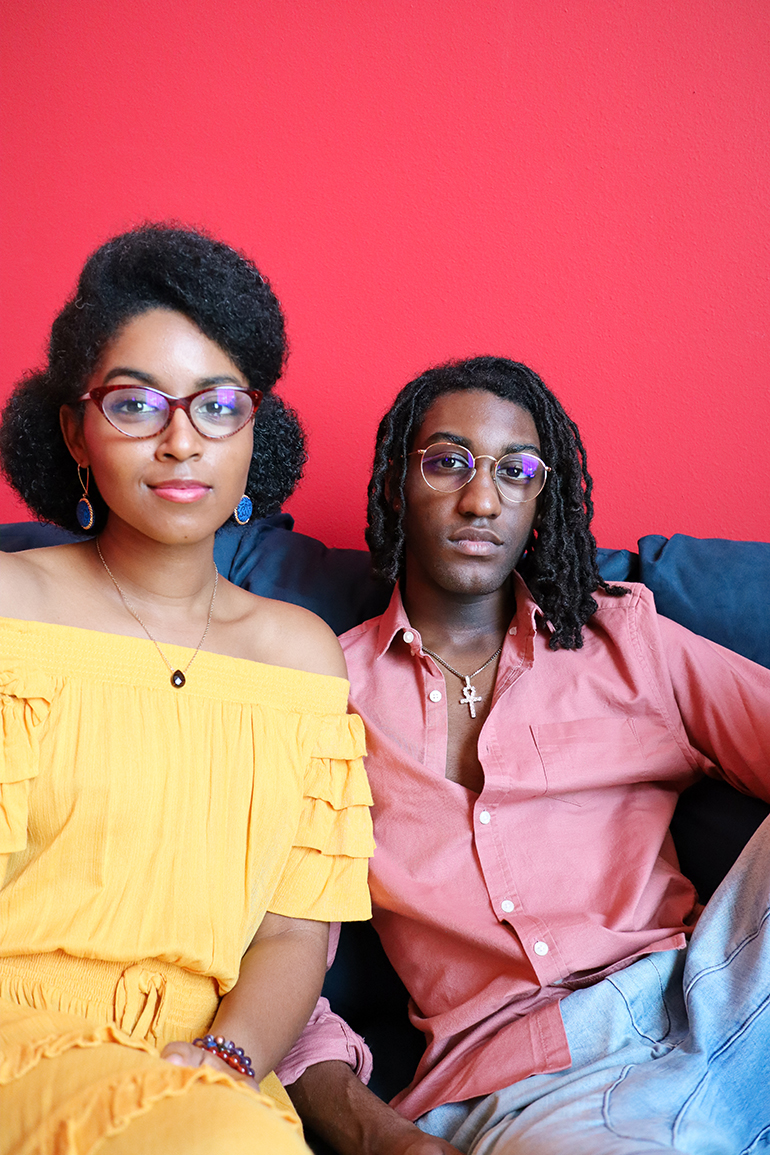
The Class of 2020 has already made history before even starting life after high school. They are the first class to have the longest senior skip day. Actually, I don’t know if they are the first in education history, but stick with me. Students have experienced a major interference in their lives due to the pandemic. This has revealed how much school impacts and influences youth, from internet access, to learning styles, to various home environments. Instead of broadly speaking on how school has been impacted, I wanted to narrow the focus to real experience. In this video, I am joined with a very special guest, my brother Dantes, to discuss how seniors in high school maneuvered the second half of their semester, whether online-at-home schooling really works, and the layers of importance behind inter-generational conversations.
Well, senior year did not end on a high note for the Class of 2020. I think there is a lot to be said on how these students handled this unexpected shift. So much has been revealed within the inadequacies of some school districts, which some really did leave students hanging, and the abundance of some communities, which stepped in to fill the voids as best they could. Online education is not as simple as scanning a syllabus to a forum and expecting students to do the assigned homework. For those who are developing online learning platforms, either for brands, businesses, or schools, I hope you are including the needs of this generation. You will need to balance the priorities of a group of people who are the most tech savvy, have a very different attention span, and really want to feel connected with their class.
Looking at the bigger picture, I feel they are the chosen ones. I can’t tell for what yet, but there is a reason why they are called to experience this. Before 2020, this generation already understood the need to nurture the environment, was already comfortable with respecting identified pronouns, and already strive to balance mental health. They understand a lot more than others give them credit for. They have been exposed to a lot more since the time their parents gave them their first cell phone at the age of 8.
Like Dantes mentioned in the video, his generation’s biggest fear is ending up like previous generations who are unhappy and not being able to do better than previous generations. For capitalism purposes, they are identified as Generation Z. I think that label will transform with time to illustrate the freedom and clarity they possess. Similar to how the term Millennials, my generation, no longer only refers to a group of people who created social media. My generation is leading the revolution all over the world. We decided to not hold “adulting” as an excuse to continue making a mess for the next generation to clean up. Before 2020, we already shook the table by creating unconventional lifestyles that did not rely on traditional gate keepers for news, careers, relationships, education, etc. We accidentally taught ourselves how to code through MySpace and later created after school programs to teach kids coding, arts, history, and tech. Millennials made mental health, travel, individuality, collective responsibility, and financial freedom look and feel cool. There is a reason why these two generations are so close and have so much energy at this pivotal time in history. Now, let me share some advice on how to handle these fears.
In regards to fearing regret, I think everyone of every age can resonate with this. The thing I focus on to avoid regrets is intention. Everything worth having takes time. If you are intentional with what you learn and experience, there is no room for regrets. People tend to live a life full of regrets because they hold on to excuses. There is always some reason why they did not show up for themselves, why they were waiting for permission, or why they were too busy projecting. You need to prioritize your mindset in order to avoid this. The sooner you gain clarity on who you are, everything else will fall in place. That clarity comes from releasing yourself from others expectations, be it personal or distant.
In regards to doing better than previous generations, this too is a recurring goal. We all want to make our parents and ancestors proud. Understand you already have by existing at this time. You are loved for who you are more than what you do. If you can create a reality where you are truly happy and healed, then our ancestors struggle was not in vain. If you can uplift yourself and those around you in a sustainable way, then our parents dreams have come true. You do not have to follow the rules because they were not written with your best interest in mind. Let go of what school tried to confine you in. You can color and think outside of the box now. Accept that you never stop learning in life. The stage is being set up for you right now, so take the time to create what you are proud to display.
I am so proud of you Dantes. I am proud of the Class of 2020. I am so glad to have you as part of the team and am so excited to see you take the lead.
How has 2020 influenced your education plans? What have you learned from it? What do you enjoy or look for in inter-generational conversations? Let me know in the comments.
Also, what would you like to see Dantes and I discuss next? It has been so long since we did a video together. We want to do more before the time comes for our location to change again.
Below you will find a list of Black-Owned businesses and initiatives you can support.
Remember to connect with me on Twitter, Instagram, or Facebook. I love hearing from you.
If you want to know why something is happening, follow the money. To further the discussion to heal the distance between Africa and its Diaspora, let us go over the historical and current economic oppression that influences and determines the Black experience.
In this video and post, I am focusing on Black America and Ghana. For Black people outside of America and Ghana, please do not feel isolated or excluded in this conversation. The point is for all of us to win. Understanding how we can strategically do that is key. As you read further in this post, I widen the focus to other parts of the world.
Let’s dive deeper. Starting with economic oppression and Black America, there are two layers to this agenda: the wealth gap and the income gap. The wealth gap was created by the exploitation of free labor from Black slaves, passing down of profits from that exploitation, and destroying and stealing from Black businesses.
The history of slavery in America is diluted and distorted in American history. The wealth gap began with cotton. America’s first big business, which pushed it to be the leading economy in the world, revolved around slavery. At one point, American cotton made up two-thirds of the global supply of cotton. This was all off the backs of slaves. Americans became millionaires off the bleeding backs of enslaved Black people. This is also where police brutality began. Aggressive and barbaric white “supervision” was used to return runaway slaves to the plantation while violently and brutally questioning the work and movement of slaves. This Vox article gives more details on how slavery became America’s first big business.
Like I mention in the video, there are two historical massacres that are referred to as the illustration of why telling Black people to pick themselves up from their bootstraps is not valid.
The Tulsa Massacre in 1921 occurred in Tulsa, Oklahoma in the Greenwood District, which was also known as Black Wall Street. It was an affluent Black American community that included thriving and peaceful Black businesses and residential areas covering 35 city blocks. The incident that started the massacre is still surrounded by rumors around what happened when Dick Rowland, a Black man, and Sarah Page, a white woman, stood in an elevator. A white mob formed reacting to this rumor that was further embellished as it spread through the town. Rowland was arrested and held at the police station. The mob outside was met with a group of concerned Black residents who understood that Rowland was in danger of being killed by either law enforcement or this white mob. This response added to the rumors that spread among the white mob pitting for a race war. The white mob grew in size and hate. They proceeded to burn and destroy Black Wall Street, leaving around 10,000 Black Americans homeless and murdering around 300 Black Americans. The Tulsa Historical Society and Museum have archived the details of the Tulsa Massacre through documents, photos, and audio on their website. They also provide a free exhibit.
The Rosewood Massacre in 1923 occurred in the predominately Black town, Rosewood, in central Florida. It also was instigated by an alleged rumor that a white woman was offended, in this case sexually assaulted, by a Black man. The white mob that responded to this acted on further embellished rumors to burn the town to the ground and lynch / murder any Black man they could find. Again leaving those who survived homeless. More details are in this Black Past article.
The income gap continues through occupational segregation. Let’s go over some numbers. In 2018, 20.8%, which is 8.9 million, of Black America were living underneath the poverty threshold, being the second largest group in America living in poverty. (Source from Talk Poverty) The overall largest group is Native Americans at 25.4%. Like I mentioned in the video, Black people in America got the shorter end of the stick and Native Americans did not get a stick at all. Systematic inequality cannot continue to wipe them out either. Let me know if you would like to learn more about the Native American experience so I can direct you to the voices you need to listen to. Regarding unemployment, in 2018, the overall rate was at 3.8% and the Black rate was 6.5%. In 2020, the overall rate is 13.3% and the Black rate is 16.7%. America has the biggest incarcerated population in the world. Prison policies and reform has more depth than a few percentages could show. This report gives more details on the issue of mass incarceration in America. The income gap is not only maintained by unemployment. There is an additional layer with wages. This article breaks down how the wage gap is widening further. For more insight, read this report on systematic inequality and economic opportunity.
When we talk about systematic racism and systematic inequality, these numbers are part of the picture. One cannot “catch up” when the game is fixed or when the goal post continues to be moved. The gap is not actually influenced by the mask of education, home ownership, or job title. The gap is only influenced and maintained by the deliberate effort to keep the gap. This article from CityLab about why we can’t close the racial wealth gap has some good insight. This is part of why it is so exhausting to be Black in America. Always working hard and following the rules accepting that you will always have to tolerate less in every industry, field, interaction, and experience.
This is also why America always starts sweating when the conversation about reparations comes up. It is not because it is impossible to calculate the wealth Black America created and never benefited from. It is not because Black America is living so much better now compared to the 1800s or 1960s. It is because America prefers to drag its feet. It is because America prefers to do everything but what was asked for, like painting Black Lives Matter on a street, manufacturing band-aids that match brown skin, and kneeling while wearing cloth that looks like Kente cloth.
How can we learn from this? For the first time in a while, Black America used its purchasing power as an effective tool and Black-Owned businesses made millions of dollars over night. This is a good start. How do we take this further?
Now, let’s talk about economic oppression and Ghana. When I compare what was happening in Ghana with the same historical dates I listed above, I see there is a lot Africa’s people, in and out of the continent, can learn from to heal the distance and enhance the link.
In the 1860s, which was during the height of the cotton empire in America, the export of slaves was gradually diminishing. Even though the import of slaves to America was outlawed in 1808, the demand for slave labor continued after that. Later, Ghana experienced a shift as colonizers pivoted to competing with each other for colonial territories. During this time there were a variety of alliances and struggles for power, including the Ashanti-Fante War and the Anglo-Ashanti Wars. The latter wiped out different levels of British forces.
The debate as to whether Africans sold Africans into slavery is an interesting one. I have noted Africans rebutting that there is no evidence that a sale transaction occurred. I have noted Black people outside of Africa express suspicion on whether Africans were sold or stolen. Some argue that trying to discuss whether Africans sold Africans is like discussing black on black crime, which is a distraction from the movement. To me, it sounds like both discussions trigger people in different ways. I believe in holding each other accountable, which includes looking in the mirror and reading real history. The primary point is to avoid repeating history. Stop trying to distance yourself from the problem. We need to do better.
British authorities in the 1920s in Ghana adopted a system of indirect rule. Even though they put traditional chiefs in position of local authority, they took instructions from their British supervisors. During this era, transportation, water supply, public buildings, schools, prisons, hospitals, and other services were developed by colonial rule and African hands. Ghanaians also assisted Britain in World War I and World War II. A national conscious, which lead to independence, developed after WWII when veterans and the growing educated population no longer were satisfied with the humble position colonial rule kept them in. In some respects, Ghana was lucky compared to other African colonies. They did not experience limbs being chopped off, like Belgium rule in Congo, or complete destruction, like French rule in Algeria. However, one could analyze a wealth gap in how much was extracted from Ghana during this time.
Before I fast forward to the income gap of today, let’s pause here. If we focus on the historical events listed above for both Black America and Ghana, what do you see? Black people in America had a different experience with white people compared to Black people in Ghana during that time. Both set of colonizers utilized economic oppression, but in different ways. I feel this needs to be understood by Africans and Africa’s diaspora. This might be the reason why there is a sense of urgency to fight the power on one end and a sense of confusion and no urgency on the other. Remember, colonizers do not want us to be on the same team. I feel education has a role to play in this too. When I speak to Ghanaians about colonialism and Ghana’s relationship with England now, I do not pick up a sense of animosity or disdain. The narrative is not focused on exploitation, but rather how the British enhanced Ghana, historically speaking. Like I noted above, development did occur during colonial rule. Also focus on the fact that British rule had authority over education and implemented the British educational curriculum in Ghana. Making sure the Ghanaian population learned British history under a British lens, it is no surprise the British continued to frame themselves as a hero. This is similar to the American education system, which continues to frame the founding fathers and corporations as heroes. However, Black Americans have a different narrative when they speak about slave masters, Jim Crow law, and police brutality. Black British and Black French also have a different narrative when they speak about their experience with colonizers, which does include police brutality, economic oppression, and pushing statues back into the sea. I do not have the answer yet, but this disconnect should not be dismissed nor should it allow us to create more barriers between us.
Fast forward to the income gap of today in Ghana. In 2016, 56.90% of Ghana’s population was living underneath the international poverty threshold. In 2018, the unemployment rate in Ghana was 4.16%. There is a lack of transparency in the value of labor and skills in Ghana. This is why the numbers, which are primarily calculated and reported on by NGOs and international corporations, may not always add up. The focus of these numbers are primarily on national policy, like this report on Ghana’s poverty rate and inequality. There is a discrepancy between what Ghanaians are paid and what expats are paid in Ghana. There is inequality between what women are paid and what men are paid in Ghana. More details on this inequality are analyzed in this Oxfam report. As development continues, the gap between the rich and poor continues to widen.
These numbers and lack of numbers is part of the picture. This is why the sense for most in Ghana is that nothing you do will really change the bigger things that keep your life the way it is. Some still spend half the day without electricity. The floods, that could be prevented, still kill and displace people every year during rainy season. This supports the assumption that big money only comes from abroad or corruption, not real work. When you compare this to how many foreign companies are making real profits in Ghana and taking it outside of Ghana, like this company producing organic bananas, I have to wonder if this attitude is systematic to reduce competition.
How do we learn from this? There are plenty of Black owned businesses in Ghana and Africa. There is a strong purchasing power in Ghana and Africa. However, there is still a mix-match. How can we fix it?
How do we learn from how economic oppression has been utilized against us to effectively protect what we build? On a people, corporate, and government level. How do we prevent our efforts from being destroyed by those who want to maintain the status quo? Let me know what you think.
The energy we are feeling right now is a golden opportunity. The shift and change is possible, if we continue speaking up, evolving, holding each other accountable, and making a difference. Below are more resources for you to continue supporting Black content and businesses.
Also, feel free to connect with me on Instagram, Twitter, and Facebook. I love hearing from you.
Freedom Agenda
Black Owned Apps
JoinMi – safe space for HBCU students to converse about concerns and life.
Gbook – e-commerce platform for students to buy/sell products and services.




 Dagny Zenovia