How are you doing with your generational cycles? Feeling excited? Lost? Fun? All the above? We know we are not the only ones who think this journey is an endless roller coaster sometimes. In this episode, we share our experience in identifying patterns and themes within you that reflect generational cycles. Plus tips on how to be more accepting of yourself and others.
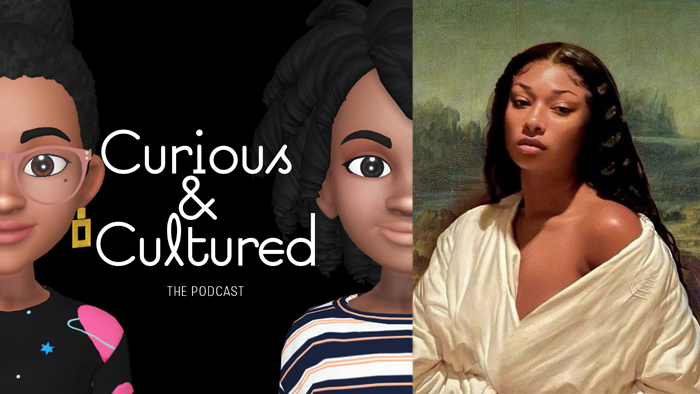
When someone in your community is harmed or going through a tough time, do you respond to see how you can assist, or lean into gossip? Let’s discuss the Megan Thee Stallion case and how it reflects on industry politics and respectability bias. Regardless if you followed the case or the artist, this episode shares some gems on how we navigate bias and assumptions we all have experienced.
We know we are not the only siblings who have experienced a variety of dynamics within our relationship. Especially with the myths and realities surrounding sibling and family hierarchies.
In this episode, we share our experience navigating the evolutions of our sibling relationship, debunking and embodying the truths behind being the 1st born and 2nd born, and how sibling relations can reflect and heal generational cycles.
We know we are not the only ones who can watch our favorite Studio Ghibli movies a million times and never get tired of them. Studio Ghibli is a Japanese animation studio founded in 1985. Their movie catalog is famous for unique storytelling that blends fantasy, adventure, and deep themes.
In this episode, we share our experience exploring our favorite Studio Ghibli movies, the story themes that stand out to us, and how to navigate the legacy and magic of a project when it needs to be passed on to the next leader or generation.
We know we are not the only ones who have spent countless time and energy absorbing self-help books, TEDx talks, and masterclasses searching for answers. Did the Chicken Noodle Soup book series also have you in a chokehold at one time? How many masterclasses (original or not) have you yet to complete? There’s no shame here. Let’s talk about it.
In this episode, we share our experience with self-help content, including challenges with finding stories that reflect our reality and discovering our own answers to wisdom and success.
Neurodivergent is a non-medical umbrella term that describes people with various mental functions where their brain processes, learns, and behaves differently from what is considered “typical.”
We like to consider neurodivergents as mutants who deserve honorary status in X-men.
In this episode of the Curious and Cultured podcast, we share our experiences learning about neurodivergence, discovering we both are on the spectrum in different degrees, creating routines that accommodate our beautiful minds, and discussing movies we feel showcase neurodivergent characters in a way that is wholesome.
Note, neither of us are psychology or medical experts and are not giving medical advice. We do hope and trust this episode encourages you to accept yourself more and think out of the box when it comes to holding space for others and yourself.
As I mentioned in this episode, I first came across the term neurodivergent in this article about rejection sensitivity. Rejection is a normal part of life and we all experience it in different degrees. However, as I continue to learn how to understand myself, I have noted that I internalize these types of feelings more intensely then my peers. The experiences that article shares was the first time I felt seen in my own experiences with my need for information, tendency to isolate and overestimate situations, anxiety, challenges with reading social cues, masking for the comfort of others, and overthinking to an intense spiral effect. This lead me to further exploring neurodivergence beyond learning abilities.
With the amount of information that is now available about neurodivergence, it can get overwhelming and confusing to understand what is considered “typical”, what is a one time experience, and what is something that needs intentional accommodation. Since this has to do with our brain functions and how they are felt, I feel a lot of this should be seen as fluid. Maybe you resonate with a mixture of functions within the neurodivergence umbrella. There is no need to try to fit in one box. Instead, I prefer to explore and use this information to better understand myself and others, be more accepting of myself and others, and develop tools and routines to care for myself and others.
Here are a few things that have helped me along this journey of being a wholesome mutant:
Accept and believe that I am not defective or a burden.
Maintain that I am not a victim in my life and no one is a villain in my life.
Take full responsibility to be my biggest cheerleader and best friend.
Research information to explore possibilities and gain understanding, not to fixate on a problem or diagnosis.
Create routines and experiences that resonate with me and align with my needs.
Become comfortable with prioritizing my needs. For example, stepping away from a crowd to soothe anxiety, ask for help or feedback (and be open to receive it), and/or embrace healthy solitude and rest.
Explore and lean into my unique strengths and talents.
Journal as often as needed.
Accept not everyone will understand, and that’s ok.
I hope you found this episode helpful. What are your thoughts? What would you like to learn more about neurodivergence?
Do you find terms like neurodivergence helpful for individuals and the collective? Does it provide the vocabulary and context needed for us all to be more considerate and responsible?
Let me know in the comments. I always love hearing from you.




 Dagny Zenovia