Tag: Black History

  • Does Your Blackness Empower Others

    Does Your Blackness Empower Others

    What is blackness? It can be uplifting and frustrating to recognize how complex the answer to that question is. It is a spectrum of colors, a history of movements, a source of swag, a hybrid experience, and a resilient soul. Unlike others who can choose when it is convenient to step out of their privileged bubble, we are always in a time where our voices need to be heard and our presence needs to be respected. Our reality is filled with the unrelenting battle between our royal essence and brutal environment. A balance that is constantly shifting.

    Dagny Zenovia Plum Pants African JacketDagny Zenovia Plum Pants African Jacket

    Sometimes, I experience that shift when I feel I have to constantly second guess myself in interpreting how people interact with me and how I allow my identity to be swayed by self-doubt. It takes so much emotional energy to resist carrying my color as a burden. Feeling as if no one around you really understands how much unfair foolishness you have to tolerate on a daily basis. So, when I came across this discussion with Melissa Harris-Perry about the crooked room analogy to define black women’s identity, you know I was snapping my fingers for the entire clip. Her book “Sister Citizen” is on my reading list for this summer. The gist of the analogy: black women are sitting on a crooked chair in a crooked room. As we try to adjust our chair to be aligned with who we believe we are, we overcompensate the adjustment to either oppose the limited spectrum of stereotypes or suppress our natural glow.

    Dagny Zenovia Plum Pants African Jacket

    This analogy is so true! It is also one of the first things I thought of after watching Beyoncé’s beautiful performance at the Grammy’s. (I am not sure if that was the intention, but let us flow with it.) So, how should we align our crooked chair? Is it as simple as paying attention to what influences our mental conditioning? or is it as complex as healing centuries of damage. That is a discussion I would love to continue.
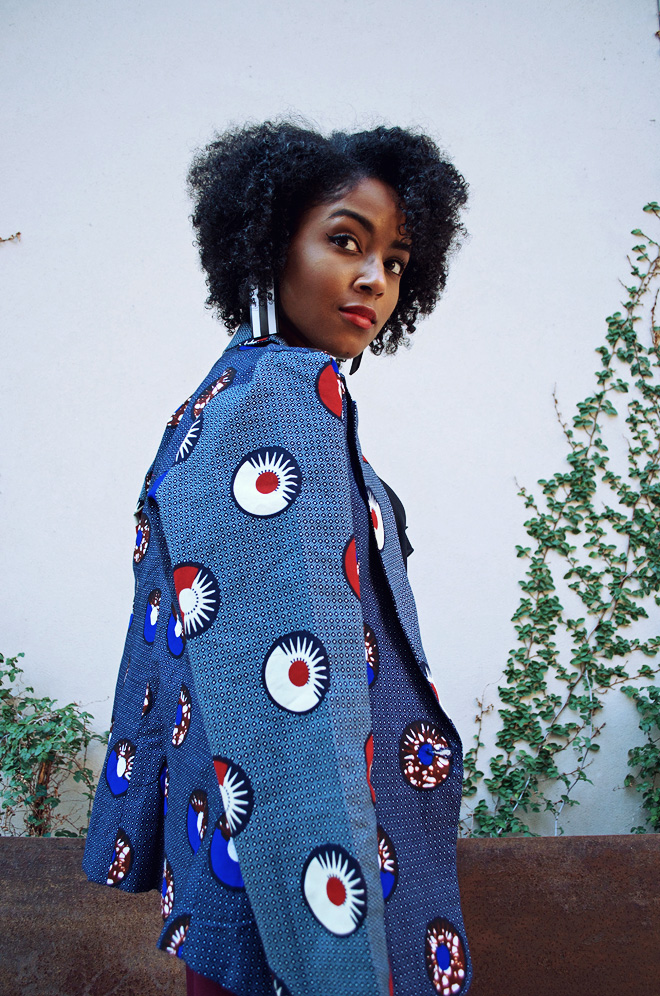
    dagny-zenovia-plum-pants-african-jacket-7Dagny Zenovia Plum Pants African Jacket

    How do you use your blackness? I feel there is no one right way to do this, but a few questionable ways to do so. Since everything we do becomes a trend, there will always be some who choose not to participate in order to refrain from jumping on the band wagon and others who choose to participate to make an impact on directing that band wagon. The truth is, there really is no band wagon. Similar to the crooked room, sometimes we are made to feel foolish for doing what is right and made to feel confused for not doing anything. This came to mind while viewing a number of things.

    Dagny Zenovia Plum Pants African Jacket

    First, the New York Times did a feature on Harry Belafonte to reflect on his life near his 90th birthday. One of the many gems he dropped in that interview spoke about leadership. During the civil rights movement, a number of people were pushed forward to run for office and represent in politics. Ironically, those “leaders” stepped up to office and proceeded to forget about their community and leave their supporters behind. As you may or may not know, the majority of those “leaders” are still in office and “the community” still feels forgotten. This wisdom influenced my response to the recent headlines about black leaders refusing to meet with President Trump and HBCU representatives meeting at the White House. I feel there are two sides to this. One, the black community has grown comfortable with the illusion of freedom. Just because we can sit anywhere on a bus, tweet to our heart’s content, attend any school, and announce that “our president was black, and our lambo is still blue” does not mean we are really equal. It does not mean we are considered significant. Every other group in America skips the line ahead of the black community. Why is that? It is quite heartbreaking, actually. I feel it is similar to when slavery was abolished and some slaves did not want to leave the plantation due to the wicked conditioning they had suffered in believing “massa” protected them. It is similar to what Harriet Tubman noted that she could not rescue everyone because some did not realize they were slaves. So, instead of getting upset, just work with what you have. On the other hand, we should not be shocked when proposed meetings end up only being a photo opportunity. It seems hypocritical, doesn’t it? It is. That is why utilizing blackness can be exhausting and draining.
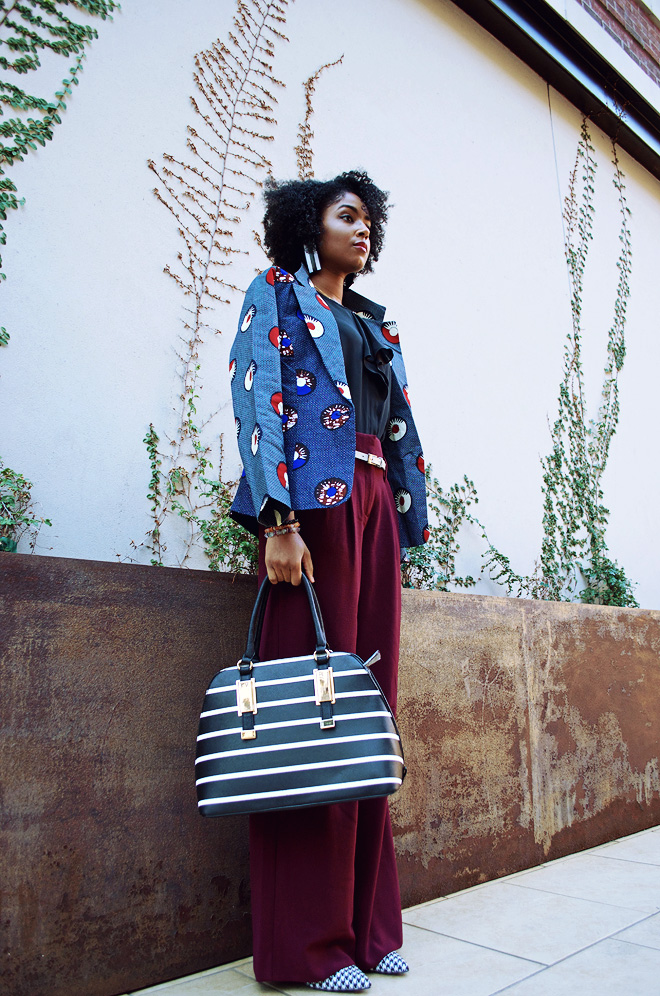
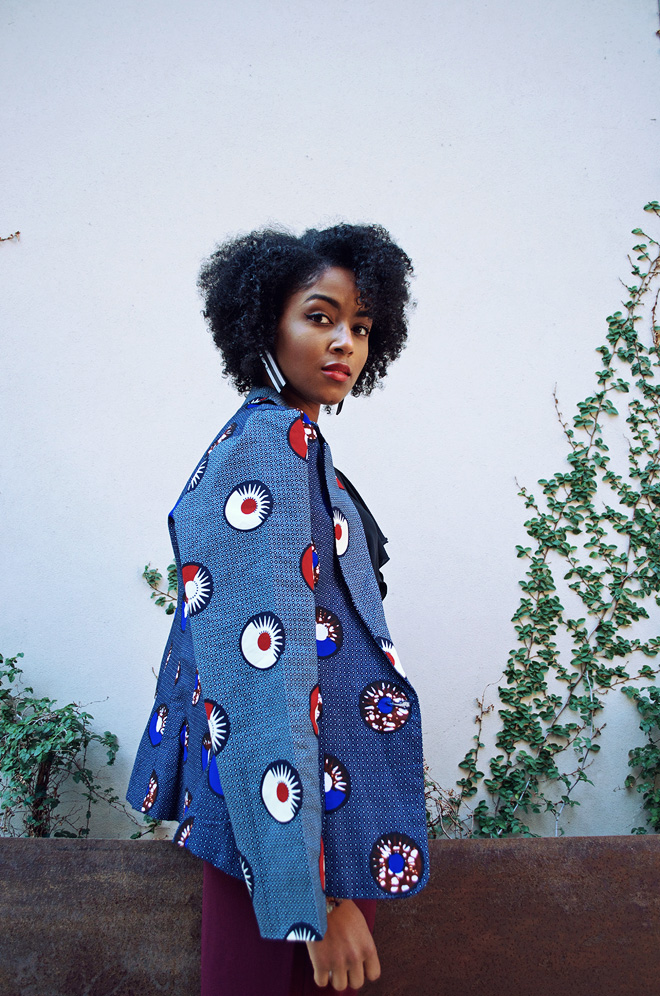
    dagny-zenovia-plum-pants-african-jacketDagny Zenovia Plum Pants African Jacket

    Second, the film “I Am Not Your Negro” is a powerful documentary. Even though reading James Baldwin’s work would give you a similar impression, hearing his words juxtaposed with images from then and now really emphasize how everything he said resonates with what we are experiencing today. I feel it pushed the envelope within the documentary category because it is not simply a biography. The way the director painted a story with James Baldwin’s words, historical photos and footage, as well as current images is really creative. Not only can it be used to introduce James Baldwin to different audiences, it also illustrates how we possibly have not made as much progress as we thought we did.

    Dagny Zenovia Plum Pants African Jacket

    Does this mean that anytime we refer to blackness it should always refer to gloom and doom? No. We are still experiencing a version of the Harlem Renaissance. Take note of all the creative work that has been published and acknowledged: such as 13, Moonlight, Hidden Figures, Lemonade, A Seat At The Table, etc. The increase in community-based programs and individuals stepping up and showing up for their community. The spike in interest to no longer be oblivious of reality. We continue to make something out of nothing. This is one of the many sentiments I picked up from President Obama’s farewell speech. America may never be ready for the change we were willing to bring, but that does not mean we sit back and give up. As long as we help at least one person, that change is still valid. As long as we continue to step up and show up, that hope is still alive.

    Now, when I refer to “America” throughout this post, do I mean every single American person including your pet cat and virtual pet fish? No.

    Dagny Zenovia Plum Pants African Jacket

    How do you think we can continue to use our identity to empower? Let me know in the comments below.

    Also, remember to connect with me on Twitter and Instagram. I would love to hear from you.

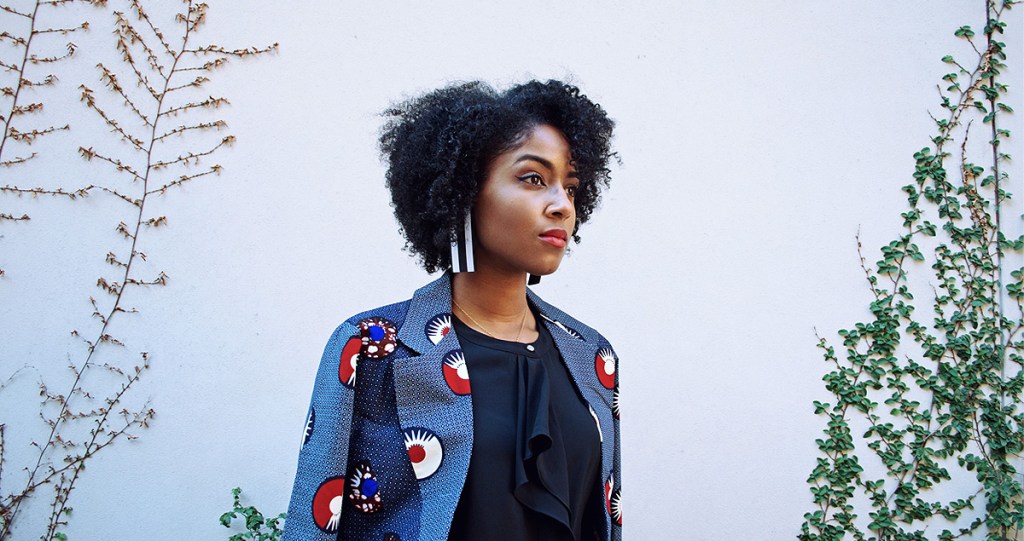
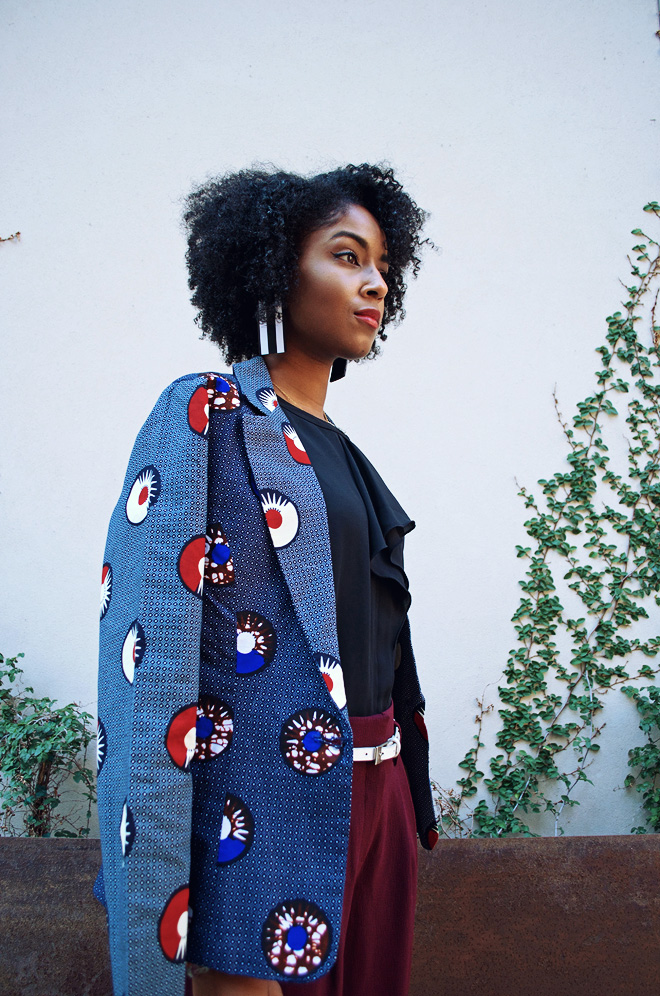
    Wearing: Zuvaa blazer; New York & Company blouse; The Limited pants; DSW heels; Aldo purse; Vinti Couture earrings
  • Dear Future Owner of Neverland

    Dear Future Owner of Neverland

    Neverland Ranch is up for sale for $100 million and I think it should be considered a historical landmark. I am not only referring to the location, structure, and previous owner. This place is a prime location to maintain and further Michael Jackson’s legacy.

    Michael Jackson bought it in 1987 for $19.5 million, which is approximately $41.1 million in 2015. He transformed the ranch into an amusement park and zoo with a tudor-style home. In 2008, Colony Capital LLC bought a $23.5 million note on Neverland while Michael Jackson and his estate were planning to sell it. Subsequent to his death, they have restored the home and ranch to be ready for sale. According to Colony Capital LLC, the ranch is zoned for agriculture and would require approval to be changed into a tourist attraction like Graceland in Memphis, Tennessee.

    As an individual who values cultural history and recognizes the importance of respecting its legacy, I have a few recommendations for what the new owner of Neverland should do with the property.

    1. Turn Neverland into a Performing Arts Academy

    Combining the King of Pop’s message of love, resilience, and creativity plus his never ending concern for peace with a curriculum to enhance future generations academic experience sounds like the perfect plan for world moonwalking domination. In addition to courses for music, art, fashion, theater, and film, the curriculum could also include the history of black performance, Michael Jackson philosophy, and creative-prenuership. Some people recognize the endless potential behind all the work Michael Jackson left behind to study and interpret. For example, Marc Anthony Neal taught a graduate course about Michael Jackson and the black performance at Duke University, which I wish I could have attended. Zack O’Malley Greenburg wrote “Michael Jackson, Inc” illustrating the business side of an icon, which I have included in my summer reading list.

    I am not sure yet if this school should be only for grade school students or be a general institution of learning that all ages can participate in. Granted, there are a lot of costs to factor in. Certain taxes, licenses, accreditations, and regulations need to be adhered to. Faculty and staff will be needed. I have not personally visited Neverland, but looking at pictures and a map it seems far away from town. So we would probably need an MJ school bus as well.

    2. Turn Neverland into a Museum + Theme Park

    Over the years I have felt saddened and concerned hearing about Michael Jackson’s stuff being auctioned. What use do those buyers have for a painting of Michael Jackson dressed like Napoleon, or one of his costumes, or a Peter Pan statute, or his tour bus trailer, or a piece of his ornate furniture? I am not sure if any of his personal writings or sheet music was included in the auction, but if it was, what use is it in someone’s private collection? I do commend those who bought a large amount of his stuff in order to keep it safe (hat tip to Lady Gaga).

    Neverland could be the Michael Jackson Museum. Renovate parts of it to have display rooms, some “this is where Michael wrote or composed music” rooms, and interactive rooms. The display room is where you have things in glass cases and seating here and there for people to learn about different aspects of Michael Jackson’s business. The studio, dining room, and library can be used as rooms to showcase his taste in home decor and give visitors a glimpse into his home life without being too invasive.

    The interactive room has a few options. I initially had this idea when Michael Jackson was still alive, so it might seem creepy now, but I will share it anyway. I figure we have the technology to have a hologram as the tour guide. The museum could have a realistic looking hologram of Michael Jackson as the tour guide. Each season has a different era tour guide. Spring time could have a Jackson 5 MJ and Fall could have Thriller MJ. The hologram could also be the Jackson 5 cartoon and the HIStory statue. The hologram would walk with the group of visitors, with a real guide to make sure everything works, and interact with the visitors by telling stories and answering questions. Another option is an interactive music video room. Using the technology from virtual video games, have visitors either wear goggles or a helmet to transport them inside one of Michael Jackson music videos or his smooth criminal video game. Visitors have to dance to win the game.

    Of course there will be a gift shop with MJ trading cards, jackets, and silver gloves as well as books, music, and videos by Michael Jackson and others inspired by him.

    Outside, visitors could use the train and rides if they purchase the ticket for the full package.

    I hope the new owner will recognize the value of their purchase and be creative in how they use it. What do you think the new owner of Neverland should do with the property?

  • How To Be An Ally For The Oppressed

    In the wake of the tragedies in Ferguson, I would like to ask how I, as your friend, can be an effective white ally? What does it mean to be an effective white ally? How would you like to see your white/privileged friends stand up for racial equality and justice?

    A cogent question by a friend on Facebook that stood out among the countless posts on my newsfeed praising protestors, condemning protestors, or avoiding the subject all together. I noted the responses from her other friends, mentioning the importance of learning history, sharing personal stories of discrimination, and claiming white privilege will always be blind to this issue. I decided to contribute to the conversation a narrative that has not received many headlines and seems to be missed in most discussions.

    There are many points to make regarding the solution to this issue, but since the question and the trendy topic at the moment is police brutality, I will focus on that branch of oppression. Here, let us engage in two directions to begin making progress: history and understanding.

    History

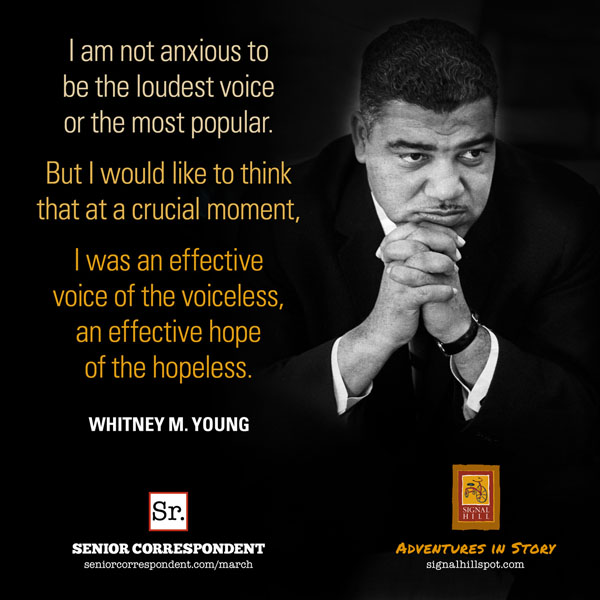
    You have to focus on the history that was omitted from text books. Before, this information required major effort to find, but now you would be surprised how easily accessible it is. One particular moment in history that most are aware of but might not know the back story of is the Civil Rights Act of 1964. I attended a documentary screening last year for “The Powerbroker: Whitney Young’s Fight for Civil Rights” by Bonnie Boswell that discussed an aspect of this Act that I did not know and I think makes a great connection with what is happening today.

    Whitney Young Jr

    When President Johnson was considering signing the Civil Rights Act into legislation, there were a number civil rights leaders meeting with him at the White House to convince him to sign it. Their approaches can be divided into two categories. Dr. King and others would emphasize the importance of black lives, families, and suffering they endured. Even though President Johnson might have agreed with these sentiments, it did not push him to sign the Act. Whitney Young, Jr. on the other hand emphasized the negative effect a lack of the Civil Rights Act would have on everyone including businesses and communities that are not black. Thus, we can celebrate and praise the Civil Rights Act of 1964.

    I mention this aspect of history to draw a connection with the recent protests, campaigns, and hashtags for “black lives matter,” “hands up don’t shoot,” and “I can’t breathe.” Even though all of those lines are true and recognizing the pain and exhausting existence blacks endure everyday is important, it does not illustrate the bigger picture. Not enough people and hashtags focus on how police brutality negatively effects everyone in this country. This is not a black problem. This is not a black versus white problem. This is an American problem and as Americans we should all be very concerned at how this issue has continued to escalate and not tolerate a system that does not treat everyone equally.

    2014 was not a good year for American police departments in terms of media coverage. I am not sure if there has actually been an increase in their brutality or they just got caught up in headlines more frequently that year, but if the people who are hired to protect citizens are always portrayed as monsters…how can we maintain a healthy society? This is not just about the countless number of black boys, girls, men, and women who are murdered by the hands of police and the families they leave behind. Do you want to live in a country where everyone is scared of a badge? A country where everyone is suspicious and scared of blacks? A country where everyone is walking on egg shells to prevent another riot? If we are not careful, we could be heading further in that direction. I commend the few millionaires who donated money to police departments to give to random citizens in cash or christmas presents, but that is not enough to solve this issue. (As an aside, the fact that millionaires stepped up to do this further validates the boycott of Black Friday. Police brutality is bad for business. Your spending power makes more of an impact then any sit-in, die-in, sign-in, etc. Remember that.) I know not all police men and women are monsters and I would like to believe not all of them would shoot and kill me within a second, but we cannot be naive to the fact that some badges, guns, and authority are given to people who truly hate those that are different from them.

    To the non-black person who genuinely wants to be an ally to the oppressed, I recommend you view the documentary I mentioned above and read about Whitney Young, Jr’s impact on the Civil Rights Movement. Then use that knowledge to explain to your non-black friends how this issue of police brutality directly affects their lives to entice them to help stop it. It’s almost like translating it into another language. Viewing the tweets under #blacklivesmatter can help see what the conversation needs to focus on with out dominating it with ignorance. However, also understanding how this affects you as a non-black individual, not as a white person feeling guilty, in realizing how it can and will damage your privileged reality, is key.

    Stand In My Shoes

    For some, understanding is best acquired through empathy. If, for one day, you could walk in a black persons shoes, you could get a glimpse to how exhausting this life is. I do not have the means to provide such an experience, but John Howard Griffin wrote a novel in 1959, “Black Like Me”, that can provide some insight. Griffin disguised himself as a black person and documented his experience. I think it would be intriguing if someone conducted that experiment today to see how much progress has actually been made, but it would take more resources to illustrate the numerous groups and characters within the black community now compared to the 1960s. Nonetheless, this novel is a good start in understanding the experience of a culture you are not a member of. In addition to listening to a black person’s experience with discrimination, your discomfort with the topic should inspire you to not remain silent but to take an informed stand.

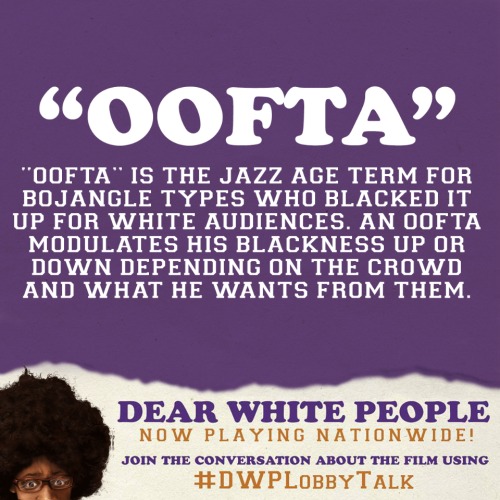
    Another film I would recommend is “Dear White People.” The title might give a certain impression, but the film is not a guilt-trip blame narrative. It is a witty satire that provides insight and social commentary to what the black experience is in the current form of racism. It is packed with a lot of conversation points, but one key message is to respect others’ experiences and not disregard them by snapping back about how long ago slavery was. The film also illustrates how blacks internalize and react to this question of identity in and out of the black community in a variety of ways. All of those experiences are worth listening to.

    There is also an article, “The Talk: How black parents prepare their young sons for life in America” by Bijan Stephen, that touches on the painful balancing act parents engage in while raising black children in America.  Black children learn about the dark side of being black in a reactionary way through interactions at school. It is almost like a form of losing one’s innocence. You also feel a sense of helplessness knowing that there is nothing you can do to protect a black child from any pain or danger they might face outside of your home. This realty adds to the sadness of losing a black child by a police bullet, regardless if you knew them personally.

    There is no simple solution to oppression in America because it is so engrained in our history. Those in power and older citizens cannot change. However, the youth and young adults can stop manufacturing racial oppression for the generations coming up. For now, to be an ally to the oppressed, you must listen, respect their experience, and acknowledge their pain and existence.

    I know this discussion could branch off in many directions, but these are the two points I wanted to start with. I hope this was helpful. Have you watched either films or read the novel I mentioned? Are there other points you would like to elaborate on? Let’s have a conversation.