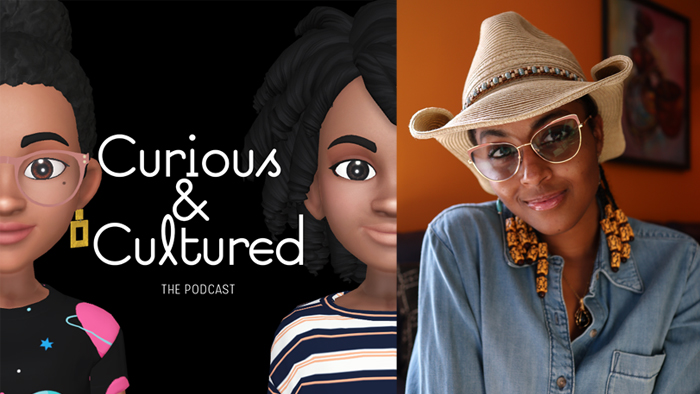
Are you into country music? Did you know an enslaved Black man invented the Banjo? Did you know the original cowboys were Black, Mexican, and Native American? Did you know the Hollywood Country Western movie era resulted from aesthetic copying and Jim Crow laws? Well, have we got a show for you.
In this episode, we decided to take an educational and experimental approach to our discussion. This was inspired by Beyonce’s new album Cowboy Carter and our own experience growing up in Texas. We gave ourselves a homework assignment to explore the origins of Country music, Country Western culture, the Rodeo, and modern discrepancies in these industries.
Let us know what you think of the episode.
Here are the links to the information we mentioned in this episode:
Everything the light touches is our kingdom. Yes, I watched “Black Is King” 5 million times. Yes, I watched and read the praise and criticism. Yes, we need to discuss some questions. As an art masterpiece, I loved the wardrobe, imagery, representation, and the fact that so many Africans artists got full credit and got PAID. As context for discussion, I loved how it sparked so many conversations across the royal continent and the diaspora about who can tell African stories and which stories should be told. In this video, I share the questions that I have been inspired to think about thanks to the film and the praise/criticism.
As I mentioned in the video, the film and the conversations it sparked made me think of some questions. I feel this is how Beyoncé’s “Black Is King” serves Africa and it’s diaspora.
Is Black luxury or Black excellence appropriation or repatriation?
I feel the argument for appropriation stems from the notion that wealth and success is obtained through proximity to whiteness and is performative for the white gaze. Showcasing wealth and success through an African context is judged as colonialism. I hear you, but I feel part of that has more to do self-hate, even though elitism can come into play. On the other hand, could this be a form of repatriation? As a Black culture in and out of Africa, we all know we should never visit people empty handed. I feel showcasing Black luxury or Black excellence is a way to pull reparations that have yet to be paid. To bring wealth and access to those that have been forgotten in and out of Africa. I am not saying this exactly what the film has done, but I feel this is what the diaspora can do as it reconnects to Africa. It is true that a lot of Africa’s diaspora views Africa in this lens of luxury, which can be through material things or also afrofuturistic. Just because I love Wakanda does not mean I am oblivious to the suffering that is happening in Africa. It means I hold Africa in high regard and will not allow the damage it still faces infect that view.
Must Blackness or Being Black or Being African be rooted in poverty and struggle?
This is tricky. I feel it doesn’t, but I understand why it does. The collective story is rooted in resilience, which is constantly facing poverty and struggle. Why are we quick to say who is more Black or more African than the other? Someone is less Black because they speak a certain way or lived in a certain neighborhood. Someone is more African because they experienced certain circumstances or view Africa in a certain way. Again, anything that is outside of poverty and struggle is deemed to be performing for the white gaze. I feel this runs deeper in the historical experience of having to tolerate living in an oppressors world. Certain fragments of the community did change their behavior once their lifestyle changed. Some also were quick to snitch or be oppressive themselves once they apparently moved on up. When it comes to representation through the arts, if a Black person feels isolated or excluded by images of Black people wearing crowns or diamonds, what does that mean for the art? Maybe it worked by inspiring you to see yourself better. Maybe it worked by showing how complex and diverse Black people are.
Why is African royalty considered offensive, when the Lion King is a story about royalty?
This was a big one among the praise and criticism. First, the Lion King is a story about a royal family. Black Is King is a spin-off of the Lion King. Thus, it makes sense for the story to surround a royal family. Secondly, I feel the concept of African royalty gets mistakenly wrapped with elitism and capitalism. Yes, monarchs have a certain hierarchy and rules apply to them differently. However, in the context of Black America pushing the image of our ancestors being Kings and Queens, it has more to do with reclaiming identity than it does being ignorant of African history. It is a direct rebuttal to the brutal perception that Black is criminal, ugly, and disposable. It is a direct counterclaim that Africa is poor, diseased, and worthless. I feel claiming Black royalty is a collective form of intellectual freedom.
Why does Africa represent different things for different people?
Overall, this is what I felt created the spectrum of praise and criticism. This was not an us versus them. The praise and criticism came from a mixture of people in and out of Africa. I might have stated this in a previous post, now that I think about it. For some, Africa is home and easily accessible. For others, Africa is freedom and needs to be celebrated and protected at all times. There is more than enough room for both of those sentiments to exist. We also need both of them. The key to this is to leverage what we both bring to the table. Are we using our access effectively? Do we have our priorities straight? Are we making an effort to understand where we all come from, by location and perspective? This also means we need to agree to share Africa.
Finally, I really loved the wardrobe and imagery. I am so excited for how this is going to benefit African talent across all industries. I feel this is the blueprint, that can continue to evolve, for how to interact and work with the depth of creativity, innovation, and vibrance that comes from Africa while giving Africa full credit, full access, and full ownership. This is just the beginning.
What do you think? Does this serve Africa and it’s diaspora? Share with me in the comments.
Also remember to connect with me on Twitter, Instagram, and Facebook. I love hearing from you.
The tricky thing about this era of rapid information is that whenever you do “too much,” you can never please everyone. In this video, I respond to a question from you. I discuss the nuances behind the reaction to the U.S. Congress wearing Kente cloth while presenting a police reform bill, the historical origin and adopted symbolism of Kente cloth, and the vast spectrum of terminology around Black identity and ethnicity in America.
Regarding the gesture by the U.S. Congress, in the grand scheme of things, I think it was okay. However, I would not have suggested to make that gesture at this time. It felt forced, which made it too easy to dismiss. This is where tagging on definitions or people to established symbols becomes slippery. There will always be push back when you add foreigners to a symbol or initiative that was created predominately for a certain message and a certain group of people. Now, after that gesture, they did introduce police reform legislation. We will see how that proceeds. Federal law is a start. The real work happens at the state and union level.
I think it is cool that people became Kente cloth connoisseurs over night due to this gesture. Like I mentioned in the video, Western media jumped between quoting social media posts about slave owners wearing Kente and whether a spider inspired the Kente patterns. Before you jump to conclusions, no, Kente cloth is not connected to the slave trade. Yes, of course Anansi the Spider created the original pattern. It is originally from Ghana, from the Ashanti and Ewe people. The colors, patterns, and weaving technique is a beautiful cultural tradition. To learn more from the source, I suggest you check out Kwasi Asare, a master Kente weaver. Below is the story of how Anansi the Spider inspired Kente cloth. Do you remember watching this clip as a kid? Or when your kids were actually kids?
As for Kente in America, it became a symbol of Black pride during the Civil Right’s Movement. Part of that was inspired by seeing Kwame Nkrumah, Ghana’s first President, wearing Kente cloth to meet with President Eisenhower at the White House. Images of Ghana’s independence influenced and inspired Black people all over the world, in and out of Africa. Kente continued to represent a gesture to reclaim Black identity paying homage to Ghana and Africa as well as making a statement to rebut the hipocracy of the American dream. This article discusses more details on how Kente became a part of the Black diaspora graduation tradition.
Like I mentioned in the video, Wax Print Film is a documentary about the origins, culture, and challenges behind wax print. I watched it at a screening last year at the Wax Print Festival in Accra. I thought it was really well done and thought provoking. The organizers for that festival were also recently featured in this BBC article discussing the same topic. African textiles that are sourced from Africa have so much potential that is suffocated by counterfeit goods, stifling trade agreements, and lack of investment. I am encouraged to see fashion industries all over Africa position themselves to showcase their value on a global scale. Hopefully, this leads to more progress in substantial support for this industry. What do you think? What makes wax print African? How can we build systems and infrastructure to support the fashion and textile industry in Africa?
Regarding terminology for Black identity in America, there is a spectrum of terms that continue to evolve. As I mentioned in the video, I appreciated the way Bre Danielle defined the terms in this post. There really is no one-size-fits-all answer to why some people prefer Black over African American or vice versa. As you can see, neither of the official definitions of these terms distance the person from Africa. The terms may also not fully represent the person’s identity. Where do people who are children of immigrants in America fit in? What do we call them? First-generation American. Diasporan. Afropolitan. Wakandan. The list continues to transform.
I feel the attitude towards creating a distance with Africa is more influenced on identity and pain instead of category terms. When I say it is exhausting being Black in America, I do not mean America makes me sleepy. There is a weight sitting on your shoulders that you cannot shake off. There is a cap to how tall you can stand. There is a constant internal fight to second-guess yourself as you maneuver a system that is designed to make you hate yourself. That same system defined Africa as the dark continent, a place with no value, which validates treating the people who were taken from it with no value. That pain is still very real and runs really deep. That is why education is so important. We cannot continue to hold on to ignorance as an excuse. I am encouraged to see more of the Diaspora take the initiative to knowing their history and opening themselves up to expanding their horizons to Africa.
Understanding the Black American experience will help understand the gestures to reconnect with Africa through art and fashion. For example, I have noticed the responses to Beyoncé upcoming film Black is King on Disney+. They are mixed, as usual. One discussion stood out to me, which you can view on this African Hustle Series post. The perspective noted that it is a film about Africa that is not available to watch in Africa. The narrative of African Kings and Queens is not valid because most were farmers and Africa is no longer full of huts. They expected more from Beyoncé. Now, I see where they are coming from. The film includes a lot of African artists and was filmed in different parts of Africa. I’m not sure yet why it is being released on Disney+. It could point us to who the target audience is for this film. I feel this film is a response to the Black American experience. The American education system and news media has taught Americans that Africa and its people are poor, diseased, and worthless. To rebut this, art that portrays Africa as rich, royal, and beautiful is needed. A quote from the trailer says “your ancestors never left you.” Why would the film depict “the ancestors” with cell phones and skyscrapers? Actually, we should be happy she is not showing all the investment and lifestyle opportunities in Africa. It would be too much. Africa would not be able to protect itself from the influx of foreigners, who are not Black, coming in to take it away again. If you are offended by this, maybe you are not the target audience for this film.
Similar to how Kente cloth was adopted, Africa represents something different for Black America compared to Africans and African immigrants. For Africans, Africa is home and is easily accessible. For Black America, Africa is freedom and needs to be defended and protected.
Thank you again to my YouTube subscriber for sharing this question. Let’s keep it going! Comment below and share what you would like to know and what you wish other Black people understood about you.
Also, remember to connect with me on Instagram, Twitter, and Facebook. I love hearing from you.



 Dagny Zenovia