Everything the light touches is our kingdom. Yes, I watched “Black Is King” 5 million times. Yes, I watched and read the praise and criticism. Yes, we need to discuss some questions. As an art masterpiece, I loved the wardrobe, imagery, representation, and the fact that so many Africans artists got full credit and got PAID. As context for discussion, I loved how it sparked so many conversations across the royal continent and the diaspora about who can tell African stories and which stories should be told. In this video, I share the questions that I have been inspired to think about thanks to the film and the praise/criticism.
As I mentioned in the video, the film and the conversations it sparked made me think of some questions. I feel this is how Beyoncé’s “Black Is King” serves Africa and it’s diaspora.
Is Black luxury or Black excellence appropriation or repatriation?
I feel the argument for appropriation stems from the notion that wealth and success is obtained through proximity to whiteness and is performative for the white gaze. Showcasing wealth and success through an African context is judged as colonialism. I hear you, but I feel part of that has more to do self-hate, even though elitism can come into play. On the other hand, could this be a form of repatriation? As a Black culture in and out of Africa, we all know we should never visit people empty handed. I feel showcasing Black luxury or Black excellence is a way to pull reparations that have yet to be paid. To bring wealth and access to those that have been forgotten in and out of Africa. I am not saying this exactly what the film has done, but I feel this is what the diaspora can do as it reconnects to Africa. It is true that a lot of Africa’s diaspora views Africa in this lens of luxury, which can be through material things or also afrofuturistic. Just because I love Wakanda does not mean I am oblivious to the suffering that is happening in Africa. It means I hold Africa in high regard and will not allow the damage it still faces infect that view.
Must Blackness or Being Black or Being African be rooted in poverty and struggle?
This is tricky. I feel it doesn’t, but I understand why it does. The collective story is rooted in resilience, which is constantly facing poverty and struggle. Why are we quick to say who is more Black or more African than the other? Someone is less Black because they speak a certain way or lived in a certain neighborhood. Someone is more African because they experienced certain circumstances or view Africa in a certain way. Again, anything that is outside of poverty and struggle is deemed to be performing for the white gaze. I feel this runs deeper in the historical experience of having to tolerate living in an oppressors world. Certain fragments of the community did change their behavior once their lifestyle changed. Some also were quick to snitch or be oppressive themselves once they apparently moved on up. When it comes to representation through the arts, if a Black person feels isolated or excluded by images of Black people wearing crowns or diamonds, what does that mean for the art? Maybe it worked by inspiring you to see yourself better. Maybe it worked by showing how complex and diverse Black people are.
Why is African royalty considered offensive, when the Lion King is a story about royalty?
This was a big one among the praise and criticism. First, the Lion King is a story about a royal family. Black Is King is a spin-off of the Lion King. Thus, it makes sense for the story to surround a royal family. Secondly, I feel the concept of African royalty gets mistakenly wrapped with elitism and capitalism. Yes, monarchs have a certain hierarchy and rules apply to them differently. However, in the context of Black America pushing the image of our ancestors being Kings and Queens, it has more to do with reclaiming identity than it does being ignorant of African history. It is a direct rebuttal to the brutal perception that Black is criminal, ugly, and disposable. It is a direct counterclaim that Africa is poor, diseased, and worthless. I feel claiming Black royalty is a collective form of intellectual freedom.
Why does Africa represent different things for different people?
Overall, this is what I felt created the spectrum of praise and criticism. This was not an us versus them. The praise and criticism came from a mixture of people in and out of Africa. I might have stated this in a previous post, now that I think about it. For some, Africa is home and easily accessible. For others, Africa is freedom and needs to be celebrated and protected at all times. There is more than enough room for both of those sentiments to exist. We also need both of them. The key to this is to leverage what we both bring to the table. Are we using our access effectively? Do we have our priorities straight? Are we making an effort to understand where we all come from, by location and perspective? This also means we need to agree to share Africa.
Finally, I really loved the wardrobe and imagery. I am so excited for how this is going to benefit African talent across all industries. I feel this is the blueprint, that can continue to evolve, for how to interact and work with the depth of creativity, innovation, and vibrance that comes from Africa while giving Africa full credit, full access, and full ownership. This is just the beginning.
What do you think? Does this serve Africa and it’s diaspora? Share with me in the comments.
Also remember to connect with me on Twitter, Instagram, and Facebook. I love hearing from you.
Digital content is leveling the playing field when it comes to opportunities and connections. The influencer industry continues to transform as consumer behavior and technology evolves. What does this mean for Africa? With the increased global interest to support, invest, and collaborate with the vast spectrum of talent and innovation throughout the continent, this is the time to strategically position all of Africa’s voices. In this video, I share tips on how to develop a digital strategy, focusing on personal brands and businesses based in Africa and interested in tapping into the African market.
As I mentioned in the video, your overall digital strategy should answer the following points:
What is your story?
What is your goal?
Who is your target audience?
Who is your competition?
What platforms or channels will you focus on?
Even though there is a lot of material about digital marketing and digital content strategy in the West, not all of it appropriately translates for the African market. Each country in Africa holds different cultural norms, laws, and consumer behavior. Access to internet is also varied. Thus, traditional modes of digital marketing and strategy do not always fulfill expectations on the ground. That is why I decided to break it down here.
Story
As a personal brand, your story is the most important part of your strategy. It answers the question for your potential community as to why they should pay attention to you and trust you. Authenticity is key here. What have you overcome? What are you passionate about? How can you be of service? This does not have to be complicated or astronomically huge. The more vulnerable and intimate your answer is, the more likely it will resonate with the right people. This also does not require pulling heart strings. If I really did not grow up living in a shoe box in my Dad’s garage, I do not need to create a persona of struggle.
As a business, your story is also the most important part of your brand. It provides your potential customers a reason to care about your product and trust you. Authenticity and creativity is key here. Your people are also important. The brand story can encompass the narrative behind how the business began, the problem your product solves, the people who make your product a reality, and the people you want to serve with your product. Give your company a personality.
Goal
As a personal brand, you are building a community to take them somewhere. This can evolve over time, but pay attention to the value of your community. Take note of their questions and preferences. Develop a reliable way to communicate with them individually.
As a business, your goal is to make a profit, of course, but also to establish your brand as the expert and preferred choice in your industry. This can be done in a variety of ways. In the video, I speak to advertisements, which need to be clever and not look like an advertisements. Other options include educating your audience, showcasing your employees and customers, plus hosting experiences.
Target Audience
As a personal brand, I feel there are two branches to this. One, create an imaginary person who you think would benefit from your content or service. Second, focus on the lifestyle, mindset, or experience you think your potential audience would be attracted to.
As a business, your audience can be more narrow in terms of who would purchase your product or service. However, a developed online brand expands your potential customer reach.
Competition
As a personal brand, this is where market research comes in. Follow and study hashtags and brands to understand what is working and trending. This will lead you to understand where the void is and how you can fill it better.
As a business, expand your market research to see how others in your industry are positioning their brand online. Also study your customers online preferences and behavior.
Platforms or Channels
For both personal brands and businesses, set up an account on every platform that is widely used. This is free and is important to keep your brand professional. Then, take the time to understand how your story and goal translates into each platform. You do not need to be active on all of them, but you do need to be effective on the ones that work for you.
There is such a wide space for this. For example, in Ghana, there is a growing number of creators producing a variety of media. There is so much room for more sponsored content between local businesses and these creators plus strategic positioning to establish these voices as experts in their industries. This also is where aligning the content and strategy with the cultural norms, laws, and consumer behavior for the country is important. For instance, the news about 5 Egyptian women being arrested in Egypt over the videos they posted on TikTok illustrates how important it is to balance all the information you are consuming globally and how to safely position your voice on the ground.
I feel the influencer and brand industry can fill part of the void in market data in Africa. As a voice with an engaged community surrounding your expertise, you can be the liaison between opportunity interest coming from brands and investments in and out of Africa. This is an exciting time.
I hope you found these tips helpful. What else about digital content strategy would you like to learn about? Let me know in the comments.
Also, who is your favorite African influencer or brand? Share with me in the comments.
Remember to connect with me on Instagram, Twitter, or Facebook. I love hearing from you.
The tricky thing about this era of rapid information is that whenever you do “too much,” you can never please everyone. In this video, I respond to a question from you. I discuss the nuances behind the reaction to the U.S. Congress wearing Kente cloth while presenting a police reform bill, the historical origin and adopted symbolism of Kente cloth, and the vast spectrum of terminology around Black identity and ethnicity in America.
Regarding the gesture by the U.S. Congress, in the grand scheme of things, I think it was okay. However, I would not have suggested to make that gesture at this time. It felt forced, which made it too easy to dismiss. This is where tagging on definitions or people to established symbols becomes slippery. There will always be push back when you add foreigners to a symbol or initiative that was created predominately for a certain message and a certain group of people. Now, after that gesture, they did introduce police reform legislation. We will see how that proceeds. Federal law is a start. The real work happens at the state and union level.
I think it is cool that people became Kente cloth connoisseurs over night due to this gesture. Like I mentioned in the video, Western media jumped between quoting social media posts about slave owners wearing Kente and whether a spider inspired the Kente patterns. Before you jump to conclusions, no, Kente cloth is not connected to the slave trade. Yes, of course Anansi the Spider created the original pattern. It is originally from Ghana, from the Ashanti and Ewe people. The colors, patterns, and weaving technique is a beautiful cultural tradition. To learn more from the source, I suggest you check out Kwasi Asare, a master Kente weaver. Below is the story of how Anansi the Spider inspired Kente cloth. Do you remember watching this clip as a kid? Or when your kids were actually kids?
As for Kente in America, it became a symbol of Black pride during the Civil Right’s Movement. Part of that was inspired by seeing Kwame Nkrumah, Ghana’s first President, wearing Kente cloth to meet with President Eisenhower at the White House. Images of Ghana’s independence influenced and inspired Black people all over the world, in and out of Africa. Kente continued to represent a gesture to reclaim Black identity paying homage to Ghana and Africa as well as making a statement to rebut the hipocracy of the American dream. This article discusses more details on how Kente became a part of the Black diaspora graduation tradition.
Like I mentioned in the video, Wax Print Film is a documentary about the origins, culture, and challenges behind wax print. I watched it at a screening last year at the Wax Print Festival in Accra. I thought it was really well done and thought provoking. The organizers for that festival were also recently featured in this BBC article discussing the same topic. African textiles that are sourced from Africa have so much potential that is suffocated by counterfeit goods, stifling trade agreements, and lack of investment. I am encouraged to see fashion industries all over Africa position themselves to showcase their value on a global scale. Hopefully, this leads to more progress in substantial support for this industry. What do you think? What makes wax print African? How can we build systems and infrastructure to support the fashion and textile industry in Africa?
Regarding terminology for Black identity in America, there is a spectrum of terms that continue to evolve. As I mentioned in the video, I appreciated the way Bre Danielle defined the terms in this post. There really is no one-size-fits-all answer to why some people prefer Black over African American or vice versa. As you can see, neither of the official definitions of these terms distance the person from Africa. The terms may also not fully represent the person’s identity. Where do people who are children of immigrants in America fit in? What do we call them? First-generation American. Diasporan. Afropolitan. Wakandan. The list continues to transform.
I feel the attitude towards creating a distance with Africa is more influenced on identity and pain instead of category terms. When I say it is exhausting being Black in America, I do not mean America makes me sleepy. There is a weight sitting on your shoulders that you cannot shake off. There is a cap to how tall you can stand. There is a constant internal fight to second-guess yourself as you maneuver a system that is designed to make you hate yourself. That same system defined Africa as the dark continent, a place with no value, which validates treating the people who were taken from it with no value. That pain is still very real and runs really deep. That is why education is so important. We cannot continue to hold on to ignorance as an excuse. I am encouraged to see more of the Diaspora take the initiative to knowing their history and opening themselves up to expanding their horizons to Africa.
Understanding the Black American experience will help understand the gestures to reconnect with Africa through art and fashion. For example, I have noticed the responses to Beyoncé upcoming film Black is King on Disney+. They are mixed, as usual. One discussion stood out to me, which you can view on this African Hustle Series post. The perspective noted that it is a film about Africa that is not available to watch in Africa. The narrative of African Kings and Queens is not valid because most were farmers and Africa is no longer full of huts. They expected more from Beyoncé. Now, I see where they are coming from. The film includes a lot of African artists and was filmed in different parts of Africa. I’m not sure yet why it is being released on Disney+. It could point us to who the target audience is for this film. I feel this film is a response to the Black American experience. The American education system and news media has taught Americans that Africa and its people are poor, diseased, and worthless. To rebut this, art that portrays Africa as rich, royal, and beautiful is needed. A quote from the trailer says “your ancestors never left you.” Why would the film depict “the ancestors” with cell phones and skyscrapers? Actually, we should be happy she is not showing all the investment and lifestyle opportunities in Africa. It would be too much. Africa would not be able to protect itself from the influx of foreigners, who are not Black, coming in to take it away again. If you are offended by this, maybe you are not the target audience for this film.
Similar to how Kente cloth was adopted, Africa represents something different for Black America compared to Africans and African immigrants. For Africans, Africa is home and is easily accessible. For Black America, Africa is freedom and needs to be defended and protected.
Thank you again to my YouTube subscriber for sharing this question. Let’s keep it going! Comment below and share what you would like to know and what you wish other Black people understood about you.
Also, remember to connect with me on Instagram, Twitter, and Facebook. I love hearing from you.
If you want to know why something is happening, follow the money. To further the discussion to heal the distance between Africa and its Diaspora, let us go over the historical and current economic oppression that influences and determines the Black experience.
In this video and post, I am focusing on Black America and Ghana. For Black people outside of America and Ghana, please do not feel isolated or excluded in this conversation. The point is for all of us to win. Understanding how we can strategically do that is key. As you read further in this post, I widen the focus to other parts of the world.
Let’s dive deeper. Starting with economic oppression and Black America, there are two layers to this agenda: the wealth gap and the income gap. The wealth gap was created by the exploitation of free labor from Black slaves, passing down of profits from that exploitation, and destroying and stealing from Black businesses.
The history of slavery in America is diluted and distorted in American history. The wealth gap began with cotton. America’s first big business, which pushed it to be the leading economy in the world, revolved around slavery. At one point, American cotton made up two-thirds of the global supply of cotton. This was all off the backs of slaves. Americans became millionaires off the bleeding backs of enslaved Black people. This is also where police brutality began. Aggressive and barbaric white “supervision” was used to return runaway slaves to the plantation while violently and brutally questioning the work and movement of slaves. This Vox article gives more details on how slavery became America’s first big business.
Like I mention in the video, there are two historical massacres that are referred to as the illustration of why telling Black people to pick themselves up from their bootstraps is not valid.
The Tulsa Massacre in 1921 occurred in Tulsa, Oklahoma in the Greenwood District, which was also known as Black Wall Street. It was an affluent Black American community that included thriving and peaceful Black businesses and residential areas covering 35 city blocks. The incident that started the massacre is still surrounded by rumors around what happened when Dick Rowland, a Black man, and Sarah Page, a white woman, stood in an elevator. A white mob formed reacting to this rumor that was further embellished as it spread through the town. Rowland was arrested and held at the police station. The mob outside was met with a group of concerned Black residents who understood that Rowland was in danger of being killed by either law enforcement or this white mob. This response added to the rumors that spread among the white mob pitting for a race war. The white mob grew in size and hate. They proceeded to burn and destroy Black Wall Street, leaving around 10,000 Black Americans homeless and murdering around 300 Black Americans. The Tulsa Historical Society and Museum have archived the details of the Tulsa Massacre through documents, photos, and audio on their website. They also provide a free exhibit.
The Rosewood Massacre in 1923 occurred in the predominately Black town, Rosewood, in central Florida. It also was instigated by an alleged rumor that a white woman was offended, in this case sexually assaulted, by a Black man. The white mob that responded to this acted on further embellished rumors to burn the town to the ground and lynch / murder any Black man they could find. Again leaving those who survived homeless. More details are in this Black Past article.
The income gap continues through occupational segregation. Let’s go over some numbers. In 2018, 20.8%, which is 8.9 million, of Black America were living underneath the poverty threshold, being the second largest group in America living in poverty. (Source from Talk Poverty) The overall largest group is Native Americans at 25.4%. Like I mentioned in the video, Black people in America got the shorter end of the stick and Native Americans did not get a stick at all. Systematic inequality cannot continue to wipe them out either. Let me know if you would like to learn more about the Native American experience so I can direct you to the voices you need to listen to. Regarding unemployment, in 2018, the overall rate was at 3.8% and the Black rate was 6.5%. In 2020, the overall rate is 13.3% and the Black rate is 16.7%. America has the biggest incarcerated population in the world. Prison policies and reform has more depth than a few percentages could show. This report gives more details on the issue of mass incarceration in America. The income gap is not only maintained by unemployment. There is an additional layer with wages. This article breaks down how the wage gap is widening further. For more insight, read this report on systematic inequality and economic opportunity.
When we talk about systematic racism and systematic inequality, these numbers are part of the picture. One cannot “catch up” when the game is fixed or when the goal post continues to be moved. The gap is not actually influenced by the mask of education, home ownership, or job title. The gap is only influenced and maintained by the deliberate effort to keep the gap. This article from CityLab about why we can’t close the racial wealth gap has some good insight. This is part of why it is so exhausting to be Black in America. Always working hard and following the rules accepting that you will always have to tolerate less in every industry, field, interaction, and experience.
This is also why America always starts sweating when the conversation about reparations comes up. It is not because it is impossible to calculate the wealth Black America created and never benefited from. It is not because Black America is living so much better now compared to the 1800s or 1960s. It is because America prefers to drag its feet. It is because America prefers to do everything but what was asked for, like painting Black Lives Matter on a street, manufacturing band-aids that match brown skin, and kneeling while wearing cloth that looks like Kente cloth.
How can we learn from this? For the first time in a while, Black America used its purchasing power as an effective tool and Black-Owned businesses made millions of dollars over night. This is a good start. How do we take this further?
Now, let’s talk about economic oppression and Ghana. When I compare what was happening in Ghana with the same historical dates I listed above, I see there is a lot Africa’s people, in and out of the continent, can learn from to heal the distance and enhance the link.
In the 1860s, which was during the height of the cotton empire in America, the export of slaves was gradually diminishing. Even though the import of slaves to America was outlawed in 1808, the demand for slave labor continued after that. Later, Ghana experienced a shift as colonizers pivoted to competing with each other for colonial territories. During this time there were a variety of alliances and struggles for power, including the Ashanti-Fante War and the Anglo-Ashanti Wars. The latter wiped out different levels of British forces.
The debate as to whether Africans sold Africans into slavery is an interesting one. I have noted Africans rebutting that there is no evidence that a sale transaction occurred. I have noted Black people outside of Africa express suspicion on whether Africans were sold or stolen. Some argue that trying to discuss whether Africans sold Africans is like discussing black on black crime, which is a distraction from the movement. To me, it sounds like both discussions trigger people in different ways. I believe in holding each other accountable, which includes looking in the mirror and reading real history. The primary point is to avoid repeating history. Stop trying to distance yourself from the problem. We need to do better.
British authorities in the 1920s in Ghana adopted a system of indirect rule. Even though they put traditional chiefs in position of local authority, they took instructions from their British supervisors. During this era, transportation, water supply, public buildings, schools, prisons, hospitals, and other services were developed by colonial rule and African hands. Ghanaians also assisted Britain in World War I and World War II. A national conscious, which lead to independence, developed after WWII when veterans and the growing educated population no longer were satisfied with the humble position colonial rule kept them in. In some respects, Ghana was lucky compared to other African colonies. They did not experience limbs being chopped off, like Belgium rule in Congo, or complete destruction, like French rule in Algeria. However, one could analyze a wealth gap in how much was extracted from Ghana during this time.
Before I fast forward to the income gap of today, let’s pause here. If we focus on the historical events listed above for both Black America and Ghana, what do you see? Black people in America had a different experience with white people compared to Black people in Ghana during that time. Both set of colonizers utilized economic oppression, but in different ways. I feel this needs to be understood by Africans and Africa’s diaspora. This might be the reason why there is a sense of urgency to fight the power on one end and a sense of confusion and no urgency on the other. Remember, colonizers do not want us to be on the same team. I feel education has a role to play in this too. When I speak to Ghanaians about colonialism and Ghana’s relationship with England now, I do not pick up a sense of animosity or disdain. The narrative is not focused on exploitation, but rather how the British enhanced Ghana, historically speaking. Like I noted above, development did occur during colonial rule. Also focus on the fact that British rule had authority over education and implemented the British educational curriculum in Ghana. Making sure the Ghanaian population learned British history under a British lens, it is no surprise the British continued to frame themselves as a hero. This is similar to the American education system, which continues to frame the founding fathers and corporations as heroes. However, Black Americans have a different narrative when they speak about slave masters, Jim Crow law, and police brutality. Black British and Black French also have a different narrative when they speak about their experience with colonizers, which does include police brutality, economic oppression, and pushing statues back into the sea. I do not have the answer yet, but this disconnect should not be dismissed nor should it allow us to create more barriers between us.
Fast forward to the income gap of today in Ghana. In 2016, 56.90% of Ghana’s population was living underneath the international poverty threshold. In 2018, the unemployment rate in Ghana was 4.16%. There is a lack of transparency in the value of labor and skills in Ghana. This is why the numbers, which are primarily calculated and reported on by NGOs and international corporations, may not always add up. The focus of these numbers are primarily on national policy, like this report on Ghana’s poverty rate and inequality. There is a discrepancy between what Ghanaians are paid and what expats are paid in Ghana. There is inequality between what women are paid and what men are paid in Ghana. More details on this inequality are analyzed in this Oxfam report. As development continues, the gap between the rich and poor continues to widen.
These numbers and lack of numbers is part of the picture. This is why the sense for most in Ghana is that nothing you do will really change the bigger things that keep your life the way it is. Some still spend half the day without electricity. The floods, that could be prevented, still kill and displace people every year during rainy season. This supports the assumption that big money only comes from abroad or corruption, not real work. When you compare this to how many foreign companies are making real profits in Ghana and taking it outside of Ghana, like this company producing organic bananas, I have to wonder if this attitude is systematic to reduce competition.
How do we learn from this? There are plenty of Black owned businesses in Ghana and Africa. There is a strong purchasing power in Ghana and Africa. However, there is still a mix-match. How can we fix it?
How do we learn from how economic oppression has been utilized against us to effectively protect what we build? On a people, corporate, and government level. How do we prevent our efforts from being destroyed by those who want to maintain the status quo? Let me know what you think.
The energy we are feeling right now is a golden opportunity. The shift and change is possible, if we continue speaking up, evolving, holding each other accountable, and making a difference. Below are more resources for you to continue supporting Black content and businesses.
Also, feel free to connect with me on Instagram, Twitter, and Facebook. I love hearing from you.
Freedom Agenda
Black Owned Apps
JoinMi – safe space for HBCU students to converse about concerns and life.
Gbook – e-commerce platform for students to buy/sell products and services.
Africa is the future. The real question is, whose future does it benefit? What does Beyond the Return look like now? Before moving to Ghana, I did a lot of research to try to understand the country and see where I could fit. Even though that helped to encourage me to take the first step, it did not compare to what I needed to learn on the ground. In this video, I discuss what has worked for me in finding and creating my niche in Ghana and Africa.
As I discussed in the video, nothing compares to learning from experience. Being patient, adaptable, and open to learning will take you much further, if you are looking to find and create your niche in Ghana and Africa.
Networking does play a role in your success. Instead of insisting there is only one way to do this, I encourage you to explore what works for your industry and your personality. Some people need to be in everyone’s face. Others prefer to keep their circle of contacts small and close. I have found that a mixture of in person socializing and online outreach allows me to have a diverse network of people to learn from, collaborate with, support, and work with. This lends itself to the work culture in Ghana. You do not need to limit people to one transaction or interaction. The person you purchase furniture from can also introduce you to a business opportunity, help you with your garden, invite you to meet their family, or find that particular gadget that is not available in stores. The person you met at an event can also collaborate with you on a project, introduce you to the manager of a bank, teach you how to cook traditional dishes, or introduce you to their tailor. It all depends on how you value and maneuver your interactions.
Even though these connections feel more wholesome compared to the isolating transactions I experienced in Houston, or America in general, I am still learning how these interactions evolve to create your closer circle of friends. This might be influenced by the societal notion that everyone should know their place. Some people, in spite of interacting with each other for an extended period of time, may never feel comfortable enough to invite me into their home. As an American, this is not unusual because we all have friends who don’t know where we live. From my understanding, Ghanaians do invite their real friends home and introduce them to their families. I have also learned that people in Accra are different from people based or born and raised in other parts of Ghana. This might be similar to other big cities, but the sense that not everyone is truly as they seem or say is not foreign in Accra. I am very grateful that I have met and continue to connect to the people who are wholesome, supportive, authentic, and interesting.
Regarding the established network groups I mentioned in the video, I feel they are a great start to get a sense of who is around, what people are talking about, and what you can connect to. Ahaspora is a group for young professionals. I have also used their job listing to find opportunities. AAAG, the African American Association of Ghana, is the group that introduced me to the W.E.B. Du Bois Center in Accra. Ghana Must Read Book Club is a lovely group of book nerds. I really enjoyed the meet up I attended to discuss Children of Virtue and Vengeance by Tomi Adeyemi. This year, each month is dedicated to a different region of the world. There are many more groups for a variety of interests through out Ghana. These are the ones I have participated in thus far.
When it comes to figuring out if your industry exists in Ghana, or another country in Africa, it is important to remember that it may look different than what you are used to. Even though most of the data you need will come from word of mouth, there are startups developing ways to gather that data for all industries. Survey54 is a platform focused on emerging markets in Africa and its diaspora. I met the founder, Stephen Eyeson, in Ghana during the December holiday season. Him and his team are doing an impressive job developing their product. This article in African Business Magazine discusses the industries that are buzzing due to need to shift the economy into a digital landscape. Like I mentioned in the video, mobile financing, online education, and tele health are on their list. There is also a luxury market in Africa that continues to expand and grow. Another article from African Business Magazine discusses this in more detail. The speed of development, debt, and demand creates an interesting environment in Ghana and Africa. The mixture provides a blank canvas for you to choose how you further your business, make an impact, and gain in every aspect of your life.
So far, this is what has encouraged me to continue my journey. Are you looking to move or work in Ghana or another country in Africa? Are you already based in the royal continent and looking to expand or pivot? What do you find helpful? Let me know in the comments. Let’s continue the conversation.
Also, feel free to reach out and connect with me on Instagram, Twitter, or Facebook. I love hearing from you.
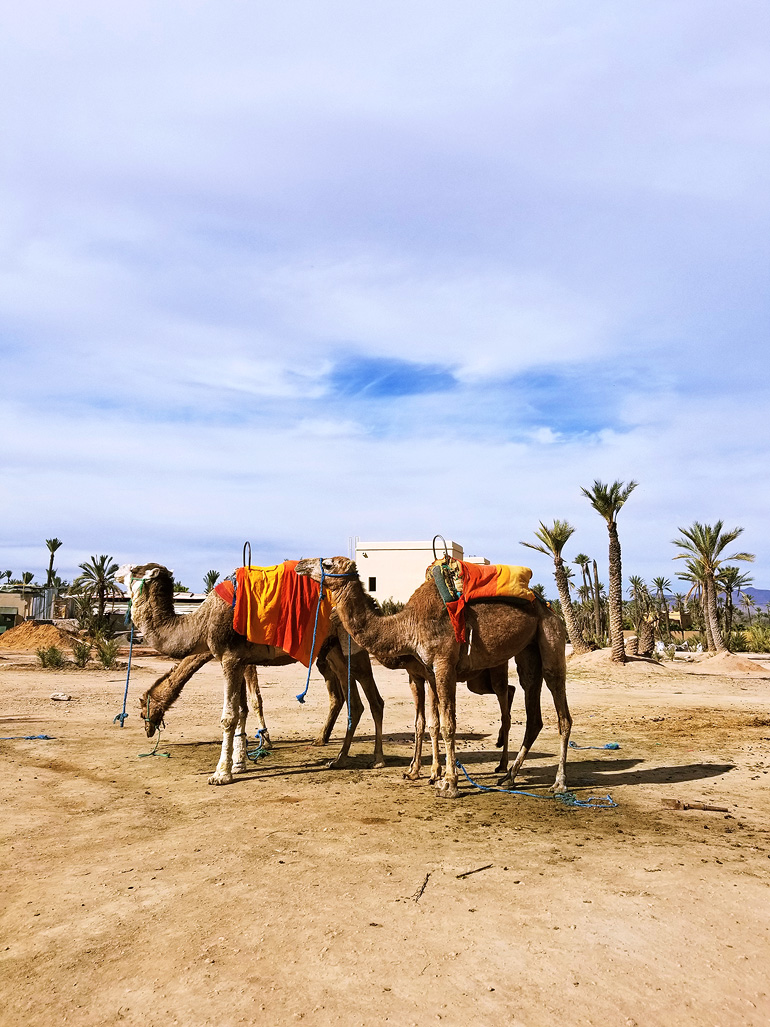
There is a certain freedom in being present while experiencing something new. Travel can do that to you. Like flying a magic carpet, it can feel unbelievable and simple at the same time. I spent New Year’s in Morocco. This was my first visit to the northern region of the Royal Continent and it was more magical than I could have ever imagined. There is so much to soak in that one really needs to stay for a couple of months. I spent 6 days based in Marrakech and took 2 day trips to Rabat and Ouarzazate. All three cities are unique and I hope this post helps to inspire you to visit.
Marrakech
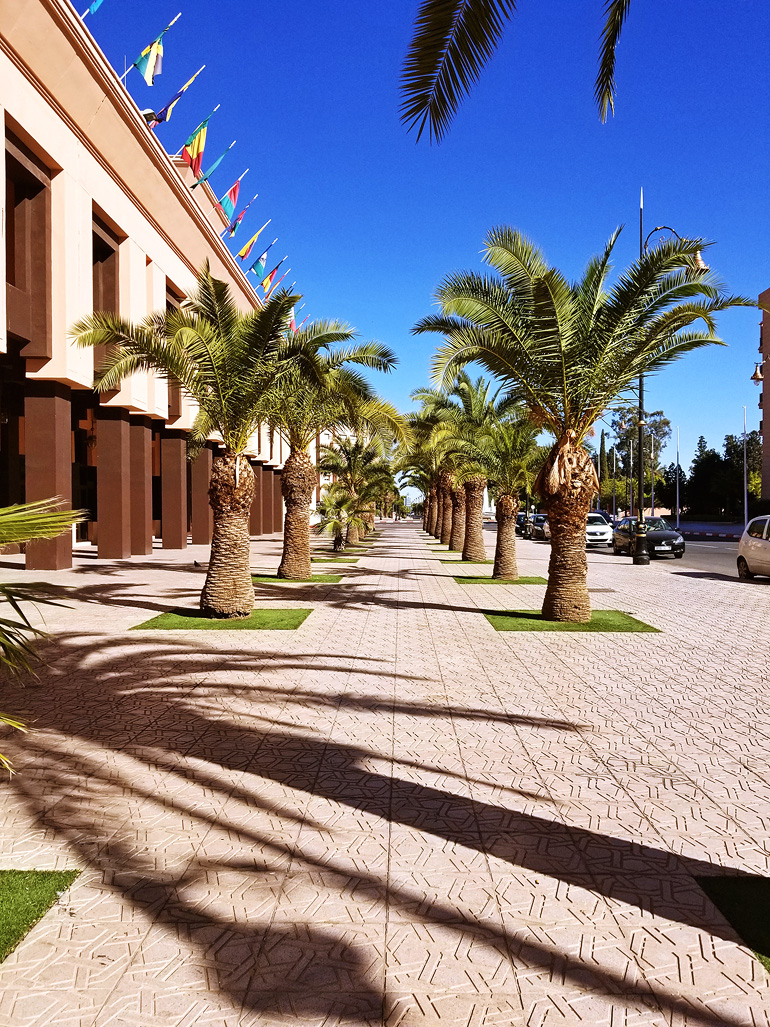
A crisp morning in Marrakech starts at 10am, a wonderful time in my opinion. Along with the birds singing, you can hear the faint sound of Arabic and French spoken everywhere. Then there’s the sound of motors passing by, from old taxis and mopeds to shining new range rovers. The architecture in Marrakech is so picturesque. Between the old city and new city, European and African style is all blended with red bricks and walls. It is really beautiful.
Marrakech is a vibrant and artistic city. A paradise for photographers, foodies, history buffs, antique collectors, and of course…tourists. It is overwhelming and exciting at the same time. It is built in a way that makes it easy to walk around, which makes it even more fun to explore. We were lucky to have our stylish family friends show us around.
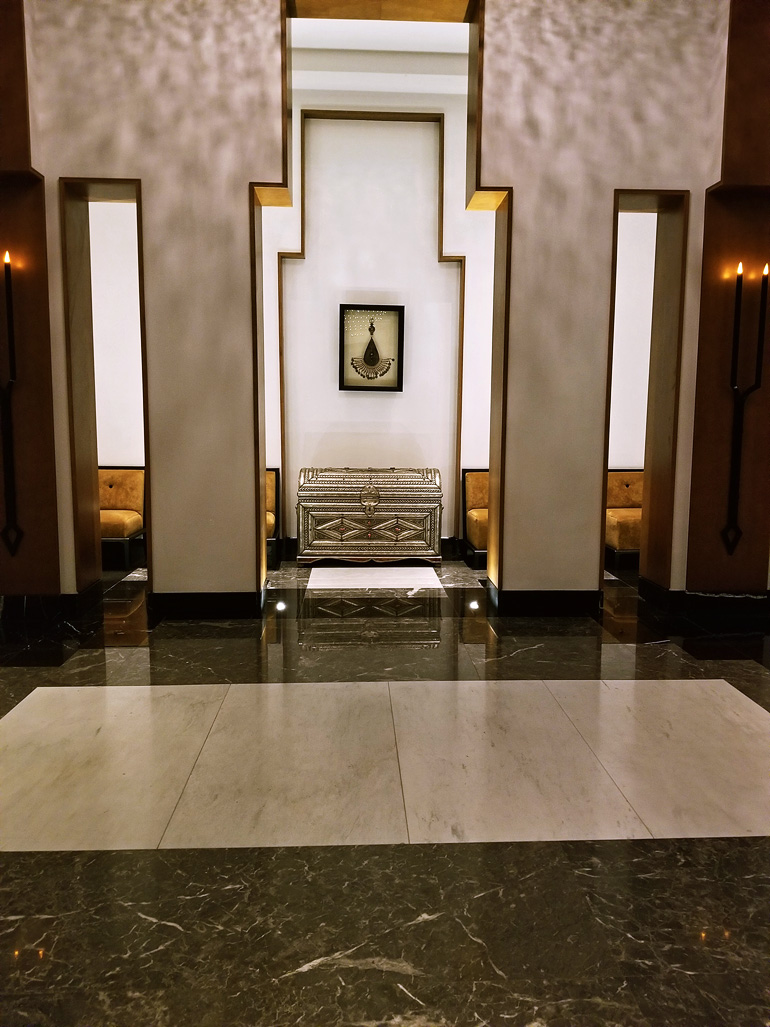
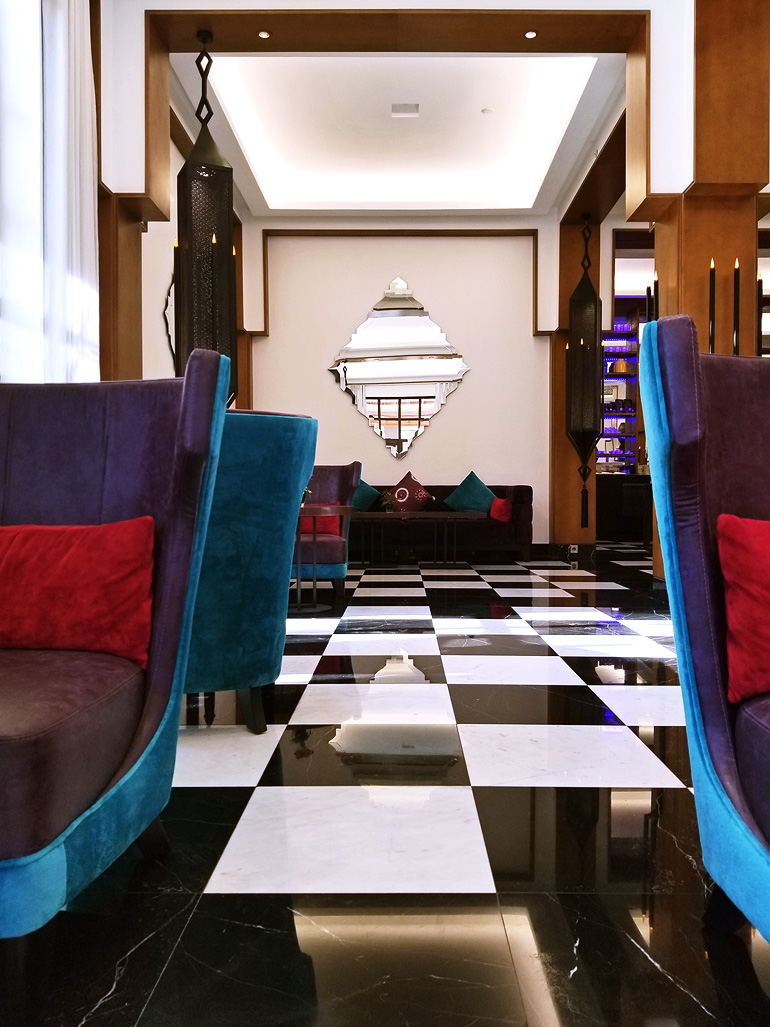
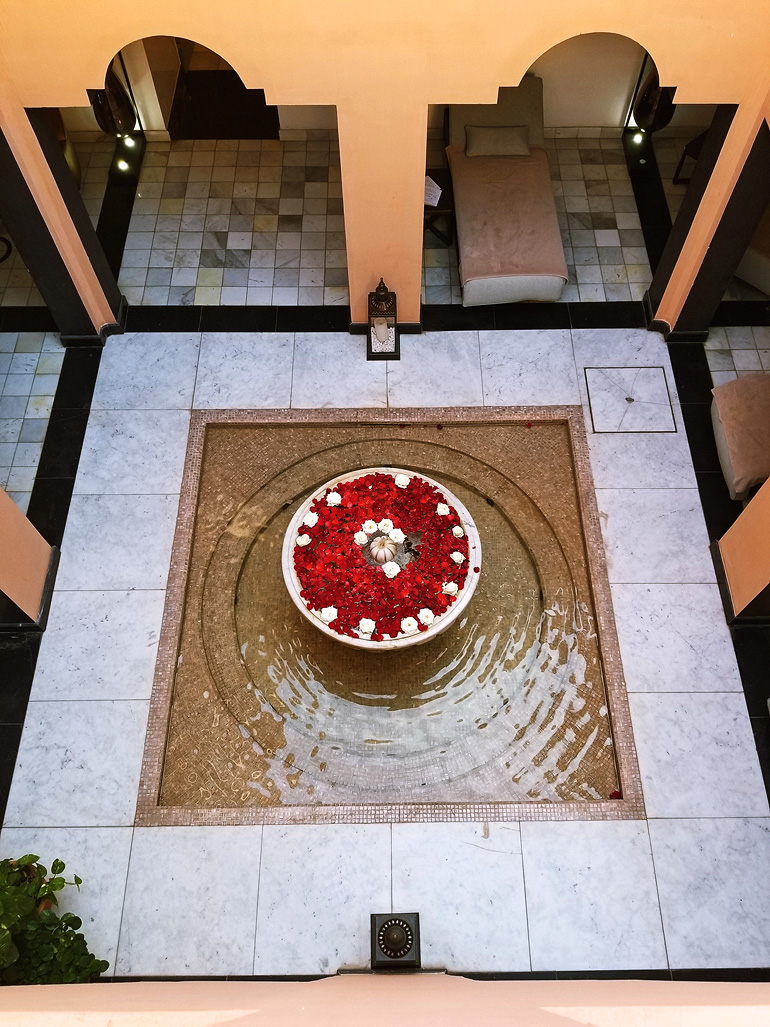
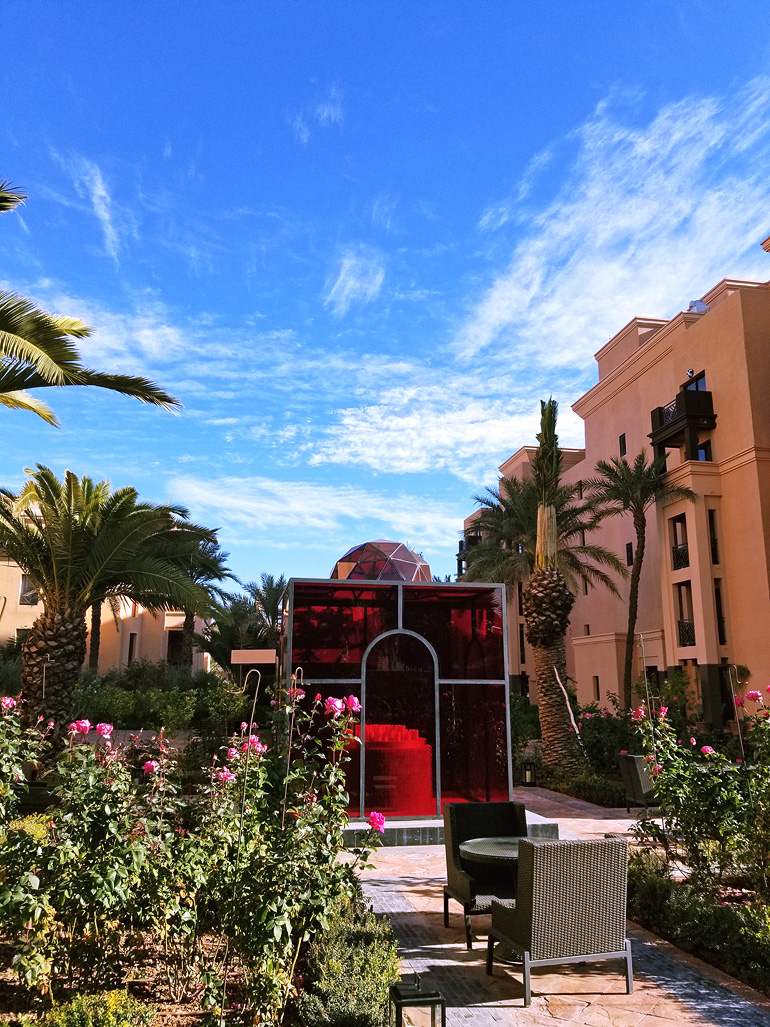
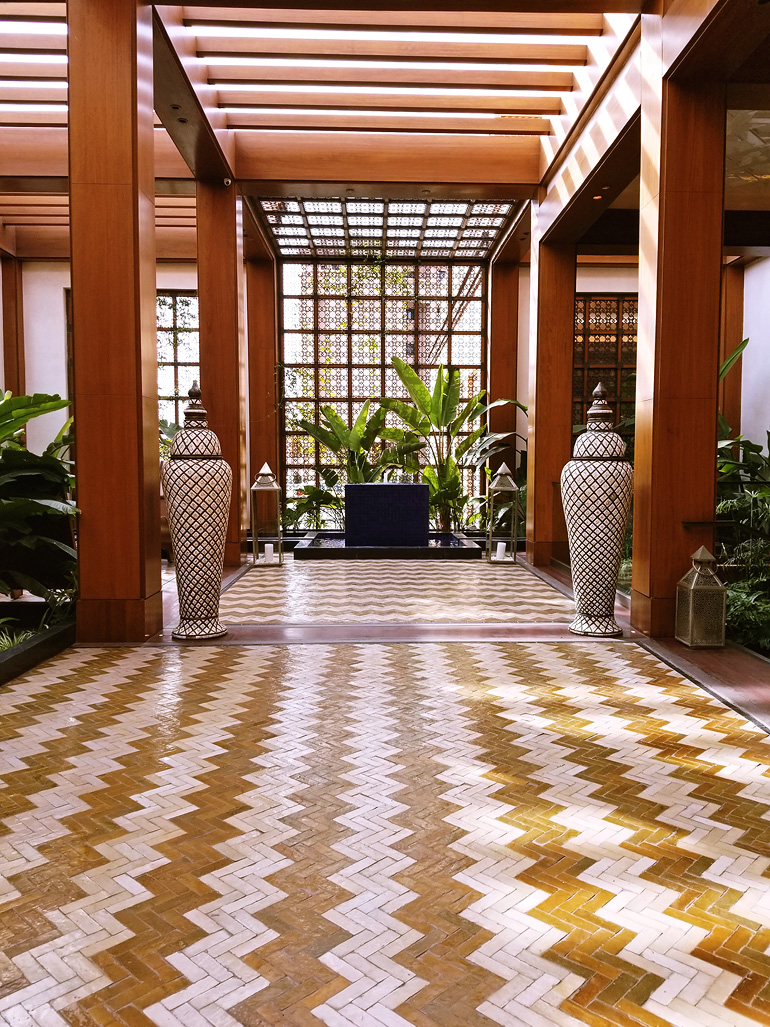
I stayed at the Movenpick Marrakech hotel. This place was gorgeous! Every corner of this hotel was breathtaking. The customer service was royal and the food was top-notch. Their buffet spread for breakfast was so elegant and had every choice you could think of. The rooms were comfortable andI really loved the details of the decor, from the marble architecture to the colorful furniture.
I also did a few photoshoots at this beautiful hotel. Stay tuned for those photos in my next post.
Rabat
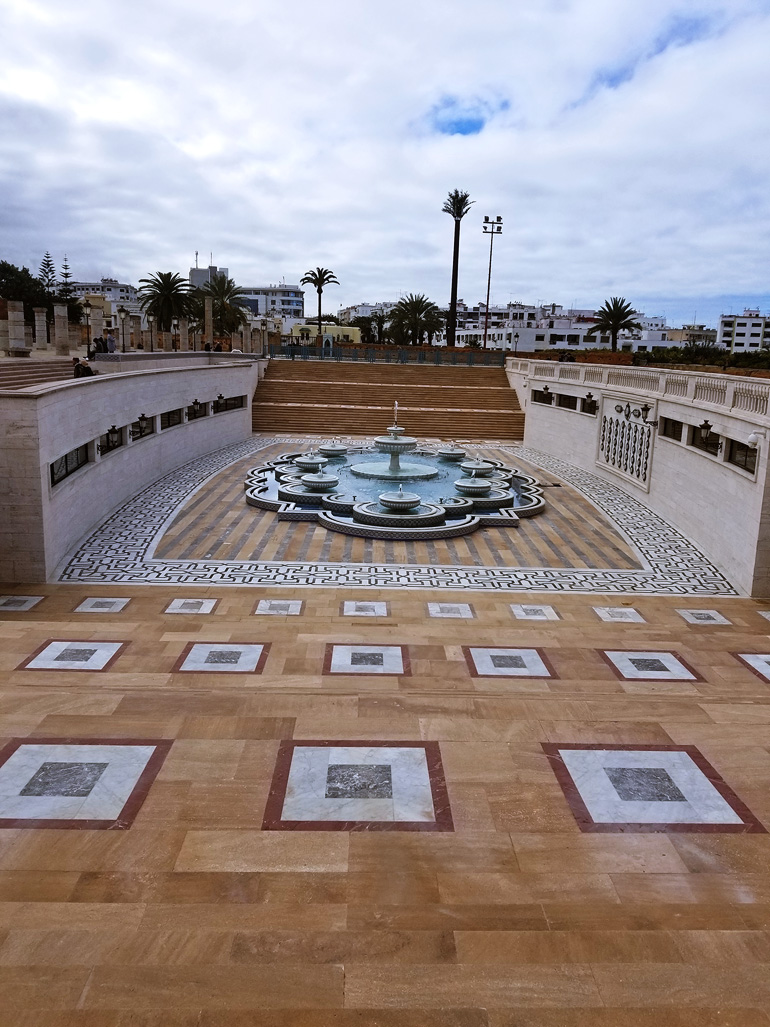
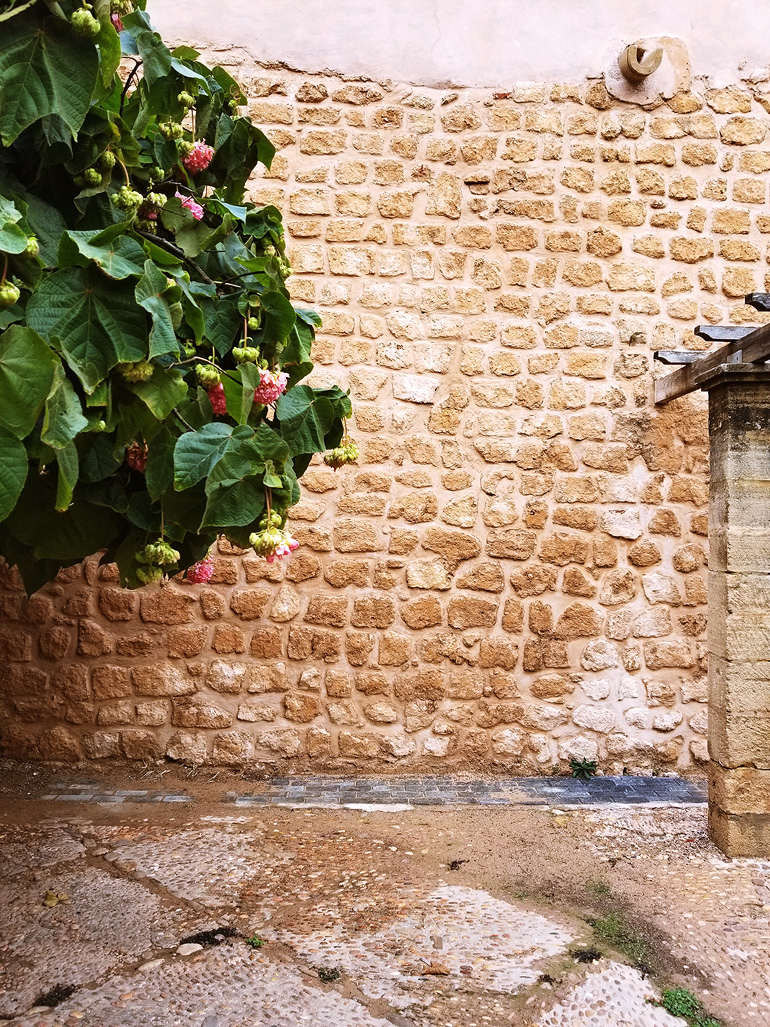
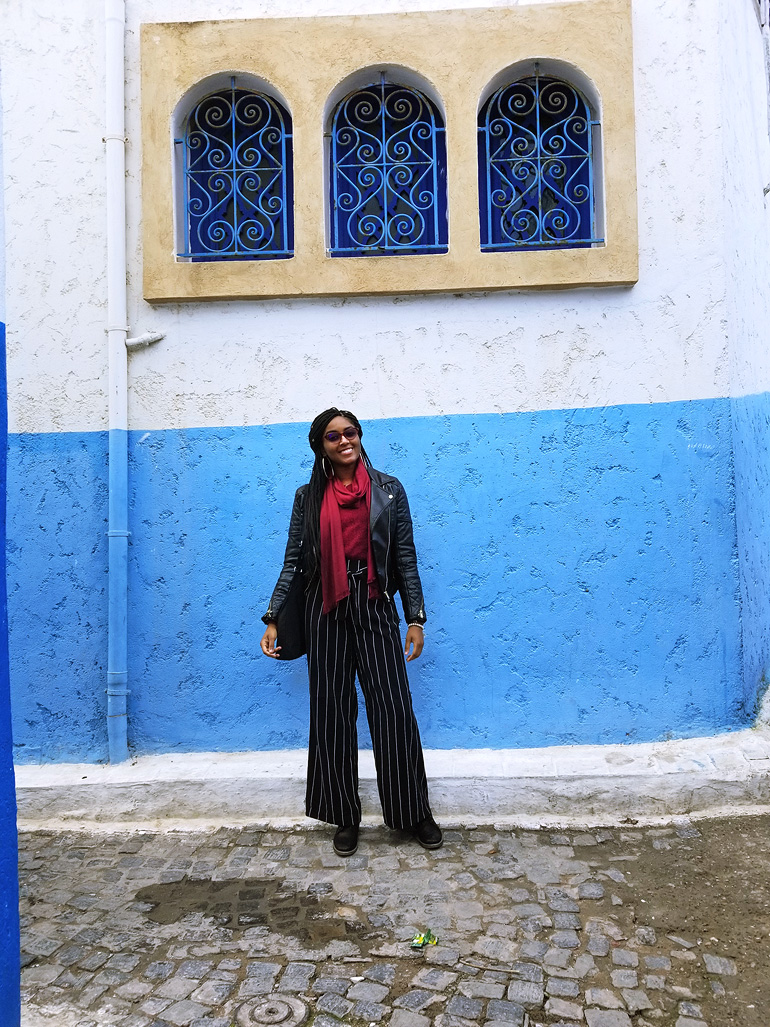
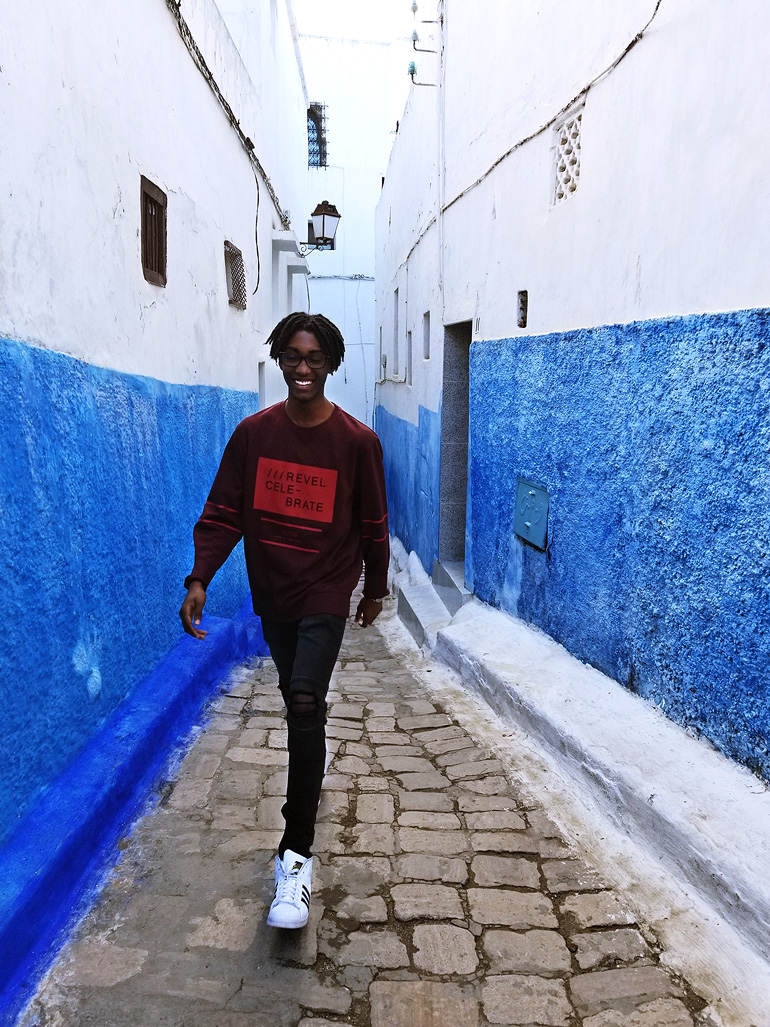
Rabat is another beautiful city in Morocco. It is also unique. One part has the Parliament building and pretty avenues lined up with shops and cafés. Down a few blocks and closer to the shore are these blue mazes lined up with artisans and shops. We were so lucky to have connected with a lovely professor from Morocco. She gave us a wonderful tour.
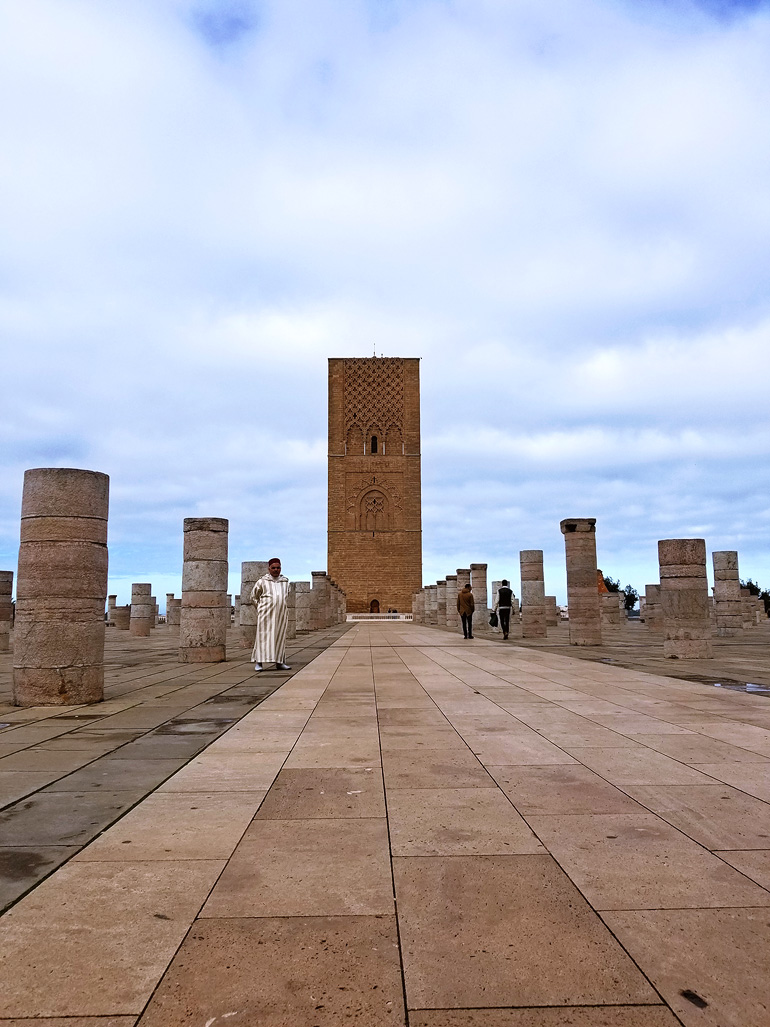
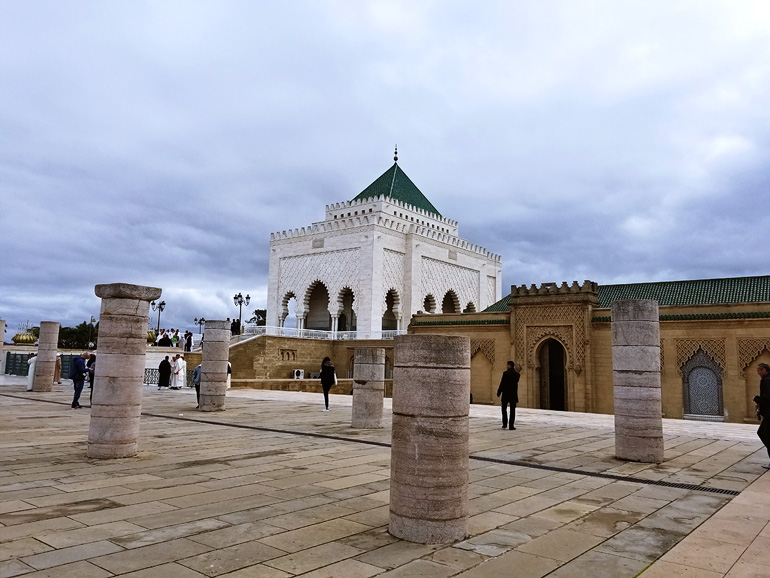
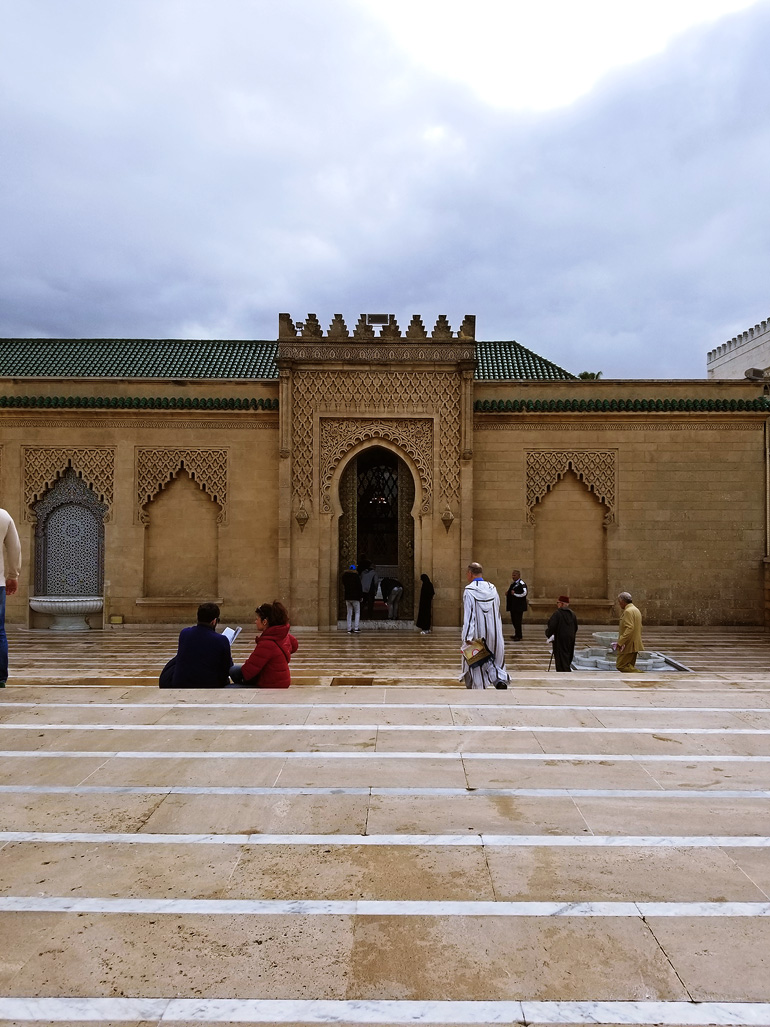
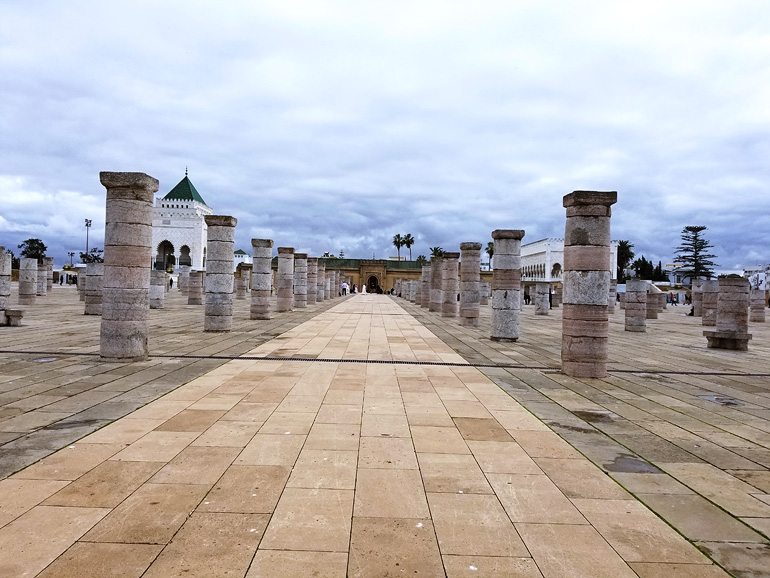
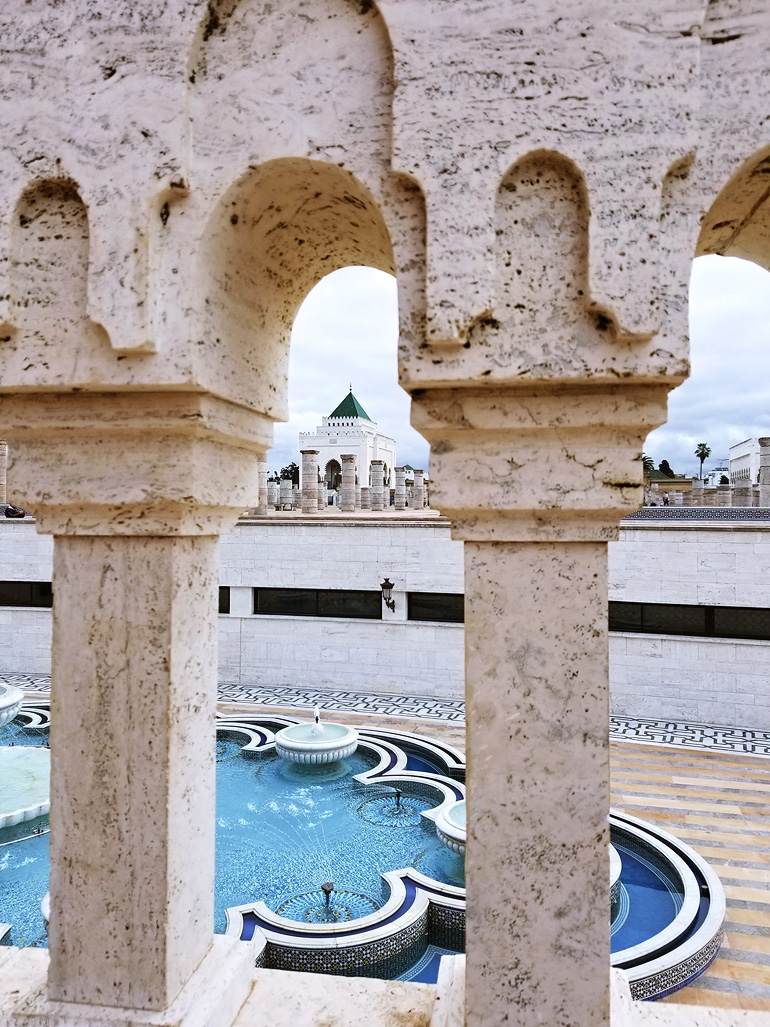
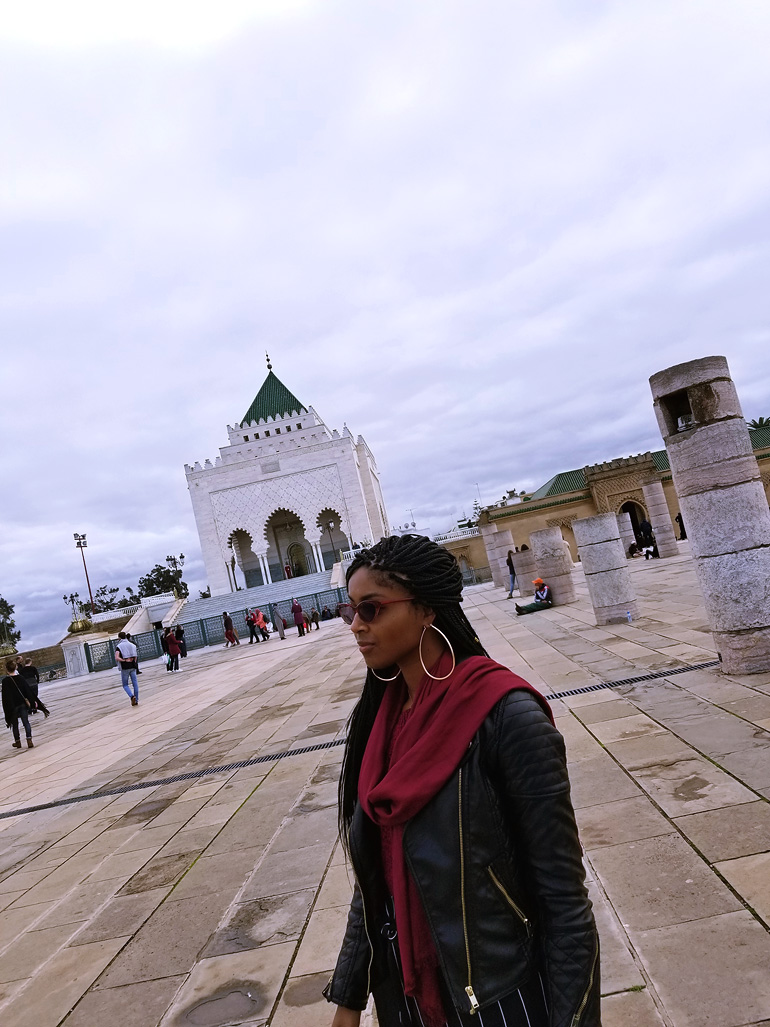
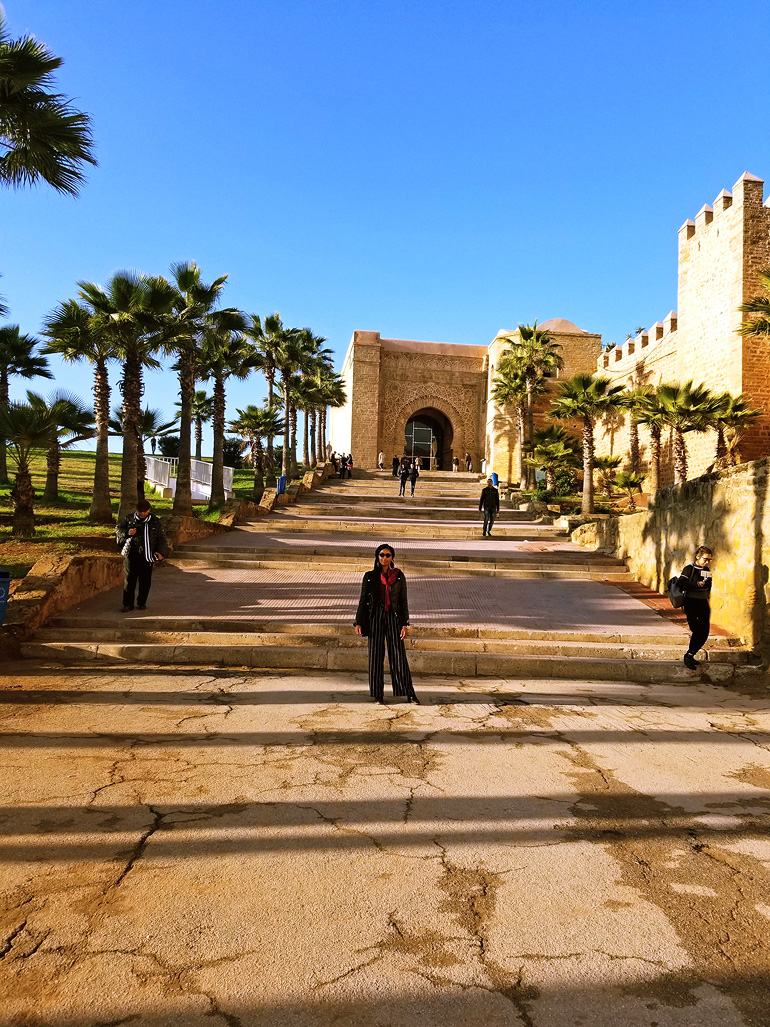
The Hassan Tower was such a beautiful and somber place to visit. The guards on horseman at the entrance plus the tower and columns are very impressive. The call for prayer occurred while we were there and it was interesting to observe people come together to pray. Historically, the Hassan Tower is an incomplete mosque that was intended to be the largest minaret in the world. Construction began in 1195, but stopped in 1199 after the Sultan died. The tower stands 140 feet tall.
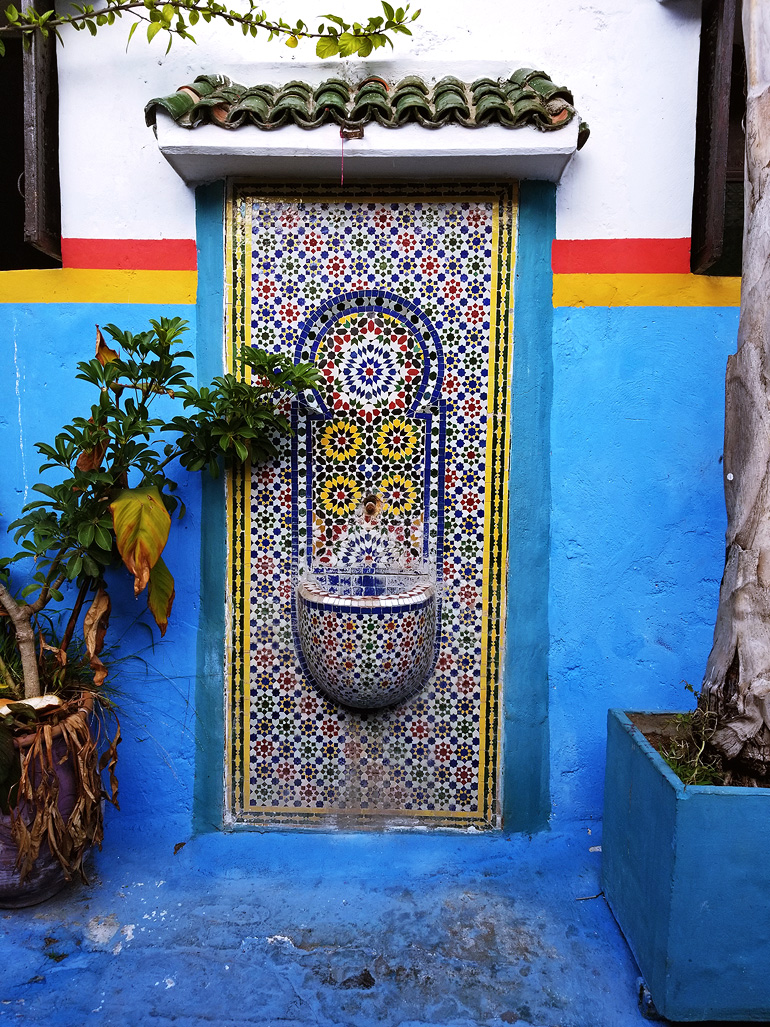
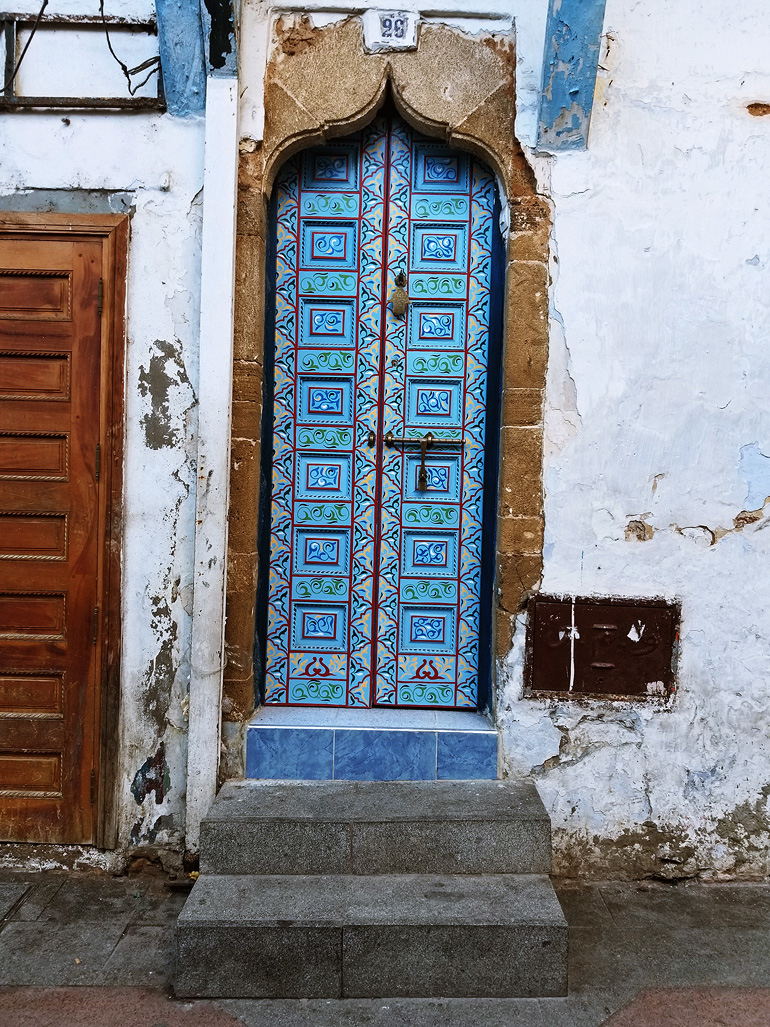
Kasbah des Oudaias is the blue maze in Rabat. Filled with artisans, shops, and cafés, it makes for a really beautiful walk. I could not get enough of all the ornate doors and fountains and tile details.
Ouarzazate
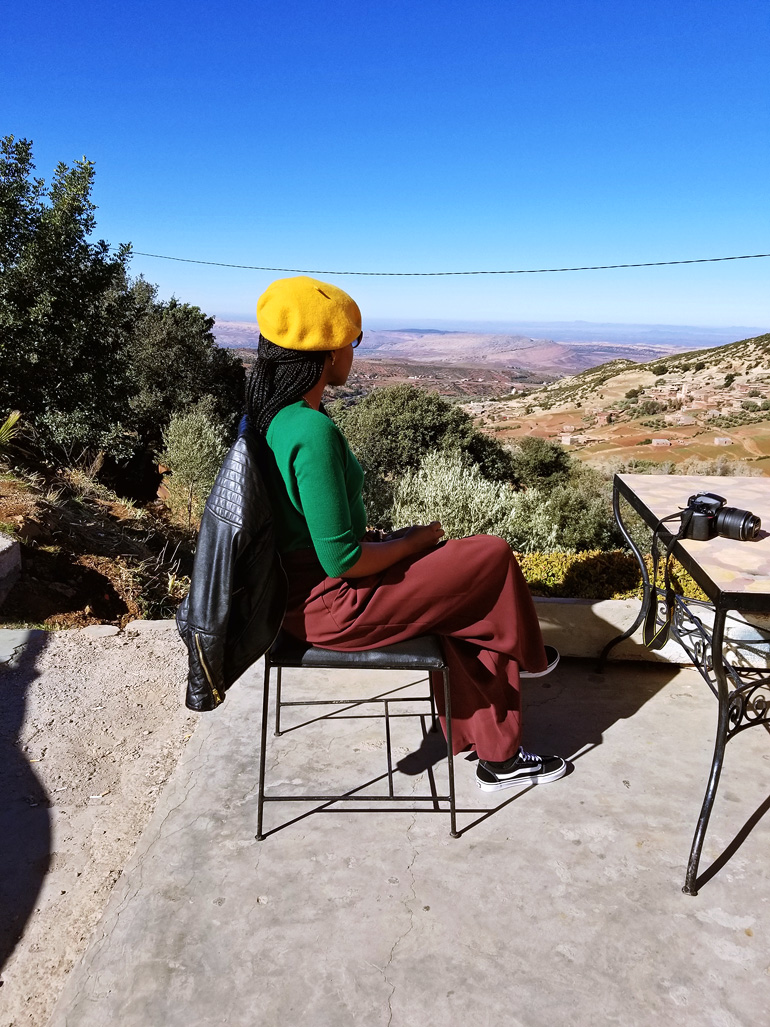
Driving up the Atlas Mountains really looked (and felt) like a secret agent movie. The road weaves around the mountains with sharp turns and steep cliffs. The views were absolutely breathtaking.
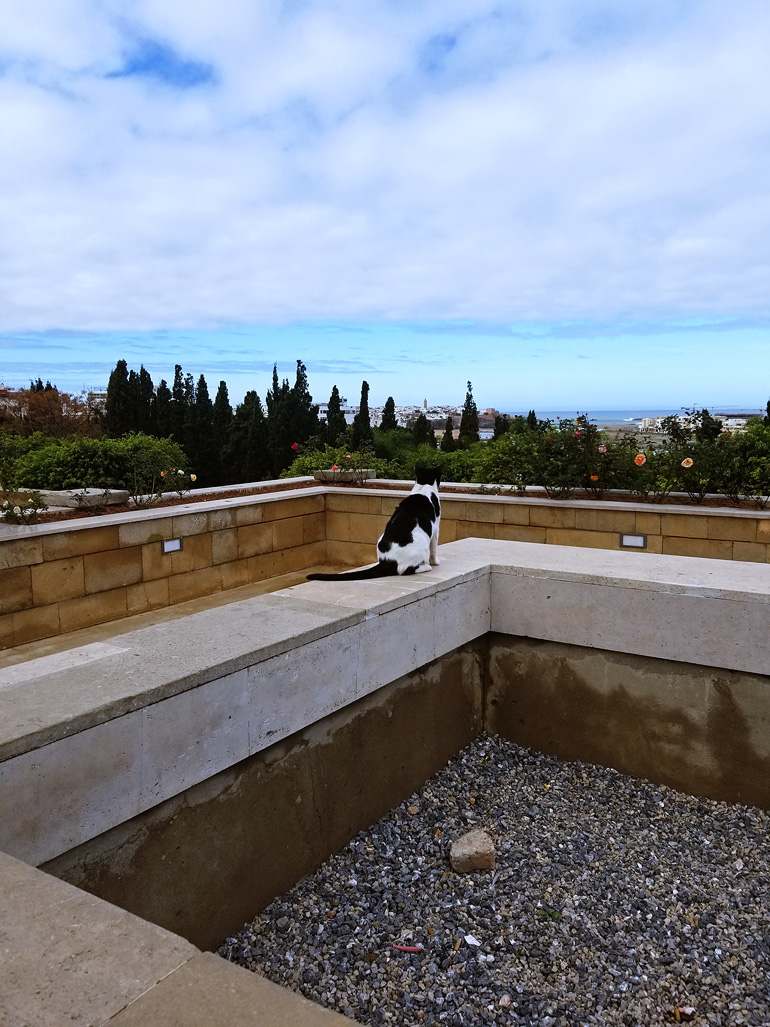
I also noticed something. Cats run (or protect?) the cities and dogs live solely in the mountains. I did not get a chance to ask whether this was done deliberately, but I think I might be on to something.
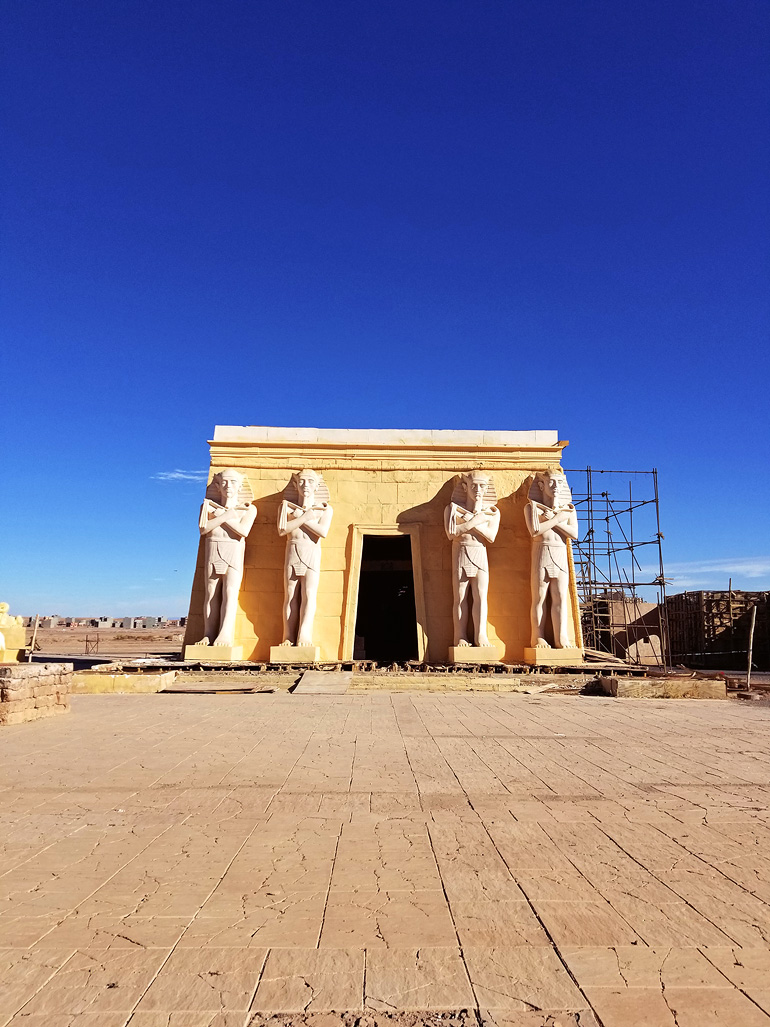
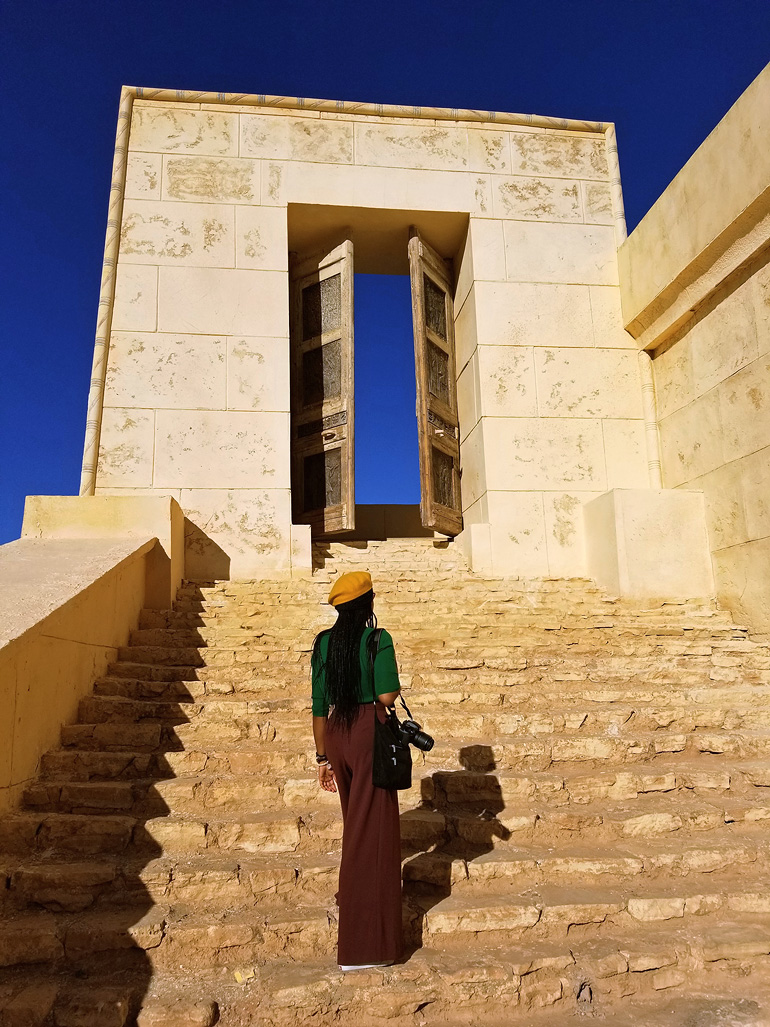
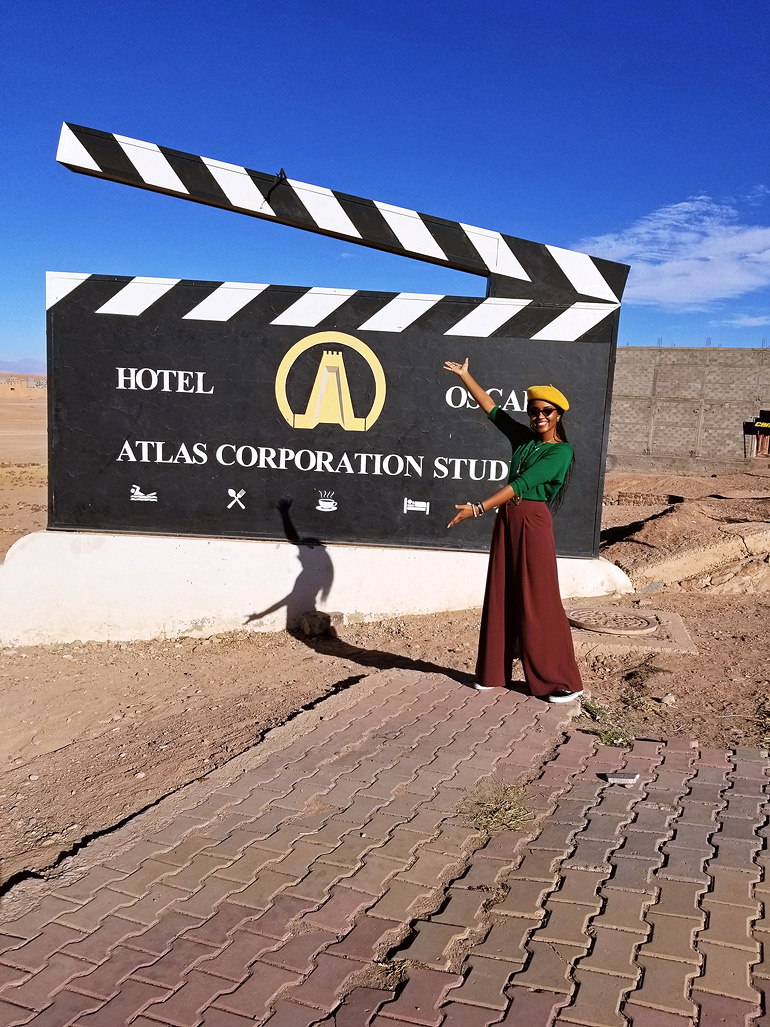
Atlas Corporation Studios is a film studio in Ouarzazate. Lawrence of Arabia, Cleopatra, Gladiator, Kingdom of Heaven and The Mummy (just to name a few Hollywood titles) were filmed there. The city is built like a movie world. There are film motifs adorned on every street intersection. Almost everyone who lives there has played an extra in a film. There is even a hotel named after Oscar (the award).
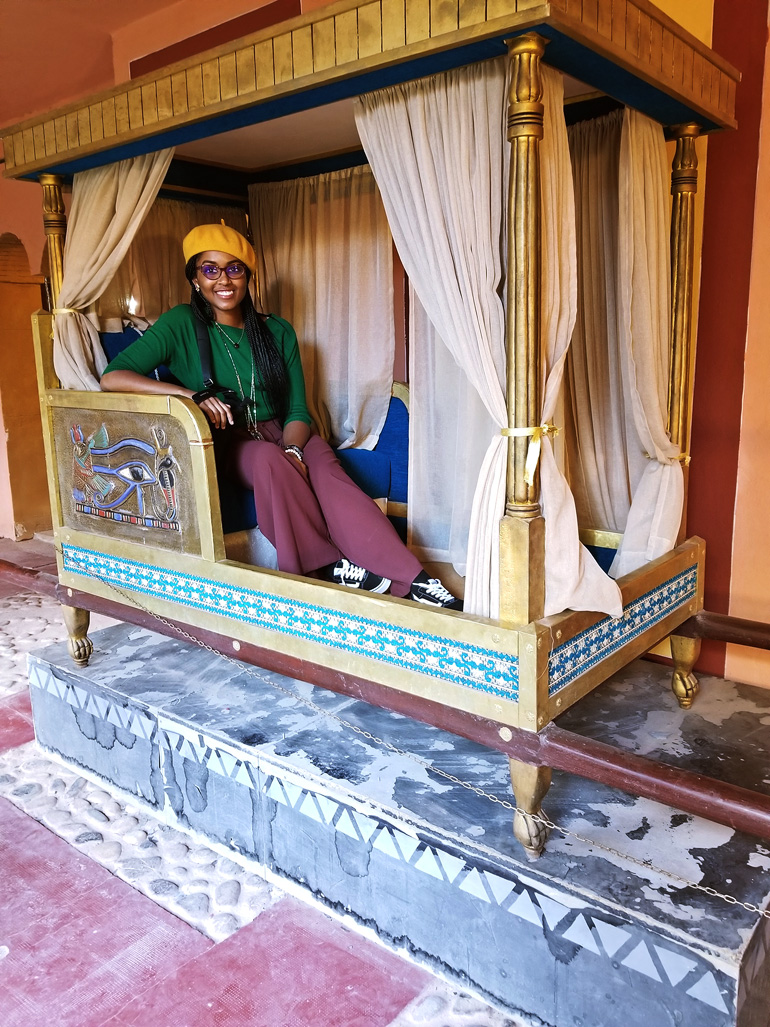
It is the largest film studio in the world, measured by acres, which is mostly desert and mountains. It also has a cinema museum that features more sets. I really loved the camera room. They had film cameras ranging back to Charlie Chaplin through to today. It was so cool!
As cool as this all was, it seemed bitter-sweet. It felt like everything was built and set up for an abundant industry, but the party never showed up. It felt more like a historical landmark, even though they are open for business. Apparently there is more competition for desert scenes…the recent Star Wars movie was filmed in Tunisia (not space). But it does not seem as if African filmmakers are using it much. I am not sure if this depends on politics or funding or a combination of both, but I felt like it is a beautiful studio with a lot of potential that is not being used to the fullest. Nonetheless, they have done very well to preserve the history of film here. I loved it.
Travel Tips
Now that you are convinced to visit to Morocco, let’s talk about some tips. I did a lot of research to prepare for my trip, from required travel documents to best places to take photos. In particular, I was looking for information about women traveling to Morocco. Even though Morocco is accepting of all religions, I understood it was a majority Muslim country and I wanted to respect the culture.
I chose to pack a wardrobe that was modest in accentuating my curves or skin. From what I could see, what women wear in Morocco ranges from traditional robes to modern jeans. However, those wearing mini skirts or crop tops tend to be expats. Everyone we interacted with, regardless of gender, were polite and respectful. Funnily enough, the only time someone called out to us was in the Souks in Marrakech, when a man called us The Obamas…which we all know is a compliment, so that was cool.
Of course, I also used Instagram for research and inspiration. The posts I found helpful in planning my trip, in terms of what to see and do, were from Monroe Steele, Visiter L’Afrique, and Spirited Pursuit.
In Marrakech, you must also visit and experience Chez Ali. It is a dinner and fantasia show that is incredible. The food was delicious, the location is breathtaking, and the entertainment is delightful.
The souks in Marrakech are also fun and you will feel overwhelmed by all the beautiful craftsmanship. Due to traveling with a carry-on as my main case, I bought smaller things. However, there are some stores that offer shipping, which is very convenient.
Overall, I really enjoyed my trip. It was so exciting and refreshing to explore and observe such a beautiful country. There is so much I still would love to see, which is why I will most likely be back. I would highly recommend adding Morocco to your travel list.
Where have you traveled that you absolutely loved? Would you visit Morocco? Let me know in the comments.
Also, remember to connect with me on Twitter and Instagram. I would love to hear from you.


















 Dagny Zenovia