Category: Social Issues

  • Dear Future Owner of Neverland

    Dear Future Owner of Neverland

    Neverland Ranch is up for sale for $100 million and I think it should be considered a historical landmark. I am not only referring to the location, structure, and previous owner. This place is a prime location to maintain and further Michael Jackson’s legacy.

    Michael Jackson bought it in 1987 for $19.5 million, which is approximately $41.1 million in 2015. He transformed the ranch into an amusement park and zoo with a tudor-style home. In 2008, Colony Capital LLC bought a $23.5 million note on Neverland while Michael Jackson and his estate were planning to sell it. Subsequent to his death, they have restored the home and ranch to be ready for sale. According to Colony Capital LLC, the ranch is zoned for agriculture and would require approval to be changed into a tourist attraction like Graceland in Memphis, Tennessee.

    As an individual who values cultural history and recognizes the importance of respecting its legacy, I have a few recommendations for what the new owner of Neverland should do with the property.

    1. Turn Neverland into a Performing Arts Academy

    Combining the King of Pop’s message of love, resilience, and creativity plus his never ending concern for peace with a curriculum to enhance future generations academic experience sounds like the perfect plan for world moonwalking domination. In addition to courses for music, art, fashion, theater, and film, the curriculum could also include the history of black performance, Michael Jackson philosophy, and creative-prenuership. Some people recognize the endless potential behind all the work Michael Jackson left behind to study and interpret. For example, Marc Anthony Neal taught a graduate course about Michael Jackson and the black performance at Duke University, which I wish I could have attended. Zack O’Malley Greenburg wrote “Michael Jackson, Inc” illustrating the business side of an icon, which I have included in my summer reading list.

    I am not sure yet if this school should be only for grade school students or be a general institution of learning that all ages can participate in. Granted, there are a lot of costs to factor in. Certain taxes, licenses, accreditations, and regulations need to be adhered to. Faculty and staff will be needed. I have not personally visited Neverland, but looking at pictures and a map it seems far away from town. So we would probably need an MJ school bus as well.

    2. Turn Neverland into a Museum + Theme Park

    Over the years I have felt saddened and concerned hearing about Michael Jackson’s stuff being auctioned. What use do those buyers have for a painting of Michael Jackson dressed like Napoleon, or one of his costumes, or a Peter Pan statute, or his tour bus trailer, or a piece of his ornate furniture? I am not sure if any of his personal writings or sheet music was included in the auction, but if it was, what use is it in someone’s private collection? I do commend those who bought a large amount of his stuff in order to keep it safe (hat tip to Lady Gaga).

    Neverland could be the Michael Jackson Museum. Renovate parts of it to have display rooms, some “this is where Michael wrote or composed music” rooms, and interactive rooms. The display room is where you have things in glass cases and seating here and there for people to learn about different aspects of Michael Jackson’s business. The studio, dining room, and library can be used as rooms to showcase his taste in home decor and give visitors a glimpse into his home life without being too invasive.

    The interactive room has a few options. I initially had this idea when Michael Jackson was still alive, so it might seem creepy now, but I will share it anyway. I figure we have the technology to have a hologram as the tour guide. The museum could have a realistic looking hologram of Michael Jackson as the tour guide. Each season has a different era tour guide. Spring time could have a Jackson 5 MJ and Fall could have Thriller MJ. The hologram could also be the Jackson 5 cartoon and the HIStory statue. The hologram would walk with the group of visitors, with a real guide to make sure everything works, and interact with the visitors by telling stories and answering questions. Another option is an interactive music video room. Using the technology from virtual video games, have visitors either wear goggles or a helmet to transport them inside one of Michael Jackson music videos or his smooth criminal video game. Visitors have to dance to win the game.

    Of course there will be a gift shop with MJ trading cards, jackets, and silver gloves as well as books, music, and videos by Michael Jackson and others inspired by him.

    Outside, visitors could use the train and rides if they purchase the ticket for the full package.

    I hope the new owner will recognize the value of their purchase and be creative in how they use it. What do you think the new owner of Neverland should do with the property?
  • How To Be An Ally For The Oppressed

    In the wake of the tragedies in Ferguson, I would like to ask how I, as your friend, can be an effective white ally? What does it mean to be an effective white ally? How would you like to see your white/privileged friends stand up for racial equality and justice?

    A cogent question by a friend on Facebook that stood out among the countless posts on my newsfeed praising protestors, condemning protestors, or avoiding the subject all together. I noted the responses from her other friends, mentioning the importance of learning history, sharing personal stories of discrimination, and claiming white privilege will always be blind to this issue. I decided to contribute to the conversation a narrative that has not received many headlines and seems to be missed in most discussions.

    There are many points to make regarding the solution to this issue, but since the question and the trendy topic at the moment is police brutality, I will focus on that branch of oppression. Here, let us engage in two directions to begin making progress: history and understanding.

    History

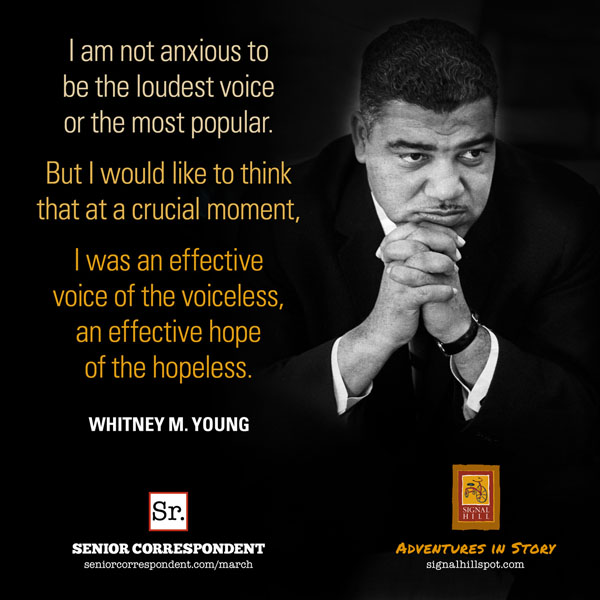
    You have to focus on the history that was omitted from text books. Before, this information required major effort to find, but now you would be surprised how easily accessible it is. One particular moment in history that most are aware of but might not know the back story of is the Civil Rights Act of 1964. I attended a documentary screening last year for “The Powerbroker: Whitney Young’s Fight for Civil Rights” by Bonnie Boswell that discussed an aspect of this Act that I did not know and I think makes a great connection with what is happening today.

    Whitney Young Jr

    When President Johnson was considering signing the Civil Rights Act into legislation, there were a number civil rights leaders meeting with him at the White House to convince him to sign it. Their approaches can be divided into two categories. Dr. King and others would emphasize the importance of black lives, families, and suffering they endured. Even though President Johnson might have agreed with these sentiments, it did not push him to sign the Act. Whitney Young, Jr. on the other hand emphasized the negative effect a lack of the Civil Rights Act would have on everyone including businesses and communities that are not black. Thus, we can celebrate and praise the Civil Rights Act of 1964.

    I mention this aspect of history to draw a connection with the recent protests, campaigns, and hashtags for “black lives matter,” “hands up don’t shoot,” and “I can’t breathe.” Even though all of those lines are true and recognizing the pain and exhausting existence blacks endure everyday is important, it does not illustrate the bigger picture. Not enough people and hashtags focus on how police brutality negatively effects everyone in this country. This is not a black problem. This is not a black versus white problem. This is an American problem and as Americans we should all be very concerned at how this issue has continued to escalate and not tolerate a system that does not treat everyone equally.

    2014 was not a good year for American police departments in terms of media coverage. I am not sure if there has actually been an increase in their brutality or they just got caught up in headlines more frequently that year, but if the people who are hired to protect citizens are always portrayed as monsters…how can we maintain a healthy society? This is not just about the countless number of black boys, girls, men, and women who are murdered by the hands of police and the families they leave behind. Do you want to live in a country where everyone is scared of a badge? A country where everyone is suspicious and scared of blacks? A country where everyone is walking on egg shells to prevent another riot? If we are not careful, we could be heading further in that direction. I commend the few millionaires who donated money to police departments to give to random citizens in cash or christmas presents, but that is not enough to solve this issue. (As an aside, the fact that millionaires stepped up to do this further validates the boycott of Black Friday. Police brutality is bad for business. Your spending power makes more of an impact then any sit-in, die-in, sign-in, etc. Remember that.) I know not all police men and women are monsters and I would like to believe not all of them would shoot and kill me within a second, but we cannot be naive to the fact that some badges, guns, and authority are given to people who truly hate those that are different from them.

    To the non-black person who genuinely wants to be an ally to the oppressed, I recommend you view the documentary I mentioned above and read about Whitney Young, Jr’s impact on the Civil Rights Movement. Then use that knowledge to explain to your non-black friends how this issue of police brutality directly affects their lives to entice them to help stop it. It’s almost like translating it into another language. Viewing the tweets under #blacklivesmatter can help see what the conversation needs to focus on with out dominating it with ignorance. However, also understanding how this affects you as a non-black individual, not as a white person feeling guilty, in realizing how it can and will damage your privileged reality, is key.

    Stand In My Shoes

    For some, understanding is best acquired through empathy. If, for one day, you could walk in a black persons shoes, you could get a glimpse to how exhausting this life is. I do not have the means to provide such an experience, but John Howard Griffin wrote a novel in 1959, “Black Like Me”, that can provide some insight. Griffin disguised himself as a black person and documented his experience. I think it would be intriguing if someone conducted that experiment today to see how much progress has actually been made, but it would take more resources to illustrate the numerous groups and characters within the black community now compared to the 1960s. Nonetheless, this novel is a good start in understanding the experience of a culture you are not a member of. In addition to listening to a black person’s experience with discrimination, your discomfort with the topic should inspire you to not remain silent but to take an informed stand.

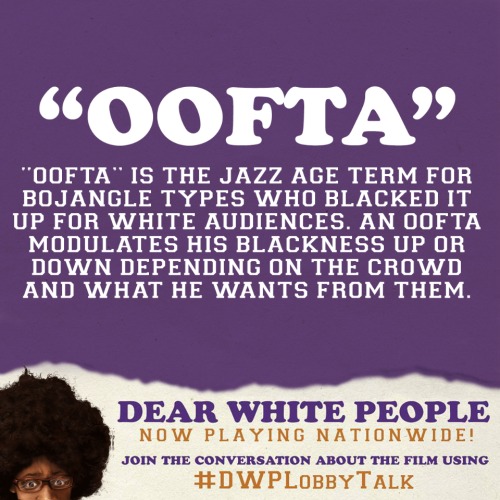
    Another film I would recommend is “Dear White People.” The title might give a certain impression, but the film is not a guilt-trip blame narrative. It is a witty satire that provides insight and social commentary to what the black experience is in the current form of racism. It is packed with a lot of conversation points, but one key message is to respect others’ experiences and not disregard them by snapping back about how long ago slavery was. The film also illustrates how blacks internalize and react to this question of identity in and out of the black community in a variety of ways. All of those experiences are worth listening to.

    There is also an article, “The Talk: How black parents prepare their young sons for life in America” by Bijan Stephen, that touches on the painful balancing act parents engage in while raising black children in America.  Black children learn about the dark side of being black in a reactionary way through interactions at school. It is almost like a form of losing one’s innocence. You also feel a sense of helplessness knowing that there is nothing you can do to protect a black child from any pain or danger they might face outside of your home. This realty adds to the sadness of losing a black child by a police bullet, regardless if you knew them personally.

    There is no simple solution to oppression in America because it is so engrained in our history. Those in power and older citizens cannot change. However, the youth and young adults can stop manufacturing racial oppression for the generations coming up. For now, to be an ally to the oppressed, you must listen, respect their experience, and acknowledge their pain and existence.

    I know this discussion could branch off in many directions, but these are the two points I wanted to start with. I hope this was helpful. Have you watched either films or read the novel I mentioned? Are there other points you would like to elaborate on? Let’s have a conversation.

  • Too Much Ivory. Too Little Coverage.

    Source: naturepl.com/John-Downer/WWF
    Source: naturepl.com/John-Downer/WWF

    Originally written December 2013

    The resurgence of poaching in Africa needs to be re-introduced to the West to portray the magnitude of the threat in having a world without elephants or rhinos. Unfortunately, there are not many journalists covering this important story. The Western media maintains a distant narrative on this issue. Focusing on numbers and corruption limits their audience reach to animal or environmental conservationists. Media outlets should focus on raising awareness among all viewers by shifting their narrative to one that is more personal, comprehensive, and accurate.

    To portray this story with a personal tone, journalists should make a point to focus on the experience of animals that are suffering.

    Keith Lindsay is a researcher for the Scientific Advisory Committee for Amboseli Trust, an elephant research and conservation project based in Kenya, and understands the effects of poaching on elephants at an individual level. “[It] is pretty devastating,” said Lindsay, “they take the biggest and oldest individuals first because they have the biggest tusks, which messes up the whole social structure of the elephants. The older animals are the ones who are wiser and learned lessons about dealing with people. When you remove them, conflicts with people will increase as well.”

    Even though they have not experienced as many losses as other conservation parks, researchers at Amboseli Trust have noticed the disruption of social and reproductive strategies among elephants due to the resurgence of poaching.

    “If elephants are wiped out,” said Lindsay, “the whole conservation movement loses an aspect for their reason to be.”

    For viewers to understand the bigger picture behind poaching in Africa, journalists need to provide a comprehensive narrative that explains how this issue effects and involves a variety of factors and people.

    “We’re losing diversity with a flagship species that is usually used to outline the parks,” said Dr. Thoralf Meyer, lecturer in the department of Geography and the Environment at the University of Texas at Austin, who also lived and worked in Botswana prior to his work at UT.

    “The trade of illegal wildlife product, according to my knowledge, is the third biggest illegal economy in the world after the illegal sales of weapons and drugs,” said Dr. Meyer. Thus, the militarization among poachers and rangers has become the main focus for resources. “Public money is forcibly spent on anti-poaching operations,” said Dr. Meyer, “but we also shouldn’t forget that a lot of money should actually be spent on efforts to eradicate the demand. So at the moment we’re just fighting the effects, but we’re not solving the problem.”

    The biggest demand for ivory is traced to South East Asia, in particular China. It has been reported that ivory and rhino horn is used in South East Asia for jewelry and traditional medicine.

    “Basically,” continued Dr. Meyer, “other nations are destroying other people’s heritage.” Due to the level of poverty in these rural regions, it is relatively easy to recruit poachers for much less then the price ivory is sold for. “I don’t think these people want to poach,” said Dr. Meyer. “I think this is done for a different reason, simply for the fact that they need money for whatever they need the money for. These are some big issues for countries like Zimbabwe, Botswana, and South Africa to handle efficiently.”

    Additionally, avoiding inaccuracy requires starting a conversation with animal and environmental conservationists who have either worked in the region or with government organizations that can speak to how the international community must collectively pay attention to this issue.

    On November 14th, the US Fish and Wildlife Service (FWS) publicly denounced poaching by crushing six tons of seized ivory for the world to see. Dr. Richard Ruggiero, the chief of the Africa branch for FWS, said they “intended this event to make a strong statement that the government of the US is taking a stand and confronting the ivory crisis firmly with our full attention.” The pieces that were crushed included a large collection of elephant tusks, carvings, and jewelry.

    “Efforts should be focused on three main areas,” noted Dr. Ruggiero, “securing the habitat, breaking up the trafficking networks, and the market demand. There is not one cure for this ailment.

    “You need a lot of money,” said Dr. Meyer, “man power, technology, and a lot of intelligence as secret service information to do this effectively.” The trafficking networks could be affected at the grassroots level. “ Hopefully we can make these communities somewhat aware of these poaching problems,” continued Dr. Meyer, “so if they see something suspicious they will point it out or to educate them in a way so that they actually see poaching as a threat to themselves that threatens their economy or heritage.”

    “We need education campaigns combined with good evidence based data,” said Lindsey, “to show that the way they are trying to change opinions in South East Asia is actually having some effect.”

    “The ivory crisis is a global problem. The solution must also be global,” said Dr. Ruggiero.

    Of the few media outlets that have covered this topic, the personal, comprehensive, and accurate tone is lacking in their stories. This small cohort of journalists, who most are out in the field covering this story, are not accessible by phone or e-mail, which also effects their story’s tone and reach.

    The New York Times and the Guardian are two of the few media outlets that have published articles reporting on this issue. The New York Times published “The Price of Ivory” in 2012 as an online multimedia series to curate all the articles and media their reporters post on this topic. Jeffrey Gettleman, the New York Times bureau chief for East Africa, is the main journalist for this series. In these stories, Gettleman illustrates the green jungle in Kenya, armed rangers in the Democratic Republic of the Congo, and the underlying theme of corruption throughout the continent. The Guardian published two new blogs – “Nature Up” by Adam Welz and “Africa Wild” by Paula Kahumbu – in March of 2013, which also primarily portrays the facts and corruption narrative. These two publications do not provide their readers with a comprehensive narrative to gain a better understanding or a personal tone to provide a better connection.

    An example of an encouraging attempt to cover this story is Journeyman Pictures’ documentary “Where Have all the Elephants Gone?” for ABC Australia. Even though they feature conservation rangers, elephant orphanages, and animal traffickers, the film could have gone a step further in giving insight on where the demand and profit for ivory is coming from. Again, corruption and poverty were the protagonists in their story, with elephants casted in a supporting role.

    Finally, poaching in Africa is a big and complex issue. Thus, it is even more important for the western media to pay close attention to how it reports this tragedy. The resurgence of poaching in Africa is not just about corruption, facts, and distant politics. This genocide against elephants and rhinos is about the future of our planet, the straining relationship between the animal kingdom and human beings, and the undeniable source of demand leading to criminal violence against both animals and people.

  • Self Esteem vs. Instagram

    “This culture of hair crushes, girl crushes, hair twins, etc… may be causing more damage than good. I often think about the women, the ever increasing amount of women, who create entire accounts strictly dedicated to highlighting others’ good hair days – but behind the good intention does that woman love her own beauty?” – Shannon T Boodram

    Shannon T Boodram, author, TV host, and photographer, posted an insightful article that I think really spoke to the dynamics of beauty in an insta-world. The line between surrounding yourself with inspiration for what you want to look like and obsessively viewing photos to fuel your self-doubt can be very blurry. Shannon explains how important it is to be aware of this distinction and how easy it is to get glued to your Instagram feed. She also filmed a clip “How To Look Like Me TAG,” which I think is brilliant and funny. She recorded a reverse beauty tutorial to show what she looks like without any beauty products. Funnily enough, most of the comments for the article claimed that since she looks beautiful before and after, it does not count as a viable example of natural beauty. I beg to differ. Her video shows the following:

    -Confidence to show the public what she looks like without beauty products and admit she uses acne medication

    -Beauty is unique and shines with individuality. Make-up and extensions are only used to accentuate what you already have

    I think the fact that there is no drastic difference between the two images clearly illustrates her point about accepting your natural beauty. Do you agree? Referring back to her article, do you think the way we use Instagram is at fault? or is it something deeper? Let me know in the comments!

  • The One Sided Mirror: How Occidentalism Missed The Boat

    The One Sided Mirror: How Occidentalism Missed The Boat

    missed_the_boat

    To provide insight on why the West has enemies, Ian Buruma and Avishai Margalit’s “Occidentalism” portrays an enemy full of jealousy and envy who hates capitalism and imperialism. Unfortunately, “Occidentalism” was written from the Western perspective and fails to reflect on the roots of this resentment.

    Buruma and Margalit mention that contemporary Occidentalism is often focused on America and that “anti-Americanism is sometimes the result of specific American policies…which is normally used as shorthand for U.S. imperialism. [But] Whatever the U.S. government does or does not do is often beside the point.” Ironically, what the author ignores is the collateral damage of U.S. policies that have created emotional victims whose semi-distorted image of the West cuts their wounds deeper.

    “Occidentalism” feeds into the West’s perception of the “other” as Russell Jacoby explains in “The Terror from Within.” “We prefer to imagine threats as emanating from aliens and foreigners” due to “small variations” that “elicit more rage because they imperil identity.” “Occidentalism” hovers above this reality and does not portray the whole picture.

    They consider the “intellectual trap to avoid” as the “colonial guilt,” with the fact that “European and American histories are stained with blood, and Western imperialism did much damage.” The West is not required to apologize for the gallons of blood on their hands or to turn a blind eye when tragedies occur around the world. However, it is naïve to presume the only basis for this Occidentalist hatred is differences in values.

    Some Occidentalists are not ranting about the evils of capitalism or the perceived lack of heroism in the West. Instead, they want to know why a drone dropped a bomb in their backyard or why their village was wiped out with a weapon that was “made in U.S.A.” It is this emotional toll that is the basis of hatred that can lead to violence if their image of the West follows what “Occidentalism” defines. However, the notion that Occidentalists solely contemplate how to rid the world of barbarians is misleading. Most are reacting from the viewpoint of a victim from a recent incident or, unfortunately for the West, from a long list of tragedies and historical biases.

  • Pancake Sponge Brain: The Internet and Digital Media Stretches Us Thin and Feeds Wisdom Depending on Who Is Using It

    Source: johnpiippo.com
    Source: johnpiippo.com

    The Internet and digital media have revolutionized the way we access the news. Ironically, it has hindered full exposure of the truth and has assisted in building the most comprehensive source of knowledge. To what extent this medium is a curse or a blessing primarily depends on those who utilize it.

    The most obvious protagonist in this dynamic play is Google. In “Is Google Making Us Stupid,” Nicholas Carr speaks to the fact that the brain can reprogram itself and adapt to every technologically development. Gradually, we have evolved from reading in-depth to only skimming. However, Google believes the human brain is an outdated computer that needs a faster processor and bigger hard drive. Carr introduces the pancake-people as we are spread wide and thin as we connect and skim through a vast network of information.

    The skimming trend leads to the concern of maintaining context and diversity as a priority. According to Michiko Kakutani in “Texts Without Context,” one of the main issues the Internet causes is cyberbalkanization. Since people can filter everything they view, they tend to not encounter other people or ideas that are different from their own, which reduces a sense of consensus and common ground.

    Switching our focus to those who produce the material we skim and filter, J. Hebert Altschull in “From Milton to McLuhan: The Ideas Behind American Journalism” points out that journalists are confined by the time and space of the news production system and tend to avoid reflecting on the fundamental ideas of their work. Thus, a lack of context is tolerated to meet a deadline and serve readers with no time to fully view their work.

    In The Guardian article “We Need a New Era of Digital Journalism,” Frederic Filloux explains that journalism is in need of an evolution to cater to today’s readers who “want to be taken from A to B, with the best possible arguments, and no distraction or wasted time.” A possible solution to this is to create a new journalistic genre for digital media.

    Thus, a form of digital media etiquette should be required for both producers and consumers of news to insure that the truth behind issues and events are clear and comprehensive. For example, the Guardian posted an article about Ghana’s first farmer’s market, implying that organic and local produce are becoming a trend due to Ghana’s growing middle class and are being hosted in markets for the first time. The article failed to mention the long history of food markets in Africa or how African farmers are undercut in the global economy or the recent health issues Ghana has faced due to its desire to compete and keep up with globalization. All of this information the article lacked are easily accessible via the Internet and digital media, but could possibly get lost beneath our skimming and filtering habits.