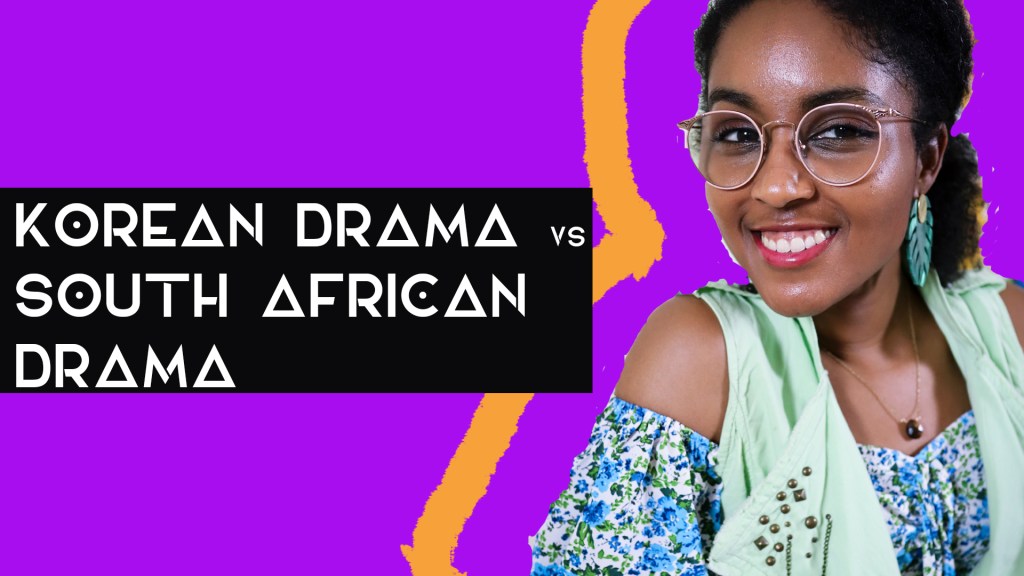
Let’s compare K-Dramas with South African dramas as an example of how to pack more in our stories. In this video, I am sharing what stood out to me in the Korean series Crash Landing On You and Misty plus the South African series Queen Sono and Blood And Water. I watched each of these series on Netflix. I loved all of them and want to see African films do more in character development and cultural showcase.
Have you watched any of the series I mentioned? What did you think of them? What would you like to see more of in African film? Let me know in the comments. Let’s continue the conversation.
Also remember to reach out on Twitter, Instagram, or Facebook. I love hearing from you.
Let’s travel! I visited Morocco in 2017. Even though I shared photos at that time, I had yet to sift through all of the footage I took during my trip. Re-living my trip while editing this video has been really fun. In this video, I share my experience in visiting Marrakesh, Rabat, and Ouarzazate.
Make sure to view my blog post To Morocco, With Love: Travel Guide for photos and details on how I prepared for the trip, what each day was like, and my tips on how to enjoy your visit.
Have you visited Morocco? Is it on your travel bucket list? Share with me in the comments.
Also, remember to connect with me on Twitter, Instagram, or Facebook. I love to hear from you.
As we continue our journey to explore and learn about Africa and its Diaspora, the spectrum of opportunities and possibilities can feel overwhelming. I like to think of the New Africa Renaissance as a mindset that is the foundation behind claiming Africa as the future. In this video, I share business opportunities in Africa, including real estate, agriculture, and tech, plus how you can find and connect to the right opportunities, including how to move, Odanna Connect, and the New African Renaissance.
Real estate is a popular investment topic across the continent. As I mentioned in the video, I feel this has two branches. One is building new cities and renovating established cities. For example, Akon City is a futuristic, cryptocurrency themed, city that will be developed in Senegal, West Africa. Akon recently announced he secured a $6 billion contract to build it. Phase 1 of construction is scheduled to be completed in 2023. For more details, I wrote about how Akon plans to bring Akon City to life on Africans On China. There is a big need for these types of projects. As Africa grows more urban, the infrastructure and industrialization needed to support that urbanization has a lot of room to catch up. Now, when I say “urban,” I do not mean building mini Houston or Paris in Africa. I mean combining technology and creativity to protect the environment, enhance the people’s well being, and modernize convenience. I am really excited to see how this becomes a reality across the continent.
The second branch of real estate opportunities is focused on residential and commercial. From what I have seen, the sales point for both of these is investment. As in, purchase to rent to someone else. That is cool. I would also suggest building and selling to customers who want to live or work there. For example, a lot of the Diaspora who is looking for real estate in Ghana or Africa do not only want rental investment. Some want to live in a neighborhood with a community of like-minded people, convenient location for groceries, business, and leisure, plus open spaces to hang out or collaborate. I am not sure yet how the after-effects of The Virus will influence this, but the fact that working from home or co-working is needed even more should be incorporated in your building blueprint. We also need to expand the “affordable” spectrum. Quality housing across the board is in dire need of fulfillment. Plumbing, electricity, and paved roads still do not reach everywhere. Not to put a damper on your enthusiasm…and I am not expecting anyone to put on a superhero cape…but, I feel the rise in innovation and development should narrow the gap between the haves and have nots, not widen it.
Agriculture in Africa has so much to offer if done the right way. Every sector of food has room for improvement plus voids that need to be filled. For example, Bountifield International invests and creates agricultural opportunities in Africa by providing tools and services for African rural entrepreneurs to efficiently process, save, and sell more food.
Tech in Africa is exciting because it is capable of supporting so many industries, sectors, and demographics while solving so many issues. Balancing culture, security, and convenience is key. One example I share in the video has to do with eCommerce. If you want to take advantage of this growing opportunity, look beyond creating a product. Infrastructure, manufacturing, inventory storage, customs, and shipping also have voids that need to be filled efficiently. This TechPoint Africa article does a good job breaking down the challenges eCommerce in Nigeria is currently facing.
Now, where do you fit in all of this? I am glad you asked.
This free ebook, “How To Move To Africa, Specifically Ghana,” provides insight and resources to understand how to prepare before you purchase your ticket and what to expect in maneuvering your new reality. The ladies behind it, Bridget and Nana, have combined their experiences as educators and entreprenuers to give you and easy-to-read guide to make your move a success.
Odana Connect is an online platform to connect and collaborate with hard to find Africans for investment, business opportunities, job opportunities, and experts in the field. At the time of writing this article, the waiting list is still open to sign up before its launch. It is by the people behind Odana Network. If you are interested in Africa, I am sure you have seen one or multiple videos on their YouTube channel showcasing African business and innovation. I am excited to see how this platform develops.
The New African Renaissance hosted it’s debut conference, virtually, in June 2020. They are creating a community to build capital for Africa’s development. Their funding focuses on building new cities, invest in startups in Africa, plus investing in education and talent accelerator programs.
Impact Hub Accra recently launched New Economy Booster, an accelerator program. They are providing resources and tools for entrepreneurs and startups, and non-profit organizations who are contributing to Ghana’s post-pandemic economy recovery.
The list above is not exhaustive, but I feel these initiatives will enhance your experience and plan as you continue your search. Regardless if you are planning to visit or move or have been living in Africa all your life, there is something here for you.
I hope you found this helpful. What would you like the New African Renaissance to look like? Comment below and lets continue the conversation.
Remember to connect with me on Twitter, Instagram, or Facebook and subscribe to my YouTube channel. I love hearing from you.
Everything the light touches is our kingdom. Yes, I watched “Black Is King” 5 million times. Yes, I watched and read the praise and criticism. Yes, we need to discuss some questions. As an art masterpiece, I loved the wardrobe, imagery, representation, and the fact that so many Africans artists got full credit and got PAID. As context for discussion, I loved how it sparked so many conversations across the royal continent and the diaspora about who can tell African stories and which stories should be told. In this video, I share the questions that I have been inspired to think about thanks to the film and the praise/criticism.
As I mentioned in the video, the film and the conversations it sparked made me think of some questions. I feel this is how Beyoncé’s “Black Is King” serves Africa and it’s diaspora.
Is Black luxury or Black excellence appropriation or repatriation?
I feel the argument for appropriation stems from the notion that wealth and success is obtained through proximity to whiteness and is performative for the white gaze. Showcasing wealth and success through an African context is judged as colonialism. I hear you, but I feel part of that has more to do self-hate, even though elitism can come into play. On the other hand, could this be a form of repatriation? As a Black culture in and out of Africa, we all know we should never visit people empty handed. I feel showcasing Black luxury or Black excellence is a way to pull reparations that have yet to be paid. To bring wealth and access to those that have been forgotten in and out of Africa. I am not saying this exactly what the film has done, but I feel this is what the diaspora can do as it reconnects to Africa. It is true that a lot of Africa’s diaspora views Africa in this lens of luxury, which can be through material things or also afrofuturistic. Just because I love Wakanda does not mean I am oblivious to the suffering that is happening in Africa. It means I hold Africa in high regard and will not allow the damage it still faces infect that view.
Must Blackness or Being Black or Being African be rooted in poverty and struggle?
This is tricky. I feel it doesn’t, but I understand why it does. The collective story is rooted in resilience, which is constantly facing poverty and struggle. Why are we quick to say who is more Black or more African than the other? Someone is less Black because they speak a certain way or lived in a certain neighborhood. Someone is more African because they experienced certain circumstances or view Africa in a certain way. Again, anything that is outside of poverty and struggle is deemed to be performing for the white gaze. I feel this runs deeper in the historical experience of having to tolerate living in an oppressors world. Certain fragments of the community did change their behavior once their lifestyle changed. Some also were quick to snitch or be oppressive themselves once they apparently moved on up. When it comes to representation through the arts, if a Black person feels isolated or excluded by images of Black people wearing crowns or diamonds, what does that mean for the art? Maybe it worked by inspiring you to see yourself better. Maybe it worked by showing how complex and diverse Black people are.
Why is African royalty considered offensive, when the Lion King is a story about royalty?
This was a big one among the praise and criticism. First, the Lion King is a story about a royal family. Black Is King is a spin-off of the Lion King. Thus, it makes sense for the story to surround a royal family. Secondly, I feel the concept of African royalty gets mistakenly wrapped with elitism and capitalism. Yes, monarchs have a certain hierarchy and rules apply to them differently. However, in the context of Black America pushing the image of our ancestors being Kings and Queens, it has more to do with reclaiming identity than it does being ignorant of African history. It is a direct rebuttal to the brutal perception that Black is criminal, ugly, and disposable. It is a direct counterclaim that Africa is poor, diseased, and worthless. I feel claiming Black royalty is a collective form of intellectual freedom.
Why does Africa represent different things for different people?
Overall, this is what I felt created the spectrum of praise and criticism. This was not an us versus them. The praise and criticism came from a mixture of people in and out of Africa. I might have stated this in a previous post, now that I think about it. For some, Africa is home and easily accessible. For others, Africa is freedom and needs to be celebrated and protected at all times. There is more than enough room for both of those sentiments to exist. We also need both of them. The key to this is to leverage what we both bring to the table. Are we using our access effectively? Do we have our priorities straight? Are we making an effort to understand where we all come from, by location and perspective? This also means we need to agree to share Africa.
Finally, I really loved the wardrobe and imagery. I am so excited for how this is going to benefit African talent across all industries. I feel this is the blueprint, that can continue to evolve, for how to interact and work with the depth of creativity, innovation, and vibrance that comes from Africa while giving Africa full credit, full access, and full ownership. This is just the beginning.
What do you think? Does this serve Africa and it’s diaspora? Share with me in the comments.
Also remember to connect with me on Twitter, Instagram, and Facebook. I love hearing from you.
Digital content is leveling the playing field when it comes to opportunities and connections. The influencer industry continues to transform as consumer behavior and technology evolves. What does this mean for Africa? With the increased global interest to support, invest, and collaborate with the vast spectrum of talent and innovation throughout the continent, this is the time to strategically position all of Africa’s voices. In this video, I share tips on how to develop a digital strategy, focusing on personal brands and businesses based in Africa and interested in tapping into the African market.
As I mentioned in the video, your overall digital strategy should answer the following points:
What is your story?
What is your goal?
Who is your target audience?
Who is your competition?
What platforms or channels will you focus on?
Even though there is a lot of material about digital marketing and digital content strategy in the West, not all of it appropriately translates for the African market. Each country in Africa holds different cultural norms, laws, and consumer behavior. Access to internet is also varied. Thus, traditional modes of digital marketing and strategy do not always fulfill expectations on the ground. That is why I decided to break it down here.
Story
As a personal brand, your story is the most important part of your strategy. It answers the question for your potential community as to why they should pay attention to you and trust you. Authenticity is key here. What have you overcome? What are you passionate about? How can you be of service? This does not have to be complicated or astronomically huge. The more vulnerable and intimate your answer is, the more likely it will resonate with the right people. This also does not require pulling heart strings. If I really did not grow up living in a shoe box in my Dad’s garage, I do not need to create a persona of struggle.
As a business, your story is also the most important part of your brand. It provides your potential customers a reason to care about your product and trust you. Authenticity and creativity is key here. Your people are also important. The brand story can encompass the narrative behind how the business began, the problem your product solves, the people who make your product a reality, and the people you want to serve with your product. Give your company a personality.
Goal
As a personal brand, you are building a community to take them somewhere. This can evolve over time, but pay attention to the value of your community. Take note of their questions and preferences. Develop a reliable way to communicate with them individually.
As a business, your goal is to make a profit, of course, but also to establish your brand as the expert and preferred choice in your industry. This can be done in a variety of ways. In the video, I speak to advertisements, which need to be clever and not look like an advertisements. Other options include educating your audience, showcasing your employees and customers, plus hosting experiences.
Target Audience
As a personal brand, I feel there are two branches to this. One, create an imaginary person who you think would benefit from your content or service. Second, focus on the lifestyle, mindset, or experience you think your potential audience would be attracted to.
As a business, your audience can be more narrow in terms of who would purchase your product or service. However, a developed online brand expands your potential customer reach.
Competition
As a personal brand, this is where market research comes in. Follow and study hashtags and brands to understand what is working and trending. This will lead you to understand where the void is and how you can fill it better.
As a business, expand your market research to see how others in your industry are positioning their brand online. Also study your customers online preferences and behavior.
Platforms or Channels
For both personal brands and businesses, set up an account on every platform that is widely used. This is free and is important to keep your brand professional. Then, take the time to understand how your story and goal translates into each platform. You do not need to be active on all of them, but you do need to be effective on the ones that work for you.
There is such a wide space for this. For example, in Ghana, there is a growing number of creators producing a variety of media. There is so much room for more sponsored content between local businesses and these creators plus strategic positioning to establish these voices as experts in their industries. This also is where aligning the content and strategy with the cultural norms, laws, and consumer behavior for the country is important. For instance, the news about 5 Egyptian women being arrested in Egypt over the videos they posted on TikTok illustrates how important it is to balance all the information you are consuming globally and how to safely position your voice on the ground.
I feel the influencer and brand industry can fill part of the void in market data in Africa. As a voice with an engaged community surrounding your expertise, you can be the liaison between opportunity interest coming from brands and investments in and out of Africa. This is an exciting time.
I hope you found these tips helpful. What else about digital content strategy would you like to learn about? Let me know in the comments.
Also, who is your favorite African influencer or brand? Share with me in the comments.
Remember to connect with me on Instagram, Twitter, or Facebook. I love hearing from you.
It’s a beautiful day in the new normal. In this vlog, I run some errands, bake Oat, Coconut, Chocolate Chip cookies from scratch, dance in the kitchen, and work from home. I talk about what I have been watching and listening to recently. I also share details about the work I am doing with the platform Africans on China.
Regarding skincare, I have been developing a routine since I was in middle school. For the past 3 or 4 years, I have been using Palmer’s Cocoa Butter Formula Skin Therapy Cleansing Oil, Skin Therapy Face Oil, and recently added their Coconut Sugar Facial Scrub. I have seen a great improvement in my skin with these products. My skin tone is more even and my natural glow is brighter. Due to the success of my skin, I have also convinced my mother, sisters, and brother to use these products. They all have different skin types and they all love how these products work on their face.
Like I mentioned in the video, I do recommend using cotton pads. I have been using them for a few years now and I do feel they have made a difference with my cycle. They also feel more comfortable. I use L, which does not only produce a quality organic product, but is also supporting education and access (read more on their website). I also finally got my hands on The Honey Pot, which is Black-owned and the first feminine hygiene care system powered by herbs.
Are you going out a lot these days? I feel uneasy when I do go out for essentials things. It is so worrisome knowing any and all precautions taken carry no guarantees.
The cookies! This is the oatmeal cookie recipe I used. For this batch, I substituted the coconut oil with almond milk and oat flour with almond flour. This is possibly why the texture came out more like a lump than a circle. It did taste delicious. This is a great dessert option if you are looking to cut down on sugar. The whole family liked it and demanded I make more. It was also a fun activity for me. As you may notice, if I continue doing vlogs, I must play music while I cook or bake. The food does not taste right when it is quiet in the kitchen.
I am currently reading the Inheritance Trilogy by N. K. Jemisin. It is so good! I am really enjoying the story. This author is so clever. I will share more about it once I finish it. The music I mentioned in the video are two albums I have been listening to fully back to back. Sauti Sol is a Kenyan Afro-Pop group. Their new album Midnight Train is really nice. I like the vocals and lyrics. It has a positive vibe.
Chloe x Halle are an American R&B sister duet. Their new album Ungodly Hour is really cool. I like the variety in beats and their rich vocals. It has a smooth vibe.
In terms of life in general, I am OK. Kind of feel like I am on a really long roller coaster…and I am not fond of real roller coasters. One week I feel balanced and productive, the next week I am wondering why I bother to thrive. It is weird and surreal. I am grateful.
Like I mentioned in the video, I am now part of the team behind Africans on China. It is a media platform that builds leadership capacity and boosts the agency of Africa in the China-Africa relationship. It is also a consultancy firm that provides strategic advisory services for individuals and businesses in both China and Africa. Currently, I am producing content. Feel free to check out my recent article, “The Surprising Way TikTok is Empowering African Artists.” The website has been up for a few weeks. So, we are working on building the brand voice and position the content to reach people who are interested in learning and contributing. Would you be interested in hearing more about this topic? Let me know in the comments.
Also, I am always looking for new music to listen to. Do you have any suggestions? Open to all genres. Share with me in the comments.
Remember to connect with me on Instagram, Twitter, or Facebook. I love hearing from you.



 Dagny Zenovia