
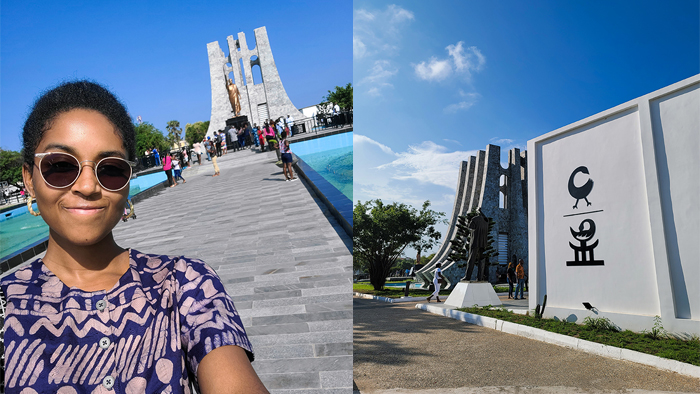
Let’s go outside! Did you know the Kwame Nkrumah Memorial Park and Mausoleum is now re-opened to the public? Would you like to know what to expect? I had the pleasure of visiting the newly renovated Kwame Nkrumah Memorial Park and Mausoleum on a beautiful and sunny Saturday afternoon. I also picked up a few observations and thoughts I wanted to share with you. Let’s indulge, shall we?
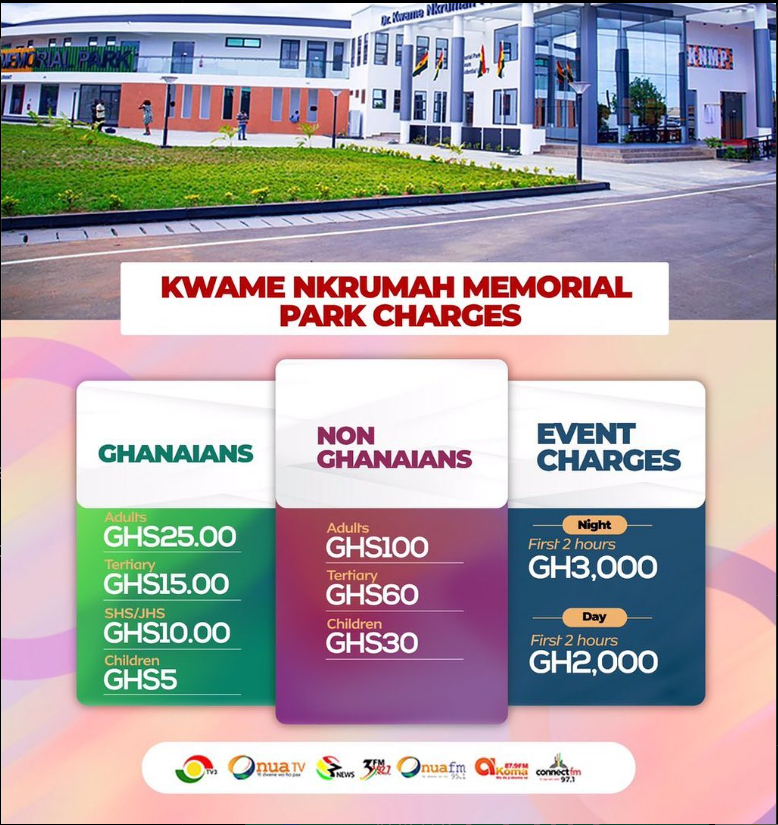
First, logistics. As of the time of posting this, the ticket prices are as follows:
Regarding the renovations, I feel they did a beautiful job in enhancing and redefining the space. The moment you walk through the entrance gate, you meet a large Welcome sign and a profile illustration of Kwame Nkrumah. You feel as if you are being transported into a full dedicated experience. Uplifting music is playing nearby. On the day that I went, people of all ages were enjoying their time as they took photos and explored.

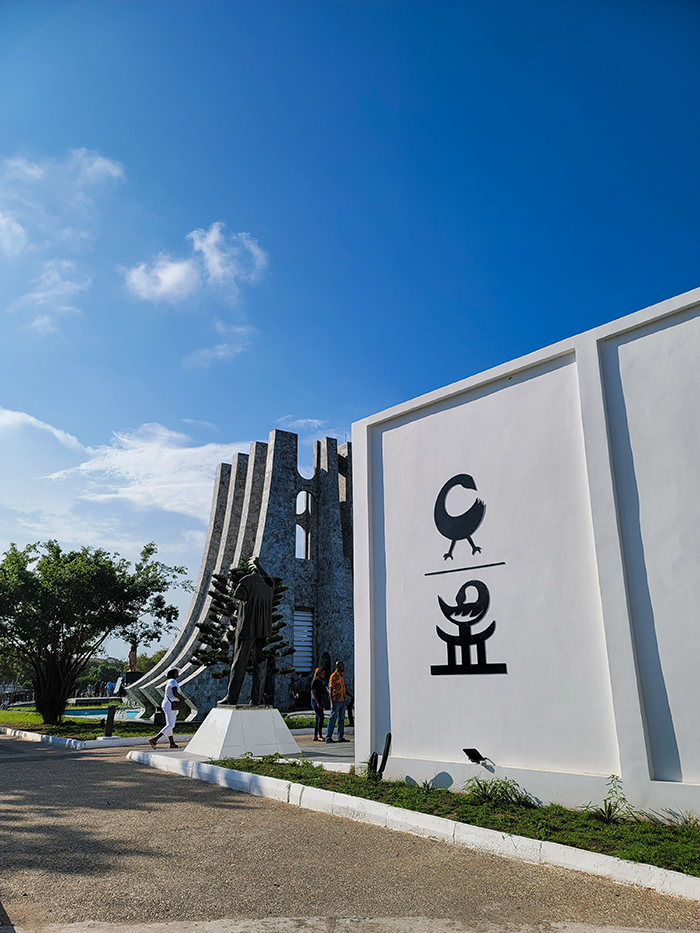
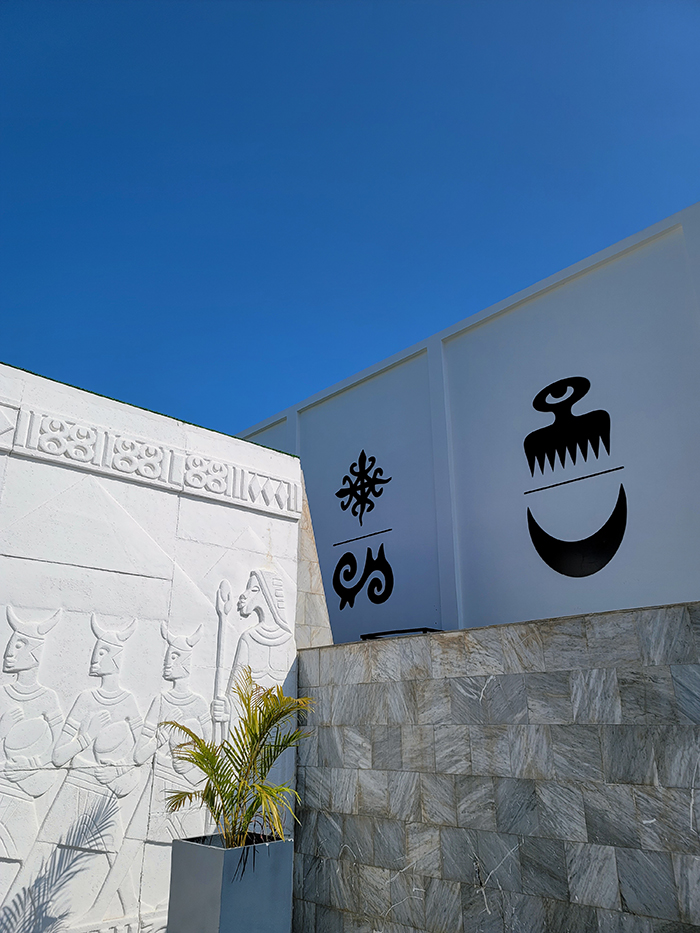
Yes, the sky was actually this blue and beautiful on a Saturday afternoon in July. Lucky me.
The reception hall is decorated with a pleasant blend of minimalistic clean lines and Ghanaian colorful culture. The high ceiling and large windows make it feel spacious and refreshing. Depending on when you go, there might be a bit of a line to purchase your ticket.
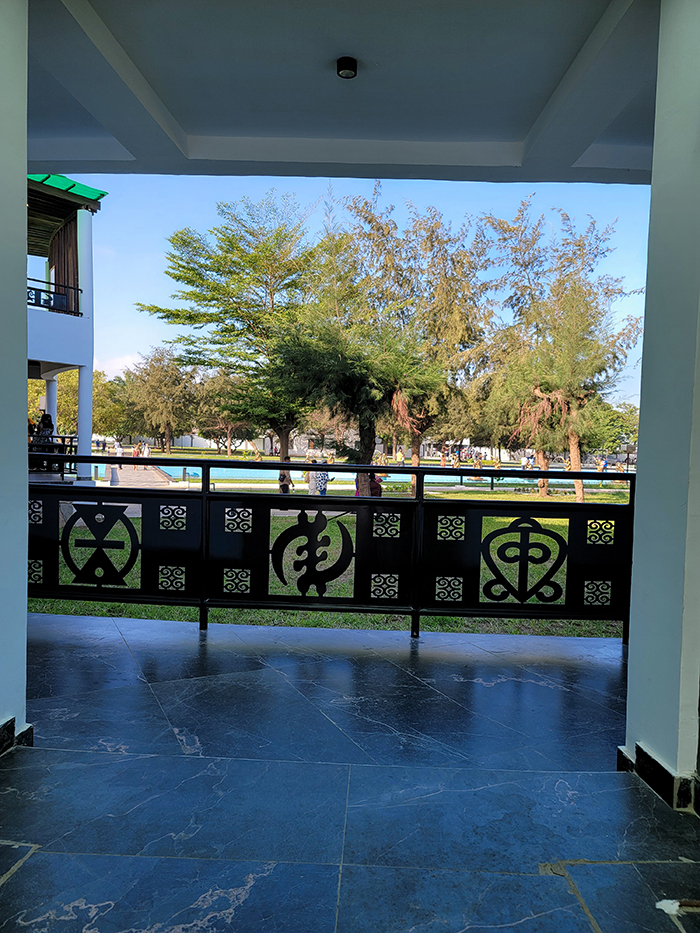
The architect behind the new design, who is Ghanaian, was able to enhance the park with a signature millennial aesthetic by creating multiple spaces that cater to ambiance, easy photos and videos, and history in a relaxed and pleasant vibe. The fountain sings a different upbeat song every hour. The garden is lush and green. All the architecture doubles up as the perfect backdrop. It is giving what it needs to give.



Now, for the museum. This is where I feel there is room to do a lot more.
There are two parts to the museum. Upstairs, you walk through a hall. The floors, walls, and ceiling are black with quotes from Kwame Nkrumah written in gold font. As you are walking, you hear in the distance Kwame Nkrumah’s voice as he speaks announcing Ghana’s independence. At the top, there is a screen looping the video of that speech. Downstairs, you walk through a room to view key points of Kwame Nkrumah’s life. This room includes photos and artifacts.
This is where I feel a lot more can be added. For me, walking through this room felt as if I was reading facts from a Wikipedia page or encyclopedia. They were all factual, but they did not include any context. For example, on one side of the room, there are images of Ghanaians celebrating Kwame Nkrumah as president. On the other side of the room, there are images of Ghanaians celebrating tearing down Kwame Nkrumah’s statue. There is nothing in the middle to explain these two extreme positions. As another example, there is long blocks of text listing all the factories, schools, hospitals, industries, and initiatives Kwame Nkrumah developed and established. Again, no context on what that did for Ghana.
Are you open to hear my feedback on what would help with this? Are you sure? Ok.
I feel details on what Kwame Nkrumah’s writings were about are important to showcase in the museum to better illustrate what his definition and thoughts were on Pan-Africanism, Ghana, freedom, etc. The gap between independence and coup d’état should include details of the CIA’s involvement, the Ghanaians who participated in it, and the historical use of the illusion of democracy vs communism propaganda. The image of the “big 6” should include details on who among them were involved in the overthrow of Kwame Nkrumah and how since that day Ghana’s presidency continues to only involve the families of the “big 6” with a few breaks in between due to military coups. It would be cool to have an infographic depicting every industry and initiative Kwame Nkrumah established illustrating when it was opened, how it impacted Ghana, when it was closed or destroyed, and who was responsible for shutting it down.
I feel the library, which at the moment of this post is an empty room and will most likely be completed later, should have copies of Kwame Nkrumah’s books available to read physically and on screens.
Ok, ok. I hear you. This might be too much pepper. But I believe we can handle it. We deserve it.
To be transparent with you, I did not go to school in Ghana. I see what Ghana represents inside and outside of Ghana. Outside, Ghana is a beacon of hope for Pan-Africanism, freedom, and liberation. Outside, Ghanaians are respected for their work ethic, culture, achievements, and hospitality. Outside, Kwame Nkrumah is a legend. Inside, Ghana is hard paa…depending on which bubble you exist in. Inside, Ghanaians are divided, distracted, enjoying, and progressing. Inside, Kwame Nkrumah is a list of dates, depending on whether your family supported him or not.
None of these things are good or bad. It is what it is. Please understand that I am not trying to instigate insults or belittle anyone’s experience. But, do you see why it is so important to make Kwame Nkrumah’s full story be accessible to all? Yes, this park is a tourist attraction. So, it is an opportunity to set the record straight. I’m sure this will not interrupt US-Ghana relations. But also, this park is one of the few places in Accra to learn an aspect of Ghana’s history. Ghanaian students should be going on field trips to visit this park. Does Ghana’s school system teach the full story? These students should be able to come to the park and learn how strategic one needs to be to make a difference for their people. Or do we still want to make sure no one can pick up from where Kwame Nkrumah left off?
I understand, everyone is tired. But, your children are not. They will grow up and hopefully say no to the enemy of progress one day. Why not give them the tools to develop that confidence now?
Again, this is an intellectual and social conversation, respectfully. I am keen to hear different perspectives on what this could look like. What are your thoughts? Share with me in the comments. I love hearing from you.
Also, make sure to visit this park. It is definitely worth the visit.
 Dagny Zenovia
Leave a comment